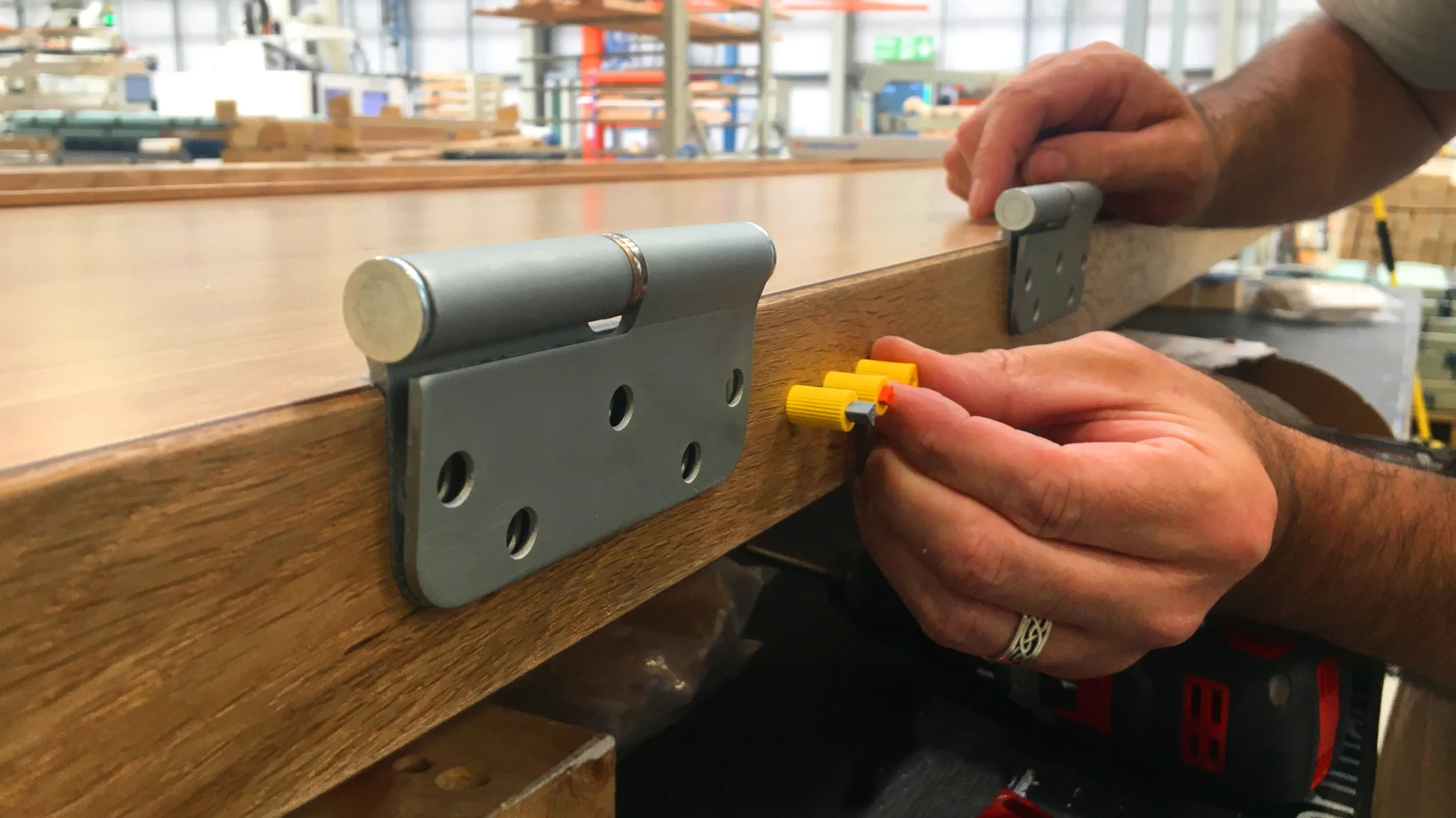
Does a fire door have to have a gap at the bottom?
Introduction to Fire Doors
What is a Fire Door?
A fire door is a specially designed door that helps prevent the spread of fire and smoke within a building. It is typically made from materials that can withstand high temperatures, such as steel, wood, or a combination of both. These doors are an essential part of any fire safety plan, as they create a barrier between areas of a building, slowing the spread of flames and smoke.
In simple terms, a fire door acts like a shield, stopping fire from spreading and giving people time to escape safely. Unlike regular doors, fire doors are constructed with fire-resistant cores, seals, and, in some cases, intumescent strips that expand when heated to seal gaps. They can withstand heat for a specific period, often rated for 30, 60, or even 120 minutes, depending on the building’s needs and fire risk.
Fire doors are often used in areas such as stairwells, corridors, and between compartments of a building, like a kitchen or utility room, where fires are more likely to start. They can also be installed in industrial settings to protect against fire hazards from machinery or chemicals. When appropriately installed, fire doors save lives, protect property, and reduce the spread of toxic smoke.
Importance of Fire Doors in Building Safety
Fire doors play a critical role in building safety, and their importance cannot be overstated. Here are the main functions that make them so vital:
1. Fire Protection:
The primary function of a fire door is to contain the spread of fire. By keeping the fire confined to one area, these doors give people more time to escape and minimize damage to other parts of the building. Without fire doors, a small flame could quickly spread, endangering lives and property.
2. Smoke Control:
A fire door doesn’t just stop flames; it also helps to control smoke. Smoke is one of the leading causes of death during a fire, as it can fill a room quickly and make it hard to breathe. Many modern fire doors are equipped with smoke seals that create a barrier, preventing smoke from flowing into different areas. This feature is crucial for providing clear escape routes and keeping vital areas, such as hallways and stairwells, smoke-free.
3. Sound Insulation:
Although primarily designed for fire safety, fire doors can also help reduce noise between different areas of a building. In offices, hotels, or residential buildings, fire doors can provide sound insulation, enhancing privacy and comfort. This is especially important in environments such as hotels, hospitals, or multi-family dwellings, where soundproofing is often needed for peaceful living.
4. Security Against Hazardous Materials:
Fire doors are often used in buildings that store hazardous materials, such as factories, laboratories, and warehouses. These doors can help to prevent a fire from spreading to areas containing dangerous substances, reducing the risk of explosions or toxic fumes. Properly maintained fire doors are critical in industrial settings to protect both workers and the property from potential harm.
5. Compliance with Building Codes:
Most importantly, fire doors are required by building codes and fire safety regulations. In many regions, installing fire doors is needed for both commercial and residential buildings. Ensuring that these doors are in place and properly maintained not only helps prevent fires from spreading but also enhances everyone’s safety within the building.

The Role of a Gap at the Bottom of Fire Doors
Fire doors are critical components of a building’s safety system, designed to prevent the spread of fire and smoke. While fire doors are built to be solid and durable, it’s common to see a gap at the bottom. This gap may seem counterintuitive given the door’s primary purpose of stopping fire, but it actually plays a vital role in the overall design.
Why Fire Doors Have Gaps?
Fire doors often feature a gap at the bottom for several reasons. One of the main reasons is ventilation. Without adequate air circulation, a fire door might trap heat and gases inside a room during a fire. The gap allows for a small amount of airflow, which helps maintain air pressure levels and can even prevent the buildup of dangerous smoke and heat in a sealed environment.
Additionally, fire doors are not always perfectly aligned with the floor. Floors may not be level, and over time, building materials settle or warp. The gap at the bottom of a fire door allows for this natural shifting, ensuring the door can still function as intended even in imperfect conditions. Without this gap, the door could become stuck or fail to close correctly, compromising its ability to prevent the spread of fire.
In some cases, the gap also helps with accessibility. For example, if the door is intended for use in areas with people with disabilities or heavy foot traffic, the gap makes movement easier, reducing friction when the door opens and closes.
Fire Door Seal vs. Gap: What's the Difference?
While a gap at the bottom of a fire door is essential for ventilation and adaptability, it’s equally important to ensure the fire door seal is intact. The seal serves a different purpose, focusing on preventing smoke and heat from passing through the door during a fire. Unlike the gap, which is a physical space, the seal is a compressible material that fits tightly against the door frame and floor.
Fire door seals are often made from intumescent materials, which expand when exposed to heat, forming a tight barrier that blocks smoke and flames. They provide a much stronger seal than a simple gap ever could. Seals work with the gap to ensure the fire door remains effective at containing a fire while allowing some airflow.
In summary, the gap at the bottom of a fire door and the fire door seal serve complementary roles. The gap provides necessary ventilation and accommodates structural movement, while the seal ensures the door remains airtight during a fire. Both are crucial to maintaining the effectiveness of fire doors, enabling them to perform their protective function while adapting to everyday conditions.

Does a Fire Door Have to Have a Gap at the Bottom?
The presence of a gap at the bottom of a fire door often raises questions about its necessity, especially considering the door’s role in preventing the spread of fire and smoke. While it may seem counterproductive, building codes and safety regulations typically allow, or even require, such gaps under certain conditions. Let’s explore whether a fire door truly needs a gap at the bottom and how building regulations address this.
Building Codes and Regulations for Fire Doors
Building codes and regulations vary by country or region. In many cases, these regulations are in place to ensure fire doors perform their intended function effectively, while accounting for factors such as air circulation and accessibility.
United Kingdom & Europe:
In the UK and across Europe, fire door regulations are closely aligned with fire safety standards, such as the Building Regulations 2010 in England and the European Fire Safety Standards. These guidelines generally require that fire doors have a small gap at the bottom to allow ventilation and accommodate structural shifts. The gap helps prevent heat buildup and improves the door’s ability to close correctly, ensuring it can contain a fire. However, there are limits to the gap’s size to prevent the door from becoming ineffective. Typically, the gap should not exceed 10-15mm in the UK.
Australia:
In Australia, fire door regulations are governed by the National Construction Code (NCC) and Australian Standard AS 1905.1. These regulations also allow for a gap at the bottom of fire doors, but with specific guidelines regarding its size. Similar to European standards, the gap is usually capped at 10mm to 15mm to ensure the door’s functionality in preventing fire spread. In addition, the gap must be balanced with the requirement for fire door seals, which provide an airtight barrier when the door is closed.
United States (NFPA):
In the United States, fire door requirements are governed by the National Fire Protection Association (NFPA) standard, particularly NFPA 80. This standard outlines the construction and performance criteria for fire doors. According to NFPA 80, the gap at the bottom of fire doors is permitted but should not exceed ¾ inch (about 19mm). The purpose of this gap is to allow for thermal expansion and structural movement, but it must not compromise the fire door’s ability to prevent the passage of smoke and flames. NFPA 80 also requires the use of fire door seals to ensure a tight barrier during a fire emergency.
Summary
Overall, while regulations across countries may differ slightly, they all recognise the importance of balancing ventilation and airtight sealing for fire doors. Fire door gaps are allowed to a limited extent but must be controlled to ensure they do not compromise the door’s primary function: fire and smoke containment.
The Ideal Gap Size for Fire Doors
The size of the gap at the bottom of a fire door is critical to its performance. A gap that’s too large can undermine the door’s ability to stop smoke or flames from passing through, while one that’s too small can lead to operational issues. So, what is the ideal size for this gap?
Recommended Maximum Gap Size:
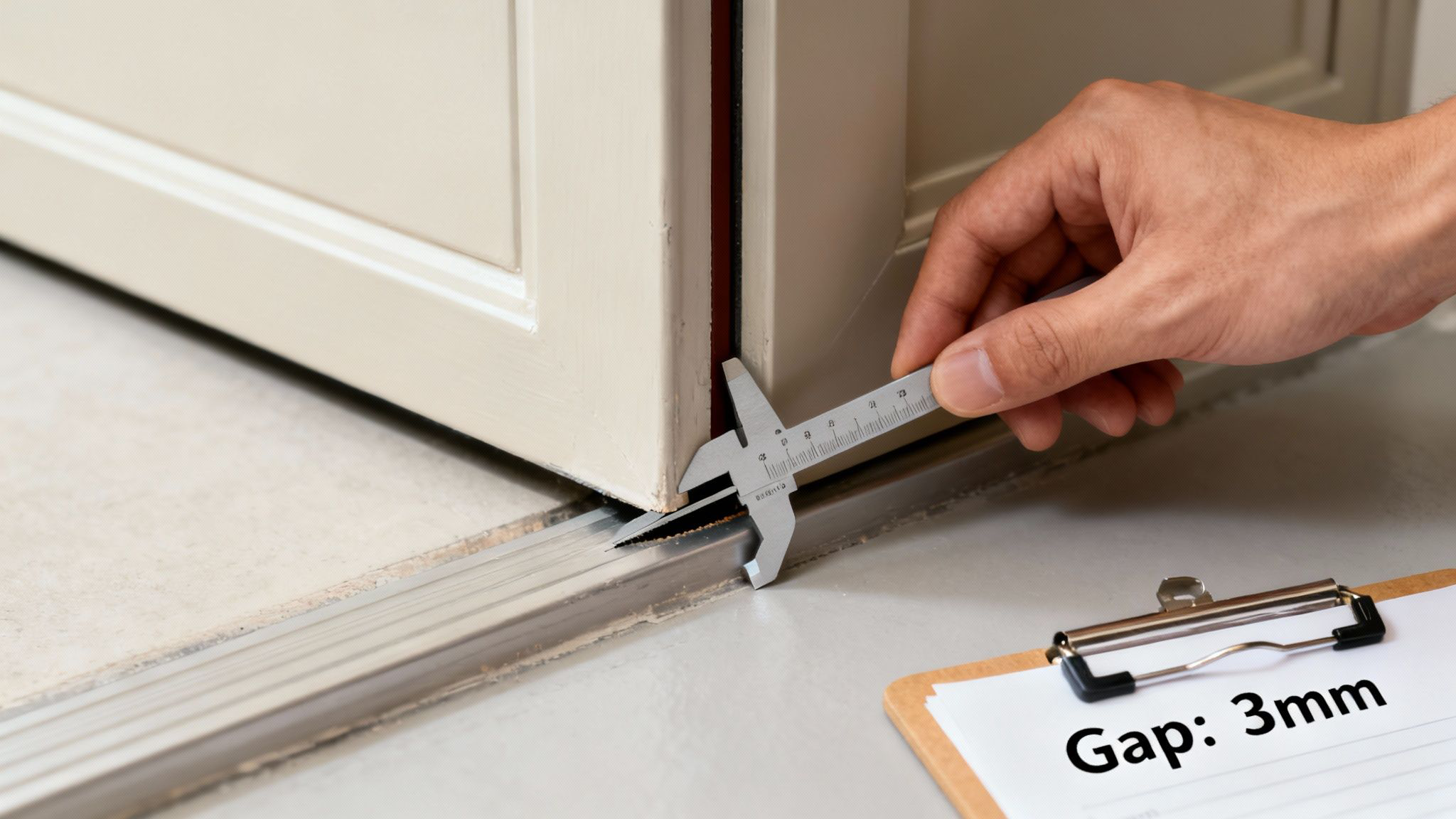
Most building codes and fire door standards recommend a maximum gap size of 10-15mm. This size is generally ideal for ensuring the door functions effectively while still allowing ventilation and movement. A gap within this range helps accommodate the natural shifting of the building materials and provides airflow to prevent the buildup of heat or gases during a fire.
Recommended Minimum Gap Size:
On the other hand, the minimum gap size is generally set at 3mm to 5mm. This ensures the door opens and closes smoothly, without sticking due to friction. A gap smaller than this may cause the door to jam or fail to close correctly, allowing fire or smoke to pass through.
The ideal gap size is often determined by factors like the door’s material, the type of building, and the specific fire safety requirements of the location. For instance, in environments with heavy foot traffic or where accessibility is a concern, slightly larger gaps may be preferred to ease door operation. However, it’s always essential to ensure that the gap remains within the allowable range to prevent it from negatively affecting the fire door’s performance.
Summary
In conclusion, while the gap at the bottom of a fire door is necessary for ventilation and structural adaptability, it must be carefully regulated. Both maximum and minimum gap sizes have been established in fire door regulations to ensure that the doors provide the best possible protection against fire while still meeting practical and safety needs.
Pros and Cons of a Gap at the Bottom of a Fire Door
Fire doors are crucial for containing fires and preventing smoke from spreading through buildings. A gap at the bottom of these doors, while necessary for specific practical reasons, has both advantages and risks. Understanding these pros and cons can help ensure that fire doors perform optimally while balancing safety and functionality.
Benefits of Having a Gap at the Bottom
A gap at the bottom of a fire door offers several significant benefits, particularly for door operation and building ventilation.
1. Air Circulation:
One of the primary reasons for having a gap at the bottom of a fire door is to allow for proper airflow. In a fire emergency, the gap helps regulate air pressure, preventing the room from becoming completely sealed. This can help avoid dangerous conditions, such as smoke or heat buildup. Additionally, it ensures that air circulation is maintained, which is crucial in buildings with a high number of occupants or sensitive equipment.
2. Standard Opening and Closing of the Door:
Fire doors can be heavy and difficult to open and close, especially when sealed tightly. The gap allows the door to open and close more easily, preventing it from sticking or jamming. This is particularly important in buildings with heavy foot traffic or where people with disabilities may need to move freely. Without the gap, friction could make the door more complicated to operate, delaying evacuation during an emergency.
3. Adaptation to Floor Irregularities:
Floors in buildings are often uneven due to settling or other structural changes. A small gap at the bottom of the fire door helps the door remain functional despite these natural shifts. Without this gap, the door might become misaligned, preventing it from closing properly and compromising its ability to contain a fire.
4. Cost-Effective Solution:
In many cases, the gap is a practical solution that doesn’t require additional mechanisms or costly adjustments. It serves as a simple way to ensure the door functions properly without significant extra expense, compared to installing more complex systems like automatic door closers or specially designed thresholds.
Risks and Drawbacks of Having a Gap
While the gap at the bottom of a fire door offers several advantages, it also introduces risks that must be carefully managed.
1. Smoke Leakage:
One of the principal risks of having a gap at the bottom of a fire door is the potential for smoke to leak through during a fire. Even if the gap is small, smoke can still seep through the opening, spreading quickly and posing a significant risk to building occupants. Smoke inhalation is a leading cause of death in fires, and a gap that allows smoke to pass through can compromise the safety of the people inside the building.
2. Fire Spread:
Although fire doors are designed to block the spread of flames, a large gap at the bottom may undermine this critical function. In the case of intense heat, the gap could allow flames to creep under the door, bypassing the barrier entirely. This could contribute to the spread of fire from one room to another, causing further damage and endangering lives.
3. Reduced Effectiveness of Fire Door Seals:
The gap at the bottom of the door can also reduce the effectiveness of fire door seals, which are meant to form a tight barrier against smoke and fire. If the gap is too large, the seal may not function properly, leaving the fire door unable to perform as expected. This makes the gap a concern for the door’s overall fire resistance.
4. Inconsistent Performance:
Depending on the size of the gap, the door may not close fully during a fire, especially if the door is affected by shifting or settling over time. In such cases, the gap could increase, allowing for more smoke or fire to pass through, reducing the door’s effectiveness. Regular inspection and maintenance are crucial to ensure the door continues to provide the necessary level of protection.
Summary
In summary, while a gap at the bottom of a fire door offers practical benefits such as improved air circulation and more straightforward operation, it also poses risks of fire and smoke spread. Proper design, maintenance, and compliance with building codes are essential to minimising these risks and ensuring the fire door remains an effective safety feature. Both the gap size and the quality of the fire door seal are critical factors in balancing safety with functionality.
Alternative Solutions for Fire Door Gaps
While a gap at the bottom of a fire door has practical benefits, it can also pose risks, particularly for fire and smoke containment. To address these concerns, there are alternative solutions that can maintain the door’s functionality while ensuring its fire-resistance performance. Let’s explore two such solutions: fire door bottom seals and intumescent strips, and automatic fire door closers.
Fire Door Bottom Seals and Intumescent Strips
Fire door seals and intumescent strips are excellent alternatives to a simple gap, providing an added layer of protection without compromising the door’s primary function. These solutions are designed to seal the bottom of the door, effectively preventing smoke, heat, and flames from passing through.
Fire Door Bottom Seals:
These seals are typically made from durable materials like rubber, silicone, or other fire-resistant compounds. When properly installed, fire door bottom seals form a tight barrier between the door and the floor, sealing any potential gaps. They ensure that smoke and fire cannot seep through the bottom of the door, significantly improving the door’s ability to prevent the spread of fire. Additionally, bottom seals help reduce drafts and improve energy efficiency by keeping air from escaping the room.
Intumescent Strips:
Intumescent strips are an innovative solution for fire doors, often used in conjunction with bottom seals. These strips are made of materials that expand when heated, filling any gaps between the door and the frame or between the floor and the frame. The expansion of the intumescent material forms a dense, heat-resistant barrier that blocks smoke and flames from passing through. Unlike static seals, which remain the same size, intumescent strips respond to heat, providing an added layer of protection when the fire door is exposed to high temperatures. This ensures that the fire door remains effective even during intense fire conditions.
Summary
Both fire door bottom seals and intumescent strips are highly recommended to ensure a door’s fire resistance, especially in areas where gaps may occur. They provide the necessary airtight seal to keep fire and smoke from spreading, without hindering the door’s regular operation.
Automatic Fire Door Closers
Automatic fire door closers are another solution that can help prevent fire and smoke from spreading through the gap at the bottom of a fire door. These devices ensure the fire door is always securely closed when required, providing reliable protection without risking a gap that could compromise safety.
1. How Automatic Closers Work:
Automatic fire door closers are typically installed at the top of a fire door and activated by mechanisms such as springs, hydraulic systems, or electronic triggers. These closers automatically close the door after it is opened, ensuring it remains shut at all times. By keeping the door tightly closed, the closer eliminates any potential gaps that could allow fire or smoke to pass through. This is especially important in buildings where doors might be left open by accident, which could significantly reduce their effectiveness in a fire.
2. Preventing Fire Spread:
The main benefit of automatic fire door closers is their ability to keep the door shut when it matters most. In the event of a fire, the door’s ability to close quickly and tightly prevents flames from spreading from one room to another. Automatic closers are particularly useful in areas with high foot traffic, where people may not remember to close the door behind them, or in buildings where weather conditions or other factors may impede door closures. With an automatic closer, the door will close and seal off any gaps, offering continuous fire protection.
3. Controlling Door Gaps:
Automatic fire door closers not only enhance fire protection but also help control bottom gap size. Many closers are designed to keep the door tightly closed, reducing the risk of an uncontrolled gap. By adjusting the closing mechanism’s tension or speed, these devices ensure that the door remains in optimal condition, preventing unwanted air or smoke from seeping through.
Summary
In conclusion, automatic fire door closers are an effective way to address gaps in fire doors, ensuring the doors close correctly each time they are used. When combined with fire door seals or intumescent strips, automatic closers help ensure that fire doors perform optimally in preventing the spread of fire and smoke, providing safety and peace of mind.
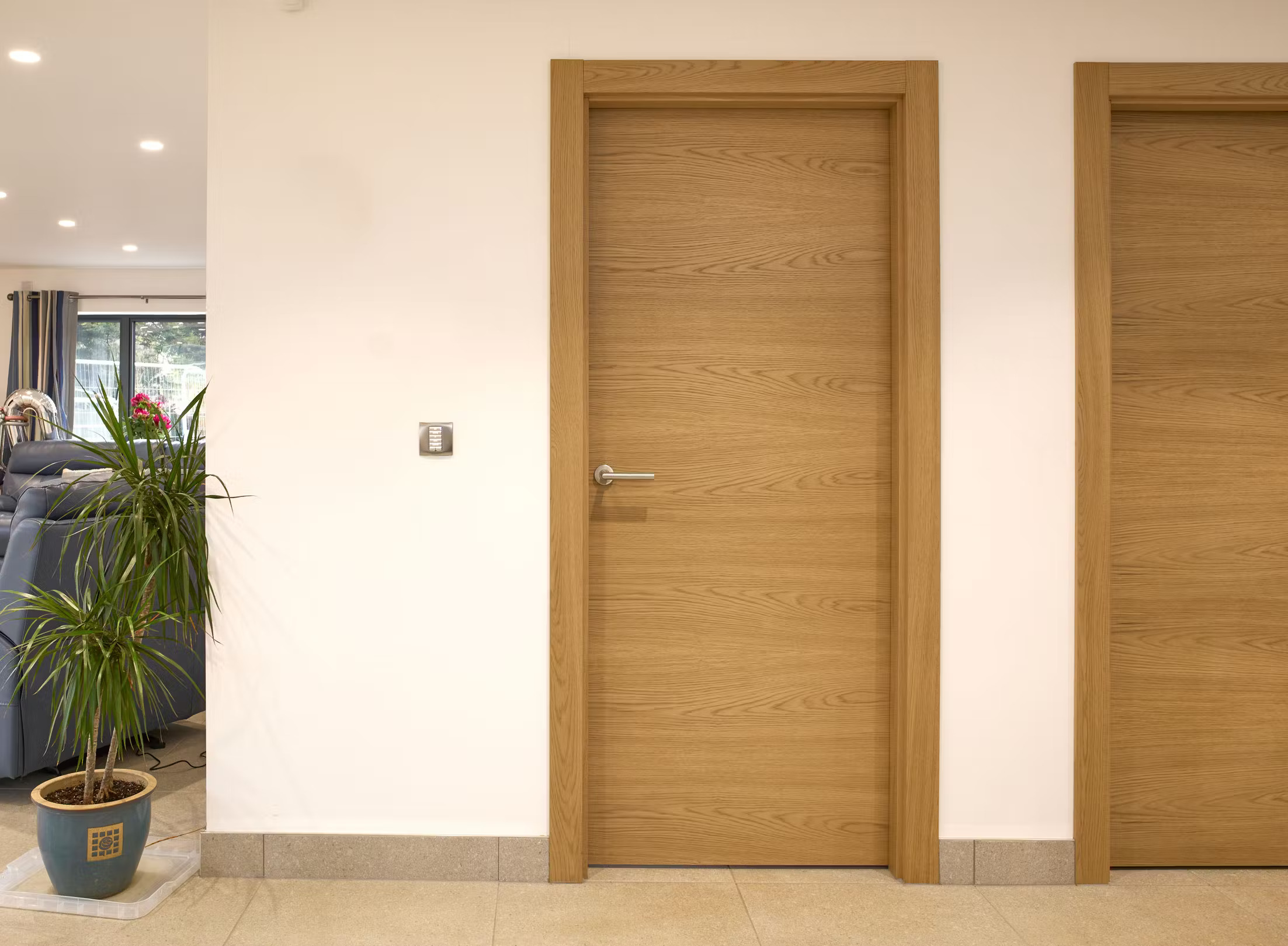
Can Fire Doors Without Gaps Still Be Effective?
Fire doors are essential components of a building’s safety system, designed to prevent the spread of fire and smoke. Traditionally, fire doors have a small gap at the bottom to allow for air circulation and easy door operation. But what happens if a fire door has no gap at all? Can it still perform its vital role in fire protection? Let’s explore how fire doors without gaps can still meet safety standards and maintain fire resistance.
Fire Door Design Without a Gap
Fire doors can indeed be designed without a bottom gap and remain effective, but this requires careful planning and the right materials. When a fire door is built without gaps, the focus shifts to ensuring it can still function properly while maintaining its fire resistance.
1. Enhanced Seals and Intumescent Strips:
A fire door without gaps requires high-quality seals and intumescent strips to ensure its performance. Seals are installed around the door frame and at the bottom of the door to form an airtight barrier when the door is closed. Intumescent strips, which expand when exposed to heat, are crucial in such designs. These strips fill any small gaps that may occur when the door is exposed to fire, preventing smoke and flames from passing through.
2. Precision Fit:
To ensure the fire door remains effective without gaps, the door must be carefully manufactured to fit precisely within the door frame. This prevents any unsealed areas that could allow smoke or heat to escape. A precise fit is crucial to achieving the same fire resistance as a door with a small gap. In some cases, the door may also be fitted with automatic closing systems to make sure it remains securely shut at all times.
3. Fire Door Hardware:
Using the correct hardware, such as fire-rated hinges, latches, and locking systems, is also essential when designing a fire door without a gap. These components must be designed to withstand high temperatures without compromising the door’s integrity. Additionally, fire door hardware must ensure that the door stays closed during a fire, preventing the gap from opening.
Summary
In summary, fire doors without gaps can still meet safety standards if they are designed with the right materials, precision, and high-quality components. By eliminating the gap, the focus shifts to ensuring the door remains sealed and effective at containing fire and smoke.
Ensuring Fire Resistance Without a Gap
Even without a gap, a fire door can still effectively prevent the spread of fire, but other techniques must be employed to ensure its performance. Here are some key strategies for providing fire resistance in a fire door without a gap:
1. Use of High-Quality Fire Door Seals:
The most critical component in ensuring a fire door’s effectiveness without a gap is the fire door seal. These seals are often made from materials like rubber or silicone, which are designed to form a tight, heat-resistant barrier when the door is closed. This barrier prevents smoke and flames from passing through. In the absence of a gap, fire door seals must be of high quality to provide a reliable seal, especially around the perimeter of the door.
2. Automatic Door Closers:
Even if the door doesn’t have a gap, it’s crucial to ensure it closes quickly and securely in the event of a fire. Automatic door closers can help achieve this. These devices ensure that the door closes immediately after opening, preventing accidental openings that could compromise its fire resistance. With automatic closers, the door remains tightly sealed at all times, preventing gaps from forming during operation.
3. Intumescent Strips for Thermal Expansion:
Intumescent strips are handy in fire doors without gaps. These strips are made from materials that expand when heated, filling any small gaps that might open during a fire. When the door is exposed to high temperatures, the intumescent material swells, creating a tight seal and preventing the passage of smoke or flames. This ensures that the fire door remains fully functional in extreme conditions.
4. Fire-Rated Glass and Materials:
Fire doors without gaps require more frequent maintenance and inspection to ensure they remain in optimal condition. Over time, seals and intumescent strips may degrade, and hardware might become loose or damaged. Regular checks can identify any issues and ensure that the door continues to perform as expected. Maintaining the door’s fit and ensuring all components are working properly are crucial to ensuring fire resistance.
Summary
In conclusion, a fire door without gaps can still be highly effective at preventing the spread of fire, provided it is constructed with high-quality materials and features such as seals, intumescent strips, and automatic closers. By focusing on the tight seal and ensuring that the door closes securely every time, these doors can meet fire safety standards and provide the necessary protection during a fire emergency.

Common Misconceptions About Fire Doors and Gaps
There are many misconceptions about fire doors and their bottom gaps. While fire doors play a critical role in ensuring building safety during a fire, some common misunderstandings can lead to improper use or installation.
Is It Okay to Block the Gap?
A common question is whether it’s okay to block the gap at the bottom of a fire door. The answer is generally no; blocking the gap can negatively impact the fire door’s performance and could even violate building regulations.
1. Why Blocking the Gap is Not Recommended:
Fire doors are specifically designed to prevent the spread of fire and smoke. The gap at the bottom of the door serves practical purposes, such as ventilation, easy door operation, and accommodating structural movement. However, the gap must be controlled and not sealed off completely. Blocking the gap can cause the door to fail to close properly, resulting in ineffective smoke and fire protection. In the case of a fire, the door may not seal tightly enough to prevent flames from passing through, making the gap a critical area for fire resistance.
2. Regulatory Concerns:
Blocking the gap can also violate building codes and fire safety regulations. For instance, in many countries, including the UK and the US, fire door regulations specify a maximum allowable gap size. Sealing or blocking the gap can prevent the door from meeting its fire resistance rating, rendering it noncompliant with safety standards. Fire doors must be installed and maintained in accordance with these regulations to ensure they perform their protective role during a fire emergency.
3. The Importance of Proper Sealing:
Instead of blocking the gap, it is better to use fire door seals and intumescent strips, which are designed to work with the door’s existing gap. These materials expand when heated, providing a reliable barrier against smoke and flames while maintaining the door’s functionality. Blocking the gap entirely may compromise the door’s design and hinder its ability to offer protection.
Summary
In short, blocking the gap at the bottom of a fire door is not advisable, as it can affect the door’s ability to perform its fire-resistance function. Instead, focus on ensuring the gap remains within the recommended size and use proper seals to enhance the door’s fire protection.
Fire Door Gaps and Soundproofing: Are They Connected?
Another common misconception is that the gap at the bottom of a fire door contributes to its soundproofing capabilities. While it’s true that fire doors can offer some degree of noise reduction, the relationship between fire door gaps and soundproofing is not as straightforward as it may seem.
1. Fire Door Gaps and Soundproofing:
The primary function of a fire door is to stop the spread of fire and smoke, not to provide soundproofing. The gap at the bottom of the fire door serves practical purposes, such as allowing air circulation, adapting to uneven floors, and ensuring proper door operation. However, this gap can reduce the door’s soundproofing. Gaps, even small ones, allow sound to travel more easily between rooms, which can compromise the door’s ability to block noise.
2. Soundproofing Materials:
If noise reduction is a key consideration, additional soundproofing measures should be taken. For example, soundproof fire doors are often fitted with specially designed seals and materials that block sound while maintaining fire resistance. These soundproofing materials differ from fire-resistant seals used to block smoke and flames. Therefore, if a fire door is intended for both fire safety and soundproofing, the gap must be sealed with materials that block sound while still allowing the door to close securely in case of fire.
3. Meeting Both Needs:
Fire doors designed for soundproofing often incorporate acoustic seals, which can be used in conjunction with intumescent strips. These seals are specifically designed to reduce noise transfer while still maintaining the door’s ability to stop fire and smoke. However, achieving both fire resistance and soundproofing requires careful design and installation. Simply relying on the gap at the bottom of the door will not be enough to achieve a significant soundproofing effect.
Summary
In conclusion, while fire doors can offer some soundproofing, the gap at the bottom of the door actually reduces their ability to block sound. For effective soundproofing, additional measures, such as acoustic seals and specialised soundproofing materials, should be considered alongside fire-resistant components. Balancing fire safety and noise reduction requires a thoughtful approach to door design and installation.

Relate FAQ
Does a fire door have to have a gap at the bottom?
Yes, fire doors are required to have a gap at the bottom, but this gap must be controlled. According to fire safety regulations, the gap is typically limited to 10mm to contain smoke and heat while still allowing the door to function effectively in an emergency. This gap allows the door to seal properly without restricting the airflow necessary for its performance.
What is the maximum gap allowed at the bottom of a fire door?
The maximum permissible gap under a fire door is usually 10mm, as specified by fire safety regulations. This gap ensures the door maintains its fire-resistance rating while allowing proper ventilation and easy operation. Gaps exceeding this limit can compromise the door’s integrity and fire rating.
Can fire doors have a gap at the bottom for ventilation?
Fire doors can have a gap at the bottom, but they are designed for functionality, not general ventilation. The gap is strictly regulated to maintain the fire door’s performance in the event of a fire. For additional ventilation needs, alternative solutions like fire-rated air transfer grilles or vents should be used.
Can the gap under a fire door be adjusted?
The gap under a fire door is generally set during installation, and a qualified professional should make any adjustments to ensure the door still complies with fire safety standards. Adjusting the gap without proper knowledge may negatively impact the door’s fire-resistance rating and safety.
What happens if the gap at the bottom of the fire door is too large?
If the gap under the fire door exceeds the maximum allowable size (usually 10mm), it can compromise the door’s ability to prevent the spread of smoke and flames in a fire. This could invalidate its fire-resistance rating, putting people and property at risk in the event of a fire emergency.
Can fire doors be installed without a bottom gap?
No, fire doors cannot be installed without a gap at the bottom. The gap is essential for ensuring the door can swing open properly during an emergency and for maintaining the door’s seal for effective fire protection. However, the gap must remain within regulatory limits to meet safety standards.
Are fire door bottom gaps different for different types of doors?
Yes, the required gap can vary depending on the type of fire door and its specific use case. For example, fire doors in residential buildings may have slightly different requirements than those in commercial settings. Always check local regulations and manufacturer guidelines for the exact specifications.
Can a fire door be installed with a threshold to reduce the gap?
Yes, a threshold can help reduce the gap at the bottom of a fire door, but it must be installed in compliance with safety standards. A threshold can help ensure a tight seal while still meeting fire-resistance requirements, provided it does not interfere with the door’s ability to function during a fire emergency.