How are CE certified fire doors tested?
Why Fire Door Testing Is So Important?
Fire door testing is a critical part of building safety. Fire doors are designed to prevent the spread of fire and smoke, giving people time to escape safely. However, a fire door only works properly if it is tested regularly. Testing ensures that the door closes correctly, the seals are intact, and no gaps or damage could allow fire to pass through.
Regular fire door inspections and fire safety checks can save lives. Without testing, even a high-quality fire door might fail in an emergency. Businesses, schools, hospitals, and residential buildings all rely on effective fire doors to protect occupants. Moreover, tested fire doors can reduce property damage and insurance claims, making testing not only a safety requirement but also a financial smart choice.
How Fire Doors Save Lives?
Fire doors act as barriers between fire sources and escape routes. They contain fire and smoke in one area, giving people extra time to evacuate. A properly functioning fire door can prevent flames from spreading to hallways, staircases, and other rooms.
In emergencies, every second counts. Fire door inspections and maintenance help ensure that doors are not stuck, warped, or blocked. They save lives by maintaining safe exit paths and limiting smoke inhalation risks. When fire doors function as intended, they can also protect vulnerable populations, such as children, the elderly, and hospital patients.
How Testing Helps Stop Fire and Smoke?
Fire door testing goes beyond checking the handle or hinges. It involves verifying fire-resistance ratings, smoke seals, and automatic closing mechanisms. Testing ensures that the fire door can withstand high temperatures for a specified period, usually 30, 60, or 90 minutes, depending on regulations.
Smoke-proof fire door tests confirm that smoke does not leak into escape routes. Fire doors that pass these tests create a controlled environment, slowing the fire’s spread and reducing overall damage. Regular checks can spot issues like broken intumescent strips or misaligned doors, which might otherwise render the fire door ineffective.
Legal Requirements for Commercial Buildings
Commercial buildings are legally required to have fire doors that have been tested and certified. Laws vary by region, but most jurisdictions mandate fire door inspections at least once a year. Fire doors must meet specific fire-resistance ratings and comply with building safety codes.
Failing to test or maintain fire doors can lead to fines, legal liabilities, or voided insurance policies. Property owners and facility managers must document all fire door inspections and repairs to demonstrate compliance. Proper fire door maintenance not only meets legal standards but also shows commitment to occupant safety.
Common Risks of Non-Tested Fire Doors
Failing to test fire doors can pose serious risks. Non-tested doors may stick, fail to close, or allow smoke to pass through. Even minor damage, such as warped frames or missing seals, can compromise fire safety.
Buildings with untested fire doors are more likely to experience rapid fire spread, injuries, fatalities, and increased property damage. In commercial settings, this can also mean legal repercussions and increased insurance costs. Simple maintenance and testing prevent these risks and ensure fire doors perform as intended in an emergency.
How Are CE Certified Fire Doors Tested?
CE certified fire doors are tested to ensure they meet strict European safety standards. These tests check how well the fire door resists heat, smoke, and flame. Testing a fire door is not just about the door itself – it includes the frame, hinges, locks, intumescent seals, and smoke seals. A properly tested fire door helps protect lives and property in the event of a fire.
Step 1 – Preparing the Fire Door Set
Preparing the fire door set is the first and most important step in testing. This step ensures that every component of the fire door is correctly installed before it faces the fire resistance test. A fire door set includes the door leaf, the fire-rated frame, the hinges, locks, other hardware, and the intumescent and smoke seals. Each part must meet CE standards and be checked carefully.
Door Leaf
The door leaf is the main part of the fire door. During preparation, the door leaf is measured, inspected, and, if necessary, conditioned to match the environment. The surface, edges, and core materials are checked to ensure they are intact. For example, any cracks, warping, or damage can reduce fire resistance. Fire door leaf tests make sure the door can resist flames for its rated time, usually 30, 60, or 90 minutes, depending on the certification.
Fire Rated Frame
A fire-rated frame holds the fire door leaf in place and ensures stability during a fire. Before testing, the frame is carefully aligned and secured. CE testing requires the frame to match the door size and rating. Any misalignment or loose fittings could let fire or smoke escape. Inspecting the fire-rated frame ensures that the fire door will perform as a complete unit under real fire conditions.
Hinges, Locks, and Hardware
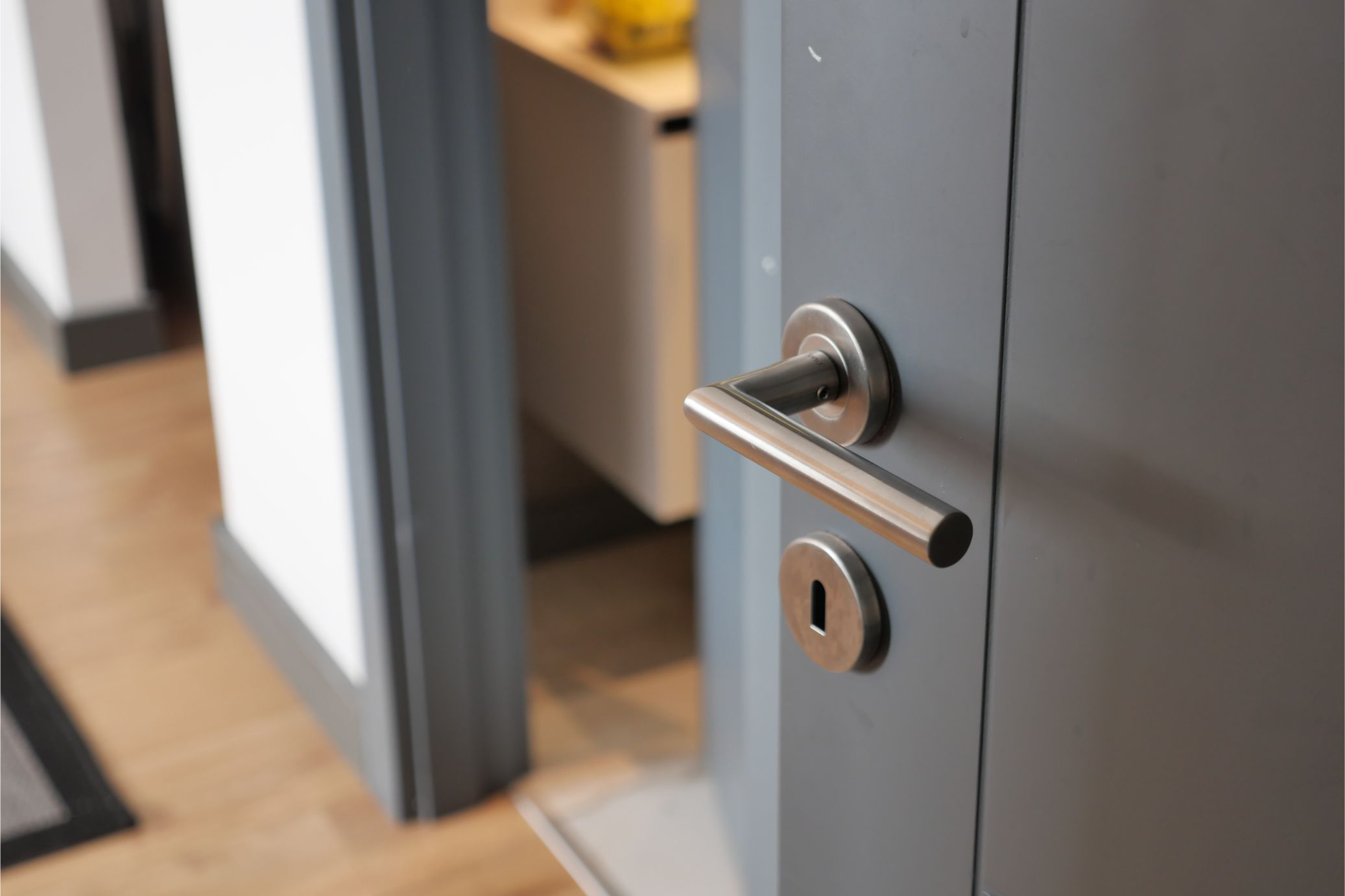
Hinges, locks, handles, and other hardware are more than convenience – they affect fire door performance. During preparation, all hardware is installed according to the manufacturer’s instructions. Hinges are checked for smooth operation and correct placement. Locks and handles are verified to ensure they do not interfere with closing. Hardware must also withstand heat without failing, so CE testing considers these elements carefully.
Smoke Seals and Intumescent Seals
Intumescent seals and smoke seals are crucial for keeping fire and smoke from passing through gaps around the door. Intumescent strips expand when exposed to heat, filling the space between the door leaf and frame. Smoke seals help block toxic smoke from spreading. Before testing, these seals are checked for correct placement and condition. CE-certified fire doors require proper sealing to pass smoke-control and fire-resistance tests.
Step 2 – Putting the Door Into a Furnace
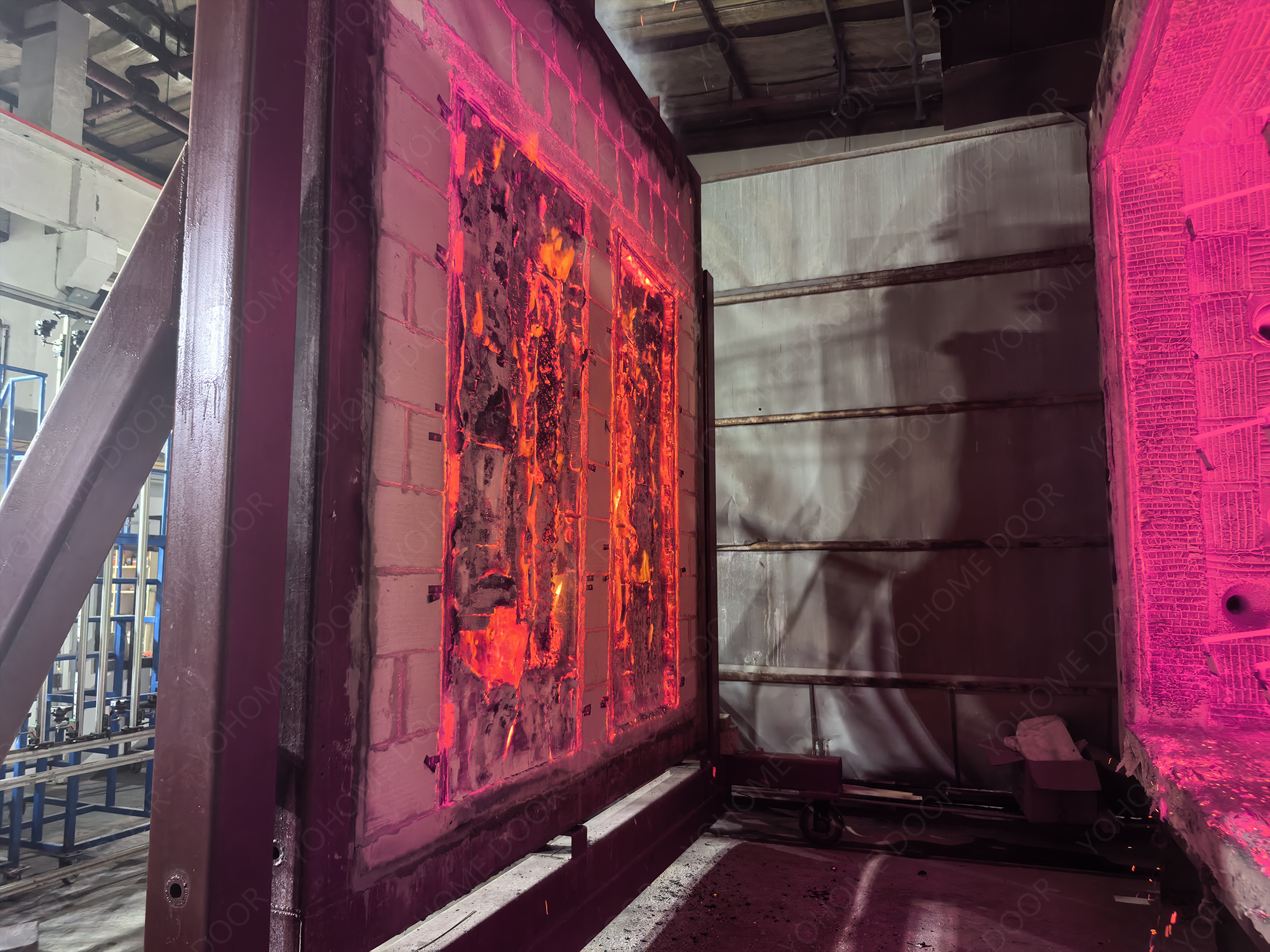
Once the fire door set is ready, it is carefully placed into a furnace designed for fire testing. The furnace simulates real fire conditions and extreme heat. Fire doors are mounted exactly as they would be in a building, including the frame, hinges, hardware, and seals.
Placing the fire door into the furnace is precise work. Test engineers ensure that the door sits correctly, with gaps and clearances checked. Misalignment at this stage could affect the test results. The goal is to replicate how the fire door would perform in a real emergency.
Step 3 – Heating the Door Under Extreme Temperatures
After placement, the furnace heats the fire door to extreme temperatures. Fire doors must withstand intense heat for their rated time, which could be 30, 60, or 90 minutes, depending on CE certification.
During heating, sensors and cameras monitor the door leaf, frame, and hardware. Engineers watch for warping, smoke leakage, and structural failure. Fire doors are tested not only for flame resistance but also for heat transfer. A well-tested fire door slows the spread of fire and protects the escape routes.
Step 4 – Measuring Fire Resistance Time
The key purpose of CE fire door testing is to measure fire resistance time. This is the period during which the door can resist fire without allowing flames or excessive heat to pass through.
Testers record the exact time when the fire door reaches critical limits, such as temperature on the non-fire side or structural damage. Accurate timing is important because it determines the fire rating. Fire resistance testing ensures that fire doors provide occupants with safe evacuation time and reduce property damage.
Step 5 – Checking Smoke Leakage
After the fire-resistance part of the test, engineers check for smoke leakage. Even if flames are blocked, smoke can travel through gaps and endanger lives.
Smoke seals and intumescent strips are tested to determine whether they expand and effectively close gaps. Smoke tests may use smoke generators and pressure measurements to detect leaks. CE certified fire doors must prevent significant smoke penetration, protecting hallways and escape routes.
Step 6 – Recording Structural Failure
Recording structural failure is a critical part of fire door testing. Test engineers watch the door closely for any signs that it can no longer contain fire or heat. Structural failure can appear in several ways, each of which affects the door’s fire rating and safety performance.
Flame Penetration
Flame penetration is when fire breaks through the fire door. CE certified fire doors are designed to prevent flames from reaching the non-fire side. During testing, sensors and cameras detect any small breaches in the flame. Even a minor flame penetration is recorded because it affects the fire door’s effectiveness in real-life emergencies. Properly tested fire doors stop flames long enough for safe evacuation.
Heat Transfer
Even if flames do not pass through, excessive heat can travel through the door. Heat transfer is measured on the non-fire side to see if the temperature rises too quickly. CE fire door testing ensures the door slows heat transfer, protecting people and property. Heat transfer tests also check that the door core, seals, and frame maintain integrity under extreme temperatures.
Door Distortion
Door distortion is another key factor. High heat can cause warping, bending, or gaps around the fire door. Test engineers monitor the door for any visible deformation. If the door leaf or frame twists too much, it could compromise fire resistance. CE certified fire doors must resist distortion long enough to maintain a proper barrier against fire and smoke.
Final Test Report and CE Approval
After all tests are complete, the results are compiled into a final test report. This report details fire resistance times, smoke leakage performance, flame penetration, heat transfer, and any structural failures observed.
CE approval is granted only if the fire door passes all requirements. The CE mark indicates that the fire door meets European safety standards, is reliable, and can be installed in commercial and residential buildings. With CE certification, building owners and managers can be confident that their fire doors will protect lives and property in case of a fire.
What Standards Are Used to Test CE Fire Doors?
When it comes to CE fire doors, safety and compliance are the top priorities. Fire doors must meet strict European and British standards before they can be installed in buildings. These standards test how well a fire door resists flames, smoke, and heat, ensuring it protects lives and property during a fire.
Several standards are commonly used to evaluate fire doors. Each standard focuses on a specific aspect, like fire resistance, smoke control, or overall classification. Understanding these tests is crucial for manufacturers, builders, and anyone choosing fire doors for homes or commercial spaces.
EN 1634-1 Fire Resistance Test
The EN 1634-1 test is the backbone of fire door certification in Europe. This standard measures how long a fire door can withstand flames and high temperatures. During the test, a full-size fire door is exposed to intense heat in a furnace. Inspectors check whether the door maintains its structure, integrity, and insulation for the specified period.
For fire doors, this test ensures they can slow the spread of fire, giving occupants more time to escape. Manufacturers often label their fire doors as “FD30” or “FD60,” indicating the door can resist fire for 30 or 60 minutes, respectively, based on EN 1634-1 fire resistance test results. Using EN 1634-1-certified fire doors is a key part of meeting European building safety regulations.
EN 1634-3 Smoke Control Test
Fire doors do more than block flames—they also stop smoke. The EN 1634-3 standard focuses on smoke control. In this test, fire doors are checked to see how effectively they prevent smoke from passing through gaps around the door.
Smoke is a major killer in fires, even more than flames in many cases. Smoke-sealed fire doors, certified under EN 1634-3, help protect escape routes and limit smoke damage to other areas. A fire door that passes this test is often labeled as a “smoke control door” or “FD30S,” indicating both fire resistance and smoke-tightness.
EN 13501-2 Fire Classification Standard
EN 13501-2 sets the framework for classifying fire doors in Europe. While EN 1634 tests focus on performance, EN 13501-2 assigns a rating to fire doors based on those results. Ratings combine fire resistance, integrity, and insulation, giving builders a clear idea of a door’s protective level.
For example, a fire door might be classified as “EI60,” meaning it maintains its integrity (E) and insulation (I) for 60 minutes. This standard helps architects and contractors select the right fire doors for specific applications, from residential buildings to commercial complexes.
BS 476 vs EN Standards
Before the European standards became dominant, fire doors in the UK were tested under BS 476. This standard also measures fire resistance and performance, but the testing methods and classifications differ slightly from EN standards.
Today, many fire doors in the UK are dual-certified to both BS 476 and EN standards. This ensures compliance with local regulations while maintaining European CE certification. Understanding the differences helps building managers and safety inspectors make informed choices when sourcing fire doors for projects in Europe or the UK.
What Parts of a Fire Door Are Tested?
Fire door testing covers a range of components. Labs test how long each part can resist heat, smoke, and pressure. They also check whether the fire-resistant door can still open and close during an emergency.
Door Leaf
The door leaf is the main moving panel of a Fire Door. It is often the first thing people notice, but it also takes the most heat during a fire test. Most fire door leaf products use solid timber cores, steel, or composite materials. These materials help slow the spread of flames and reduce high temperatures.
During a fire-resistance test, the door leaf is subjected to extreme heat inside a furnace. Test teams check several things. First, they see how long the fire-rated door leaf can remain stable without bending too much. Next, they look for cracks or gaps through which flames or hot gases may pass. Finally, they measure heat transfer on the safe side of the Fire Door.
In many commercial buildings, the door leaf must meet standards such as FD30, FD60, or higher ratings. A properly tested Fire Door leaf can protect escape routes and give people more time to leave the building safely.
Door Frames
Many people focus only on the door itself. However, the Fire Door frame is just as important. Even the best fire rated door will fail if the frame cannot hold it in place.
A fire door frame supports the entire assembly during daily use and during a fire. Testing checks whether the frame stays strong under heat and pressure. Labs also examine how well the frame works with wall systems like concrete, drywall, or masonry.
In some fire door inspections, failed frames caused large gaps around the edges. That is dangerous because smoke and flames can move through these openings very fast. Because of this, fire rated door frames must match the tested door system exactly. Installers should never mix random frames with certified Fire Doors.
Fire Door Hinges and Closers
Hinges and closers may look small, but they play a huge role in Fire Door safety. If a hinge breaks during a fire, the door may collapse or stay open. Then the fire barrier no longer works.
Fire door hinges undergo endurance and heat exposure tests. Engineers test whether the hinges can support the heavy door leaf for thousands of cycles. They also test whether the metal parts can survive high temperatures without warping.
At the same time, fire door closers must fully close the door after every use. This matters because a Fire Door only works when it stays closed. During testing, labs make sure the door closer can still operate under fire conditions. In schools, hospitals, and office buildings, self-closing fire doors are often required by code.
Locks, Handles, and Panic Hardware
Every Fire Door needs hardware that works fast and safely in an emergency. This includes locks, handles, latches, and panic exit devices.
During fire door hardware testing, technicians check if these parts still function after heat exposure. For example, a fire rated lock must keep the door secure during a fire but still allow people to escape quickly. Panic hardware must open easily with one push, even when smoke and stress levels are high.
Many commercial Fire Door systems use panic bars because they help large groups exit faster. In public buildings, this type of fire exit hardware can save lives during an evacuation.
Another important point is compatibility. Fire rated door hardware must match the tested Fire Door assembly. Using non-certified handles or locks may reduce the overall fire rating.
Vision Panels and Fire Rated Glass
Many modern Fire Doors include vision panels or fire rated glass. These glass sections improve visibility and allow more natural light into hallways and stairwells. However, regular glass cannot survive high temperatures for long.
Because of this, fire-rated glazing systems undergo strict testing. Labs expose the fire resistant glass to intense heat and check whether it cracks, falls out, or allows flames to pass through.
The size and position of the vision panel also matter. A larger glass opening may weaken the Fire Door if the design is poor.
Smoke Seals and Intumescent Strips
Smoke often spreads faster than flames during a building fire. In fact, smoke causes many fire-related deaths. That is why smoke seals and intumescent strips are critical parts of a Fire Door system.
Smoke seals help block cold smoke before temperatures rise too high.
They sit around the edges of the fire rated door and reduce the movement of toxic gases.
Intumescent strips work differently. When the heat increases, these strips expand. Then they fill small gaps between the Fire Door and the frame. This creates a tighter seal and slows down the spread of fire.
During fire door testing, inspectors check whether the seals remain in place and expand correctly when heated. Even small installation mistakes can affect performance. So proper fitting and maintenance matter a lot.
A well-tested Fire Door with quality smoke seals and intumescent strips offers stronger fire and smoke protection for both homes and commercial buildings.
Who Carries Out CE Fire Door Testing?
In Europe, a Fire Door must go through strict checks before it can enter the market legally. Different organizations take part in the process. Some test fire-rated doors in labs, while others inspect factories and review quality systems.
Accredited Fire Testing Laboratories
Accredited fire testing laboratories conduct the actual Fire Door testing. These labs use specialized furnaces and testing equipment to evaluate how a fire-rated door performs under extreme heat.
During a CE fire door test, technicians expose the Fire Door assembly to controlled fire conditions. They measure how long the fire-resistant door can prevent the transfer of flames, smoke, and heat. They also test critical components, including fire door hinges, glazing, seals, and hardware.
Most European fire testing labs follow standards such as EN 1634-1 for fire resistance testing. If the Fire Door passes, the lab issues a detailed fire test report. Manufacturers later use this report for CE marking and certification.
Trusted fire door testing laboratories often work with commercial builders, architects, and Fire Door manufacturers across Europe. Their reports play a major role in proving product safety and compliance.
Third-Party Certification Bodies
A fire test alone is not enough. In most cases, a third-party certification body also reviews the Fire Door system.
These independent organizations check whether the tested Fire Door matches the product sold in the market.
Then they decide whether the fire-rated door qualifies for certification.
Third-party Fire Door certification gives buyers more confidence. It shows that an independent expert has reviewed the product rather than relying solely on the manufacturer’s claims.
Many builders and project managers prefer certified Fire Doors because they reduce legal risks and improve building safety. In Europe, certification bodies often operate under strict rules to ensure the process is fair and transparent.
Factory Production Control (FPC)
Testing one Fire Door sample is only part of the job. Manufacturers must also prove they can consistently produce the same high-quality product. This is where Factory Production Control, or FPC, becomes important.
FPC is a quality control system inside the Fire Door factory.
It covers raw materials, production methods, equipment checks, and staff training. The goal is simple: every fire rated door should match the tested version.
For example, if a factory changes the core material, hardware, or fire resistant glass without approval, the Fire Door may no longer meet its certified fire rating.
Because of this, Fire Door manufacturers in Europe must keep detailed production records. Regular monitoring helps maintain product consistency and long-term compliance.
How Audits and Inspections Work?
Audits and inspections are a normal part of CE Fire Door certification. They help ensure the Fire Door manufacturer follows the approved process at all times.
During a factory audit, inspectors review documents, production lines, and quality systems.
They may also select random Fire Door samples for extra checks. Sometimes, they compare current products with the original tested Fire Door assembly.
Inspectors also look at labeling, traceability, and storage conditions. Even small mistakes can create problems later.
For example, incorrect installation instructions or missing product labels may lead to compliance issues.
These inspections usually happen on a regular schedule. Some are planned, while others may happen without much notice. Good manufacturers treat audits as part of daily business, not as a one-time event.
Role of Notified Bodies in Europe
In Europe, Notified Bodies play a key role in CE Fire Door approval. These organizations receive official authorization from EU member states to assess construction products, including Fire Doors.
A Notified Body reviews fire test reports, Factory Production Control systems, and technical documents.
In some cases, they also carry out inspections and ongoing surveillance.
Once everything meets European standards, the manufacturer can move forward with CE marking for the Fire Door. This marking shows the product complies with EU construction product regulations.
Notified Bodies help create trust in the European Fire Door market. They provide an extra level of control and reduce the risk of unsafe fire-rated doors reaching construction projects.
Final Thoughts on CE Certified Fire Door Testing
Why CE Marking Matters for Fire Door Safety?
It shows that the fire-resistant door has undergone fire testing, factory inspections, and quality control checks. More importantly, it proves the Fire Door system meets European safety standards and works as a complete assembly.
For many commercial buildings, schools, hospitals, and apartment projects, using certified Fire Doors is now a key part of fire safety compliance. Buyers also prefer CE certified fire rated doors because they reduce long-term risks and help meet local building regulations.
Proper Installation Is Just as Important as Testing
Proper installation also plays a huge role. Even the best Fire Door can lose performance if installers use the wrong hinges, locks, seals, or frames.
For example, a poor fit may create gaps around the fire resistant door. Then, during an emergency, smoke and flames can spread much faster. Because of this, Fire Door installation should always follow the manufacturer’s tested specifications and approved hardware list.
In many cases, regular fire door inspections and maintenance are just as important over time. Buildings change, hardware wears out, and seals may become damaged after years of daily use.
Choosing the Right Fire Door Supplier Makes a Difference
For architects, contractors, distributors, and property managers, choosing a certified Fire Door supplier is often the smarter long-term decision. It helps reduce legal risks, supports code compliance, and improves overall building safety.
Reliable Fire Door manufacturers usually provide full fire test reports, certification documents, installation guides, and ongoing technical support. This makes project planning much easier and helps avoid costly compliance problems later.
In Europe especially, many buyers now look for CE marked Fire Doors with third-party certification because they offer an extra level of trust and product consistency.
Fire Doors Protect Lives
At the end of the day, a Fire Door is not just another construction product. It protects lives, property, and valuable escape time during an emergency.
That is exactly why CE Fire Door testing and certification continue to play a critical role in modern commercial and residential buildings across Europe. A high-quality fire-rated door system may never get much attention in daily life. Yet in a real fire, it can become one of the most important safety barriers inside the entire building.
Relate FAQ
Which standards are used to test CE certified fire doors?
CE certified fire doors are commonly tested according to standards such as:
- EN 1634-1 for fire resistance testing.
- EN 1634-3 for smoke control testing.
- EN 16034 for fire-resisting and smoke-control characteristics.
- EN 14351-1 for external pedestrian doorsets
How is a fire door fire-resistance test performed?
During testing, the complete door assembly is installed in a furnace and exposed to extremely high temperatures according to a standardized time-temperature curve. The test measures:
- Integrity (preventing flames and hot gases from passing through).
- Insulation (limiting heat transfer).
- Stability and structural performance.
Are CE certified fire doors tested as a complete assembly?
Yes. CE certified fire doors are tested as a full doorset, including:
- Door Leaf
- Door Frame
- Hinges
- Locks and Latches
- Intumescent Seals
- Glazing Components
- Door Closers and Hardware
How is smoke leakage tested on fire doors?
Smoke control testing evaluates how much smoke can pass through the door assembly under pressure differences and ambient or elevated temperatures. This helps protect escape routes and improves occupant safety during a fire emergency.
Do glazed fire doors undergo additional testing?
Yes. Fire-rated glass panels must also be tested as part of the complete door system. The glazing must maintain its integrity and insulation performance during fire exposure without cracking or premature collapse.
Who conducts CE fire door testing?
Testing is performed by accredited laboratories and notified bodies authorized to carry out fire-resistance evaluations. Manufacturers must also implement Factory Production Control (FPC) systems to maintain ongoing compliance.