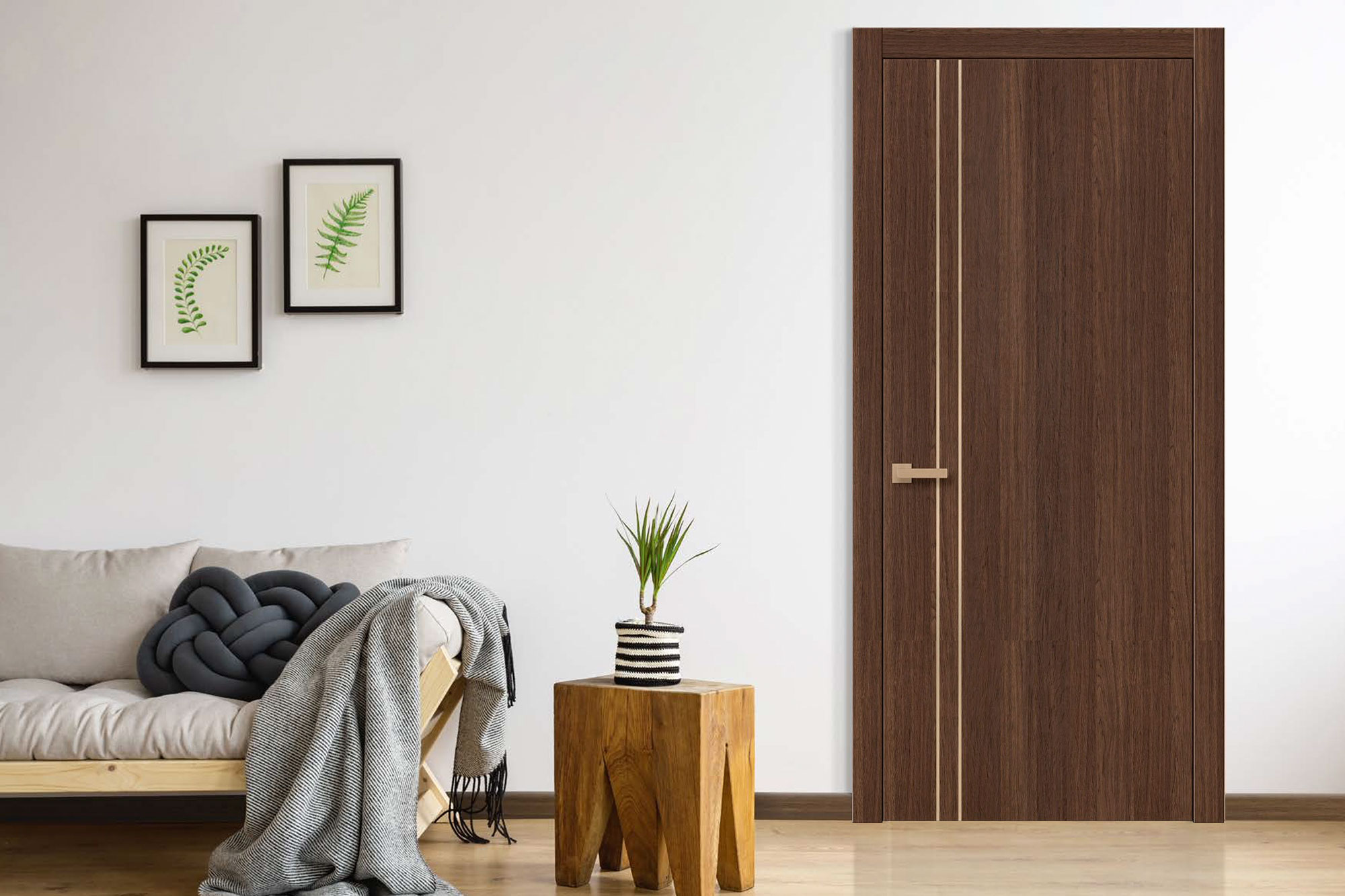
How thick is a 20 minute fire rated door?
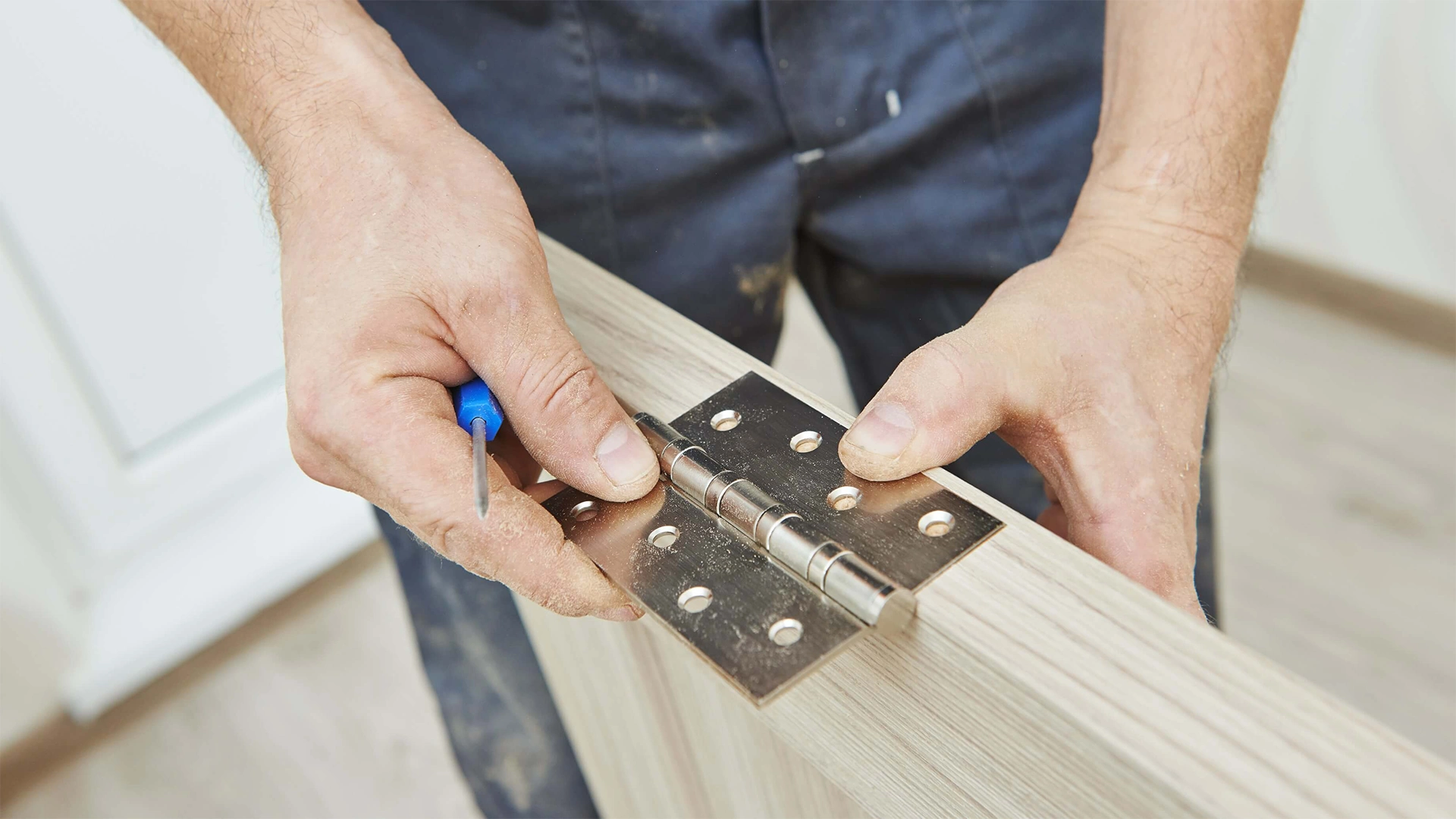
Introduction to Fire Rated Door
Fire rated doors are critical for fire safety in buildings. These doors are designed to prevent the spread of fire and smoke, offering crucial protection to people and property. Whether you’re designing a new building or upgrading an existing one, understanding fire rated doors and their specifications is essential.
What is a Fire Rated Door?
A fire-rated door is specifically engineered to resist fire and heat for a specified period. It’s a key part of any fire protection system, especially in places where safety is paramount, such as commercial buildings, hospitals, and residential complexes. The fire rating indicates how long the door can withstand fire before it begins to break down.
Typically, fire-rated doors are rated for 20, 30, 60, or 90 minutes of fire resistance. The rating reflects how long the door can protect the occupants and limit the spread of fire. These doors are made from materials such as solid wood, steel, or composite materials and feature specialized cores designed to withstand extreme temperatures. A fire rated door is not just about the material; it also involves a carefully designed seal, frame, and installation process to ensure maximum safety.
Why is the Thickness of a Fire Rated Door Important?
The thickness of a fire rated door is directly linked to its ability to prevent fire and smoke from spreading. Thicker doors generally offer better fire protection because they can withstand higher temperatures for longer periods.
For example, a 20-minute fire-rated door is often thinner than a 60-minute-rated door, but it still provides enough protection for specific applications. The thickness is determined by the materials used, including the door’s core. For instance, fire doors with a mineral or honeycomb core tend to be thicker and more durable, ensuring they can withstand the heat of a fire.
The thickness of a fire rated door also affects its strength and durability. A thicker door is more likely to resist wear and tear from everyday use while maintaining its fire resistance properties. This is why it’s important to choose the right thickness for your needs, whether you’re installing in a high-traffic commercial space or a residential property.
Quick Overview of Fire Resistance Ratings
Fire-rated doors come in various resistance ratings, typically ranging from 20 to 90 minutes, depending on the building’s needs and safety requirements. Each rating is designed to serve a different purpose:
- 20-Minute Fire-Rated Door: These are often used in areas with a low risk of fire, such as interior rooms or smaller commercial spaces. While they offer a basic level of protection, they are usually thinner and more affordable compared to higher-rated doors.
- 30-Minute Fire Rated Door: These doors offer a bit more protection and are commonly found in spaces with moderate fire risk, such as utility rooms or hallways.
- 60-Minute Fire-Rated Door: Typically used in areas with a higher fire risk, these doors offer greater protection, especially in stairwells or kitchen entrances.
- 90-Minute Fire-Rated Door: These doors are designed for high-risk areas such as warehouses and industrial buildings, where fire prevention is a top priority.
Summary
In the end, the thickness of the fire rated door, combined with its fire resistance rating, plays a key role in protecting both lives and property. It’s important always to consider the building’s fire safety plan when selecting the right fire door for your needs.

The Thickness of a 20-Minute Fire Rated Door
The thickness of a fire-rated door is essential to its fire resistance. A thicker door generally provides better protection against fire and smoke. For a 20-minute fire-rated door, its thickness is optimized to withstand fire for at least 20 minutes while balancing durability and cost-effectiveness.
Standard Thickness for 20-Minute Fire Rated Doors
For a 20-minute fire-rated door, the standard thickness is usually 1 3/8 inches (35mm) to 1 3/4 inches (45mm). This thickness ensures the door can provide adequate fire resistance without being too heavy or cumbersome. The design is optimized to allow the door to fulfill its fire-resistance role while remaining easy to handle and install in various settings.
Typical Materials Used
The materials used for a 20-minute fire rated door are specifically chosen for their ability to resist heat and limit fire spread. Some common materials include:
- Steel: Steel fire doors are among the most popular choices. Steel is inherently fire-resistant, durable, and offers excellent protection. Even though steel doors may be thinner than some other types, their dense construction ensures they meet the 20-minute fire resistance standard.
- Wood: Fire rated wooden doors are often made with solid wood frames and fire-resistant cores. The wood itself isn’t fire-resistant, but when paired with the right core material, it can achieve a fire rating. These doors are more common in residential applications and are usually reinforced with materials to improve their resistance.
- Composite Materials: Some fire doors are made from composite materials, which combine the strength of steel with the insulation properties of other materials. These doors can be thinner while still offering good fire protection. The combination of materials allows for a lightweight yet fire-resistant door that meets a 20-minute fire rating.
Common Thickness Ranges for Doors and Cores
The overall thickness of a 20-minute fire-rated door depends not only on the door itself but also on the core material. Fire rated doors generally have thicker cores than regular doors to provide additional protection.
- Wooden Core Doors: For doors with a wooden core, the typical thickness ranges from 1 3/8 inches (35mm) to 1 3/4 inches (45mm). The core, which may include a fire-resistant material such as a mineral core or a honeycomb core, adds strength and fire resistance to the door. Honeycomb Core
- Doors: Honeycomb cores are lightweight and offer good fire resistance while keeping the door thickness reasonable. These cores are made from a metal or fire-resistant material that provides strength and stability. They are often found in doors with a thickness of 1 3/8 inches (35mm) or 1 1/2 inches (38mm).
- Mineral Core Doors: These cores are made from a fire-resistant mineral-based material and are typically used in doors that require higher fire resistance. For a 20-minute fire rated door, a mineral core is usually paired with a door thickness of around 1 3/8 inches (35mm) to 1 3/4 inches (45mm).
Sumamry
In summary, the thickness of a 20-minute fire-rated door plays a crucial role in its performance under fire conditions. The standard thickness ranges from 1 3/8 inches (35mm) to 1 3/4 inches (45mm), and the materials used for both the door and its core significantly impact its fire resistance. Whether the door is made of steel, wood, or composite materials, its design is carefully engineered to balance fire protection with practicality.
Factors Affecting Fire Rated Door Thickness
The thickness of a 20-minute fire rated door isn’t just about meeting a basic requirement. It’s influenced by the materials used in the construction, the core design, and additional reinforcements. Each of these factors ensures the door can withstand the heat and pressure during a fire while still providing the necessary strength and durability.
Door Materials
The materials used to make a fire-rated door are among the most important factors that affect its thickness. Different materials provide varying levels of fire resistance and strength.
- Wood: Wood fire-rated doors are a popular choice for residential properties. However, wood alone isn’t fire-resistant. The door’s thickness increases when it is reinforced with fire-resistant cores or additional layers of material. Wooden doors typically have a thicker construction to meet fire safety standards, with thicker frames and internal reinforcements to prevent fire spread.
- Steel: It is naturally fire-resistant, making it an ideal material for fire doors. Steel fire doors can be thinner compared to wooden doors because of their inherent strength. However, they are still designed to meet the fire rating, and the door’s thickness ensures it can resist fire for the required time. A steel fire door with a 20-minute rating might be thinner than other types of fire-rated doors, but it will still offer excellent protection against fire.
- Composite Materials: Composite doors combine multiple materials to balance strength, fire resistance, and weight. These doors typically use a combination of wood, steel, and fire-resistant materials to create a robust, fire-resistant barrier. Composite doors can be thinner than pure steel doors while still offering the same level of fire resistance. The combination of materials allows these doors to be lightweight without sacrificing performance.
Core Materials
The core material inside a fire rated door is a critical component that affects its fire resistance and thickness. Different core materials offer different benefits.
- Mineral Core: Mineral core doors are made with a fire-resistant mineral-based material. These cores are dense and provide excellent fire resistance. Mineral cores are commonly used in doors that need to withstand high heat for longer periods. The thickness of the door is often determined by the mineral core’s density, with thicker cores providing better fire protection.
- Honeycomb Core: Honeycomb cores are made from a honeycomb-shaped metal or fire-resistant material. This core design helps keep the door lightweight while still maintaining its structural integrity during a fire. Honeycomb cores are often used in doors that need to be both strong and lightweight. These cores typically allow for a thinner overall door construction while still meeting fire resistance requirements.
Additional Reinforcements
In addition to the core and door materials, fire doors may include additional reinforcements that affect their thickness and fire resistance.
- Fire-Resistant Seals: To enhance the door’s fire resistance, fire rated doors are often fitted with special fire-resistant seals around the edges. These seals expand when heated, helping block smoke and flames from passing through the door. Although these seals don’t directly affect the door’s thickness, they do enhance the door’s overall performance during a fire.
- Insulation Layers: Some fire doors have added insulation layers to improve thermal performance. These layers help the door maintain its temperature and prevent heat from penetrating. The thickness of the insulation can add to the overall door thickness, especially in doors with higher fire resistance ratings.
- Reinforced Frames: A fire rated door’s frame is just as important as the door itself. Reinforced frames are designed to prevent the door from warping or failing during a fire. These frames may be thicker or made from stronger materials to support the door’s fire rating.
Summary
In summary, the thickness of a 20-minute fire rated door is determined by a combination of materials, core design, and reinforcements. Whether the door is made of wood, steel, or composite materials, the internal core and additional layers play a key role in providing the necessary fire protection. By understanding these factors, you can choose the right fire rated door for your building’s specific needs.

How Does Door Thickness Affect Fire Safety?
The thickness of a fire rated door plays a significant role in its ability to protect people and property from the devastating effects of a fire. Fire-rated doors are designed to resist flames and heat, and their thickness is one of the most important factors in determining how well they perform.
Fire Protection and Door Thickness
Fire protection is all about stopping the spread of fire and smoke. The thicker the fire rated door, the better it can resist fire and heat for a longer period of time. Fire-rated doors are designed with a combination of materials and cores that enable them to withstand high temperatures.
How Thickness Relates to Fire Resistance?
Fire rated doors are tested to determine how long they can withstand fire before failing. This is known as the fire resistance rating, and the door’s thickness plays a crucial role in achieving it. A thicker door typically means it can contain heat and smoke for a longer period, increasing its fire resistance.
The materials used in the door, such as steel, wood, or composite materials, also affect how well the door resists fire. Thicker materials provide greater mass and insulation, slowing the rate at which heat passes through the door. This means the door can stay intact longer, giving people more time to evacuate and helping to prevent the fire from spreading to other parts of the building.
In essence, the thicker the fire door, the more heat it can absorb and the longer it will remain effective during a fire. Therefore, a thicker door offers a higher level of fire protection, especially in areas with greater fire risks.
Why Thicker Doors Provide Better Protection?
Thicker fire doors provide better protection for several reasons. First, the added thickness means the door can withstand higher temperatures and direct exposure to flames without compromising its structural integrity. This extra thickness gives the door more time to keep flames and smoke from spreading to other areas.
Second, thicker fire doors are often made with more robust core materials. For example, a door with a thick mineral core or a dense honeycomb core will be much stronger and more fire-resistant than a thinner door with a less durable core. These thicker cores provide insulation, helping keep heat from penetrating the door and entering protected spaces.
Additionally, thicker fire doors are generally more resistant to damage. In a fire situation, fire doors are subjected to extreme conditions, including high temperatures, flame pressure, and smoke. Thicker doors are less likely to warp, crack, or break under these conditions, ensuring they maintain their fire-resistance properties for the full duration required by building codes.
In short, thicker fire doors offer superior protection because they have more material to absorb heat and more durable internal cores to resist fire. This added protection can be crucial in giving occupants more time to evacuate, containing the fire to a single area, and preventing major property damage.
Summary
By understanding how thickness relates to fire resistance and why thicker doors provide better protection, you can make more informed decisions when selecting fire rated doors for your building. Whether for residential or commercial use, investing in a thicker fire door ensures better fire safety and protection.
Regulatory Standards and Building Codes
Fire and building codes provide guidelines for the specifications and installation of fire doors. These codes are in place to ensure that fire doors perform as needed during a fire, limiting the spread of flames and smoke, and providing protection for occupants and property. The thickness of a fire door is one of the many factors regulated by these codes.
Fire Safety Codes and Requirements for Fire Doors
Fire safety codes set specific requirements for fire rated doors based on their intended use and the building’s fire risk. These codes are designed to ensure that fire doors meet minimum standards of fire resistance and can effectively contain fire and smoke for a predetermined period, such as 20, 30, or 60 minutes. The materials, design, and thickness of the door determines the fire resistance rating.
For example, the National Fire Protection Association (NFPA) and Underwriters Laboratories (UL) set testing standards that fire doors must meet to be considered safe and effective. These standards define the specific thickness required for doors to achieve their fire rating. The codes will also address other factors, such as door frames, seals, and hardware, ensuring the entire system can withstand fire.
Fire door installation also has strict guidelines. For instance, doors must be fitted with proper fire seals, and their frames must be reinforced to ensure they function effectively during a fire. These codes often require fire doors to be self-closing, ensuring they automatically close after being opened and preventing the spread of fire or smoke.
National and Local Standards
In addition to national fire safety codes, local building codes also play an important role in specifying fire-rated doors. National codes, such as those from the NFPA in the U.S., provide broad guidelines for fire door construction and performance. However, local building codes often provide additional or stricter requirements depending on the area’s specific needs and risks.
For example, in high-risk areas such as commercial kitchens, laboratories, or industrial zones, local building codes may require fire-rated doors with greater thickness or longer fire resistance ratings. Local codes can also provide more specific instructions about the installation, maintenance, and inspection of fire doors.
Building codes typically specify the fire resistance required for different areas of a building. For example, in multi-story buildings, stairwells may require 60-minute fire-rated doors, while hallways in low-risk areas might only require 20-minute fire-rated doors. These distinctions are made based on the potential for fire to spread and the level of protection needed for the building’s occupants.
It’s essential to check both national and local regulations when installing fire doors. Ensuring compliance with these standards not only guarantees safety but also ensures the building passes inspection and meets the necessary fire safety certifications.
Summary
In conclusion, regulatory standards and building codes set strict requirements for fire doors, including thickness and materials, to ensure proper fire safety. By adhering to these codes, building owners and contractors can ensure their fire doors provide the required level of protection in the event of a fire. These codes help ensure that fire doors can effectively limit the spread of fire, protect occupants, and minimize property damage.
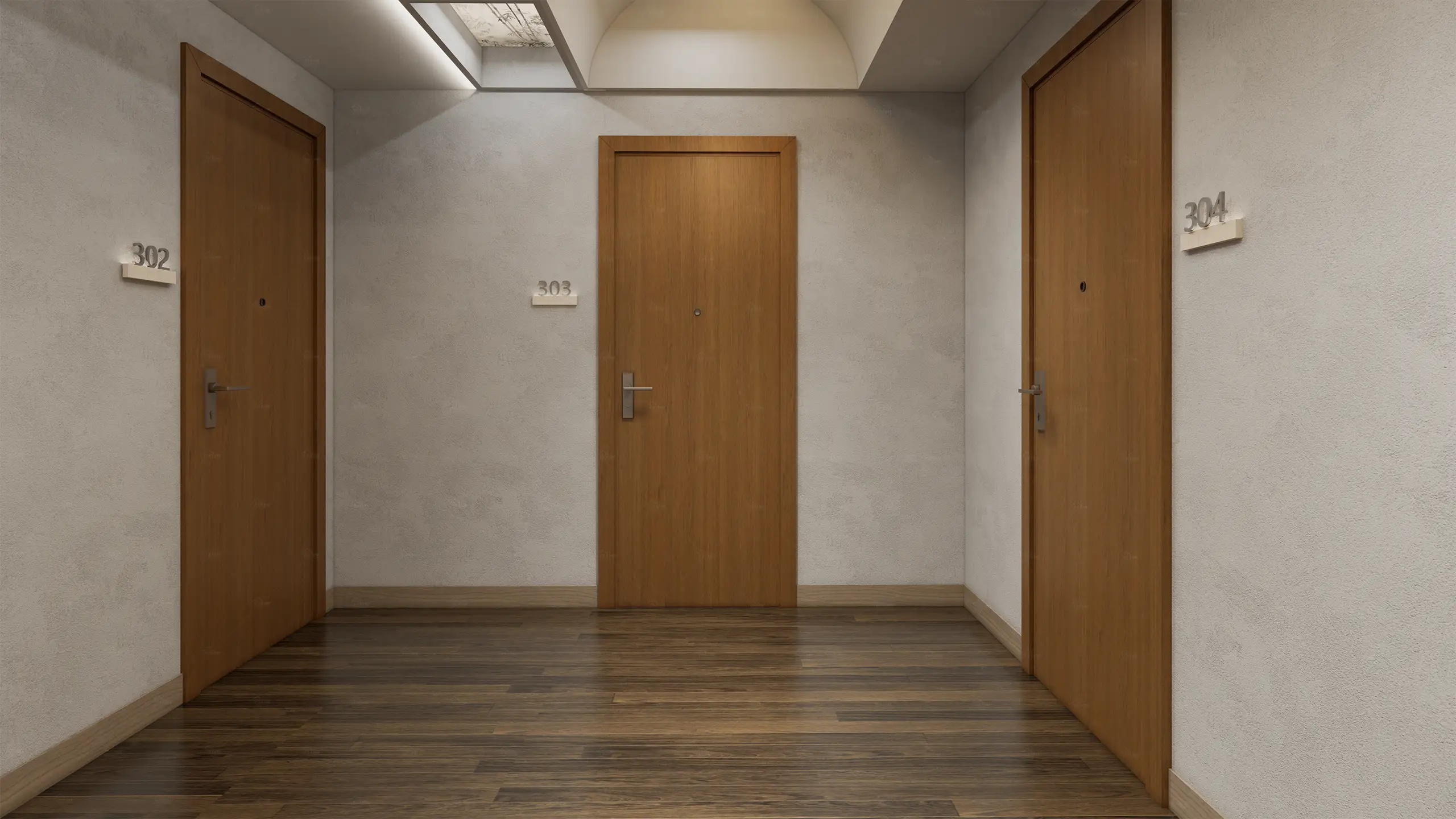
Other Important Features of 20-Minute Fire Rated Doors
While the thickness and materials of a fire-rated door are crucial, other important features contribute to its effectiveness in a fire emergency. Fireproof materials and proper installation are essential elements to ensure that the door performs as intended.
Fireproof Materials Used in Fire Rated Doors
The materials inside a fire rated door are specifically chosen for their ability to withstand high temperatures and slow the spread of fire. Different materials serve different functions, but all are designed to work together to improve fire resistance and protect building occupants.
Overview of Materials that Enhance Fire Resistance
1. Mineral Core:
Mineral cores are among the most commonly used materials in fire-rated doors. These cores are made from non-combustible, heat-resistant minerals that provide strong fire protection. Mineral cores are dense and help block the spread of both heat and flames. A fire door with a mineral core can withstand high temperatures for extended periods, making it an excellent choice for fire protection. They are often used in wood- and steel-fire doors, enhancing their overall performance.
2. Honeycomb Core:
Another popular material used in fire doors is the honeycomb core. This core is made from lightweight, heat-resistant materials arranged in a honeycomb pattern. While honeycomb cores are lighter than mineral cores, they still offer excellent fire resistance and structural integrity. The honeycomb core design helps distribute heat more evenly, reducing the risk of the door warping or failing under fire conditions. These cores are often used in doors where weight is a concern, but fire resistance remains critical.
3. Intumescent Materials:
Some fire doors use intumescent materials, which expand when exposed to heat. These materials are typically applied as seals around the edges of the door or in the core. When the door is exposed to high temperatures, the intumescent material expands, forming a barrier that blocks smoke and flames from passing through. This type of material is an important factor in enhancing the door’s overall fire resistance, especially around the perimeter.
4. Steel:
One of the most fire-resistant materials used in the construction of fire doors. It does not burn and can withstand extreme temperatures without losing structural integrity. Steel fire doors, even in thinner designs, offer strong protection due to the material’s inherent fire resistance. Steel doors are often used in commercial and industrial buildings that require higher levels of fire protection.
5. Fire-Resistant Glass:
In some fire rated doors, fire-resistant glass is used to allow visibility while still providing fire protection. This type of glass is specially treated to withstand heat and fire for a specified period. While not typically used for all fire doors, fire-resistant glass is an option in doors that require a combination of visibility and fire resistance, such as in entryways or areas where monitoring is important.
Summary
In summary, fire-rated doors rely on a combination of fireproof materials, such as mineral and honeycomb cores, intumescent seals, steel, and fire-resistant glass, to enhance their fire resistance. These materials work together to create a door that can withstand intense heat, prevent the spread of fire, and protect the building and its occupants during a fire emergency.
Importance of Proper Installation
The installation of a fire-rated door directly affects its performance under fire conditions. Even the best materials and highest quality fire door will fail to protect if it’s not installed properly. A fire door needs to be installed with precision to effectively block smoke and flames and provide the necessary protection time.
How Installation Affects Fire Performance?
When a fire rated door is properly installed, it can withstand heat and flames for the full duration of its fire rating. Proper installation ensures the door fits securely in its frame, with no gaps around the edges. These gaps, if left unchecked, could allow smoke or flames to pass through, compromising the building’s safety.
The door should also be properly sealed with fire-rated seals that expand in heat. If these seals are not installed correctly or if the door does not fit properly, the fire door may not perform as intended. Inadequate installation could cause the door to warp, sag, or not close completely during a fire, allowing heat and smoke to enter protected areas.
Furthermore, the fire door’s hardware, such as hinges, locks, and closures, must be installed correctly to ensure smooth operation. A door that doesn’t close properly or one with damaged hardware may not provide the necessary fire protection when needed.
In summary, proper installation of a fire door ensures it functions as expected during a fire, preventing the spread of flames and smoke and protecting the building and its occupants.
Common Mistakes to Avoid During Installation
When installing fire-rated doors, several common mistakes can compromise their performance in the event of a fire. Here are some key errors to avoid:
1. Not Ensuring a Tight Seal:
One of the most critical aspects of fire door installation is ensuring that the door closes tightly against its frame. Gaps around the door can allow smoke and fire to escape into other areas. Always check that the door fits snugly and that the seals are properly installed to prevent gaps.
2. Incorrect Use of Fire-Rated Seals:
Fire-rated seals are designed to expand when exposed to heat, blocking the passage of smoke and flames. If the wrong type of seal is used or if it’s not properly installed, the door’s fire resistance will be compromised. Be sure to use seals that meet fire safety standards and install them correctly along the edges of the door.
3. Improper Alignment:
The door must be perfectly aligned in its frame to ensure it closes properly and seals effectively. Misalignment can cause the door to stick or fail to close fully, leaving small openings through which fire and smoke could pass. Make sure the door is properly hung and aligned to avoid this issue.
4. Failing to Check Door Hardware:
The hardware on a fire-rated door, including hinges, locks, and closers, must be fire-rated and installed correctly. If the door hardware is not properly installed or if non-rated components are used, the fire door may fail to function as intended. Always ensure that fire-rated hardware is used and installed correctly.
5. Not Following Manufacturer’s Instructions:
Each fire door comes with manufacturer-provided installation guidelines. These instructions are crucial for ensuring the door’s performance. Failing to follow these instructions can lead to improper installation and, ultimately, a door that does not meet fire safety standards.
Summary
In conclusion, proper installation is key to ensuring a fire-rated door performs as expected during a fire. Avoiding common mistakes such as poor sealing, misalignment, and incorrect hardware installation can help ensure the fire door provides reliable protection. Always follow the manufacturer’s guidelines and consult with fire door specialists when installing these critical safety features.
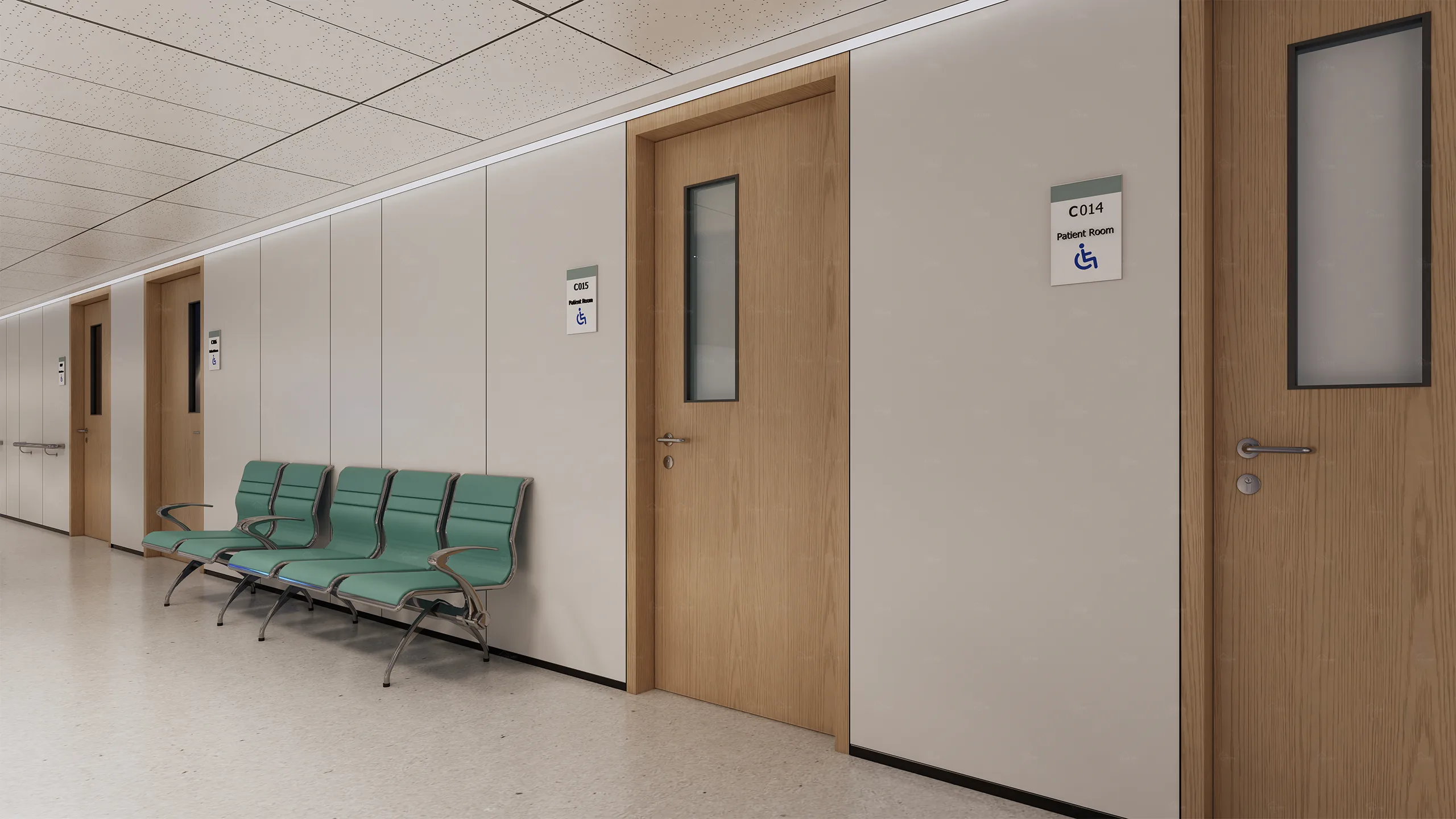
Choosing the Right Fire Rated Door for Your Needs
Choosing the right fire rated door is essential to ensuring the safety of your building and its occupants. A 20-minute fire-rated door offers some protection, but it’s important to assess your specific needs to determine whether it’s the right option.
When Should You Choose a 20-Minute Fire Rated Door?
A 20-minute fire-rated door is suitable for spaces with low to moderate fire risk. Understanding the scenarios where this door is ideal can help you make the best decision for your building’s fire safety plan.
Ideal Scenarios for 20-Minute Rated Doors
A 20-minute fire-rated door is best used in areas with minimal fire risk but where fire protection is still necessary. Some common scenarios include:
- Residential Settings: In homes, a 20-minute fire rated door can be used in interior rooms, utility closets, or garages where the fire risk is lower but still requires a basic level of fire resistance. These doors provide enough protection for these areas while keeping costs manageable.
- Low-Risk Commercial Areas: For offices, storage rooms, or hallways in commercial buildings, 20-minute fire rated doors are often sufficient. They offer a good balance between cost and safety, providing basic fire protection for spaces where the chance of fire spreading is relatively low.
- Interior Spaces: 20-minute fire rated doors work well in interior areas where the door’s main function is to prevent the spread of smoke and fire from one room to another. They can be installed in areas such as server rooms, kitchen entryways, or maintenance rooms where fire hazards are present but are less likely to escalate into major threats.
- Historical or Retrofit Projects: In buildings undergoing retrofit or in historical properties that require compliance with fire safety standards, 20-minute fire-rated doors are often an effective solution. They provide enough protection while fitting into existing design and structural constraints.
Comparing 20-Minute Doors to Higher-Rated Options
While a 20-minute fire rated door may be sufficient for many situations, it’s important to understand how it compares to higher-rated options. Here’s how the 20-minute fire rated door stacks up against doors with higher fire resistance ratings:
- 30-Minute Fire-Rated Doors: If your building has areas with a moderate fire risk, such as corridors or stairwells, a 30-minute fire-rated door may be a better choice. The additional 10 minutes of protection provides more time for evacuation and helps contain fires longer than a 20-minute door. These doors are slightly thicker and offer a higher level of fire protection, especially in areas with more foot traffic. 60-Minute and 90
- Minute Fire-Rated Doors: These doors are designed for high-risk areas, such as commercial kitchens, factories, and stairwells in multi-story buildings. They offer much more robust protection, often required in large or complex buildings where fire risk is more significant. These doors are thicker, made with more durable materials, and offer greater fire resistance, helping contain fire and smoke for longer.
Summary
In summary, a 20-minute fire-rated door is a practical and cost-effective choice for low-risk areas, providing adequate protection where fire hazards are less likely to escalate. However, for spaces with a higher fire risk or where additional evacuation time is crucial, doors with higher fire ratings (30, 60, or 90 minutes) may be necessary. Understanding these differences helps ensure you select the right door for your specific fire safety needs.

Conclusion
Recap of Fire Rated Door Thickness Importance
The thickness of a fire-rated door is more than just a measurement—it directly affects its fire resistance and overall effectiveness in an emergency. Thicker doors generally offer better protection by providing more material to resist heat and block the spread of flames. The core material inside, whether it’s mineral, honeycomb, or another fire-resistant option, also contributes to how thick the door needs to be to meet fire safety standards.
For a 20-minute fire-rated door, the thickness typically ranges from 1 3/8 inches (35mm) to 1 3/4 inches (45mm). While thinner than doors with higher fire ratings, these doors are still highly effective in areas with lower fire risk. Whether you’re installing a fire door for a residential or commercial property, understanding the balance between door thickness, core materials, and fire resistance helps you make the right choice for your safety needs.
Thoughts on Choosing the Best Fire Rated Door for Your Project
When selecting the best fire-rated door for your project, it’s important to assess both the fire risk and the specific requirements of the area. For example, a 20-minute fire rated door is perfect for interior spaces like offices or utility rooms where the fire hazard is lower. These doors provide solid protection at an affordable price.
However, in higher-risk areas like kitchens, stairwells, or industrial spaces, investing in doors with longer fire-resistance ratings—such as 30, 60, or 90 minutes—may be necessary. These doors offer enhanced protection and can help contain fires for longer periods, which is crucial in larger or more complex buildings.
In addition to fire resistance, consider factors like door material, core composition, and installation quality. The right materials and proper installation ensure that the fire rated door performs as it should in an emergency. Always check local building codes and regulations to ensure your choice complies with the required fire safety standards.
The best fire rated door for your project will strike a balance between cost, fire protection, and building safety requirements. By carefully considering the level of fire resistance you need, the door’s thickness and materials, and proper installation, you’ll be taking a crucial step in protecting your building and its occupants from fire hazards.
Relate FAQ
What is a 20-minute fire rated door?
A 20-minute fire rated door is a type of door designed to withstand fire for at least 20 minutes before failing. This level of protection is commonly used in residential and commercial buildings to prevent the spread of fire in emergencies. These doors are typically installed in areas where building codes require fire resistance, but not for prolonged periods.
How thick should a 20-minute fire rated door be?
The thickness of a 20-minute fire rated door generally ranges from 1 3/4 inches (44mm) to 2 inches (51mm). However, the exact thickness can vary depending on the material and design. For instance, doors made from solid-core materials like wood or steel tend to have these thicknesses, with additional layers such as fire-resistant materials for enhanced protection.
What materials are used for 20-minute fire rated doors?
20-minute fire-rated doors are often constructed from materials such as solid-core wood, steel, or composite materials. Steel doors are typically thicker and more fire-resistant, while wooden doors may use fire-resistant cores to achieve the required fire rating. The core material is essential in determining the overall thickness and fire resistance.
Why is thickness important for fire rated doors?
Thickness is a crucial factor in determining a door’s fire resistance. Thicker doors, particularly those with fire-resistant cores or multiple layers, are better at preventing the spread of flames and smoke. The thicker the door, the longer it can withstand extreme temperatures before compromising its structural integrity.
Can I use a 20-minute fire rated door in all areas?
No, a 20-minute fire rated door is suitable for specific areas, such as utility rooms, corridors, or areas that don’t require longer protection. For areas requiring greater fire resistance, such as stairwells or access to exit routes, a higher-rated door (e.g., 60- or 90-minute) would be required. It’s always essential to consult local building codes for proper installation.
Is a 20-minute fire rated door enough for safety?
While a 20-minute fire-rated door provides a basic level of protection, it may not be sufficient for high-risk areas or for situations where people need more time to evacuate. A longer-rated door might be necessary in places like kitchens, boiler rooms, or stairwells. Always evaluate the fire safety needs of each area before installation.
How do I maintain a 20-minute fire rated door?
Maintaining a 20-minute fire rated door involves ensuring the door and its components, including hinges and seals, remain in good condition. Periodically check for damage, ensure the door closes properly, and replace any worn seals. Any modifications or damage can compromise the door’s fire rating, so always consult professionals for repairs.
Are there different fire ratings for doors?
Yes, fire rated doors come in various ratings, typically ranging from 20 minutes to 3 hours or more. The fire rating depends on the materials used, door thickness, and construction methods. In areas where higher fire protection is essential, doors rated for 60, 90, or even 3 hours may be necessary.