What are the installation requirements for fire doors?
Understanding the Importance of Fire Doors in Building Safety
Fire doors play a crucial role in protecting people and property during a fire. They are designed to prevent the spread of fire and smoke, providing a safe escape route and buying time for firefighting efforts.
What is a Fire Door?
A fire door is a specially designed door that helps prevent the spread of fire and smoke between different areas of a building. It is made with materials that can withstand high temperatures, giving people more time to evacuate during an emergency. Fire doors are an essential part of any building’s fire safety system, as they protect both property and lives.
These doors are usually made from a combination of materials, such as steel, wood, or a composite, all of which can withstand intense heat. In addition to the door itself, fire doors are equipped with special seals that help block smoke from escaping, and they often come with fire-resistant hardware, such as hinges and locks. When properly maintained, fire doors can prevent the spread of a fire for up to 90 minutes, giving people a chance to evacuate safely.
Key Features of a Fire Door
Fire doors feature several key features that make them effective at stopping the spread of fire. Here are the most important:
1. Fire-Resistant Materials:
Fire doors are built with materials that resist burning and high temperatures. Fire-resistant perlite, fire-resistant panels, and fire-resistant framing are common materials used for fire door construction.
2. Self-Closing Mechanism:
Fire doors often include self-closing mechanisms. These ensure that the door remains closed after someone passes through, preventing smoke and flames from entering other parts of the building.
3. Smoke Seals:
Fire doors come with smoke seals, which expand when exposed to heat. This ensures that smoke cannot pass through the door’s edges, further protecting the building’s occupants.
4. Fire-Rated Glass:
In some fire doors, the window or glass is made of fire-rated glass, which can withstand high temperatures. This allows light to pass through without compromising the door’s fire-resistance.
5. Durable Hardware:
The hinges, locks, and handles on fire doors are made of fire-resistant materials to maintain the door’s integrity during a fire. Even the smallest hardware components play a role in the door’s performance during an emergency.
Why Proper Installation of Fire Doors is Critical?
Proper installation of fire doors is essential to ensure they perform as expected during an emergency. Incorrect installation can compromise the door’s effectiveness, leaving building occupants vulnerable to fire and smoke. Here’s why installation matters:
1. Ensuring Full Seal:
A fire door must create a tight seal when closed. Gaps, even small ones, can allow smoke and heat to pass through. Proper installation ensures that the door is hung correctly and closes tightly.
2. Maintaining Structural Integrity:
Fire doors must be properly aligned with the frame to withstand the heat and pressure of a fire. Incorrect installation can weaken the door’s structure, increasing the likelihood of failure during a fire.
3. Compliance with Safety Regulations:
Fire doors are subject to strict safety regulations. These include requirements for installation, maintenance, and testing. Proper installation ensures that the door meets all fire safety codes and regulations, keeping the building compliant and safe.
4. Ensuring Long-Term Performance:
Regular maintenance and proper installation help extend a fire door’s lifespan. If a fire door is installed incorrectly, it may wear out more quickly or fail to operate properly when needed most. Proper installation ensures that the door remains functional over time and can protect people in the event of a fire.
Summary
In conclusion, fire doors are a crucial element of building safety. Their design, materials, and proper installation all contribute to ensuring they effectively protect people from the dangers of fire and smoke. Fire doors should never be ignored or treated as ordinary doors; they must be installed and maintained with care to offer the maximum protection during an emergency.

Fire Door Installation Requirements
A fire door is made up of several key components that work together to provide its fire-resistance capabilities. Each part of the fire door plays an essential role in preventing the spread of fire and smoke.
General Fire Door Installation Guidelines
Fire door installation is not a simple task. It requires knowledge of building codes, the proper materials, and an understanding of the door’s function. Here are some key guidelines to follow when installing a fire door:
- Accurate Measurements: When installing a fire door, the frame and door must be correctly sized. A poorly sized door or frame can create gaps that compromise the fire door’s ability to contain smoke and fire. Always measure the door frame and door carefully to ensure a perfect fit.
- Proper Seals: Fire doors must be equipped with seals around the edges. These seals expand when heated, preventing smoke and flames from passing through. Installing the correct sealant is essential to maintaining the door’s fire-resistance rating.
- Hardware Installation: Hinges, locks, and latches must be fire-rated to match the door’s rating. The door should also include a self-closing mechanism to ensure it closes automatically after opening. These small details play a big role in maintaining the fire door’s effectiveness.
- Testing the Door’s Function: After installation, always test the door to ensure it opens and closes smoothly. Make sure the self-closing mechanism works and that the door does not drag or stick on the frame.
Understanding Fire Door Ratings and Standards
One of the first things to understand about fire doors is the fire rating. The fire rating indicates how long the door can withstand fire and prevent it from spreading. Different fire doors have different ratings depending on their design and materials. The most common ratings are FD30, FD60, and FD90, which refer to how many minutes the door can resist fire:
- FD30: This is a 30-minute fire door, often used in residential buildings or light commercial properties. It can withstand fire for 30 minutes, providing enough time for occupants to evacuate safely.
- FD60: A 60-minute fire door, commonly used in office buildings and other commercial spaces. This type of door provides a higher level of protection, ensuring that people have ample time to evacuate or for the fire service to arrive.
- FD90: This fire door offers 90 minutes of protection, typically used in high-rise buildings or industrial areas where a longer fire-resistance period is needed.
Compliance with National and Local Fire Safety Regulations
Fire doors must comply with national and local fire safety regulations to ensure they are effective in protecting lives and property. Regulations vary by region, but the general principles are the same. Here’s an overview of the fire safety codes and standards in the US, EU, UK, and Australia:
- United States: The National Fire Protection Association (NFPA) sets the standards for fire door installation. The NFPA 80 code specifically covers the installation and maintenance of fire doors. According to NFPA 80, qualified professionals must install fire doors, and they must be regularly inspected and maintained.
- European Union: The EU follows the EN 1634-1 standard for fire resistance and smoke control. This regulation ensures that fire doors meet specific fire-resistance tests before being approved for use. Additionally, the Construction Products Regulation (CPR) requires fire doors to be CE-marked, indicating compliance with European safety standards.
- United Kingdom: In the UK, fire door standards are governed by the BS 476 (British Standard) and BS EN 1634 standards. These standards outline the testing procedures for fire doors and their installation requirements. The Regulatory Reform (Fire Safety) Order 2005 also states that fire doors must be installed in accordance with fire safety regulations in non-domestic premises.
- Australia: AS 1905.1 governs the installation of fire doors. This standard ensures that fire doors are installed to protect people and property, and that they are regularly maintained to remain effective. AS 1905.1 also sets the criteria for the materials and ratings of fire doors.
Fire Door Frame and Opening Specifications
When installing a fire door, the frame and opening specifications are just as important as the door itself. A poorly installed frame can undermine the fire door’s effectiveness, allowing smoke and flames to bypass its protective barrier. Here’s what you need to know about fire door frames and openings.
Types of Frames Used for Fire Doors
Fire doors are typically installed in frames designed to withstand fire and heat. The type of frame used plays a critical role in ensuring the fire door works properly during an emergency. Here are the most common types of frames used for fire door installation:
Timber Frames:
Traditional timber fire door frames are commonly used in residential and commercial buildings. These frames are made from specially treated wood that can resist fire for a certain period, typically matching the fire door’s rating (e.g., FD30, FD60, FD90). Timber frames must be fitted with fire-resistant seals and intumescent materials that expand when exposed to heat, closing any gaps around the door.
Steel Frames:
Steel fire door frames are typically used in commercial and industrial settings where enhanced fire protection is required. It is stronger and more durable than timber, providing higher fire resistance. Steel frames are also ideal for high-traffic areas or for doors that may experience heavy wear and tear.
Aluminum Frames:
While aluminum frames are less common than timber and steel, they are sometimes used in settings that require a lightweight, sleek frame. However, aluminum frames may need additional treatments to meet the necessary fire ratings.
Composite Frames:
Composite fire door frames combine materials such as steel and timber to offer a balance of strength, durability, and fire resistance. These frames are often used in both commercial and residential buildings, offering flexibility in design and fire protection.
Summary
Each of these frame types must meet local fire safety standards and be compatible with the specific fire door being installed. Ensure the frame is appropriately fire-rated to match the fire door’s rating for optimal protection.

Dimensions of the Door Opening and Clearance Requirements
The door-opening dimensions and the clearance around the fire door are critical to ensuring the door functions effectively in the event of a fire. Correct installation can prevent gaps that allow smoke or flames to escape, thereby compromising the building’s safety. Here’s what you need to consider for fire door openings:
Standard Door Opening Dimensions:
The typical size for a standard fire door opening is 32 inches wide by 80 inches tall (813mm x 2032mm), though this can vary depending on the building’s needs. The opening size must accommodate the fire door itself, as well as any necessary hardware, such as door closers and hinges. For larger buildings or specific areas, the door opening may need to be wider or taller.
Clearance Around the Door:
When installing a fire door, it’s essential to leave proper clearance around the door to ensure it swings freely and closes properly. The clearance requirements generally include:
- Side Clearance: A minimum of 2mm to 4mm clearance on each side of the door is necessary to allow for smooth operation and proper sealing
- Top Clearance: A gap of 3mm to 5mm is generally required at the top of the door. This clearance allows the door to close properly without obstruction, especially when equipped with a self-closing mechanism.
- Bottom Clearance: The bottom clearance should be at least 10mm to allow the fire door to swing freely and also accommodate the fire-resistant seal that may be installed along the bottom of the door.
Threshold Requirements:
Some fire doors require a threshold, especially when installed in commercial or industrial settings. The threshold prevents smoke and flames from seeping under the door. It should be installed with proper sealing to match the fire-resistance rating.
Fire Door Gaps:
The gaps around the fire door must be sealed with fire-rated seals to prevent the spread of fire and smoke. Even small gaps around the door can undermine its effectiveness. It’s important to ensure that the seals are properly installed to close any gaps, especially in high-risk areas.
Summary
By ensuring that the fire door frame and door opening are properly sized and fitted, you help guarantee that the fire door will perform as expected in an emergency. Always follow the manufacturer’s specifications and local regulations to ensure a secure fit and maximum protection.
Installing Fire Doors in Different Building Types
Different buildings need different fire door solutions. A small home does not face the same risks as a large office or hospital. So, fire door installation requirements change based on building size, use, and traffic.
Residential vs Commercial Fire Door Installation Needs
In residential buildings, fire doors are often installed in key areas. These include kitchen entrances, garage access points, and stairwells. The goal is simple: contain the fire and protect escape paths. A residential fire door usually has a lower fire rating, such as 30 minutes. Also, the design often blends with home interiors.
However, commercial fire door installation is more demanding. Offices, malls, and hotels have more people and a higher risk. So, fire doors in these spaces must meet stricter fire safety codes. They often require higher fire ratings, such as 60 or 90 minutes. In addition, they need robust self-closing devices and durable hardware due to frequent use.
Another key difference is inspection. Commercial fire doors must be checked regularly. Many regions require annual fire door inspections to ensure compliance. In contrast, residential fire door checks are less strict but still important.
Fire Doors for High-Rise Buildings and Larger Properties
High-rise buildings and large properties bring a whole new level of risk. Fire can spread fast through vertical shafts, corridors, and stairwells. So, fire door installation in these buildings must be more precise and more robust.
First, high-rise fire doors must protect escape routes. Stairwell fire doors are critical. They must close fully and seal tightly to block smoke. Even a small failure can make evacuation dangerous. So, installers must ensure perfect alignment and proper door closer function.
Second, large buildings often use compartmentation. This means dividing the building into sections using fire rated doors and walls. A fire door in this setup acts like a barrier. It slows the fire and limits damage. Because of this, each fire door must meet specific fire rating requirements based on its location.
Finally, high-traffic areas need heavy-duty fire doors. These doors must handle constant opening and closing without losing performance. So, installers often use reinforced frames, strong hinges, and reliable closing systems.
Fire Door Hinges and Hardware
The hinges and hardware of a fire door are crucial for its performance. If the door’s hardware is not properly installed or rated for fire resistance, the door may not function as intended during an emergency.
Choosing the Right Hinges and Closures
When it comes to fire doors, the hinges and closures must be fire-rated to match the door’s rating. The fire door’s hinges play a key role in allowing it to open and close smoothly while withstanding heat during a fire. Here’s what to keep in mind:
Fire-Rated Hinges:
Fire-rated hinges are designed to withstand the heat and pressure of a fire. These hinges are typically made from stainless steel or another fire-resistant material, and they must be specifically rated to match the fire door’s rating (e.g., FD30, FD60, FD90). Choosing fire-rated hinges ensures the door remains operational during a fire and continues to resist damage.
The Number of Hinges:
The number of hinges required depends on the size and weight of the fire door. Larger and heavier doors may require more than two hinges to ensure smooth operation. It’s crucial to install the right number of hinges to prevent sagging or misalignment, which could interfere with the door’s function.
Hinge Placement:
Hinges should be installed according to the manufacturer’s guidelines, typically 7 inches from the top and 11 inches from the bottom of the door. Correct placement ensures the door swings freely and remains properly aligned.
Self-Closing Devices:
A self-closing device is often installed on fire doors to ensure they close automatically after being opened. This device is crucial for maintaining the door’s integrity during a fire. The self-closing mechanism should be tested to ensure it operates smoothly and shuts the door tightly.
Choosing Closures:
The fire door closure helps the door close gently but securely. Make sure to select a closure that can withstand the heat and pressure of a fire. Fire door closers are available in different styles, including surface-mounted, concealed, and overhead types. Choose the right type depending on the door’s design and the building’s needs.
Installing Panic Bars and Latches on Fire Doors
Fire doors in commercial and public buildings often require additional hardware, such as panic bars and latches, to ensure safe and efficient exit routes during emergencies. Here’s how to install them correctly:
Panic Bars:
Panic bars are essential for fire doors that are used as emergency exits. These devices allow the door to be opened quickly from the inside by simply pushing the bar. Panic bars must be fire-rated and installed in accordance with local regulations, such as NFPA 101 in the US or BS EN 179 in Europe, which govern the design and operation of exit doors. Ensure the panic bar is easy to operate and opens the door smoothly when pushed.
Latches:
The latch on a fire door must be secure enough to hold the door closed during a fire but still allow for quick exit. Fire doors typically use mortise locks or surface-mounted latches. Make sure the latch meets the fire door’s rating and is equipped with a quick-release mechanism for easy emergency opening. It’s crucial that the latch works properly and that it doesn’t obstruct the door’s closure.
Testing the Hardware:
After installing the panic bars and latches, always test them to ensure they function properly. The panic bar should open the door immediately without resistance, and the latch should securely hold the door in place without leaving any gaps. Both should work together to maintain the integrity of the fire door system.
Compliance and Certification:
All hardware used on fire doors, including hinges, closures, panic bars, and latches, must meet specific safety standards and be certified fire-resistant. Always verify that the hardware is certified by a recognized authority, such as Underwriters Laboratories (UL) or the British Standards Institute (BSI), to ensure compliance with fire safety regulations.
Summary
Proper installation of fire door hardware is just as important as installing the door itself. It ensures the door functions correctly, providing maximum safety and protection in the event of a fire. Always choose high-quality, fire-rated components and follow manufacturer guidelines to ensure a safe and reliable fire door installation.
Common Mistakes to Avoid During Fire Door Installation
Improper Sealant and Gaps Around the Door
One of the most common mistakes during fire door installation is failing to seal the door and frame properly. Even tiny gaps around the edges of the door can allow smoke, heat, and fire to spread. Fire-rated seals are specifically designed to prevent this, but improper application or the use of the wrong sealant can severely reduce the door’s effectiveness.
The Importance of Fire-Rated Sealants
Fire-rated sealants are an essential part of the fire door system. These seals are made from materials that expand when heated, closing any gaps that could allow smoke or flames to pass through. Here’s why using the right sealant is critical:
Preventing Smoke Spread:
Smoke can travel through the smallest of gaps, which is why fire-rated seals are crucial. These seals expand at high temperatures, effectively sealing the door and preventing smoke from leaking into other areas of the building. This helps keep escape routes clear and breathable.
Maintaining Fire Resistance:
Fire doors are given a specific fire-resistance rating, which reflects how long the door can withstand fire. If the sealant is applied improperly or the wrong type is used, the fire door may fail to meet its rated fire-resistance time. This can significantly increase the risk to occupants during a fire.
Ensuring Integrity of the Door System:
Fire doors are designed to function as a complete system, not just a door. The sealant plays a key role in ensuring the door remains airtight and effective when needed most. Without the right sealant, the door’s integrity is compromised, potentially leading to dangerous consequences during a fire.
Choosing the Right Sealant:
There are different types of fire-rated seals, including intumescent seals, which expand when exposed to heat, and smoke seals, which prevent the spread of smoke. Depending on the fire door’s rating and the building’s specific needs, you should choose the appropriate sealant. Always ensure the sealant is certified for fire safety, such as BS EN 13501 or UL 10C.
Ensuring Proper Gap Sizes for Smoke Resistance
Proper gap sizes around the fire door are just as important as the sealant. If the gaps between the door and frame are too wide, the door will not provide the necessary protection against fire and smoke. Here’s how to ensure the right gaps are maintained:
Side Gaps:
A typical fire door installation requires a gap of 2mm to 4mm on each side. This allows the door to open and close freely without causing friction while still maintaining a tight seal when closed. If the gap is too wide, smoke and flames could pass through, compromising the door’s effectiveness. If the gap is too small, the door might become difficult to open or close, which can be dangerous in an emergency.
Top Gap:
The gap at the top of the door should typically be between 3mm and 5mm. This is slightly larger than the side gaps to allow for the door’s natural movement. However, if the top gap is too large, smoke and heat may escape. A properly sealed top gap helps maintain the door’s fire and smoke resistance.
Bottom Gap:
The bottom gap of the fire door is typically larger than the side and top gaps, with a minimum of 10mm. This allows the door to swing freely and prevents it from rubbing against the floor, which could prevent it from closing properly. In some cases, a fire-rated threshold may be used at the bottom to seal the gap further and prevent smoke or fire from seeping through.
Adjusting Gap Sizes:
It’s important to check the gap sizes after the door is installed to make sure they meet the recommended requirements. During installation, gaps should be checked with a feeler gauge or other measuring tool. If necessary, the frame may need to be adjusted to ensure proper alignment.
Seal Quality and Gap Sealing:
Even if the gaps are the right size, seal quality matters as much. High-quality, fire-rated seals should be used to fill the gaps, as they expand when exposed to heat, further ensuring that the door remains airtight during a fire.
Summary
In conclusion, ensuring proper sealant and gap sizes around a fire door is critical to its proper function. A well-sealed fire door effectively prevents the spread of smoke, heat, and flames, protecting both the building and its occupants. Always use fire-rated sealants and carefully measure and adjust gap sizes to meet the required standards.
Using the Wrong Materials for Fire Door Installation
One of the most common mistakes in fire door installation is choosing materials that don’t meet the required fire-resistance standards. Fire doors are not just ordinary doors—they need to be built with specific materials that can withstand high temperatures and contain smoke.
Fire-Rated Glass and Wood Door Considerations
When installing a fire door with fire-rated glass or wood, several considerations ensure the materials are up to the task. Here’s what to keep in mind:
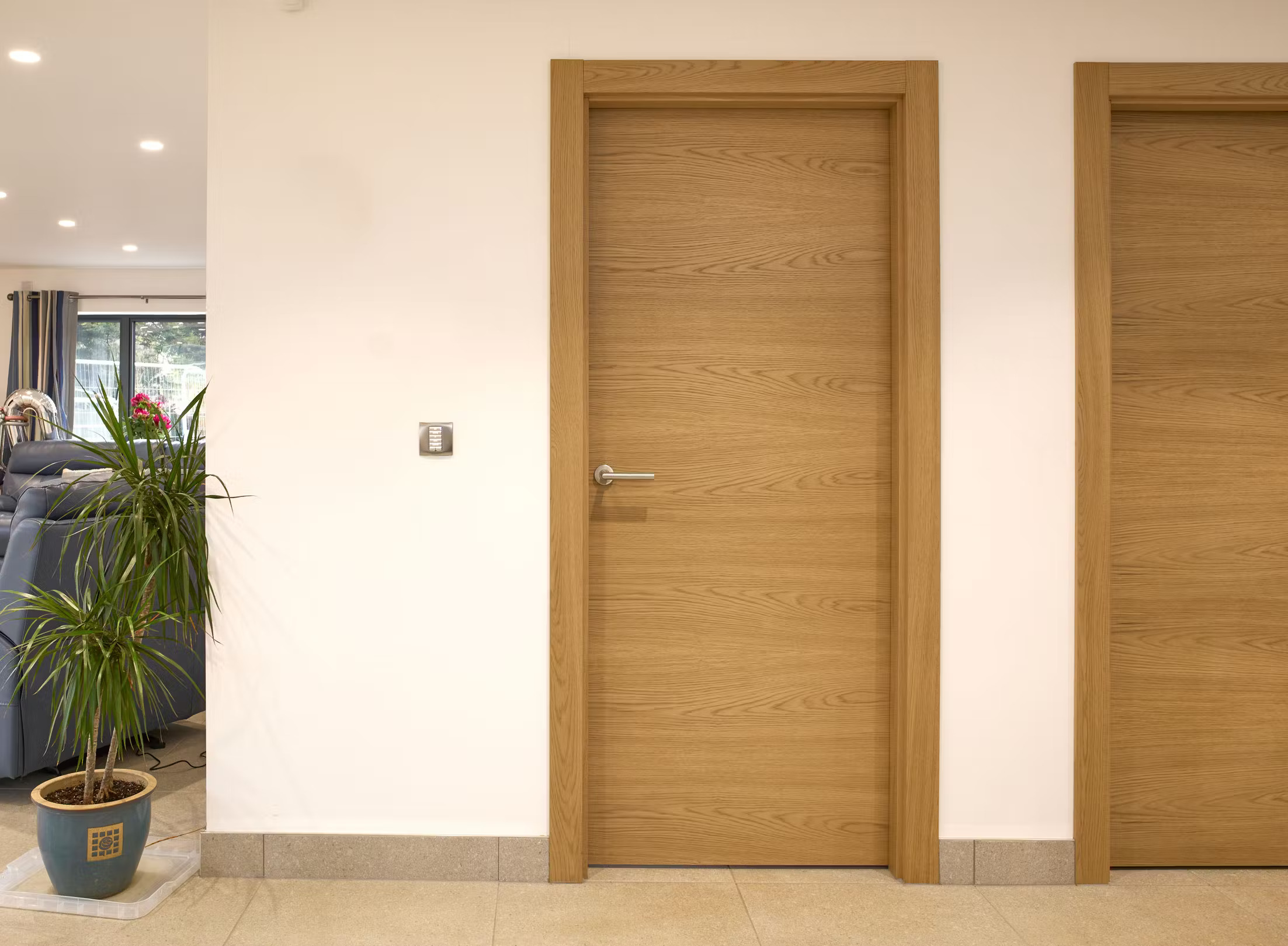
Wood Fire Doors:
Wooden fire doors are a common choice for residential buildings and offices. While wood is a natural material, it must be properly treated and constructed to withstand fire. Fire-rated wood doors are typically constructed with a solid core and treated with fire-resistant chemicals. These doors come in different fire-resistance ratings, such as FD30 or FD60, depending on the required level of protection. It’s essential to ensure that the wood used meets the fire safety standards set by your local regulations, such as BS 476 or NFPA 80.
Fire-Rated Glass:
Using fire-rated glass in fire doors is an excellent way to enhance visibility and maintain a space’s aesthetics while still providing safety. Fire-rated glass is specially treated to resist heat and flames for a specified period. When choosing glass, use certified fire-rated glazing specifically designed for fire doors. The thickness and installation of the glass are also critical to maintaining the door’s fire resistance.
Edge and Framing Considerations:
The glass edges and framing must also be fire-rated. Fire-rated glazing must be sealed properly to prevent gaps that could allow smoke and flames to pass through. Ensure that the frame around the glass and the glazing itself are installed by professionals who understand fire safety codes.
Choosing Glass for Different Applications:
Not all fire-rated glass is the same. Some types of fire-rated glass provide full fire-resistance, while others are designed only for heat resistance. Depending on the location and intended use, choose the right glass for the door. For example, in areas that require high visibility, clear fire-rated glass may be preferred, while in high-traffic or high-risk areas, more robust fire-resistant glass may be needed.
5. Compliance with Local Codes:
Not all fire-rated glass is the same. Some types of fire-rated glass provide full fire-resistance, while others are designed only for heat resistance. Depending on the location and intended use, choose the right glass for the door. For example, in areas that require high visibility, clear fire-rated glass may be preferred, while in high-traffic or high-risk areas, more robust fire-resistant glass may be needed.
Choosing Fire-Resistant Materials for the Surrounding Area
In addition to the fire door itself, the materials in the surrounding area—such as the frame, seals, and flooring—are equally important. Here’s what to consider when selecting materials for the surrounding areas:
Fire-Rated Frames:
The frame around the fire door must be made from fire-resistant materials that match the fire rating of the door. A wooden door frame might not be suitable for a steel fire door, and vice versa. Frames should be made from materials such as steel or composite materials designed to withstand heat. Fire-rated frames should also be installed with the correct sealant to prevent gaps and to ensure smoke resistance.
Fire-Rated Seals:
As mentioned earlier, the seals around the fire door are essential for smoke and fire resistance. Intumescent seals expand when exposed to heat, closing any gaps around the door. These seals are typically made of materials such as rubber or silicone, but they must be fire-rated to prevent failure during a fire. Choosing the right fire-rated sealant is crucial for maintaining the fire door’s integrity.
Fire-Resistant Flooring:
The flooring around the fire door should also be fire-resistant. Materials like ceramic tile, concrete, or fire-resistant carpets should be considered to prevent the spread of fire from the door’s base. If the floor is made of flammable material, it could lead to a dangerous fire situation, so always choose flooring that complements the fire-rated door’s protection.
Surrounding Walls and Partitions:
The walls and partitions around the fire door should also be constructed from fire-resistant materials, such as fire-rated drywall, concrete, or brick. This ensures the fire door is fully integrated into the building’s fire protection system.
Maintenance and Inspection of Fire Doors
Routine Fire Door Inspections and Testing
Routine inspections and testing are necessary to ensure that the fire door remains fully functional and compliant with safety regulations.
Why Regular Inspections Are Required?
Regular inspections are essential because fire doors are exposed to various environmental factors that can affect their performance. Here’s why consistent checks are so important:
Wear and Tear:
Over time, fire doors experience normal wear and tear. Hinges may become loose, seals may deteriorate, and door closers might fail. Regular checks help spot these issues early before they become serious problems during a fire.
Ensuring Fire Resistance:
Fire-rated doors are designed to withstand fire for a specific period, but that protection depends on their condition. An improperly sealed or poorly maintained door might not perform as intended in an emergency. Inspections help ensure that all components of the fire door system, including the door, frame, hinges, seals, and closures, are intact and functioning as intended.
Compliance with Regulations:
Building and fire safety codes require that fire doors be inspected regularly to ensure they comply with local fire safety regulations. Regular inspections help ensure compliance with national standards such as NFPA 80 in the US, BS 476 in the UK, or AS 1905.1 in Australia.

Maintaining Smoke and Fire Barrier Integrity:
Fire doors are designed to contain smoke and flames within a designated area. If the door is not properly maintained, small gaps may form around it, allowing smoke and fire to escape. Regular checks ensure that the door is properly sealed and remains effective in preventing the spread of fire and smoke.
Safety for Occupants:
The primary purpose of fire doors is to protect lives. If a fire door fails to close properly or is blocked by debris, it might prevent people from escaping during an emergency. Regular inspections ensure the door functions smoothly, providing a safe and reliable barrier in the event of a fire.
How to Conduct a Simple Fire Door Test?
Conducting a simple fire door test is a crucial step in verifying that the door is functioning properly. You don’t need to be an expert to perform this basic test; here’s how to do it:
Check for Smooth Operation:
Ensure the fire door opens and closes easily. The door should swing freely without resistance. If it drags across the floor or rubs against the frame, there may be an alignment issue that should be corrected.
Test the Self-Closing Mechanism:
The self-closing mechanism is essential for ensuring the fire door shuts automatically after being opened. To test it, open the door fully and release it. The door should close by itself without assistance and close completely, with no gaps between the door and the frame. If the door doesn’t close fully or takes too long to shut, the closer may need adjustment or replacement.
Inspect the Seals:
The seals around the fire door are crucial for preventing the spread of smoke and fire. Check the seals for any signs of wear or damage. If the seals are cracked, torn, or missing, they should be replaced immediately. You can also check for gaps around the door when it’s closed. If you can see light coming through the door’s edges, it might indicate that the sealant isn’t working properly.
Check for Obstructions:
Ensure that nothing is blocking the door’s movement. Fire doors should be free of obstructions that could prevent them from closing properly. Common issues include furniture or equipment placed too close to the door, preventing it from shutting tightly.
Test the Latch and Locking Mechanism:
The latch or lock on a fire door is designed to keep the door securely closed during a fire. Check that the latch operates smoothly and locks securely. The locking mechanism should engage easily and remain locked when the door is closed.
Verify the Fire Door’s Rating:
Finally, check the door’s fire rating, which should be clearly marked on the door or its frame. This rating indicates how long the door can withstand fire. Make sure the door has the appropriate fire rating for its location and use. Fire-rated doors should not be altered or modified in any way that could affect their fire resistance.
Summary
By performing these simple checks, you can ensure that your fire door is ready to perform when it’s needed most. If any issues are found during the inspection, they should be addressed immediately by a professional to maintain the door’s fire safety performance. Regular testing and maintenance can make all the difference in keeping your building and its occupants safe.
How to Maintain Fire Doors for Long-Term Performance?
Fire doors require ongoing maintenance to remain effective. Neglecting regular maintenance can lead to misalignment, broken seals, or malfunctioning hardware, reducing the door’s effectiveness during a fire.
Regular Inspections:
Schedule routine inspections to ensure the door and its components remain in good condition. Inspections should be done at least once every six months, or more frequently if the door is in a high-traffic area.
Lubrication:
Some fire doors, especially those with mechanical parts such as hinges or closers, may require occasional lubrication. Use the appropriate lubricant for door hinges to prevent squeaking or sticking and ensure smooth operation.
Repairs:
If you find any damaged or worn parts during your inspection, repair or replace them immediately. Small issues, such as a loose hinge or a damaged seal, can quickly escalate into larger problems that affect the door’s performance.
Cleanliness:
Keep the fire door and its surroundings clean and free from debris. This helps ensure the door operates smoothly and closes without obstruction. Avoid storing items near the door that might interfere with its movement.

Checking Hinges, Latches, and Fire-Rated Sealants
The hinges, latches, and fire-rated sealants are critical components of any fire door. They help ensure the door functions properly and provides fire and smoke protection when needed. Here’s how to check and maintain these key elements:
Hinges
- Smooth Operation: The hinges on a fire door must be regularly checked to ensure they allow the door to open and close smoothly. If the door is difficult to operate, it could be due to misaligned or worn-out hinges. A common issue is loose hinges, which can cause the door to sag and prevent it from closing properly. Tighten any loose screws and, if necessary, replace the hinges with fire-rated ones to maintain safety standards.
- Fire-Rated Hinges: Ensure the hinges are fire-rated and compatible with the fire door’s rating (e.g., FD30, FD60). If the hinges are damaged or do not meet fire safety standards, they should be replaced immediately. Fire-rated hinges are designed to withstand heat and pressure during a fire, keeping the door securely in place.
Latches
- Secure Locking: The latch on a fire door keeps the door closed during a fire, preventing smoke and flames from spreading. Ensure the latch is functioning properly by regularly testing it. It should securely lock into place when the door is closed and should not be obstructed by debris or misalignment.
- Quick Release Mechanism: Fire doors often feature a quick-release mechanism to facilitate emergency opening. Check that the mechanism operates smoothly and can be quickly activated in case of a fire. This is particularly important for doors with panic bars or push bars for easy exit during an emergency.
- Latch Condition: Over time, the latch may wear out, making it harder for the door to close properly. If the latch is damaged or doesn’t work correctly, it’s essential to replace it with a fire-rated latch to ensure continued protection.
Fire-Rated Sealants
- Sealant Integrity: The fire-rated sealants around the door play a vital role in preventing smoke or flames from passing through gaps. Check the seals for any signs of wear, cracking, or damage. If you notice any gaps or areas where the sealant is no longer effective, replace the seals immediately. Over time, intumescent seals—which expand when exposed to heat—may deteriorate and lose their ability to close gaps effectively.
- Sealant Material: Use only fire-rated sealants that are designed to withstand high temperatures and prevent smoke from escaping. Seals should be installed around the edges of the door frame, and you should check for any gaps that could compromise the door’s performance. Pay special attention to areas that are exposed to heat or heavy use.
- Testing Seal Function: To test whether the seals are still effective, close the fire door and check for any light or drafts coming through the edges. If light can be seen, the seals are not properly functioning and should be replaced. Ensuring a tight seal is essential for maintaining the fire door’s fire-resistance rating.
Summary
Regular checks of hinges, latches, and fire-rated sealants are essential for the long-term performance of fire doors. By maintaining these components and addressing any issues promptly, you can ensure the door functions properly during an emergency. Always use the correct materials and follow fire door maintenance safety guidelines to keep the door and its surroundings safe and compliant with fire safety standards.
Relate FAQ
What are the key regulations for installing fire doors?
Fire doors must comply with local fire safety codes, such as the UK’s Fire Safety Order 2005 or the International Building Code (IBC). These regulations typically specify door materials, fire-resistance ratings, and required hardware.
Do fire doors require specific frame materials?
Yes, fire doors must be installed with fire-resistant door frames. Common materials include steel, timber, or composite frames that meet the same fire resistance ratings as the door itself.
What is the minimum fire resistance rating for fire doors?
The minimum fire resistance rating for fire doors is typically 30 minutes (FD30), but it can be 60 minutes (FD60), 90 minutes (FD90), or even 120 minutes (FD120), depending on the building requirements.
How should the gap between the fire door and the frame be maintained?
The gap between the fire door and the frame should not exceed 4mm on the sides and top. This ensures the door’s integrity and its ability to prevent smoke and flames from spreading.
What type of door hardware is required for fire doors?
Fire doors require specific hardware, such as self-closing devices, intumescent seals (to prevent smoke and flames from passing through), fire-rated hinges, and fire-resistant locks or latches.
Are fire doors required to be regularly maintained?
Yes, regular maintenance is required to ensure that the fire door continues to meet safety standards. This includes checking that the door closes properly, that seals are intact, and that no alterations have compromised its fire-resistant properties.
Can fire doors be installed in all types of buildings?
Fire doors are suitable for use in residential, commercial, and industrial buildings, provided they meet the relevant fire safety requirements for each building type.
What are the consequences of improper fire door installation?
Improper installation of fire doors can lead to the spread of fire and smoke, increasing the risk of injury and damage. Non-compliance with fire safety regulations can also result in legal penalties and insurance issues.