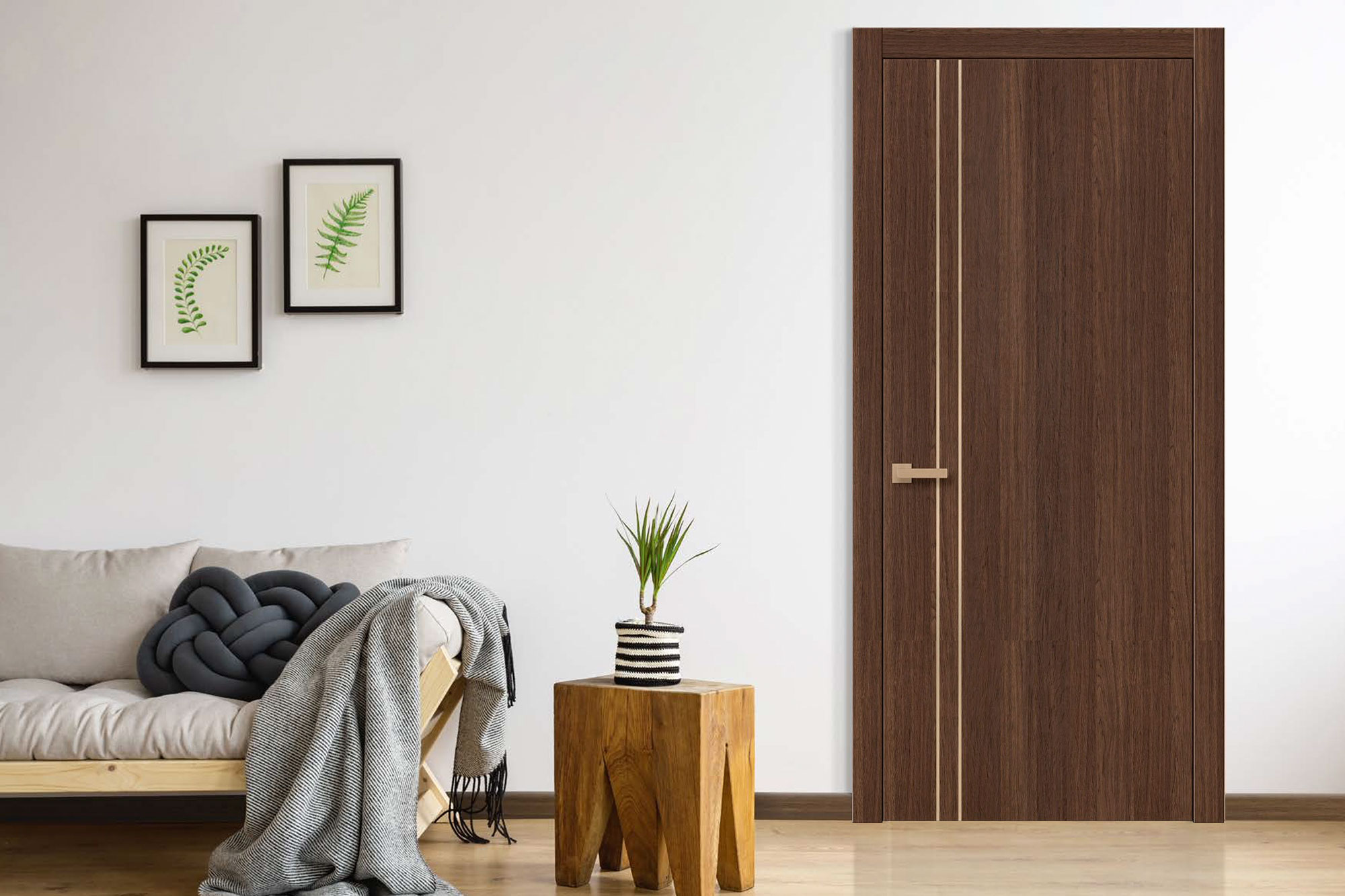
What is a self-closing fire door?

What Is A Self-Closing Fire Door?
A self-closing fire door is a type of fire door that closes automatically after being opened, without requiring manual intervention. When the door stays closed, it creates a barrier between one area and another. This gives people more time to leave the building and gives firefighters more time to control the fire.
Simple Meaning Of A Self-Closing Fire Door
A self-closing Fire Door is a door that closes automatically whenever it is opened. You open the door, walk through, and let go. Then the door closer pulls the door back into the frame. The latch catches. The door shuts firmly. After that, the Fire Door is ready to do its job.
Why does this matter? Because an open Fire Door cannot stop fire. It cannot block smoke. It cannot protect escape routes. Even a small gap can let hot smoke spread very fast. That is why a self-closing fire-rated door is so important in shared buildings, commercial spaces, and public areas.
A self-closing fire door usually includes a door closer at the top. In some buildings, it may also use concealed closers, spring hinges, electromagnetic hold-open devices, or automatic release systems. But the goal stays the same: the Fire Door must close and latch when needed.
How It Works In A Real Fire?
In a real fire, smoke often becomes dangerous before flames reach people. Smoke can move quickly through open doors, halls, and stairways. It can make it hard to see, breathe, and escape. This is where a self-closing Fire Door becomes very important.
When a fire starts in one room, the closed Fire Door helps contain it to that area. It slows the spread of heat, flames, and smoke. As a result, people in other parts of the building may have more time to get out safely. For example, if a fire starts in a storage room, a self-closing fire door can shut behind the person leaving the room, helping protect the corridor.
Some self-closing fire doors also have smoke seals or intumescent seals around the edges. Smoke seals help reduce smoke leakage. Intumescent seals expand when exposed to high heat. This helps close gaps around the door and frame during a fire, so the entire Fire Door system performs better.
In some buildings, fire doors may be held open by magnetic devices. These are not the same as wedging the door open. A proper electromagnetic hold-open device connects to the fire alarm system. Under normal conditions, it can keep the Fire Door open for easy access. But when the alarm sounds, the magnet releases, and the self-closing fire door shuts automatically.
Self-Closing Fire Door Vs Regular Fire Door
A regular Fire Door and a self-closing Fire Door may look similar, but they do not always work the same way. A regular fire-rated door is built to resist fire for a certain period of time. It may have a fire-rated core, certified frame, fire-rated glazing, smoke seals, and approved hardware. Its job is to slow the spread of fire and smoke.
However, if that regular Fire Door is left open, it cannot do much. This is the key difference. A self-closing Fire Door has a closing device that returns the door to the closed position after use. It does not rely on people to remember. It closes by itself.
A regular Fire Door without a self-closing device may still be fire-rated. But its performance depends on people closing it by hand. In busy buildings, that is a weak point. A regular Fire Door is like a shield. But if the shield is not in place, it cannot protect anyone. A self-closing Fire Door automatically repositions the shield every time someone passes through it.
This makes a self-closing fire-rated door a better choice for escape routes, stairwells, corridors, service rooms, plant rooms, shared residential areas, schools, hotels, hospitals, and commercial buildings. It reduces human error, supports safe escape routes, helps control smoke spread, and gives people more time during an emergency.

Why Are Self-Closing Fire Doors Important?
Self-closing Fire Doors are important because they close when people forget, keeping the fire safety barrier in place after each use. A Fire Door only works well when it is closed. It helps protect people, protect escape routes, and support the fire compartment design of the building.
They Help Stop Fire And Smoke Spread
A self-closing Fire Door helps slow down the spread of fire and smoke by closing the opening between two areas. When a fire starts, an open doorway can act like a fast path for flames, heat, and toxic smoke. But when the Fire Door closes properly, it creates a barrier that helps keep the fire inside one room or one zone for longer.
Smoke is often the first big danger in a fire. It can travel fast through halls, stairwells, and open doors. It can block vision and make breathing hard. A self-closing fire door with smoke seals can help reduce smoke movement, especially in corridors and escape routes. This is why smoke control is such a key part of Fire Door safety.
The Fire Door leaf, frame, closer, latch, hinges, and seals all need to work together. If the door closes but does not latch, smoke and heat may still pass through gaps. If the closer is too weak, the door may stop before it reaches the frame. For example, if a fire starts in a kitchen, storage room, plant room, or garage, the self-closing Fire Door can help contain the danger and give people more time to escape.
They Protect Escape Routes
Escape routes need to stay clear for as long as possible during a fire. These routes include corridors, stairwells, lobbies, exits, and shared hallways. If smoke fills these areas too quickly, people may panic, lose their bearings, or struggle to get out. A self-closing Fire Door helps protect these paths by keeping smoke and flames out for longer.
In many buildings, stairwells are the main way out. That is why Fire Doors near staircases are so important. A self-closing fire door at a stairwell entrance can help keep the stairwell safer and clearer. When someone opens the door and passes through, the closer brings it back into the frame. Then the door is ready to protect the escape route again.
This matters even more in places where many people may not know the building well, such as hotels, schools, care homes, shopping centers, and office towers. A Fire Door on an escape route should never be wedged open with a chair, bin, box, or door stop. If a door needs to stay open for access, the safer choice is a fire-alarm-linked hold-open device that releases the Fire Door when the alarm sounds.
They Reduce Human Error
People make mistakes. Someone may forget to close a door after a delivery. A tenant may leave a shared hallway door open. A staff member may prop open a Fire Door while moving goods. These small actions can create big risks in a fire, and a self-closing Fire Door helps reduce this kind of human error.
The best thing about a self-closing fire door is that it does not depend on memory. Once a person lets go of the door, the closer takes over. The door moves back into place, the latch engages, and the fire barrier is restored. This simple action can make a building much safer every day.
In busy commercial buildings, staff, visitors, cleaners, contractors, and delivery drivers all use the same doors. You cannot expect every person to understand Fire Door rules. But you can fit a proper self-closing device that helps the door do its job without constant reminders. Of course, the closer, hinges, frame, seals, gaps, latch, and any hold-open device still need regular checks.
They Help Keep Fire Compartments Safe
Many buildings are divided into fire compartments. A fire compartment is a section of a building designed to slow the spread of fire and smoke. Walls, floors, ceilings, and Fire Doors all help create these protected areas. The goal is to keep the fire in one area for a set time, rather than letting it spread freely throughout the building.
A self-closing Fire Door plays a key role in this system because it protects the opening in the compartment wall. A wall may be fire-rated, but if the door in that wall stays open, the compartment is broken. In simple terms, the Fire Door is the movable part of the fire compartment, so it must close when needed.
This is why self-closing fire doors are often used between corridors and stairwells, garages and homes, kitchens and dining areas, plant rooms and public spaces, and warehouse zones. When the Fire Door closes, the compartment can perform its job much more effectively. It also helps firefighters work more safely and helps building owners reduce fire risk day by day.

How Does A Self-Closing Fire Door Work?
A self-closing Fire Door works by using a closing device and the appropriate fire-rated parts to return the door to the frame after each use. When someone opens the Fire Door and lets go, the closer controls the movement, the hinges guide the swing, the latch holds the door shut, and the seals help block smoke and heat.
Fire Door Closer
The fire door closer is the part that pulls the Fire Door shut after it has been opened. You often see it fitted at the top of the door, either on the surface or hidden inside the door or frame. Its job is simple, but very important. It controls the closing speed, guides the door back, and helps the Fire Door latch firmly into place.
A good self-closing fire door should not slam hard or close too slowly. If it slams, it can damage the frame, latch, hinges, or seals. If it closes too slowly, smoke may pass through the opening before the door shuts. So, the closer must be adjusted correctly. The Fire Door should move smoothly, close fully, and latch without being pushed.
In busy buildings, fire door closers take a lot of daily use. People may carry bags, tools, trays, or boxes through the door. The closer helps reduce risk because it does not rely on people to remember to close the Fire Door. Once the person lets go, the closer brings the fire-rated door back to its safe position.
Hinges, Latch, Frame, And Seals
A self-closing Fire Door also needs strong hinges, a working latch, a correct frame, and proper seals. The hinges support the weight of the Fire Door and allow it to swing properly. If the hinges are loose, damaged, or not fire-rated, the door may drop, scrape the floor, or fail to close into the frame.
The latch is just as important. When the Fire Door closes, the latch keeps it shut. If the door closes but does not latch, smoke, heat, and pressure from a fire can push it open or force smoke through the gap. That is why the latch must line up with the strike plate and catch cleanly every time.
The frame gives the Fire Door a solid place to close into. The gap around the door should be even and not too wide. Fire door seals also need to sit in the right position. When the hinges, latch, frame, and seals work well together, the self-closing fire-rated door can better protect the opening during a fire.
Intumescent Strips And Smoke Seals
Intumescent strips are special fire door seals that expand when they face high heat. During a fire, they swell and help close the gaps around the Fire Door and frame. This helps slow the spread of flames and hot gases. They are small parts, but they play a big role in the fire door system.
Smoke seals help control smoke movement before the heat becomes extreme. This matters because smoke can travel very fast through small gaps. It can fill corridors, stairwells, and escape routes long before flames arrive. A self-closing Fire Door with good smoke seals can help keep these areas safer for longer.
Some Fire Doors use a single product that combines intumescent strips and smoke seals. Others use separate seals. Either way, they must not be painted over, cut, loose, missing, or damaged. If the seals are in poor condition, the Fire Door may still close, but it may not give the level of smoke and fire protection people expect.
Why The Door Must Close Fully Into The Frame?
A self-closing Fire Door must close fully into the frame because a half-closed door is almost the same as an open door in a fire. Even a small gap can let smoke, heat, and flames move through the building. The closer may bring the door near the frame, but if the latch does not catch, the Fire Door is not properly secure.
This is why the final few inches of closing are so important. The door must not stick to the floor, rub against the frame, hit a carpet, or stop due to poor alignment. It also should not bounce back after closing. A fire-rated door only performs well when it sits correctly in the frame, and the latch holds it shut.
Where Are Self-Closing Fire Doors Used?
Self-closing Fire Doors are used in many places where fire and smoke need to be controlled. You will often find them in shared buildings, public spaces, work areas, and homes in higher fire-risk zones. The main goal is always the same: the Fire Door must close after use, protect the opening, and help keep people safer during a fire.
Apartment Entrance Doors
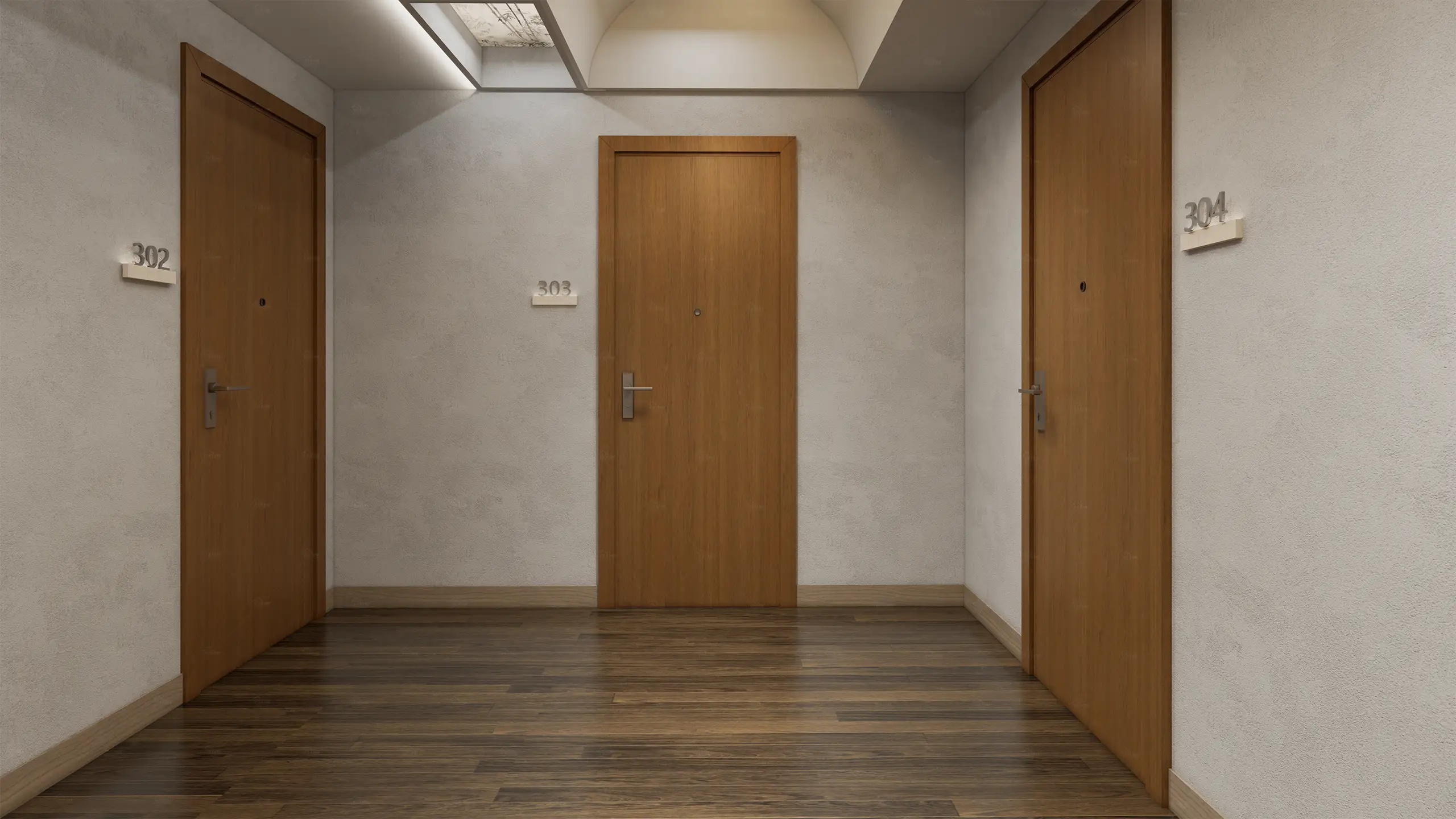
Apartment entrance doors are among the most common locations for self-closing Fire Doors. In many blocks of flats, each apartment door opens into a shared corridor, lobby, or stair area. If a fire starts inside one flat, the apartment Fire Door helps keep flames and smoke from spreading into the common escape route.
This is why a self-closing fire-rated apartment door is so important. People may leave in a hurry and forget to shut the door behind them. But when the door has a working closer, it can return to the frame on its own. Then the latch holds the Fire Door shut, and the corridor has a better chance of staying clear for longer.
For landlords, property managers, and residents, this small detail matters every day. A flat entrance Fire Door should close smoothly, latch fully, and have good seals around the frame. If it drags on the floor, stops short, or does not latch, it should be checked as soon as possible.
Corridors And Escape Routes
Corridors and escape routes require robust fire protection because people use them to evacuate the building during an emergency. A self-closing Fire Door in a corridor can help separate one part of the building from another. It can also help slow the movement of smoke along the escape path.
In a fire, smoke can travel faster than many people expect. It can fill hallways, block signs, and make it hard to breathe. A self-closing fire door with smoke seals helps reduce this risk. When the door closes after each use, it helps keep the escape route safer for people moving toward the exit.
You often see these Fire Doors near stairwells, lift lobbies, long corridors, service areas, and final exit routes. They should never be wedged open with boxes, bins, chairs, or door stops. If the door needs to stay open during normal use, a fire-alarm-linked hold-open device is a much safer choice.
Offices And Commercial Buildings
Offices and commercial buildings use self-closing Fire Doors to protect staff, visitors, stock, equipment, and escape routes. These buildings often have meeting rooms, kitchens, storage rooms, server rooms, plant rooms, stairwells, and shared corridors. Each area may carry a different level of fire risk.
A self-closing fire-rated door helps divide these areas and reduce the chance of fire spreading too fast. For example, a Fire Door between an office floor and a stairwell helps protect the main escape route. A Fire Door to a storage room can help contain a fire that starts near paper, packaging, cleaning products, or electrical items.
In busy workplaces, people do not always think about fire safety. They move files, carry drinks, push carts, and walk through doors all day. A self-closing Fire Door reduces the need to rely on memory. Once someone passes through, the closer brings the door back into the frame, restoring the fire barrier.
Schools, Hospitals, And Care Homes
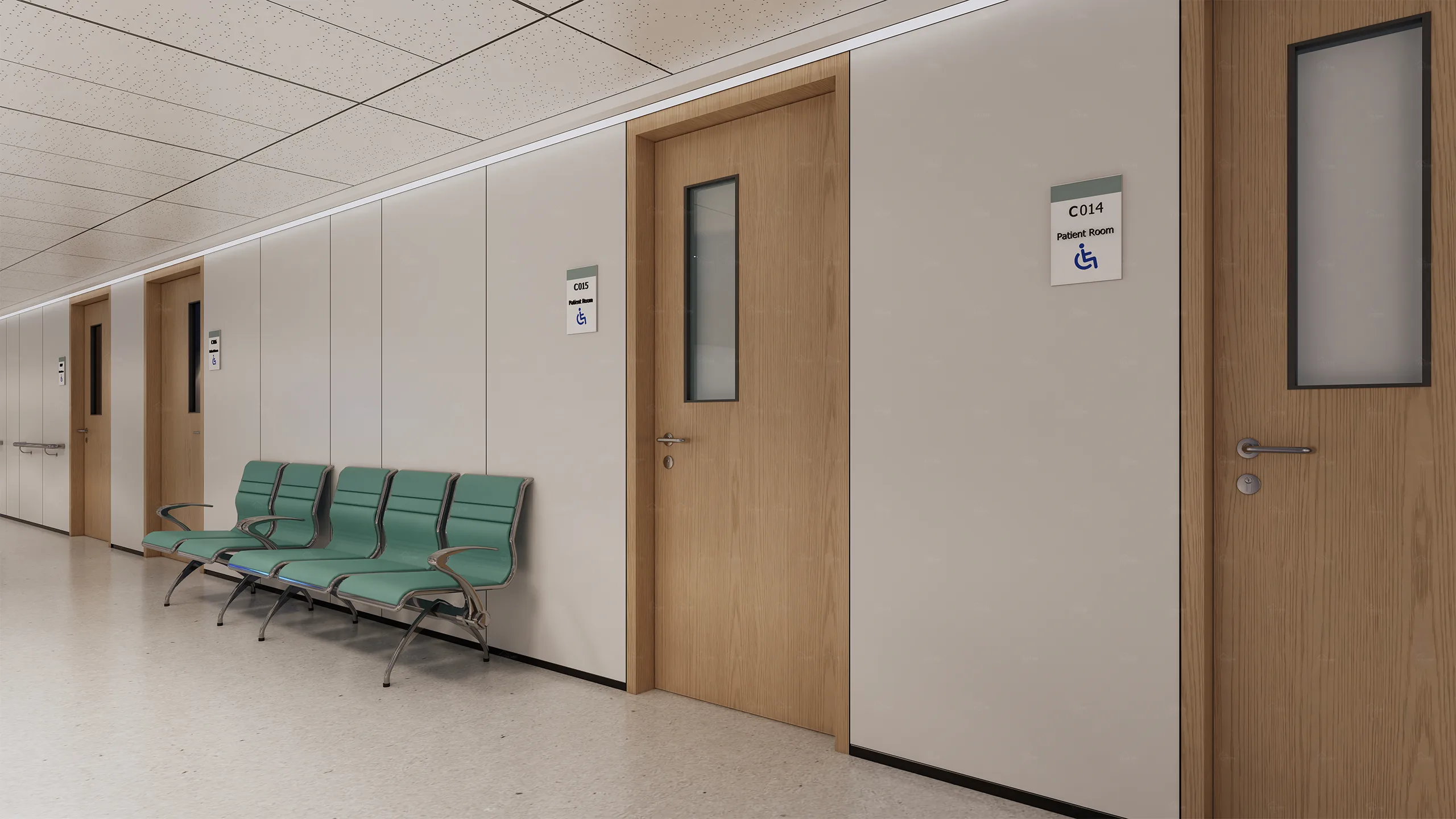
Schools, hospitals, and care homes need extra care because many people inside may need help during an evacuation. Children, patients, elderly residents, and people with limited movement may not be able to leave quickly. So, a self-closing Fire Door helps create more time and more control during an emergency.
In schools, Fire Doors are often used in corridors, stairwells, halls, kitchens, laboratories, and plant rooms. They help protect pupils, teachers, and staff by slowing the spread of smoke and fire. A self-closing fire door also helps keep escape routes ready, even when many people move through the building every day.
In hospitals and care homes, fire safety can be even more complex. Some people may need to move in stages from one safe area to another. Self-closing Fire Doors help support this kind of fire strategy by keeping compartments protected. When the Fire Door fully closes into the frame, staff are better able to manage the situation calmly.
Hotels And Public Buildings
Hotels and public buildings rely heavily on self-closing Fire Doors because many visitors do not know the layout. In a hotel, guests may be sleeping when a fire starts. In a library, theatre, shopping centre, or community building, visitors may not know the nearest exit. Good Fire Door protection helps make the building safer for everyone.
Hotel bedroom doors, stair doors, corridor doors, kitchen doors, and service doors often need to close by themselves. A self-closing fire-rated door can help stop smoke from spreading from one room or one floor to another. This is especially important at night, when people may take longer to react.
Can You Retrofit A Self-Closing Device To A Fire Door?
In many cases, you can retrofit a self-closing device to a Fire Door. This means adding a suitable door closer to an existing fire-rated door so it closes automatically after use.
When is Retrofitting Possible?
Retrofitting a self-closing device is possible when the Fire Door is still sound, properly fitted, and able to close into the frame without obstruction. The door leaf should not be warped, cracked, cut too much at the edges, or damaged around the closer fixing area. The frame should also be firm, square, and strong enough to support the closer.
It is also possible when the Fire Door already has the right basic parts, such as suitable hinges, a working latch, correct gaps, and fire door seals. If the door already swings freely and latches by hand, adding a fire-rated door closer may help turn it into a self-closing Fire Door. However, if the door rubs the floor, hits the frame, or does not latch, those issues should be fixed first.
In homes, offices, apartments, and commercial buildings, retrofitting is often done to improve safety or to bring old doors into compliance with current fire safety standards. Still, the installer should always check the Fire Door certification, door type, weight, width, opening angle, and location before choosing the closer. A small internal Fire Door may not need the same closer as a large corridor fire-rated door in a busy public building.
Why Compatibility Matters?
Compatibility matters because a Fire Door works as a complete system. The self-closing device must match the door size, weight, fire rating, usage level, and hardware. If the closer is too weak, it may not fully close the Fire Door. If it is too strong, the door may slam, become hard to open, or create problems for children, elderly people, and people with limited mobility.
The closer must also suit the door material and installation position. Timber Fire Doors, steel Fire Doors, glazed fire-rated doors, and apartment entrance doors may all need different closer types or fixing methods. Some closers are surface-mounted, while others are concealed. Some are suitable for high-traffic commercial use, while others are better for light residential use.
Good compatibility also protects the frame, hinges, latch, and seals. A poor match can pull screws loose, twist the door, damage the latch area, or stop the Fire Door from sitting correctly in the frame. In simple terms, a closer should help the Fire Door work better, not create new problems.
Using The Wrong Closer Can Void The Fire Rating
Using the wrong closer can compromise the Fire Door rating. A fire-rated door is normally tested with approved hardware, and that hardware contributes to the final performance. If a closer is not suitable for fire door use, or if it is fitted in a way that damages the door leaf or frame, the Fire Door may no longer perform as expected in a real fire.
This is especially important with concealed closers, floor springs, spring hinges, and untested hardware. Some products may look neat, but they may not be approved for the specific Fire Door assembly. Cutting into the door to fit the wrong closer can weaken the door core, damage fire protection layers, or affect the intumescent seals.
A Fire Door should never be treated like a normal internal door. The wrong closer may still make the door swing shut, but that does not mean the fire rating is protected. For landlords, facility managers, and business owners, this can also create compliance problems. So, before replacing or adding a closer, it is safer to check the door certificate, manufacturer guidance, and local fire safety requirements.
Fire-Rated Closer Replacement Tips
When replacing a closer on a Fire Door, choose a fire-rated door closer that is suitable for the door size, weight, location, and level of daily use. Look for a closer designed for Fire Door applications, not just a standard domestic closer. In busy areas, such as corridors, stairwells, offices, schools, hospitals, and hotels, a heavy-duty closer is often a better choice.
Next, make sure the closer is fitted correctly and adjusted properly. The Fire Door should close smoothly from different opening angles. It should not slam. It should not stop short. Most of all, it must latch fully into the frame without someone pushing it. After installation, open the door, let it go, and check that the latch catches every time.
Finally, check the rest of the fire door system. Look at the hinges, screws, latch, frame, gaps, intumescent strips, smoke seals, glazing, and signage. A new closer cannot fix a badly damaged Fire Door. If the door is warped, the frame is loose, or the seals are missing, those issues need attention, too. A well-chosen, well-fitted self-closing device can improve safety, but only when the entire Fire Door set works together.
Common Self-Closing Fire Door Problems
Door Closes Too Slowly
A Fire Door that closes too slowly can leave an opening for smoke and heat to pass through. In a real fire, every second matters. If the self-closing fire door takes too long to shut, smoke may enter corridors, stairwells, escape routes, or shared spaces before the door reaches the frame.
This problem often occurs when the fire door closer is set to too low a closing speed. It may also happen if the closer is worn, the door is too heavy for the closer, or the hinges create too much resistance. Sometimes people adjust the closer to make daily use easier, but they end up making the Fire Door less effective without realising it.
A properly adjusted self-closing Fire Door should close at a controlled speed. It should not rush, but it should not hang open either. The final part of the closing action should be strong enough to engage the latch. If the Fire Door drifts slowly and stops before it latches, it needs attention.
Door Slams Shut
A Fire Door that slams shut is another common problem. At first, some people may think a strong slam means the door is safe. In fact, it can cause damage over time. A slamming Fire Door can loosen screws, damage hinges, crack the frame, wear out the latch, and harm the smoke seals or intumescent strips.
It can also create a daily safety issue. In schools, care homes, hospitals, apartments, and offices, a heavy fire-rated door that slams can hurt fingers, scare people, or make the door hard to use. People may then try to wedge the Fire Door open to avoid the noise, which creates a much bigger fire risk.
Usually, slamming means the fire door closer needs adjustment or replacement. The closer should control the door from open to shut. It should bring the Fire Door into the frame with enough force to latch, but not so much force that it crashes shut. Smooth, firm, and controlled is the goal.
Door Does Not Latch
A self-closing Fire Door that does not latch is a serious problem. The door may look closed from a distance, but if the latch has not caught, the Fire Door may not hold against smoke pressure, heat, or air movement during a fire. A closed but unlatched fire-rated door may fail when needed most.
This issue can happen for several reasons. The latch may be worn, the strike plate may be out of line, the door may have dropped on its hinges, or the closer may not have enough power at the final closing stage. Paint build-up, damaged seals, loose screws, or a twisted frame can also stop the Fire Door from latching properly.
The check is simple. Open the Fire Door, let it close by itself, and listen for the latch. Then gently pull the door to see if it holds. If it opens without pressing the handle, it has not latched. A self-closing fire door should always latch fully into the frame without being pushed shut.
Door Gets Stuck On The Floor
A Fire Door that gets stuck on the floor cannot close properly. It may drag on carpet, scrape against tiles, catch on a raised threshold, or stop because the door has dropped out of alignment. When this happens, the closer may try to shut the door, but the door will not reach the frame.
This problem often occurs in older buildings, apartment blocks, offices, and schools where doors have been heavily used. Hinges may loosen. Floors may shift. New carpet or flooring may be fitted without checking the Fire Door clearance. Even a small change at floor level can stop a self-closing fire-rated door from working.
The solution is not to force the door or remove parts without checking the fire rating. Cutting too much from the bottom of a Fire Door can damage its tested performance. A competent fire door installer should inspect the hinges, frame, floor clearance, seals, and door leaf before making changes.
Door Closer Is Leaking Oil
A leaking fire door closer is a warning sign. Many door closers use internal oil to control the closing speed. If oil leaks out, the closer may lose control. The Fire Door may start slamming, closing too slowly, or failing to latch. In some cases, the door may stop self-closing altogether.
You may notice oil stains on the closer body, the door face, the frame, or the floor below. Once this happens, adjustment usually will not fix the problem for long. A leaking closer often needs to be replaced with a suitable fire-rated door closer that matches the Fire Door’s size, weight, and usage level.
This is especially important in commercial buildings, hotels, care homes, schools, hospitals, and apartment corridors. A leaking closer should not be ignored because it can turn a compliant self-closing Fire Door into an unreliable one. The Fire Door may still look fine, but the closing device may no longer function properly.
Fire Door Is Wedged Open
A wedged-open Fire Door is one of the most dangerous and common problems. People often wedge doors open for convenience. They may want better airflow, easier access, less noise, or faster movement through a busy area. But a Fire Door that is held open with a wedge, chair, bin, box, or door stop cannot protect the building.
A self-closing Fire Door only works when it is free to close. If someone blocks it open, the closer cannot bring the door back into the frame. This leaves a clear path for smoke, heat, and flames. In a fire, that open doorway can quickly put escape routes and nearby rooms at risk.
If a Fire Door needs to stay open during normal use, the better option is a proper fire-alarm-linked hold-open device. This type of device can keep the Fire Door open safely during daily use, but automatically releases it when the fire alarm activates. A simple wedge does not do that.

How To Check A Self-Closing Fire Door?
Open The Door And Let It Go
The first check is simple. Open the Fire Door, then let it go. Do not push it closed. Do not guide it by hand. Just stand clear and watch what happens. A working self-closing Fire Door should return to the frame on its own.
The door should close smoothly and in a controlled manner. It should not slam hard, swing too slowly, stop halfway, or bounce back from the frame. If the fire door closer is working well, it will control the full closing movement from open to shut.
This test checks whether the self-closing device is performing its basic function. If the Fire Door stays open, drags on the floor, or needs a push to close, the closer, hinges, frame, or floor clearance may need attention. A Fire Door that cannot close automatically cannot properly protect the building in a real fire.
Check If It Closes From Any Angle
A good self-closing Fire Door should close from different opening angles. Try opening the door fully, then let it go. Next, open it halfway and let it go again. Then open it just a little and check if it still closes and latches. This helps show whether the closer has enough control through the whole swing.
Some Fire Doors close well from a wide-open position but fail when opened only a few inches. This is a common problem. The final part of the closing action is very important because the latch still needs enough force to click into place. If the door stops just before the frame, the fire door closer may need adjustment.
This check is especially useful for apartment entrance doors, corridor Fire Doors, office doors, stairwell doors, school doors, hospital doors, hotel doors, and internal garage fire doors in homes. In daily use, people do not always open doors fully. So, the self-closing fire-rated door must work from normal angles, not just during a perfect test.
Check If The Latch Clicks Shut
A Fire Door should not only close. It should latch. When the door reaches the frame, listen for the latch clicking shut. Then gently pull the door without pressing the handle. If it opens, the latch has not caught. That means the Fire Door is not properly secured.
This matters because smoke pressure, heat, and air movement can push against a door during a fire. If the latch does not hold, the Fire Door may open or leave a gap. A closed but unlatched fire-rated door may look fine, but it may not provide the protection people expect.
If the latch does not click, there may be several causes. The strike plate may be out of line, the latch may be worn, the door may have dropped on the hinges, or the closer may not have enough power at the final closing stage. Paint build-up, damaged seals, or a twisted frame can also stop the Fire Door from latching fully.
Check The Gaps Around The Door
The gaps around a Fire Door should be even and not too wide. Look around the top and sides of the door when it is closed. The door should sit neatly inside the frame. There should not be large gaps, uneven spacing, or obvious daylight showing through the edges.
Gaps matter because fire, heat, and smoke can pass through openings. A self-closing Fire Door may close and latch, but if the gaps are too large, the fire door system may not perform well. The gap at the bottom also matters, especially if smoke control is needed.
You should also check whether the door rubs against the frame or the floor. If it scrapes, sticks, or needs force to shut, it may fail to close during an emergency. Do not simply cut the Fire Door without checking first. Trimming a fire-rated door too much can compromise its fire performance and may affect certification.
Check Seals, Hinges, And Closer Arm
Fire door seals are small but important. Check the intumescent strips and smoke seals around the edges of the Fire Door or frame. They should be present, clean, secure, and undamaged. They should not be painted over, torn, loose, missing, or cut short.
Next, look at the hinges. A self-closing Fire Door is often heavy, so the hinges must be strong and firmly fixed. Screws should not be loose or missing. The door should not drop, sag, or pull away from the frame. If the hinges are weak or damaged, the Fire Door may not close into the right position.
Finally, check the closer arm and the closer body. The arm should be fixed securely and move smoothly. The closer should not leak oil, hang loose, or make the door slam. If the closer appears damaged or cannot be adjusted properly, it may need to be replaced with a suitable fire-rated door closer. A self-closing Fire Door is only reliable when all these parts work together.

Relate FAQ
What is a self-closing fire door?
A self-closing Fire Door is a fire-rated door that automatically closes after being opened, helping prevent the spread of fire and smoke. It usually includes a door closer, hinges, a latch, and seals, forming a complete fire safety system.
How does a self-closing fire door work?
When someone opens the Fire Door, the door closer gently brings it back into the frame. The latch catches, and the door seals help block smoke and heat. This ensures the Fire Door is ready to protect escape routes and fire compartments at all times.
Where are self-closing fire doors used?
Self-closing Fire Doors are used in apartment entrances, office corridors, hotels, schools, hospitals, care homes, commercial buildings, and internal garage doors. They protect escape routes and separate fire compartments to slow the spread of fire and smoke.
Why are self-closing fire doors important?
They help stop fire and smoke, protect escape routes, reduce human error, and maintain the integrity of fire compartments. In emergencies, a properly functioning Fire Door can save lives and reduce property damage.
Can I retrofit a self-closing device to an existing fire door?
Yes, retrofitting is possible if the door is in good condition and compatible with the new closer. However, using the wrong closer can void the Fire Door’s fire rating, so always use a fire-rated device and follow manufacturer guidelines.
How do I check if a self-closing fire door is working?
Open the Fire Door and let it go; check if it closes smoothly from any angle; ensure the latch clicks shut; inspect gaps around the door; and check seals, hinges, and the closer arm. Any issues should be fixed promptly to maintain fire safety compliance.
Can a self-closing fire door help with smoke control?
Yes. Many self-closing Fire Doors have intumescent strips and smoke seals that expand under heat, blocking gaps and reducing smoke spread, keeping escape routes safer for longer.