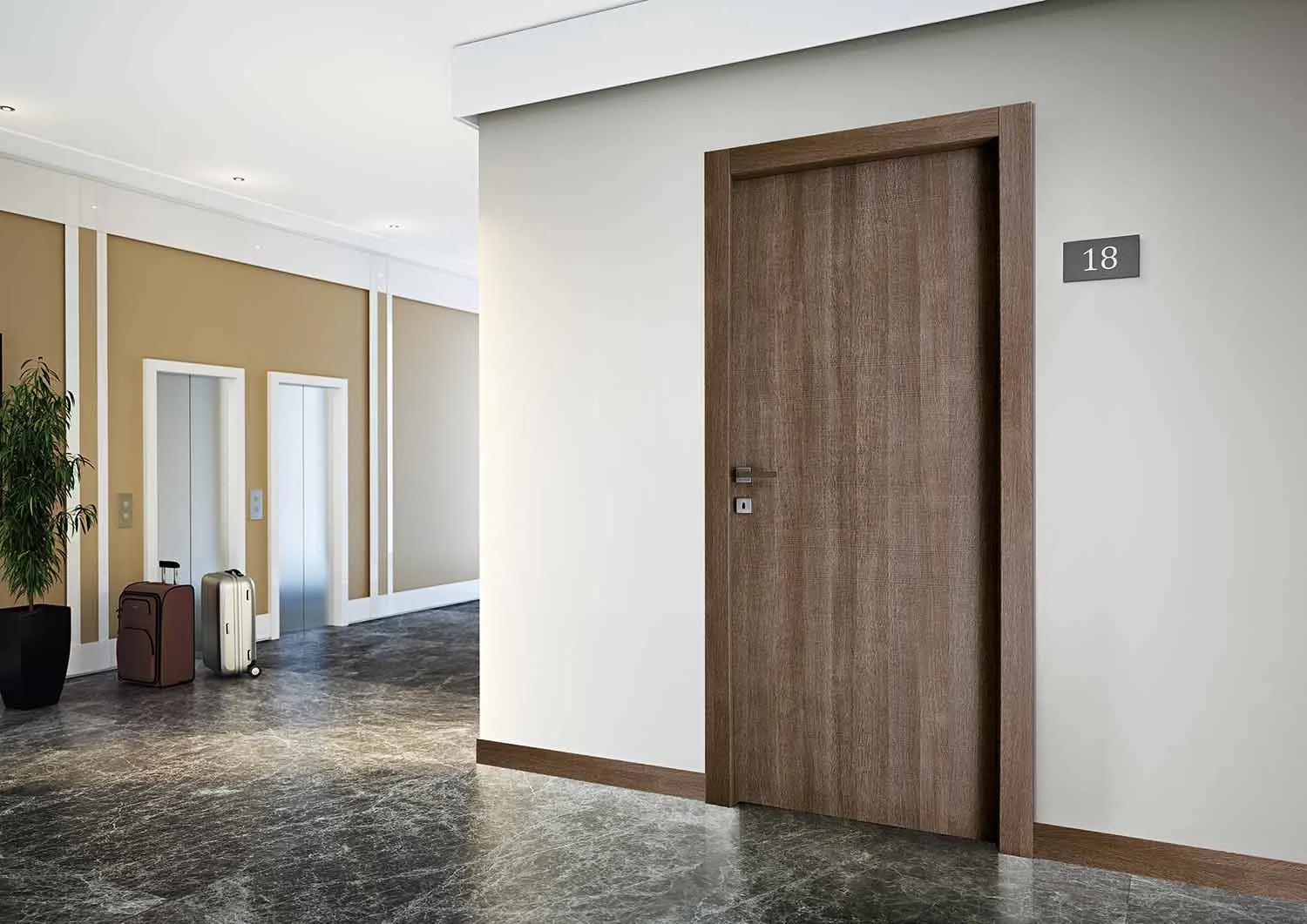
What does EI30 fire rated door mean?
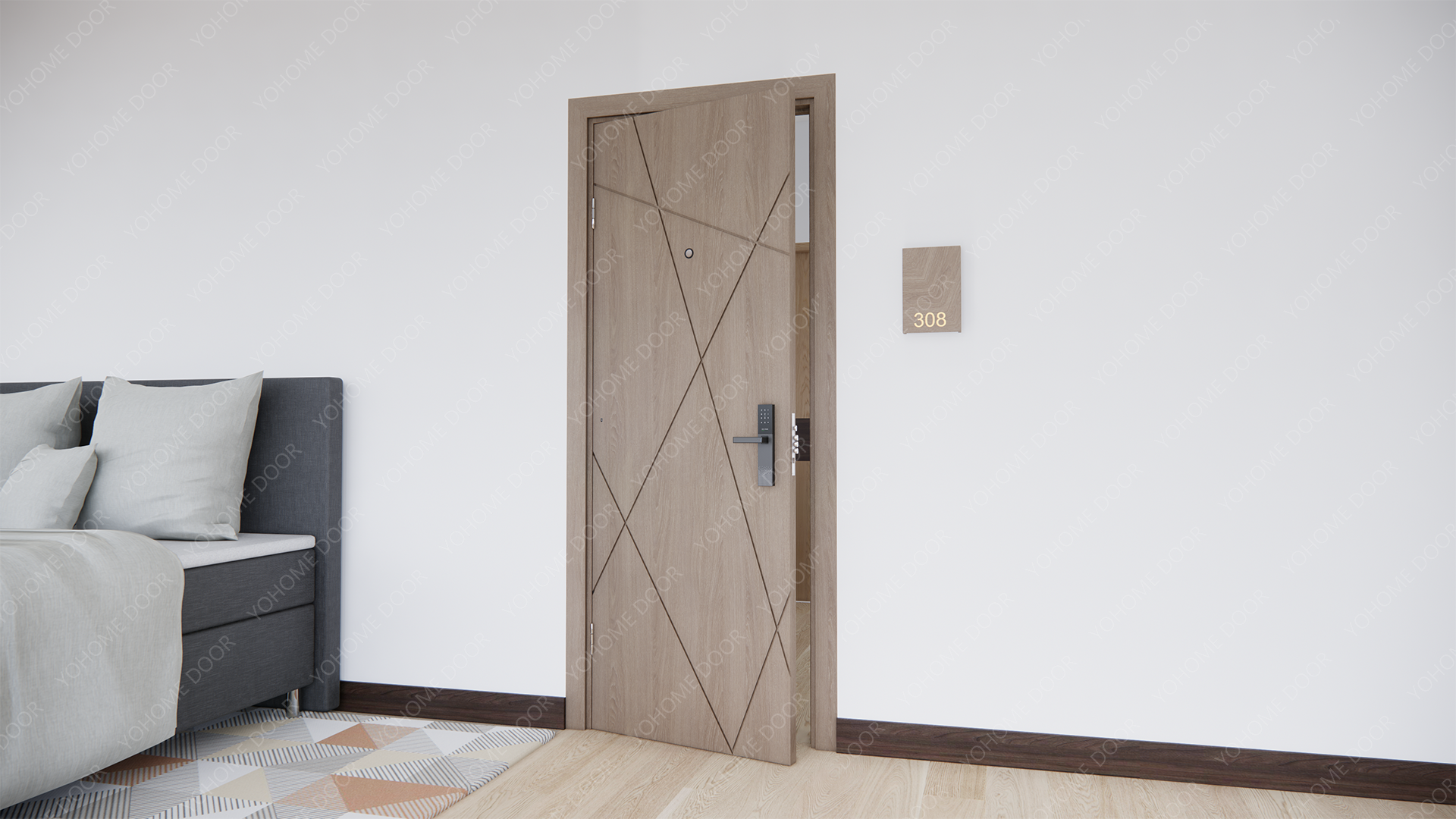
Understanding EI30 Fire Rated Doors
A Fire Rated Door helps slow the spread of fire, smoke, and heat during an emergency, giving people more time to leave safely. An EI30 Fire Rated Door provides 30 minutes of tested fire protection and is well-suited for homes, offices, hotels, schools, and commercial buildings. Also, an EI30 fire door system offers a good balance between safety, cost, and a clean, modern design.
What Does EI30 Mean?
The letters in EI30 tell you what the door can do. “E” stands for integrity, meaning it blocks flames and hot gases. “I” stands for insulation, which limits heat transfer. And “30” means it can perform these functions for 30 minutes during fire tests.
In practice, an EI30 fire-rated door withstands fire and heat for at least half an hour. This short time can be crucial in emergencies, allowing safe evacuation and giving fire crews a better chance to control the blaze.
Architects and builders often specify EI30 fire-resistant doors for residential buildings and public spaces. They are tested to ensure compliance with safety standards, making them a reliable choice for critical applications.
EI30 Fire Door Definition in Simple Terms
Think of an EI30 Fire Rated Door as a safety shield. If a fire starts in one room, the door slows the spread of flames, smoke, and heat. This extra barrier protects people and property in nearby areas.
These doors are built with special materials and tested under strict conditions. Common features include fire-resistant cores, heat-resistant seals, smoke seals, certified hardware, and reinforced frames. Together, these make the fire-rated door assembly function as a complete system.
For example, a fire in a storage room can be contained by an EI30 certified fire door, giving occupants time to evacuate. This extra time often makes a critical difference in emergencies, which is why many building codes require 30-minute fire rated doors in key locations.
EI30 vs Standard Doors
At first glance, an EI30 Fire Rated Door may look like a normal door. But standard doors are mainly for privacy or security, not fire protection. They are not tested for fire resistance and can fail quickly when exposed to heat.
An EI30 fire resistant door is built for fire safety. It undergoes testing to prove it can maintain integrity and insulation for 30 minutes. Unlike a standard door, it often also controls smoke and helps meet building codes.
While standard doors cost less upfront, certified fire rated steel doors or fire resistant wooden doors provide much higher safety. They protect people, property, and assets. Choosing an EI30 Fire Rated Door is not just about compliance—it is about saving lives and reducing fire damage.

How Does an EI30 Fire Rated Door Work?
An EI30 Fire-Rated Door serves as a smart barrier against fire, heat, and smoke. Unlike a normal door, it is built and tested to perform under high temperatures for at least 30 minutes. The door helps contain fire in one area, giving people time to evacuate and firefighters a chance to control the blaze.
The Science Behind Fire Resistance
The fire resistance of an EI30 Fire Rated Door comes from three key mechanisms: preventing the spread of flames, limiting heat, and controlling smoke. Each mechanism is tested in fire labs to meet European standards. Together, they ensure that the door can slow the spread of fire and protect life and property.
Modern fire resistant doors rely on physics and smart materials. For instance, intumescent strips expand when heated, sealing gaps around the door. The dense core materials resist burning and reduce heat conduction. Even the door frame contributes by keeping the structure stable under stress.
Overall, the science behind an EI30 fire door is simple: stop flames, block heat, and limit smoke. This approach turns an ordinary-looking door into a powerful safety tool.
Preventing Flames from Passing Through
A key feature of any EI30 Fire Rated Door is its ability to prevent flames from passing through. The door uses fire-resistant cores and tight seals to block direct contact with fire. In addition, certified hinges and latches keep the door closed even when exposed to heat.
Stopping flames is important because it prevents a fire from jumping from one room to another. With an EI30 fire door, flames are contained, reducing damage and keeping escape paths safe.
Many buildings use fire-rated doors in high-risk areas, such as kitchens, storage rooms, or corridors. By preventing the spread of flames, these doors save lives and reduce property loss.
Limiting Heat Transfer
Another critical function of an EI30 fire door is limiting heat transfer. Heat can travel through walls and doors, igniting materials on the other side. To stop this, fire resistant doors include insulating cores and heat-resistant layers.
These layers slow down the temperature rise on the non-fire side. In practical terms, this means people can stay safe behind a door for the full 30 minutes rated period.
By limiting heat, EI30 fire doors also protect nearby furniture, walls, and equipment. This makes them ideal for offices, apartments, and public buildings that are required to meet fire safety codes.
Controlling Smoke Spread
Smoke is one of the deadliest parts of a fire. EI30 Fire Rated Doors often include smoke seals along the edges to limit smoke leakage. These seals expand under heat, creating a tight barrier.
Controlling smoke protects both breathing routes and visibility during evacuation. It also reduces smoke damage to property and makes firefighting safer.
For these reasons, using smoke-rated fire doors alongside other fire rated door systems is common in schools, hospitals, hotels, and offices. They not only block fire but also manage smoke, making buildings much safer.
Components of an EI30 Fire Door
A certified EI30 fire door includes several fire-rated parts. These parts form a full Fire Rated Door assembly. If one part fails, the whole door may fail. So, every component must match the tested fire rating and meet the project’s safety needs.
Fire-Rated Door Leaf
The door leaf is the main body of the Fire Rated Door. It is the part people open and close every day. For an EI30 fire-rated door, the leaf often has a fire-resistant core made of mineral board, solid timber, steel, or other approved materials.
This core helps the door stay strong under heat. It also slows the spread of flames from one side to the other. In simple terms, the fire-rated door leaf serves as the first line of defense when a fire starts.
Fire-Rated Frame
A strong door leaf needs a strong frame. The fire-rated frame holds the EI30 Fire Rated Door in place during normal use and during a fire. If the frame bends, cracks, or pulls away, flames and smoke can pass through the gaps.
That is why the frame must match the fire door rating. A properly fire-resistant door frame helps keep the door stable, sealed, and aligned. As a result, the full fire rated door system can perform as intended.
Intumescent Seals
Intumescent seals are small strips fitted around the edge of the Fire Rated Door. They may look simple, but they play a big role. When heat rises, these strips expand and fill the gaps between the door leaf and the frame.
This helps block flames and hot gases. So, during a fire, the seal creates a tighter barrier. For an EI30 fire door, intumescent seals are among the most important components of the entire fire protection system.

Smoke Seals
Smoke seals help control smoke movement before and during a fire. They often sit along the edges of the door, close to the intumescent strips. While intumescent seals react to high heat, smoke seals help reduce smoke leakage earlier.
This matters because smoke can spread fast through small gaps. A smoke-sealed, Fire-Rated Door helps protect escape routes, stairwells, and corridors. It also gives people clearer air and better visibility when they need to leave the building.
Fire-Rated Hinges
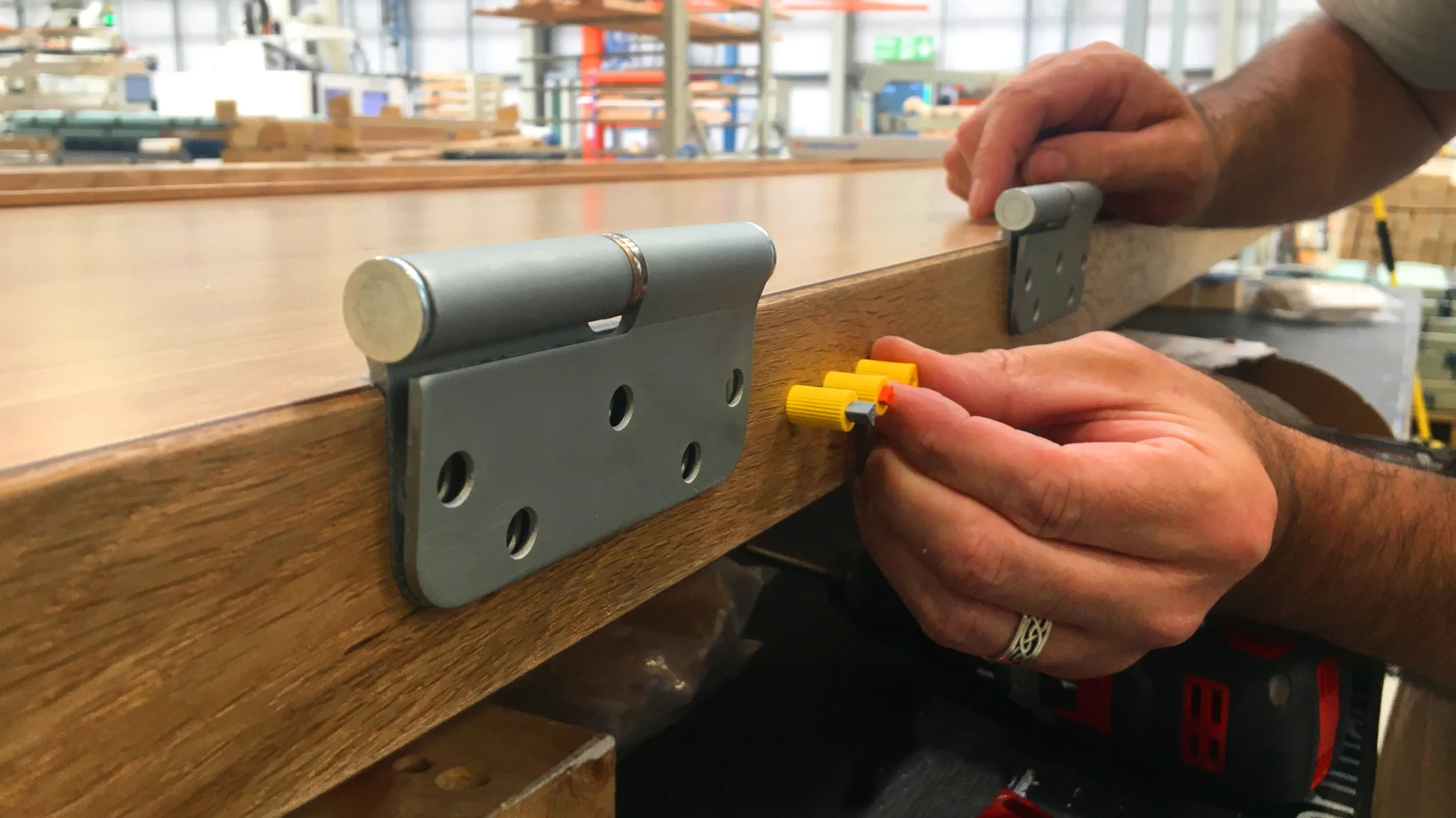
Hinges carry the weight of the door leaf. On an EI30 Fire-Rated Door, standard hinges are not enough. Fire-rated hinges are tested to hold the door in place under high heat.
They help stop the door from dropping, twisting, or leaving gaps. In daily use, they also keep the door moving smoothly. So, even though hinges are small, they are vital to the performance of a certified fire resistant door assembly.
Fire Door Closers
A fire door closer ensures the Fire-Rated Door closes after someone passes through. This may sound basic, but it is very important. A fire door cannot protect a room or corridor if it stays open.
In many buildings, closers are required by fire safety rules. They help the EI30 fire rated door return to the closed position every time. Because of this, the door can block flames, heat, and smoke when a fire breaks out.
Fire-Rated Glass Panels
Some EI30 Fire Rated Doors include glass panels for light, vision, or design. However, this glass must be fire-rated, not standard. Regular glass can crack quickly when heated, but fire-rated glass is tested to remain in place during fire exposure.
A certified fire-rated glass panel helps maintain the door’s integrity and insulation. It also allows safer visibility in corridors, offices, hospitals, schools, and public buildings. When installed with the right glazing system, it becomes part of the complete Fire Rated Door system.
What Is the Difference Between E30, EW30, and EI30?
When choosing a Fire Rated Door, you may see ratings such as E30, EW30, and EI30. They all mean the door can withstand a 30-minute fire test, but they do not offer the same level of protection. The main difference is how well the door blocks flames, radiant heat, and temperature rise.
E30 Fire Door Explained
An E30 Fire Rated Door focuses on integrity. This means it helps stop flames and hot gases from passing through the door for 30 minutes. In simple terms, it keeps the fire on one side of the door.
However, an E30 fire door does not give the same level of heat control as an EI30 fire door. Heat may still pass through the door surface. So, people and objects on the safe side may still be exposed to high heat.
E30 doors are often used where basic fire separation is needed. They can work well in some storage areas, plant rooms, or low-risk zones. Still, for escape routes and public spaces, many projects choose a higher-rated Fire Rated Door system.
EW30 Fire Door Explained
An EW30 Fire-Rated Door offers integrity and some control of radiant heat. The “W” means radiation control. So, the door helps reduce heat radiation from the fire side to the safe side.
This makes an EW30 fire resistant door stronger than an E30 door in many cases. It not only blocks flames but also reduces the risk of nearby items overheating. As a result, it can give people a safer zone near the door.
EW30 doors are common in offices, schools, hotels, and commercial buildings. They are a smart choice when a project needs better heat control, but does not require full insulation like an EI30 Fire Rated Door.
EI30 Fire Door Explained
An EI30 Fire Rated Door gives the highest level of protection among these three ratings. It provides integrity and insulation for 30 minutes. This means it blocks flames and also limits heat transfer through the door.
In real life, an EI30 fire door helps keep the non-fire side cooler for longer. That matters in corridors, stairwells, apartments, hospitals, and escape routes. People need time to move away safely, and lower heat can make that path safer.
Because of this, many architects prefer EI30 fire resistant doors for key safety areas. They offer stronger protection than E30 and EW30 doors. They also help buildings comply with stricter fire safety regulations.
Comparison E30 vs EW30 vs EI30
The easiest way to compare these Fire Rated Door ratings is to look at what each one controls. E30 blocks flames. EW30 blocks flames and limits radiant heat. EI30 blocks flames and limits direct heat transfer through insulation.
So, if the goal is basic fire separation, an E30 fire door may be enough. If the project also needs some control of heat radiation, an EW30 fire door may be a better fit. But if the space requires stronger life-safety and better heat protection, an EI30 Fire-Rated Door is usually the safer choice.
In short, all three are 30-minute fire doors, but they do not protect in the same way. The right choice depends on the building type, fire risk, escape route design, and local code. For many modern projects, a certified EI30 Fire-Rated Door offers the best balance of safety, performance, and peace of mind.
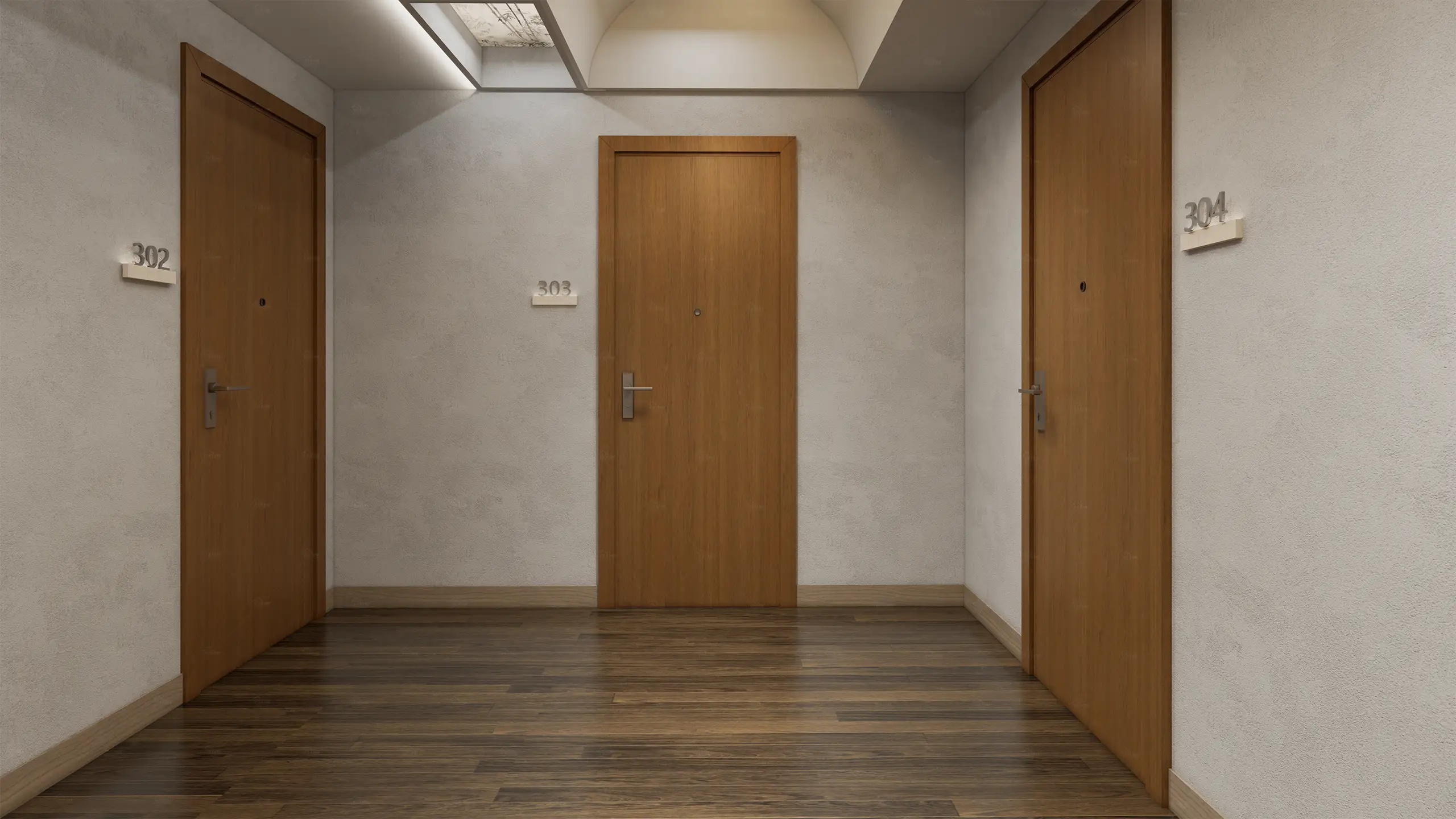
Where Are EI30 Fire Doors Commonly Used?
EI30 Fire Rated Doors are widely installed in many types of buildings where fire safety is critical. They protect people, property, and escape routes from flames, heat, and smoke for up to 30 minutes. These doors are suitable for both commercial and residential environments, providing a reliable barrier during the early stages of a fire.
Apartment Buildings
In apartment complexes, EI30 Fire Rated Doors are installed between individual flats and common corridors. They prevent flames and smoke from spreading quickly to neighboring units. Residents gain valuable time to evacuate safely, and the door protects shared areas like hallways and stairwells.
Many modern apartments also use fire-resistant doors in utility rooms, storage areas, and service ducts. This helps contain potential fire sources without affecting the rest of the building. Proper installation ensures the doors work with fire-rated door frames and seals.
High-rise apartments especially benefit from EI30 fire doors because stairwell safety is critical. Doors in stairwells create fire compartments and prevent smoke from traveling between floors, keeping evacuation paths clear and safe.
Apartment owners often combine these doors with fire rated glass panels or smoke seals to allow visibility while maintaining safety. This approach blends protection with aesthetics and functionality.
Office Buildings
Offices rely heavily on EI30 Fire Rated Doors to protect corridors, conference rooms, and storage areas. These doors help limit fire spread, keeping staff and visitors safe. They also ensure that sensitive equipment and data are better protected during a fire.
In large office complexes, fire-resistant doors are commonly used in server rooms, utility closets, and mechanical areas. They prevent a minor incident from escalating into a major fire.
Corridors and escape routes benefit from smoke seals and fire door closers to ensure doors stay shut. Together, they form a fire rated door system that protects people and property.
Many office buildings integrate EI30 fire doors with interior design, using certified timber, steel, or glass panels. This ensures compliance with building codes without compromising style or natural light.
Hotels and Hospitality Projects
Hotels, resorts, and other hospitality projects install EI30 fire doors in guest rooms, corridors, kitchens, and service areas. These doors slow the spread of fire, keeping guests safe and evacuation paths clear.
Fire-resistant doors in hotels also reduce smoke spread, protecting hallways and public areas. This is particularly important in high-rise buildings, where a fire on one floor can quickly spread to others.
Many hotels combine fire rated doors with intumescent and smoke seals for added protection. Even small service rooms or storage closets benefit from these measures, containing fire before it reaches guest areas.
Luxury hotels often use fire rated glass panels to provide light and visibility in corridors while maintaining fire safety. This provides a safer, more comfortable environment for guests without compromising protection.
Educational Facilities
Schools, colleges, and universities rely on EI30 Fire Rated Doors in classrooms, laboratories, libraries, and hallways. The doors prevent fire from spreading quickly, giving students and staff time to evacuate safely.
Fire-resistant doors are especially important in stairwells and corridors, which serve as primary evacuation routes. Smoke seals and fire door closers ensure that doors stay closed during a fire, maintaining safe paths.
Laboratories and technical rooms often contain chemicals or flammable materials. Installing EI30 fire doors helps isolate hazards and minimize risk to the rest of the building.
Libraries and administrative areas benefit from the insulation properties of fire rated doors, which reduce heat transfer and help protect people and valuable property.
Healthcare Buildings
Hospitals, clinics, and nursing homes use EI30 Fire Rated Doors to protect patient rooms, treatment areas, and corridors. These doors block flames, limit heat, and reduce smoke spread, helping staff safely evacuate patients.
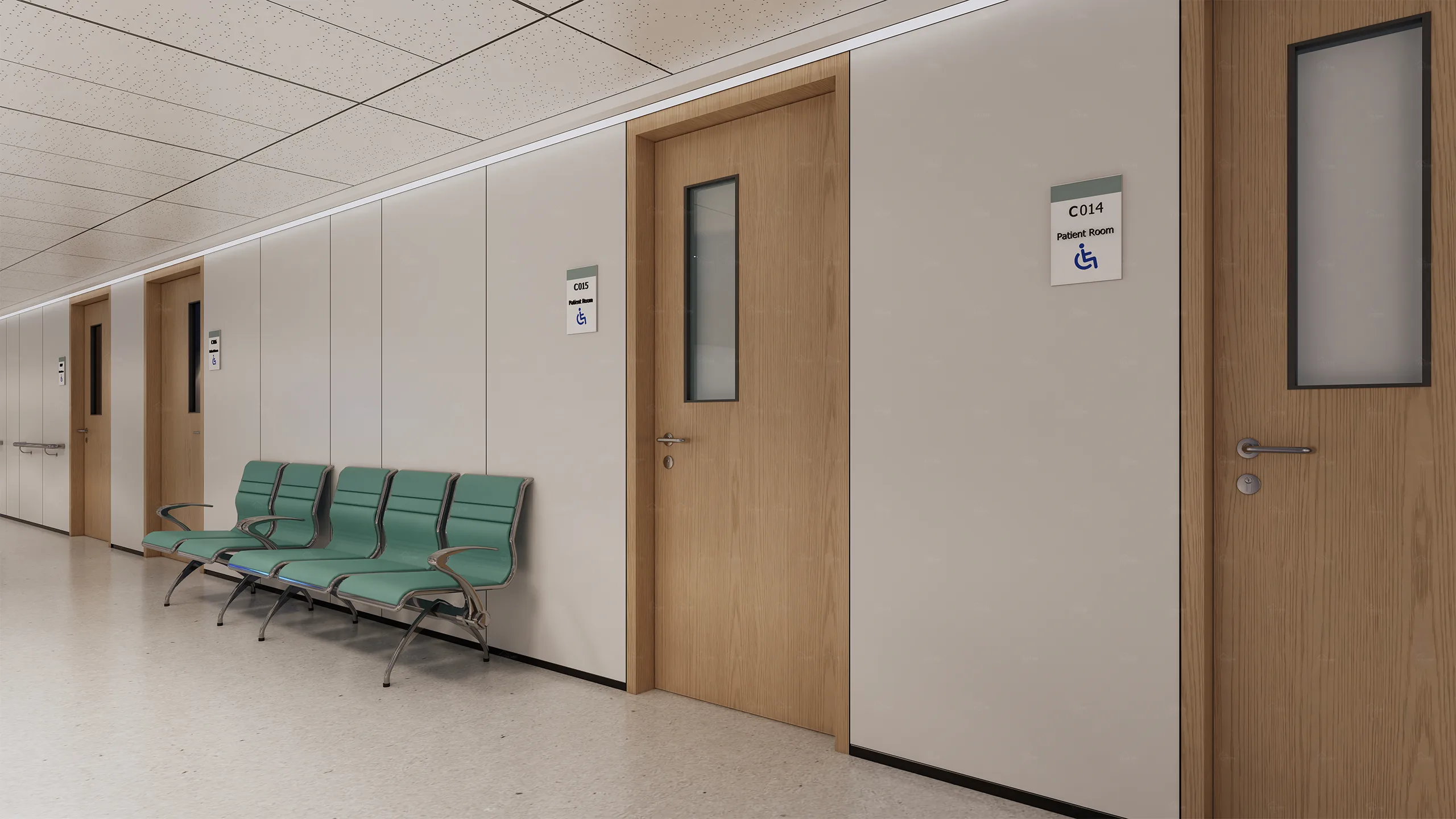
Fire-resistant doors in hospitals also protect critical areas such as pharmacies, storage rooms, and electrical rooms. Smoke-controlled doors help maintain air quality in patient zones during a fire.
EI30 fire doors in healthcare buildings often include glass panels for observation while maintaining safety. This allows staff to monitor patients without opening doors that compromise fire protection.
Additionally, stairwells and escape corridors in healthcare facilities are equipped with fire rated door systems to ensure safe egress during emergencies.
Residential Homes
Even in individual homes, EI30 fire doors are beneficial. They are often installed between garages, kitchens, and living spaces. This helps prevent fires from spreading quickly and gives occupants more time to escape.
Fire resistant doors can also be used in utility rooms, storage closets, and home offices. Installing these doors in critical locations adds an extra layer of safety in the event of an electrical or kitchen fire.
Homeowners increasingly choose fire rated doors with smoke seals or intumescent strips. This combination protects both people and property without affecting home aesthetics.
Stairwells and Escape Routes
Stairwells and corridors are primary evacuation routes in any building. EI30 Fire Rated Doors ensure these areas remain clear of flames, smoke, and heat. Doors equipped with closers and intumescent seals create fire compartments that maintain safe egress paths.
Escape routes often connect multiple floors or zones. Installing fire resistant doors in stairwells, landings, and corridor entries prevents fire from spreading vertically or horizontally.
Properly maintained fire rated door systems in stairwells give occupants more time to exit, especially in multi-story buildings, apartments, and hotels.
Utility and Service Rooms
Utility rooms, boiler rooms, electrical cabinets, and storage areas often contain flammable or heat-producing equipment. EI30 Fire-Rated Doors isolate these spaces, reducing the fire risk to the rest of the building.
These doors help protect both property and occupants. Smoke seals and fire door closers enhance safety by keeping doors closed under fire conditions.
By installing a certified fire rated door assembly, buildings ensure that high-risk areas are contained and hazards are minimized, improving overall fire safety for all occupants.
How Is an EI30 Fire Door Tested?
Testing proves that a door can block flames, limit heat transfer, and control smoke for 30 minutes. A certified fire rated door gives building owners, architects, and occupants confidence that the system will perform in a real fire. Testing follows strict standards and is conducted in controlled laboratory environments.
Fire Resistance Testing Process
The fire resistance test evaluates how well a fire-rated door performs under extreme conditions. Laboratories simulate fire exposure using specially designed furnaces, temperature sensors, and controlled measurement methods.
The process checks three main aspects: flame resistance, heat insulation, and structural integrity. Together, these determine whether the EI30 fire door assembly can safely hold back fire and heat for 30 minutes.
Testing also examines the door’s complete assembly, not just the door leaf. Frames, hinges, seals, and closers are included because a door is only as strong as its weakest component.
Furnace Testing
Furnace testing exposes the EI30 fire rated door to intense heat and flames. The door is mounted in a test frame that replicates a real-life installation. Temperatures inside the furnace rise according to a standardized curve.
During this phase, the door leaf, frame, and seals are monitored to assess their response. The goal is to ensure the door maintains integrity without burning through, warping, or opening unexpectedly.
Furnace testing also shows how the door resists flames from one side to the other. Only doors that pass this exposure test can be certified as fire-resistant.
Temperature Monitoring
Temperature sensors are placed on the non-fire side of the fire rated door to measure heat transfer. These sensors help verify that insulation performance meets the EI30 rating.
If temperatures rise too quickly, it may indicate the door is not providing sufficient protection. The sensors continuously record data to ensure the door effectively slows the spread of heat.
Accurate monitoring allows engineers to evaluate materials, seals, and design features, confirming that the EI30 fire door assembly performs reliably under stress.
Integrity Assessment
Integrity assessment focuses on whether flames or hot gases pass through the door. Inspectors watch for cracks, gaps, smoke leakage, or flaming material on the non-fire side.
The fire rated door leaf and frame must remain intact for the full 30 minutes. Hinges, closers, and seals are also observed to ensure nothing fails prematurely.
This step is crucial because integrity failure can quickly spread fire to adjacent rooms, defeating the purpose of a certified EI30 fire door.
Insulation Assessment
Insulation assessment measures how well the fire-resistant door limits the temperature rise. Even if flames are blocked, heat alone can ignite materials on the safe side.
The test ensures that the EI30 door keeps the non-fire side cool enough to protect people and property for the full 30 minutes. This includes checking intumescent and smoke seals, door cores, and any glazing panels.
Insulation performance is as important as integrity. Together, they confirm that the EI30 fire-rated door system will function in real fire situations.
What Happens During the 30-Minute Test?
During the 30-minute test, the fire rated door is fully exposed to fire in a controlled furnace. Flames and heat are applied to one side while sensors record performance on the safe side.
Inspectors monitor integrity, insulation, smoke leakage, and hardware stability. The door must remain closed and functional, with no significant cracks, gaps, or warping.
Passing this test means the door successfully holds back flames and heat for 30 minutes. Certified EI30 fire doors are then marked and labeled for use in buildings.
Why Certification Matters?
Certification ensures that the EI30 Fire Rated Door you install meets recognized safety standards. Without certification, there is no guarantee the door will perform as expected in an emergency.
Certified doors help building owners comply with local fire codes and insurance requirements. They also give occupants confidence that evacuation routes, corridors, and stairwells are protected.
In short, certification is not just a formality—it proves that the fire-resistant door assembly has been tested, is reliable, and is safe in real-life fire situations.
Damaged Seals and Hinges: The Impact on Fire Safety
Another common issue is damaged seals and hinges, which can seriously impact the effectiveness of fire doors.
- Damaged Seals: Fire door seals are designed to expand when exposed to heat, filling any gaps around the door and frame. This is a critical feature because it prevents smoke and flames from passing through. Over time, seals can wear out or become damaged, especially if the fire door is frequently used or exposed to harsh conditions. A broken seal can compromise the fire door’s ability to contain fire and smoke, which puts the safety of the building’s occupants at risk.
- Damaged Hinges: Fire door hinges are designed to withstand high temperatures without warping or failing. If the hinges become damaged or corroded, the fire door may not open or close properly, or it might even fall off its frame. Hinges are a critical component that ensures the door stays in place during a fire so that any damage can compromise the door’s function.
Improved Life Safety
The most important benefit of an EI30 Fire Rated Door is enhanced life safety. These doors slow the spread of flames, heat, and smoke, giving occupants more time to escape safely.
In multi-story buildings, stairwells, and corridors, fire resistant doors help maintain clear evacuation routes. By creating safe zones, these doors reduce the risk of injury or fatalities during an emergency.
Even in smaller residential settings, an EI30 fire door provides a protective barrier between fire sources and living areas. This extra time can be the difference between safe evacuation and serious harm.
Better Property Protection
EI30 Fire Rated Doors help protect property from fire damage. By containing flames and heat, these doors limit the fire to a single room or zone, preventing it from spreading to other areas.
Valuable equipment, furniture, and important documents benefit from this added protection. Businesses, schools, and healthcare facilities can reduce financial losses by installing fire rated doors in key areas.
Combined with fire-resistant frames, intumescent seals, and smoke seals, an EI30 fire door system acts as a robust shield for both occupants and property.
Enhanced Building Compliance
Using EI30 Fire Rated Doors helps buildings meet local fire codes and international standards. Certified doors show that a property owner takes fire safety seriously and adheres to regulations.
Codes often require fire doors in corridors, stairwells, utility rooms, and shared spaces. Installing fire resistant doors ensures compliance, reduces legal liability, and may improve insurance coverage.
Moreover, using certified EI30 fire doors demonstrates due diligence during inspections. This is especially important in commercial buildings, healthcare facilities, and schools, where safety audits are frequent.
Reduced Fire Damage
A key benefit of EI30 fire doors is the reduction of fire damage. By slowing the spread of flames and heat, these doors help contain the fire within a controlled area.
This containment prevents secondary fires and limits structural damage. Firefighters also gain more time to respond effectively, reducing overall impact.
When combined with smoke seals, fire-rated glass, and intumescent strips, the fire resistant door system minimizes damage to building interiors, equipment, and furnishings.
Increased Occupant Confidence
Installing EI30 Fire-Rated Doors boosts confidence among everyone in the building. Occupants feel safer knowing that the doors help protect them from fire and smoke.
In workplaces, schools, hospitals, and residential buildings, confidence in fire safety can reduce panic during emergencies. People are more likely to follow evacuation procedures when they trust the fire rated door system.
This confidence also benefits property owners and managers, as occupants perceive the building as safer and better maintained. Certified EI30 fire doors demonstrate that safety is a top priority, building trust and peace of mind.

How to Identify a Genuine EI30 Fire Door?
Many doors may look solid, heavy, or well-made, but that does not mean they can resist fire for 30 minutes. A genuine EI30 fire door must be accompanied by proof, such as labels, test reports, manufacturer documents, and certified hardware.
Check the Certification Label
The first thing to check is the certification label. A genuine EI30 Fire Rated Door should have a clear label, plate, or marking from a recognized testing body. This label usually shows the fire rating, product type, manufacturer name, and sometimes the test standard.
A proper label helps confirm that the door has passed fire resistance testing. It also tells building inspectors and facility managers that the fire rated door system is not just a regular door with a fire-safe claim.
If the label is missing, damaged, painted over, or hard to read, be careful. It does not always mean the door is fake, but it does mean you should ask for more proof before accepting it as a certified EI30 fire resistant door.
Review Test Reports
A test report provides stronger evidence of performance. It shows how the Fire-Rated Door was tested, which standard was used, and whether the door met the EI30 requirement. For large projects, this document is often just as important as the label.
When reviewing a report, check that the tested door type matches the door you are buying or installing. The size, core material, frame type, glass panel, seals, and hardware should be the same or covered by the report.
Also, look for the test result itself. A compliant EI30 fire door should show both integrity and insulation performance for 30 minutes. If the report only mentions basic flame resistance, it may not be a true EI30 rated door.
Verify Manufacturer Documentation
A trusted manufacturer should provide clear documentation for every certified EI30 Fire-Rated Door. These may include product data sheets, installation guides, maintenance instructions, and certificates of conformity.
Good documentation helps installers fit the door correctly. It also helps owners maintain the fire rated door assembly over time. Even the best fire door can fail if it is installed with the wrong gaps, wrong screws, or missing seals.
So, before buying, ask the supplier for full product documentation. If the manufacturer cannot provide basic proof, the door may not meet EI30 fire safety standards.
Look for Certified Hardware
A real EI30 fire door system needs certified hardware. This includes fire-rated hinges, locks, latches, door closers, panic bars, seals, and glazing systems when glass is used.
Standard hardware may look fine in daily use, but it can fail fast under heat. For example, weak hinges can bend, and a poor closer may not fully shut the door. Once the door stays open or drops out of line, the Fire Rated Door cannot protect the opening.
Always check that the hardware matches the door’s fire rating. A certified EI30 Fire Rated Door should use components that have been tested as part of the full assembly or approved for that rated system.
Common Warning Signs of Non-Compliant Doors
One common warning sign is a missing or unclear label. Another is a supplier who cannot provide test reports or manufacturer documents. In many cases, a non-compliant door is sold as “fire resistant” without real proof.
You should also watch for poor installation. Large gaps around the frame, missing intumescent seals, broken smoke seals, loose hinges, or a door that does not close by itself can all weaken the fire rated door system.
Be careful with doors that have untested glass, standard hardware, or field-made changes. Cutting holes, trimming the door leaf too much, or replacing certified parts with cheaper ones can turn an EI30 Fire Rated Door into a normal door with very little fire protection.

Final Thoughts
Summary of Key Points
A certified EI30 Fire Rated Door is designed to provide both integrity and insulation for 30 minutes. That means it helps stop flames from passing through and also limits heat on the safe side of the door.
However, a Fire Rated Door only works well when the whole system is correct. The door leaf, frame, seals, hinges, closer, locks, and any glass panels must match the tested fire rating.
So, when choosing an EI30 fire door, do not only look at price or style. Check the certification label, test reports, manufacturer documents, and certified hardware before making a final choice.
Is an EI30 Fire Rated Door the Right Choice?
For many projects, an EI30 Fire Rated Door is a smart and practical option. It offers strong fire protection without being overly complex or costly.
It suits many common areas, such as apartment corridors, office rooms, hotel guest rooms, schools, healthcare spaces, stairwells, and service rooms. In these places, a 30-minute fire rated door can help protect people and support safe evacuation.
It suits many common areas, such as apartment corridors, office rooms, hotel guest rooms, schools, healthcare spaces, stairwells, and service rooms. In these places, a 30-minute fire rated door can help protect people and support safe evacuation.
When EI30 Is Sufficient
An EI30 fire door is often sufficient where the goal is to slow fire spread during the early stage of an emergency. It works well in many standard internal locations where 30 minutes of protection meets the required code.
For example, EI30 can be enough for apartment entrances, office corridors, hotel rooms, classrooms, utility rooms, and some residential areas. These spaces usually need a reliable Fire Rated Door system that gives people time to move to safety.
In the end, an EI30 Fire Rated Door is a solid choice when you need tested fire safety, clear compliance, and everyday usability. It protects quietly in the background, but when a fire starts, it becomes one of the most important parts of the building.
Relate FAQ
Is an EI30 fire rated door suitable for residential buildings?
Yes. EI30 fire doors are widely used in residential buildings, apartment corridors, stairwells, utility rooms, and escape routes. They provide sufficient fire resistance to support safe evacuation and delay fire spread.
What does the "EI" classification stand for?
The "EI" classification comes from European fire resistance standards:
- E = Integrity (prevents flames and smoke penetration)
- I = Insulation (limits heat transfer)
How is an EI30 fire door tested?
EI30 fire doors are tested in accordance with recognized standards, such as EN 1634-1, and are classified under EN 13501-2. During testing, the door assembly is exposed to extreme temperatures while its ability to maintain integrity and Insulation is evaluated.
Can EI30 fire doors stop smoke?
An EI30 fire door can help reduce smoke spread, but dedicated smoke-control performance may require additional smoke seals and certification depending on local regulations. Always verify the complete door specification.
Are glazed EI30 fire doors available?
Yes. EI30 fire-rated glazed doors are available and use specially tested fire-resistant glass systems. These doors provide both fire protection and visibility while maintaining the required fire rating.
Does an EI30 fire door need a fire-rated frame?
Absolutely. The door leaf, frame, hardware, seals, glazing, and installation method must all be tested and certified as a complete fire-rated assembly. Using non-certified components can compromise fire performance.
Are EI30 fire doors mandatory?
Building regulations vary by country and project type. Many jurisdictions require certified fire-rated doors in escape routes, stairwells, corridors, and compartment walls to improve life safety and property protection.