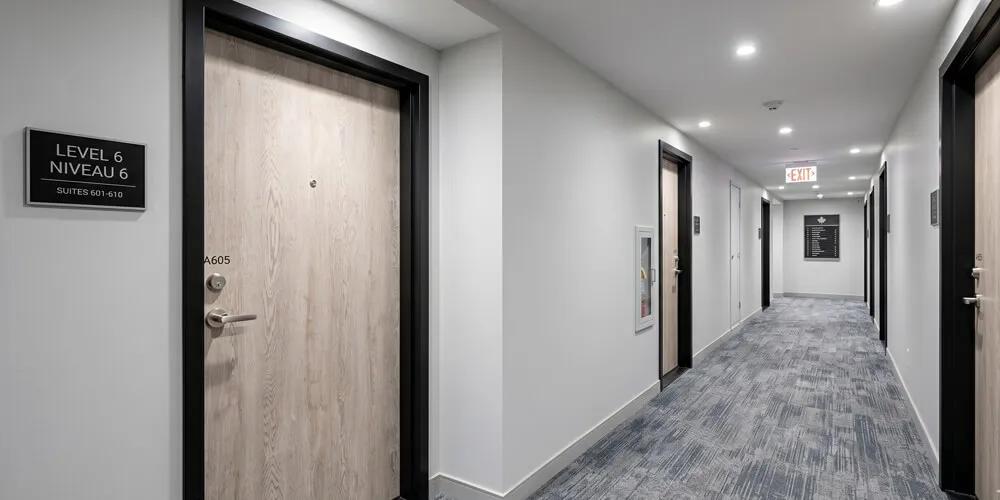
Guangdong Yohome Door Co., Ltd. Achieves Key North American Fire Door Certifications
A Key Step Forward For Yohome In North America
For any Fire Door manufacturer, entering the North American market takes more than a good product. Fire doors are a key part of a building’s passive fire protection system, so they must meet strict safety rules and testing standards.
For Yohome, gaining recognized Fire Door certifications for North America marks an important step forward. It shows that the company is not only expanding its product range but also building the technical base needed to serve projects with higher fire-safety demands.
This progress also gives architects, contractors, developers, and distributors more confidence when choosing a certified Fire Door manufacturer. Instead of looking only at price or design, buyers can check whether the fire-rated door has undergone the appropriate tests and meets the standards required for their project.
What Has Yohome Achieved?
Yohome has made clear progress in the field of Fire Door testing and certification. Its fire-rated door products have gone through recognized testing and evaluation processes designed for the North American market.
This is important because a Fire Door is not just a standard door made with different materials. It works as part of a complete fire protection system. The door leaf, frame, hardware, seals, glazing, and other parts may all affect how the assembly performs during a fire.
For this reason, achieving North American Fire Door certification requires careful work across product design, material selection, manufacturing, testing, and quality control.
Yohome’s progress demonstrates its growing ability to develop fire-rated door assemblies that meet real market requirements. It also helps the company support a wider range of commercial, residential, hospitality, healthcare, and other building projects that may require certified fire doors.
More importantly, certification is not the end of the process. Consistent production matters as much. A qualified Fire Door supplier needs to keep tight control over materials, production steps, hardware options, and finished products so that the doors supplied to customers remain consistent with the tested and certified configurations.
Why These Fire Door Certifications Matter?
When a fire starts, every minute matters. A properly designed Fire Door can help slow the spread of fire and smoke between different areas of a building. This can give occupants more time to leave and can support the building’s overall fire protection strategy.
A recognized Fire Door certification provides architects, builders, inspectors, and property owners with documented information on how a door assembly has performed under specific test conditions. It also makes it easier for project teams to select products that match applicable codes, specifications, and approval requirements.
For contractors and developers, this can reduce uncertainty during product selection. For distributors, it can make a certified fire-rated door easier to position for projects that call for specific standards. And for building owners, it provides an additional level of confidence that the selected door has been evaluated for its intended fire-protection role.
There is also a practical business benefit. North American projects often have detailed requirements for commercial Fire Doors, fire-rated steel doors, fire-rated wood doors, Fire Door frames, and complete fire-rated door assemblies. Having the right certifications opens the door to more project types and makes communication with local partners much easier.
Yohome’s Key North American Fire Door Certifications
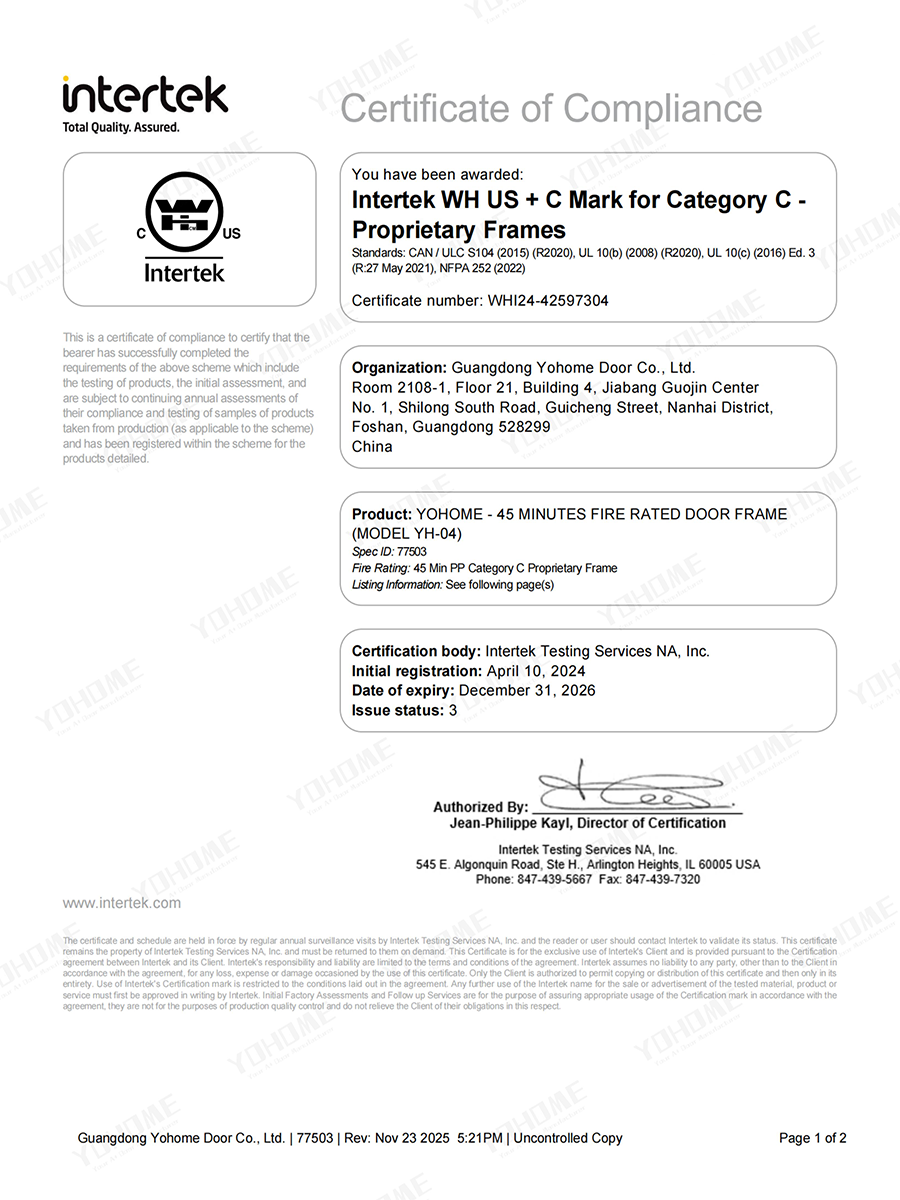
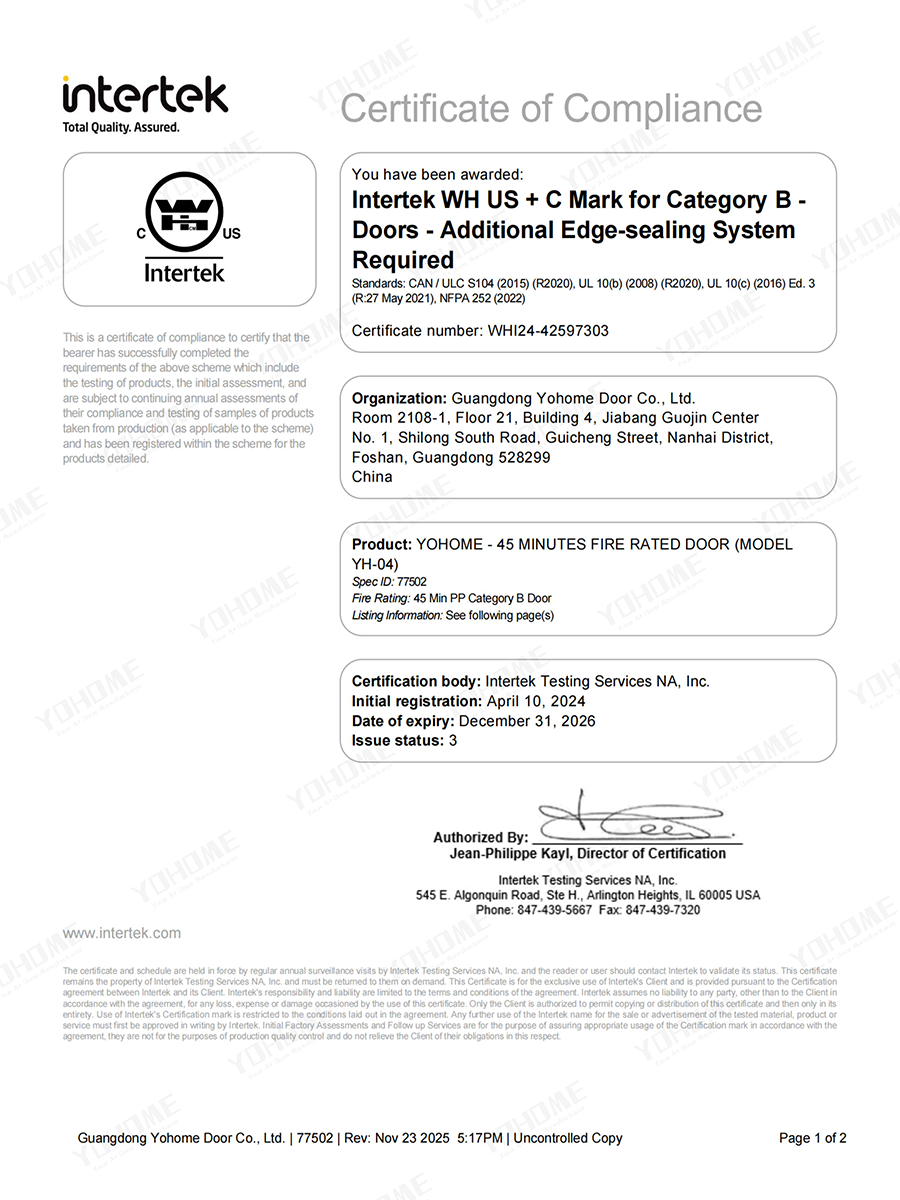
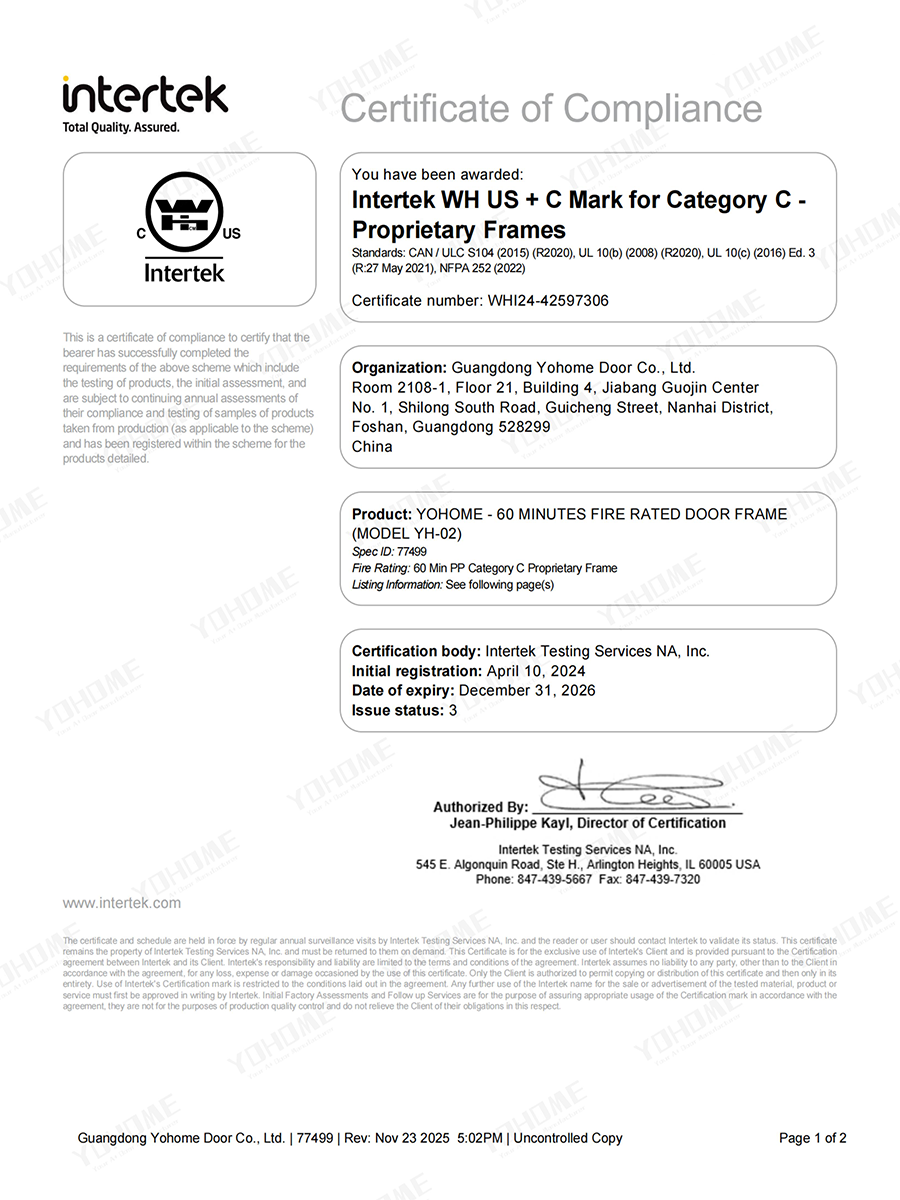
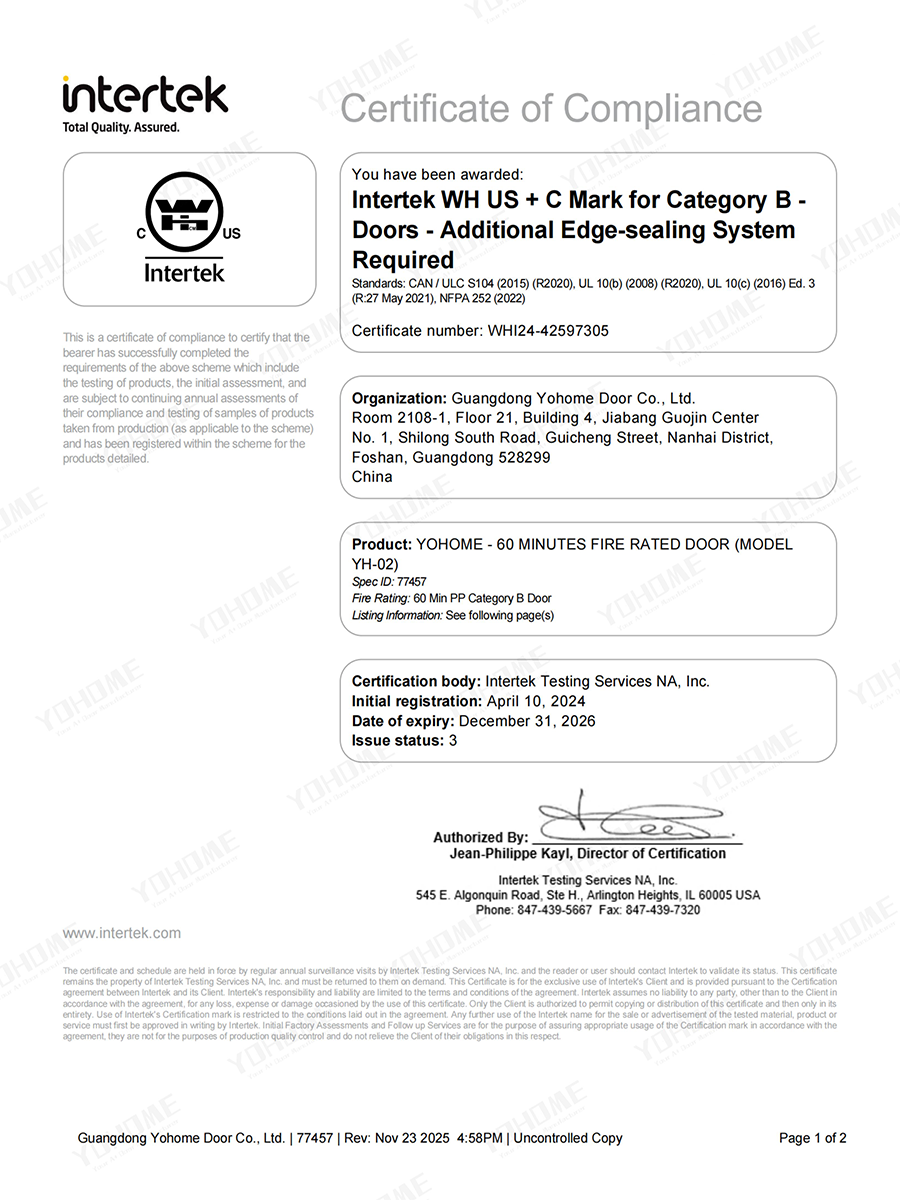
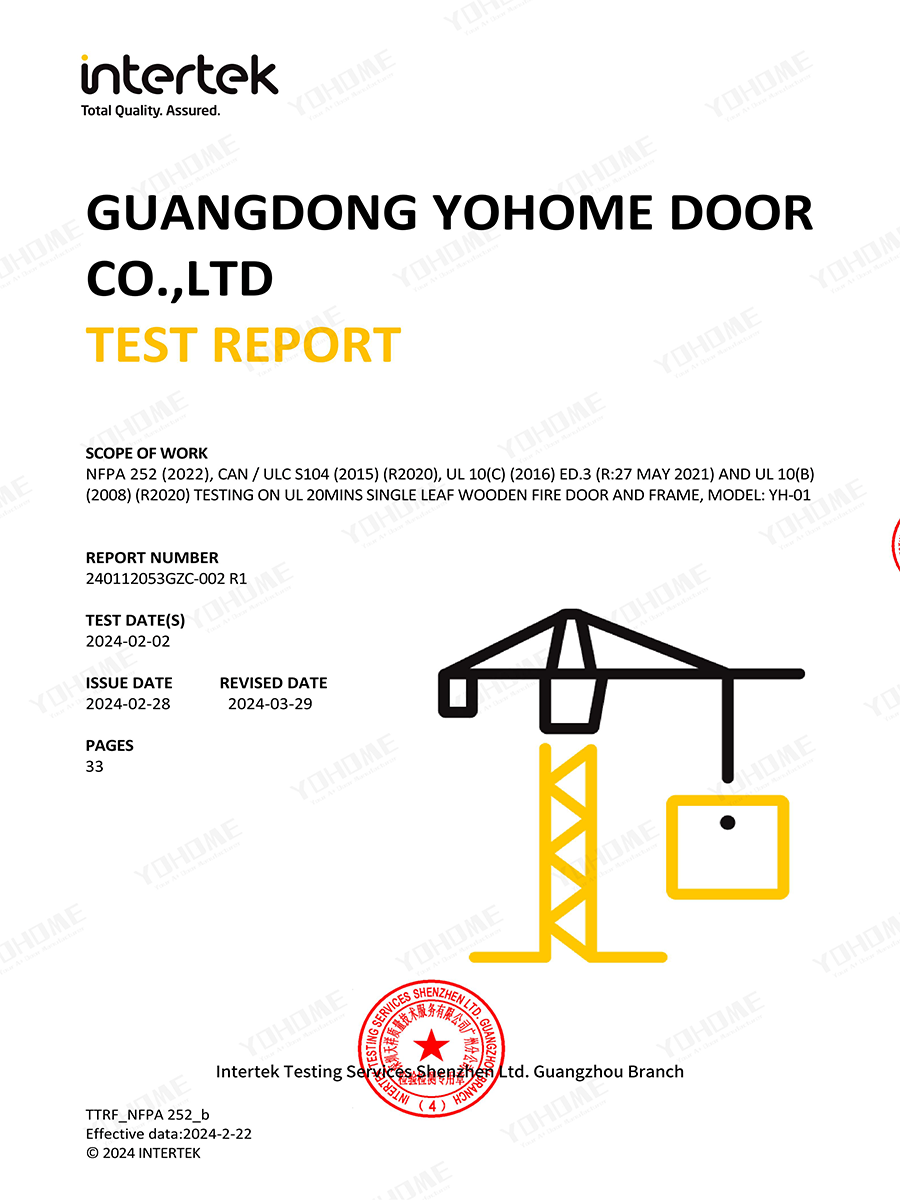
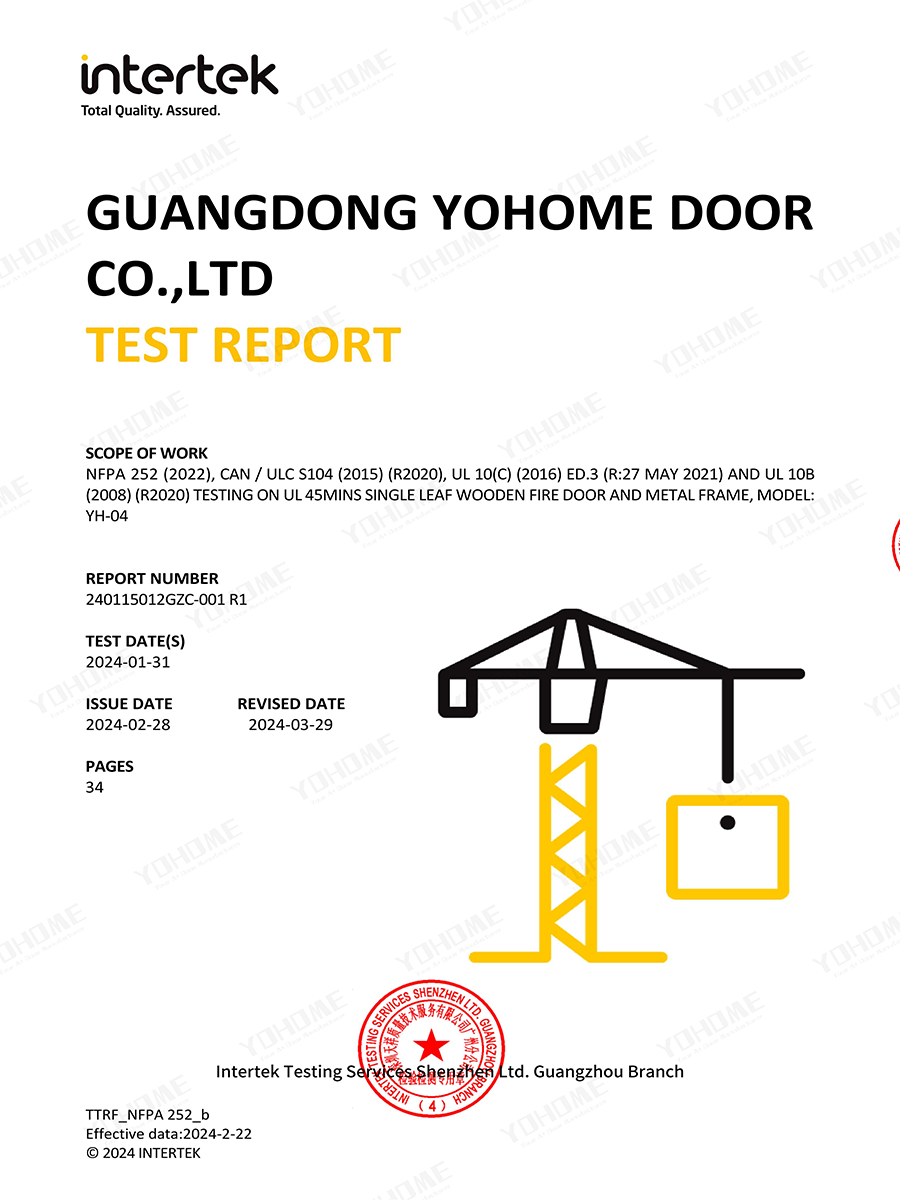
Yohome’s North American Fire Door certifications are an important part of its strategy to serve customers in the United States, Canada, and the broader regional market. Yhome has already obtained fire safety certifications, including UL 10b, UL 10c, CAN/ULC S104, and NFPA 252.
Click here for more information on Yohome’s certifications.
Depending on the product and its intended use, North American Fire Door testing standards can cover several areas of performance. These may include how long a fire-rated door assembly can resist fire exposure, how the assembly behaves under test conditions, and whether its components work together as required.
This matters because customers are rarely buying only a door leaf. In many projects, a complete Fire Door system is required, including the door, frame, hinges, locks, closers, seals, glazing, and other approved hardware. Each part needs to match the tested or listed configuration.
For architects and specifiers, this can make it easier to evaluate Yohome products against project requirements. For contractors, it can simplify sourcing when a project calls for a specific Fire Door rating or certified fire door assembly. For distributors, it provides stronger technical support when introducing Yohome products to local customers.
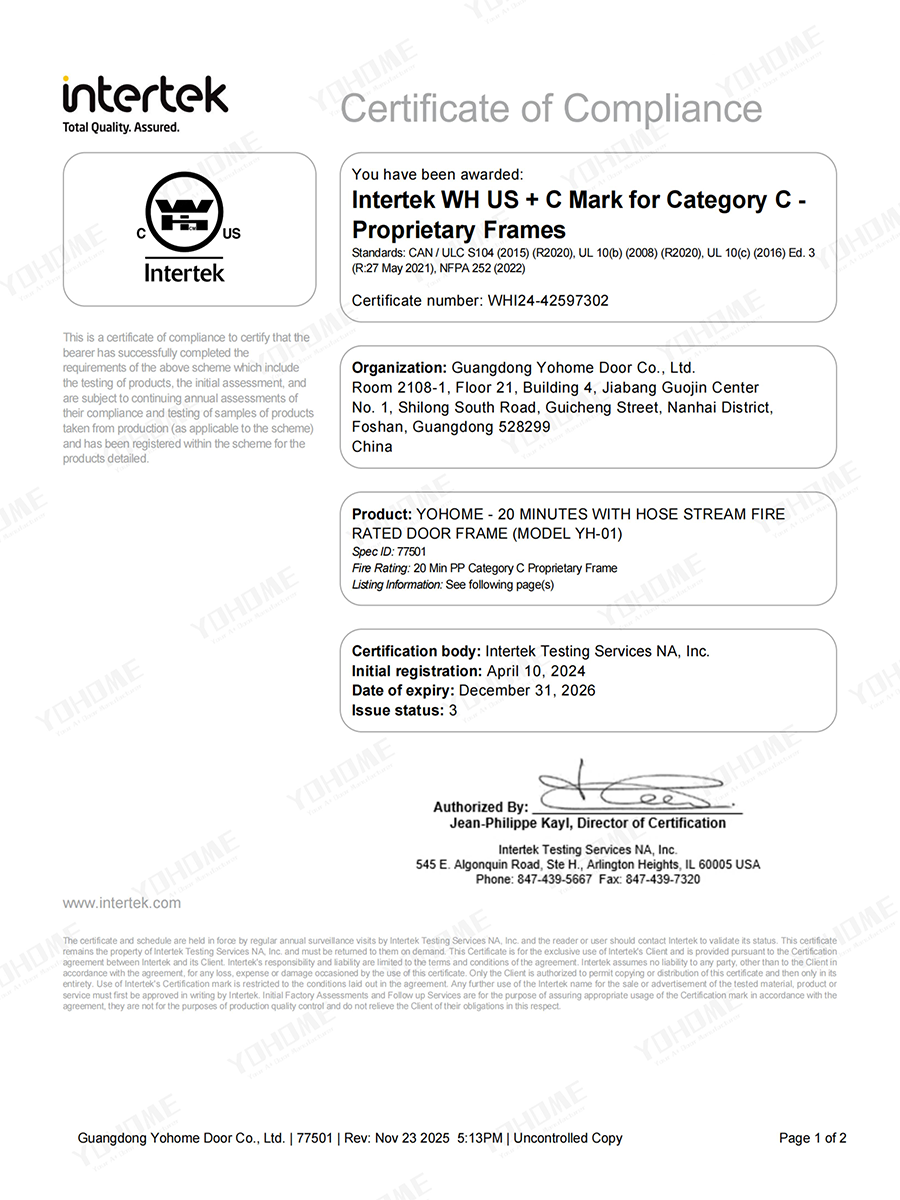
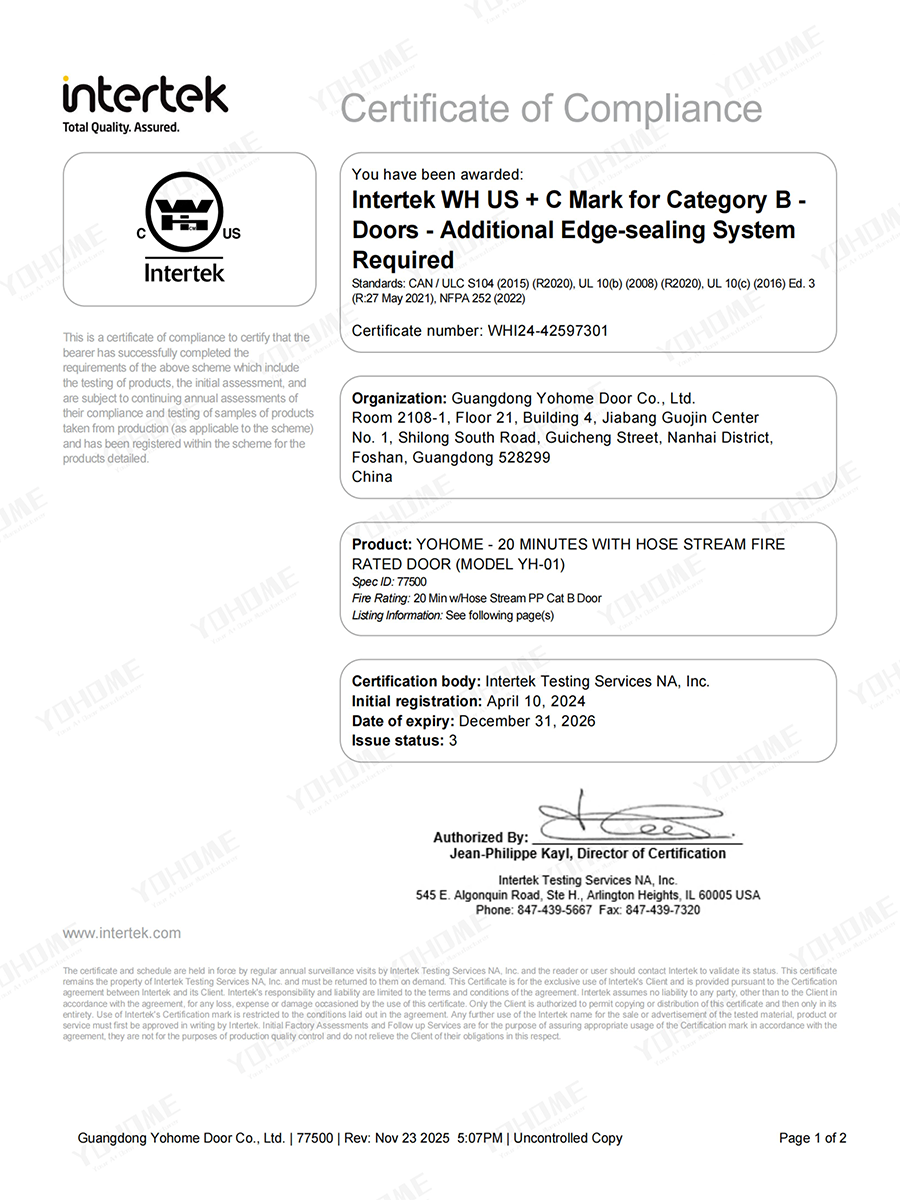
Detailed certification information is available via the link on Intertek’s official website.
UL 10B Fire Door Testing
UL 10B is an important Fire Door testing standard used to evaluate how a door assembly performs during fire exposure. It helps manufacturers confirm the fire resistance of the complete system, including the door, frame, and related parts. For Fire Door suppliers that want to serve North American projects, UL 10B testing provides clear proof of tested performance and supports compliance with project fire safety needs.
What UL 10B Covers?
UL 10B focuses on the fire performance of Fire Door assemblies under neutral or negative pressure conditions during the furnace test. The goal is simple: check whether the Fire Door can limit the spread of fire for its stated fire rating. The test exposes the door assembly to controlled heat that follows a defined time-temperature curve.
The test looks at more than the fire-rated door itself. The complete assembly matters, including the Fire Door frame, hardware, glazing, and other components used in the tested setup. This is important because even a strong door leaf may not perform as expected if other parts of the assembly fail too early.
UL 10B testing may support common Fire Door ratings, depending on the tested assembly and its approved listing. These ratings help architects, contractors, and building teams choose a certified Fire Door that fits the needs of a specific opening. In practice, the required rating depends on the building code, wall rating, location, and project design.
For a Fire Door manufacturer, passing the required tests is only part of the job. The production door must also stay consistent with the tested design. Materials, construction details, hardware preparation, and other key features require tight quality control to ensure customers receive a reliable fire-rated door assembly.
UL 10C Positive Pressure Fire Testing
UL 10C takes Fire Door testing a step further by using positive pressure conditions during part of the fire test. As the test continues, the pressure inside the furnace exceeds the pressure on the unexposed side above the neutral pressure plane. This setup can push hot gases toward and through gaps around the Fire Door assembly.
Because of this pressure, UL 10C can impose different demands on a fire-rated door and frame assembly than a neutral- or negative-pressure test. Hot gases can reach the upper areas and edges of the door more directly. As a result, the way the door, frame, seals, glazing, and hardware work together becomes especially important.
For manufacturers targeting the U.S. market, UL 10C Fire Door testing can be important because positive-pressure requirements are common in many modern building code applications. A tested and properly listed Fire Door can therefore help architects, contractors, and distributors meet project specifications with greater confidence.
Still, a UL 10C test should always be viewed as a complete system test. Changing the Fire Door construction or using components outside the approved configuration may affect compliance. That is why buyers should check the actual listing, rating, hardware options, and installation requirements for the specific fire-rated door they plan to use.
Why Positive Pressure Testing Matters?
Positive pressure testing better reflects an important condition that can develop during a building fire. As hot gases rise and pressure builds, those gases may move toward openings and gaps. A positive-pressure Fire Door test checks how the door assembly performs when positive pressure pushes hot gases against the opening.
This makes the test especially useful for evaluating the full Fire Door system rather than the door leaf alone. The frame, edge details, seals, glazing, and hardware all play a role. If one part does not match the tested design, the performance of the complete fire-rated door assembly may change.
For architects and contractors, a UL 10C-certified Fire Door can also make product selection more straightforward when positive-pressure compliance is required. They can review the listing and compare it with the project specifications, local code requirements, and the intended location of the Fire Door.
For Fire Door manufacturers such as Yohome, positive pressure testing also supports stronger product development. It pushes the team to think about how every part works together under demanding fire conditions. In the end, that means a North American Fire Door solution built around tested performance, clear specifications, and real project needs.
NFPA 252 Fire Door Testing
NFPA 252 is a widely recognized Fire Door testing standard in North America. It establishes test methods to measure how a complete fire door assembly performs when exposed to fire. For a Fire Door manufacturer, meeting NFPA 252 requirements helps show that the door, frame, hardware, and related parts can work together as a tested fire protection system.
How NFPA 252 Supports Fire Door Safety?
NFPA 252 focuses on the performance of complete Fire Door assemblies under controlled fire test conditions. During testing, the assembly is subjected to a standard fire exposure for a set period. This allows the test team to assess how well the fire-rated door resists fire and remains in place during the required test period.
The standard looks beyond the door leaf. A fire-rated door assembly may include the Fire Door, frame, hinges, latching hardware, glazing, and other components. These parts need to work together because the performance of one component can affect the safety and integrity of the whole opening.
NFPA 252 also includes a hose stream test under applicable test conditions. This step checks whether the Fire Door assembly can remain intact after fire exposure when subjected to the impact, erosion, and cooling effects of a hose stream. It adds another important performance check beyond furnace exposure alone.
For architects, contractors, and building owners, an NFPA 252 tested Fire Door provides useful evidence when selecting products for fire-rated openings. However, the required door rating and configuration still depend on the building code, wall rating, opening location, and local authority requirements.
CAN/ULC S104 Certification For Canada
CAN/ULC-S104 is a key Canadian standard for Fire Door assembly testing. It provides a standard method for evaluating the performance of fire door assemblies during fire exposure. For manufacturers that want to supply certified Fire Doors in Canada, testing to this standard can form an important part of meeting Canadian project requirements.
Like other major Fire Door standards, CAN/ULC-S104 evaluates the assembly rather than simply judging the door panel on its own. The fire-rated door, frame, hardware, glazing, and other tested components can all affect performance. This system-based approach helps provide a clearer picture of how the opening performs during a fire test.
Testing follows defined fire exposure conditions and evaluates the Fire Door assembly for the applicable rating. Depending on the assembly and certification scope, products can carry specific fire protection ratings. Buyers should therefore check the specific product listing rather than assuming that every Canadian Fire Door offers the same rating or approved configuration.
For a Fire Door manufacturer serving Canada, CAN/ULC-S104 testing also helps create a clearer path from product design to project use. It provides specifiers and contractors with recognized test information to review when selecting a fire-rated door solution for a Canadian building.
What It Means For Canadian Projects?
For Canadian projects, the right Fire Door certification can make product selection much easier. Architects and contractors often need to confirm that a fire-rated opening complies with applicable codes, project specifications, and approved product listings. A Fire Door tested to a recognized Canadian standard gives it a stronger technical basis for that review.
This is especially important for commercial buildings, hotels, apartments, schools, hospitals, and other projects where fire-rated doors and frames form part of the passive fire protection system. The required Fire Door rating can vary by location, so project teams need to match the product to the specific opening rather than use a one-size-fits-all approach.
Certification can also help distributors and contractors avoid confusion during purchasing. They can review the Fire Door rating, listed components, hardware options, glazing limits, and installation details before placing an order. That helps reduce the risk of choosing a configuration that falls outside the tested and certified system.
For Yohome, meeting relevant Canadian Fire Door testing and certification requirements can support its growth in the Canadian market. More importantly, it gives local partners clearer product data and more confidence when specifying a Yohome fire-rated door for real projects. In a safety-focused market, that kind of trust matters as much as the product itself.
What These Certifications Mean For North American Projects?
For a North American building project, Fire Door certification is more than a technical detail. It helps project teams choose fire-rated door systems that fit specific safety and code needs. With recognized Fire Door testing behind the product, architects, contractors, and developers can make decisions based on documented performance instead of product claims alone.
Easier Product Selection For Architects And Contractors
Choosing the right Fire Door can get complicated fast. Architects need to consider the fire rating, opening type, frame, hardware, glazing, and project specifications. Contractors also need to ensure the ordered fire-rated door complies with the approved design and installation requirements.
Recognized Fire Door certifications make this process easier. Test and listing information provides project teams with a clear reference when comparing different fire-rated door assemblies. Instead of relying only on catalogs or sales information, they can check the certification scope and select a system that fits the project.
This also helps during procurement. Contractors can review the Fire Door rating, door frame, hardware options, glazing limits, and other listed components before ordering. Clear information at this stage can reduce mistakes, delays, and last-minute product changes on the jobsite.
For architects and specifiers, certified commercial Fire Door systems can also simplify communication with other project teams. Everyone can work from the same technical information. That makes it easier to move from design and specification to purchasing and installation.
Support For U.S. And Canadian Building Projects
The U.S. and Canada have strict requirements for fire-rated doors and Fire Door assemblies, but the standards and project needs are not always the same. That is why manufacturers serving both markets need to understand the testing and certification requirements that apply to each region.
Standards such as UL 10B, UL 10C, and NFPA 252 play an important role in U.S. Fire Door projects, while CAN/ULC-S104 provides a key testing path for fire door assemblies used in Canada. Having products tested to relevant standards can help manufacturers support a wider range of North American project needs.
This matters across many types of buildings. Hotels, apartments, offices, hospitals, schools, and other commercial facilities may require certified Fire Doors as part of their passive fire protection systems. Project teams can then select the right fire-rated door based on the opening, wall rating, local code, and approved product listing.
For Yohome, covering both U.S. and Canadian Fire Door testing requirements creates a stronger base for regional growth. It also helps local distributors, contractors, and project teams find fire-rated door solutions that better match their market and project specifications.
More Confidence In Fire Door Performance
A Fire Door may look simple from the outside, but its performance depends on many details. The door leaf, frame, hinges, latch, closer, glazing, seals, and other components need to work as a system. Even a small change can matter when the assembly needs to perform during a fire.
Third-party Fire Door testing and certification gives buyers a better way to judge that performance. Rather than simply accepting a claim that a door is “fire resistant,” they can review the tested rating and listed configuration. This creates a clearer link between the product they specify and the system that went through the test process.
Certification also encourages stronger manufacturing control. A reliable Fire Door manufacturer needs to keep materials, construction details, dimensions, and approved components consistent with its certified designs. This helps reduce the gap between a test sample and the fire-rated doors supplied for actual projects.
In the end, confidence comes from evidence. Recognized North American Fire Door certification provides architects, contractors, distributors, and building owners with useful proof that a product has undergone defined test conditions. Combined with the right product selection and installation, this provides a stronger foundation for fire door safety in real buildings.
Yohome’s Approach To Fire Door Quality
At Yohome, Fire Door quality starts long before a finished door leaves the factory. The team focuses on tested systems, stable production, and careful checks throughout the process. From materials and Fire Door construction to packing and delivery, each step aims to keep the finished product consistent with the approved design and the needs of North American projects.
Tested Fire Door Systems
A reliable Fire Door system is more than a strong door leaf. The door, frame, hardware, glazing, seals, and other components need to work together. For this reason, Yohome develops its fire-rated door solutions around tested assemblies instead of treating each component as a separate product.
Testing helps show how a fire-rated door assembly performs under defined fire conditions. Depending on the product and market, Fire Door systems may need to meet standards such as UL 10B, UL 10C, NFPA 252, or CAN/ULC-S104. These tests give architects and contractors useful information when reviewing products for a project.
Just as important, Yohome pays attention to the details covered by each tested configuration. Door construction, dimensions, frame type, glazing, and hardware options can affect the approved Fire Door system. Keeping these details clear helps customers select the right configuration rather than relying solely on a fire rating.
For project teams, this approach makes a practical difference. They can review the available certified Fire Door assemblies against project specifications and local requirements. This creates a clearer path from product selection to ordering and installation.
Quality Control From Production To Delivery
Good Fire Door quality control starts with the materials. Yohome checks key materials and components before they move into production. The team also oversees key details during manufacturing to ensure each fire-rated door meets the required product specifications.
During production, the team checks areas such as door dimensions, construction details, frame preparation, hardware locations, and surface quality. These checks help catch problems early, when they are easier to correct. For a Fire Door manufacturer, this consistency matters because small production changes can affect the final assembly.
Quality checks continue after production. Before packing, the team reviews the finished Fire Door and frame against the order requirements and relevant product details. Proper labels, accessories, quantities, and packaging also require attention, especially for large commercial Fire Door orders involving multiple door types.
Finally, strong packaging helps protect fire-rated doors during shipping and handling. A well-made Fire Door can still cause problems on site if it arrives damaged or with missing parts. By controlling the process from production through delivery, Yohome aims to make installation easier for contractors and project teams.
Custom Door Solutions For Different Projects
No two building projects are the same. A hotel may need different Fire Door solutions than a hospital, an apartment building, a school, or an office. Door sizes, finishes, frames, glazing, hardware, and fire ratings can vary, so Yohome works with project requirements rather than relying on a single standard configuration for every job.
Yohome can support custom fire-rated door solutions based on the available tested and certified configurations. Customers can discuss details such as door dimensions, single- or double-door options, frame options, finishes, vision panels, and compatible hardware. This gives architects and contractors more flexibility when planning different openings.
However, customization for a certified Fire Door has clear limits. A requested change must stay within the scope of the applicable listing or approved system when certification is required. Yohome reviews these details before production so the project team can understand which options work with the selected fire-rated door assembly.
This balance between flexibility and compliance is important for North American projects. Customers get a custom Fire Door solution that fits the building’s design and practical needs, without treating certification as an afterthought. For Yohome, the goal is simple: provide the right door for the project while keeping tested performance and product quality at the center.
What This Milestone Means For Yohome?
Achieving key Fire Door certifications for North America marks an important stage in Yohome’s growth. It shows that the company has taken real steps to align its fire-rated door systems with recognized U.S. and Canadian testing requirements. More importantly, it gives Yohome a stronger base for working with architects, contractors, distributors, and developers across the region.
For Yohome, this milestone goes beyond adding certificates to a product list. Fire Door testing and certification require careful work in product design, material selection, manufacturing, and quality control. Each step helps the team better understand what North American projects expect from a reliable Fire Door manufacturer.
It also creates new opportunities for Yohome’s certified Fire Door systems. Commercial buildings, hotels, apartments, schools, hospitals, and other projects often have detailed requirements for fire-rated openings. With relevant testing and certification in place, Yohome can better support these project needs with clearer technical information.
Stronger Support For North American Customers
For North American customers, choosing a Fire Door supplier is not only about finding the right size, style, or price. Project teams also need to consider fire ratings, tested configurations, frames, hardware, glazing, and local code requirements. Clear product information can make that process much easier.
Yohome’s growing range of North American Fire Door certifications helps the team provide more useful support during product selection. Customers can discuss their project specifications, required fire ratings, door sizes, and hardware needs before placing an order. This helps reduce confusion and makes it easier to identify a suitable fire-rated door assembly.
Support also continues during production. For custom and commercial Fire Door projects, details matter. Yohome works to keep door construction, dimensions, frames, hardware preparation, finishes, and other key features aligned with the confirmed order and applicable certified configurations.
Then comes delivery and installation. Clear documentation, careful packing, and accurate order details can save valuable time on the jobsite. By combining certified Fire Door products with practical project support, Yohome aims to simplify sourcing fire-rated doors from overseas manufacturers for U.S. and Canadian customers.
A Wider Reach In The Global Fire Door Market
North America is one of the world’s important markets for Fire Door systems and passive fire protection products. Expanding into this region, therefore, gives Yohome more than just access to new customers. It also pushes the company to work with demanding standards and a wider range of building requirements.
Experience with standards such as UL 10B, UL 10C, NFPA 252, and CAN/ULC-S104 can also strengthen Yohome’s technical knowledge. This experience supports the continued development of commercial Fire Doors, fire-rated door assemblies, Fire Door frames, and custom fire door solutions for different project types.
At the same time, global buyers increasingly look for more than low-cost products. They want a Fire Door manufacturer that can provide clear test information, stable quality, practical customization, and dependable project support. Building these capabilities can help Yohome compete on more than price alone.
For Yohome, the larger goal is steady and sustainable growth in the global Fire Door market. North American certification is an important part of that journey. By combining proven performance, consistent manufacturing, and customer-focused service, Yohome can continue to build stronger relationships with Fire Door distributors, contractors, and project partners worldwide.
Relate FAQ
What Fire Door Certifications Does Yohome Have In North America?
Guangdong Yohome Door Co., Ltd. has expanded its North American Fire Door certification coverage around key fire door testing standards, including UL 10B, UL 10C, NFPA 252, and CAN/ULC-S104. These standards address the fire performance of fire door assemblies for U.S. and Canadian applications.
Does Yohome Meet America Fire Door Standards?
Yes. Guangdong Yohome Door Co., Ltd. offers fire-rated door assemblies that have been independently tested and certified to key U.S. fire door standards, including UL 10B, UL 10C, and NFPA 252.
Does Yohome Meet Canadian Fire Door Standards?
Yes. Guangdong Yohome Door Co., Ltd. offers fire-rated door assemblies tested and certified to CAN/ULC S104, a key Canadian standard for fire tests of door assemblies.
Can Yohome customize fire-rated doors for hotels and apartments?
Yes. Yohome specializes in customized fire-rated door solutions for applications including hotels, apartments, hospitals, schools, residential buildings, and commercial projects.