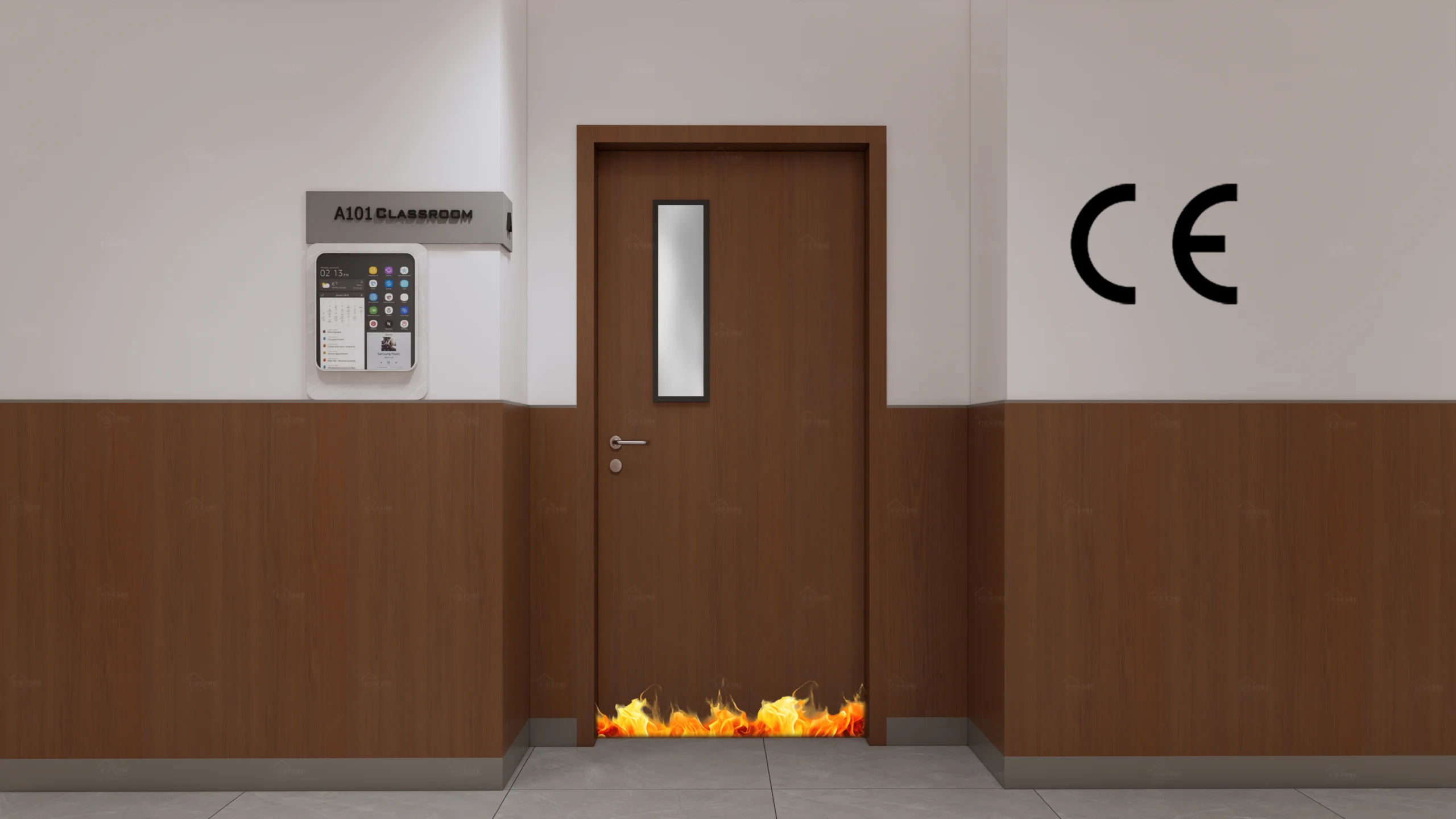
What fire rating is required for hotel room doors?
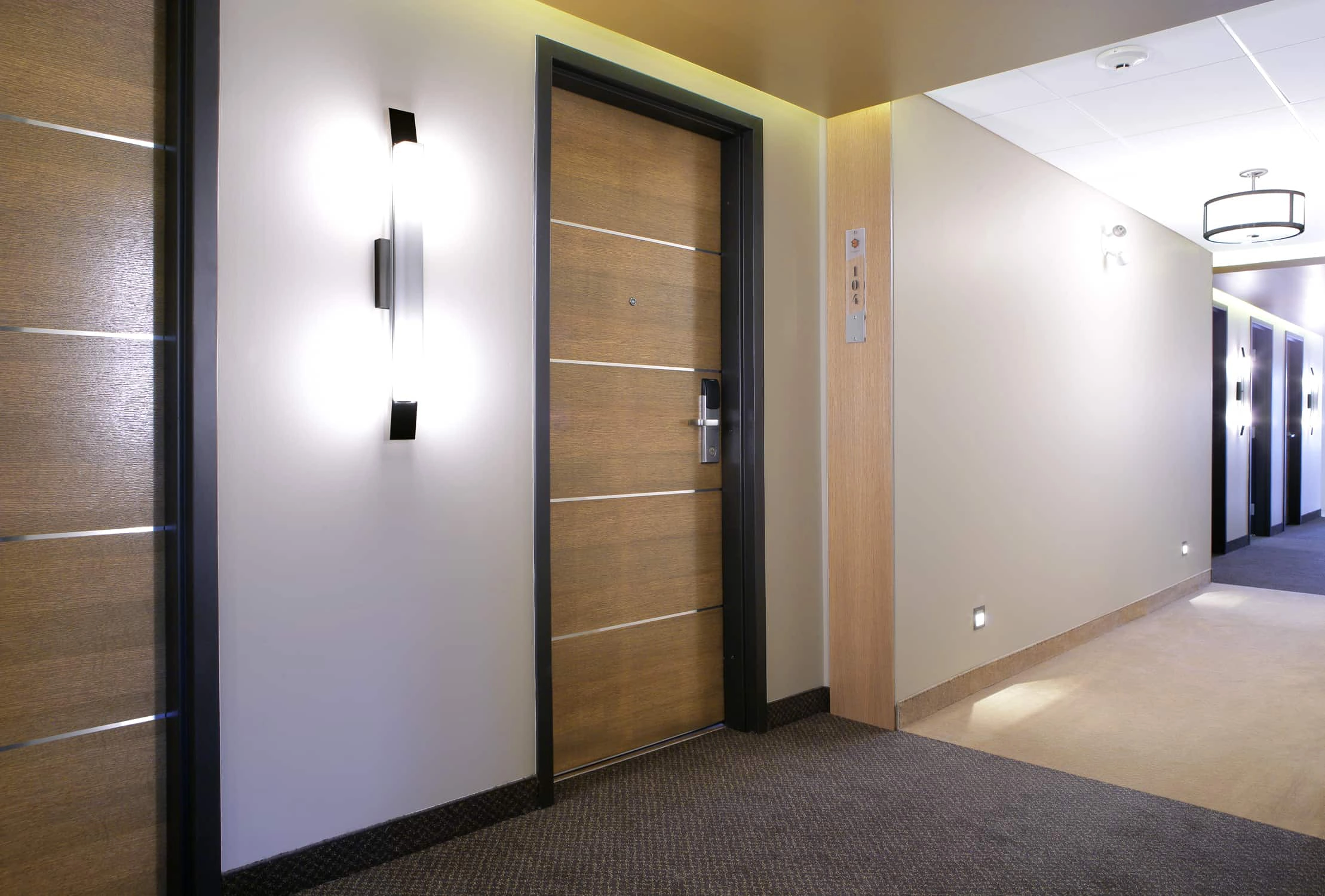
What Is A Fire Rated Door In A Hotel?
A Fire-Rated Door in a hotel is a specially built safety door designed to slow the spread of fire and smoke within the building. It is used in guest rooms, corridors, staircases, and service areas to protect escape routes. Unlike a normal door, it has a tested fire-resistance rating that helps save time during emergencies. In simple terms, it is a key part of hotel fire safety systems and life protection planning.
Basic Meaning In Simple Terms
A Fire Rated Door is a safety door designed to resist fire for a fixed time, such as 30, 60, or 90 minutes. It is often called a fire protection door or fire-resistant door, but the meaning remains the same: slowing the spread of fire. In a hotel, it helps protect guests by controlling heat and smoke movement during a fire emergency.
In simple terms, a fire door in a hotel building acts as a barrier between danger and escape routes. It does not just block flames; it also reduces the flow of toxic smoke, which is often more dangerous than fire itself. This is why fire-rated systems are a core part of hotel construction and safety design.
Inside, a Fire Rated Door is built with special fire-resistant materials, such as mineral cores, treated timber, or steel layers. These materials are tested under extreme heat conditions. The goal is simple: keep the door stable long enough for people to leave the building safely.
Fire Door Vs Normal Door
A standard door is primarily used for privacy, aesthetics, and basic access control. It is not built to handle heat or fire exposure. In a hotel fire, a standard door can fail quickly, allowing flames and smoke to spread uncontrollably.
A Fire Rated Door, also known as a fire-resistant door, is engineered for safety performance. It can hold back fire for a tested period, usually 30 to 120 minutes depending on the rating. This extra time is critical in hotels where many guests may need to evacuate at once.
Another key difference is structure and certification. A fire protection door includes fire seals, intumescent strips, and tested cores, while a normal door does not. Fire doors must meet strict safety standards, making them essential for hotel compliance and life-safety requirements.
Why Hotels Must Use Fire Rated Doors?
Hotels must use Fire Rated Doors because they are high-occupancy buildings where many people sleep at the same time. In an emergency, every second matters. A fire door in hotel design helps slow the spread of fire and protects evacuation paths, such as corridors and staircases.
A fire-resistant door system also controls smoke movement, which is one of the biggest risks during a hotel fire. Smoke can spread faster than flames and reduce visibility quickly. Fire doors help contain it, giving guests more time to exit safely.
Most importantly, hotel fire safety codes require Fire Rated Doors by law in many regions. These doors are not optional. They support firefighters, protect property, and reduce loss of life. That is why every professional hotel design includes fire-rated protection as a core safety standard.

What Fire Rating Is Required For Hotel Room Doors in Different Regions?
Fire rating requirements for hotel room doors vary by region, but the goal remains the same everywhere. Every country uses Fire-Rated Door systems to slow the spread of fire and smoke in hotels. These fire-resistant doors are required by building safety laws and help protect guests during evacuations. In general, ratings depend on local codes, building height, and fire risk level, but most hotels meet protection standards of 20 to 60 minutes.
United States
In the United States, hotel room doors are usually required to comply with the IBC (International Building Code) and NFPA 80 standards. Most guestroom doors use a 20-minute Fire-Rated Door assembly, often combined with smoke-control features. The focus is not on long fire resistance but on fast smoke containment and safe evacuation support.
A typical Fire Rated Door in US hotels is designed as a light fire protection barrier. It slows the fire in its early stages, giving guests more time to exit. These doors are tested as full fire-resistant door assemblies, not just single door leaves.
Most US hotel setups include UL-listed fire protection doors with self-closing devices. Smoke seals are also common. Overall, the US approach uses shorter-rated Fire-Rated Doors, with a strong emphasis on smoke control and life safety.
United Kingdom
In the United Kingdom, hotel room doors comply with Approved Document B fire safety regulations. Most hotels require an FD30 Fire-Rated Door, which means it must withstand fire for at least 30 minutes. This is a very common standard across UK hotel buildings.
A fire door in a UK hotel is part of a full-compartment system. Each room is designed to slow fire spread step by step. This makes fire-resistant doors a key part of the building structure, not just a standalone product.
UK hotel Fire Rated Door systems usually include intumescent seals, smoke seals, and self-closing devices. In some higher-risk buildings, FD60 doors are used. So the UK standard is stricter, with a strong focus on 30-minute fire protection as a minimum.
Europe
In Europe, hotel door requirements follow EN 1634 fire testing standards and local building codes. The most common ratings are EI30 and EI60 Fire Rated Doors, depending on hotel size and fire risk level.
A European Fire Rated Door system is tested for both flame resistance (E) and heat insulation (I). This means it not only blocks fire but also reduces heat transfer to the safe side of the door.
Most hotels in Europe use EI30 fire protection doors for standard rooms. Taller or higher-risk hotels may use EI60 fire-resistant door systems. All doors must be CE-certified, which ensures they meet strict European safety rules.
Australia
In Australia, hotel fire safety is governed by the National Construction Code (NCC) and AS 1905.1. Most hotel room doors require fire-rated doors (30/30), which means 30 minutes of fire and heat resistance.
A Fire-Rated Door in Australian hotels is part of a comprehensive passive fire protection system. It works together with walls, corridors, and escape routes to control fire movement inside the building.
Australian hotels commonly use certified fire-resistant door assemblies with smoke seals and self-closing devices. The focus is on balanced protection, where fire protection doors control both heat and smoke for safe evacuation.
Other Regions
In other regions such as Asia, the Middle East, and Africa, Fire Rated Door requirements vary widely depending on local building codes. However, most modern hotels now follow international standards such as UL, BS, and EN.
A Fire-Rated Door in hotels worldwide usually offers resistance of 20 to 60 minutes. This depends on building height, occupancy level, and fire risk classification.
Many international hotels use certified fire-resistant door systems imported from global suppliers. Even with different rules, the main goal stays the same everywhere: use fire protection doors to protect escape routes and give people enough time to evacuate safely.

Fire Rating Levels Explained
Fire rating levels for a Fire Rated Door show how long a door can resist fire, heat, and smoke during an emergency. In hotels, these ratings are very important because they directly affect evacuation time and guest safety. Each fire-resistant door system is tested under strict fire conditions and assigned a clear time rating, such as 20, 30, 60, or 90 minutes.
What 20-Minute Doors Are Used For?
A 20-minute Fire Rated Door is the lightest level of fire protection used in hotels. It is often installed in guestroom entrances and corridors, where fire risk is lower but smoke control remains important. This type of fire-resistant door is primarily designed to slow the early growth of a fire.
In real hotel use, a 20-minute Fire Rated Door system gives guests a short but critical time window to react during a fire. It helps delay the onset of flames and reduce smoke spread at the very early stage. This small delay can make a big difference in fast evacuation situations.
These fire protection doors are often used together with smoke seals and self-closing devices. They are not meant for high-risk fire zones, but they still play a key role in hotel safety design. A Fire-Rated Door in this category acts as a first line of defense in guest areas.
Overall, 20-minute doors are simple but important. They are widely used in modern hotels because they balance cost, design, and basic fire-safety requirements. Even if the rating is short, the fire-resistant door function is still essential for early fire control.
30-Minute Doors
A 30-minute Fire Rated Door is the most common standard in hotel buildings worldwide. It is widely used in guestroom doors, stairwell access points, and main corridor systems. This level of fire-resistant door provides more time than 20-minute doors, improving evacuation safety.
In a hotel fire situation, a 30-minute Fire Rated Door system helps slow both flames and heat transfer. It also reduces smoke movement, which is often more dangerous than fire itself. This extra protection time is very important in multi-floor hotel buildings.
Most fire protection door systems at this level include intumescent strips, smoke seals, and self-closing hardware. These parts expand or activate during heat exposure, helping to seal gaps. A Fire Rated Door in this category is built for consistent performance under real fire conditions.
Because of its balance between safety and cost, the 30-minute rating is often the default choice in many countries. In the UK and European hotels, it is often the minimum legal requirement. So, this fire-resistant door level is considered the standard safety baseline in modern hotel design.
60-Minute Doors
A 60-minute Fire Rated Door is used in higher-risk or more critical hotel areas. You will often find it in fire escape corridors, service rooms, storage areas, and zones close to emergency exits. This type of fire-resistant door system provides stronger protection for longer evacuation times.
In practice, a 60-minute Fire Rated Door in hotels helps control fire spread for up to one hour. This gives firefighters more time to respond and helps protect main escape routes. It also reduces heat transfer, which helps maintain safer conditions in nearby rooms.
These fire protection doors are built with stronger cores and reinforced materials than those of lower-rated doors. They also include advanced sealing systems that expand under heat. A Fire Rated Door at this level is designed for stability during severe fire exposure.
Hotels use 60-minute doors as part of a layered safety strategy. They are not always needed in guest rooms, but they are very important in structural safety zones. This fire-resistant door rating supports both evacuation safety and fire control operations.
90-Minute Doors
A 90-minute Fire Rated Door is a high-performance safety barrier used in critical hotel areas. It is commonly installed in mechanical rooms, fire compartments, and high-risk service zones. This level of fire-resistant door system is designed for maximum fire resistance and structural protection.
In a hotel emergency, a 90-minute Fire-Rated Door helps contain the fire for much longer. This allows evacuation teams and firefighters to control the situation better. It also protects key building systems from early failure during fire exposure.
These fire protection doors are built with heavy-duty materials and advanced fire-rated cores. They often include reinforced frames, strong seals, and certified hardware systems. A Fire Rated Door at this level is tested under extreme conditions to ensure long-lasting stability.
Although 90-minute doors are not commonly used in guest rooms, they are essential in core safety areas of large hotels. They form a strong final layer of protection in a fire-rated door strategy. This makes them a key part of the fire safety design for high-rise and luxury hotels.
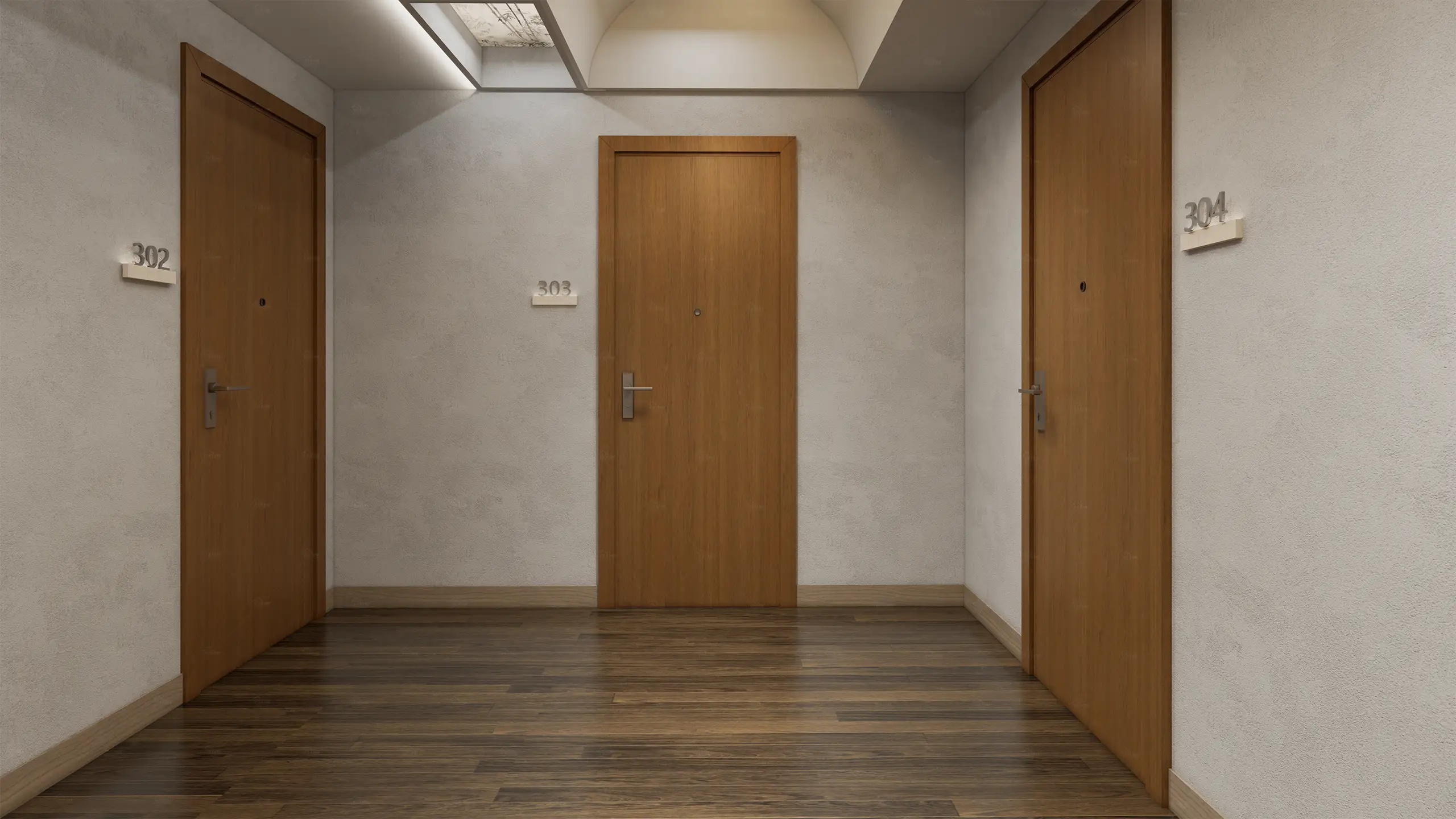
Where Fire Rated Doors Are Required In Hotels?
In hotels, Fire Rated Doors are placed in specific safety zones, not randomly. These fire-resistant door systems are designed to control fire spread, protect escape routes, and give guests enough time to evacuate. Every hotel layout uses a clear fire protection door strategy based on risk areas like rooms, corridors, stairs, and service spaces.
Guest Room Entrance Doors
A Fire Rated Door at guest room entrances is one of the most important safety features in hotels. It separates private sleeping areas from public corridors and helps slow fire spread at the earliest stage. This is why every hotel must include a fire-resistant door system for each room.
In most cases, a Fire Rated Door for hotel rooms is rated between 20 and 30 minutes. This short but critical time helps control smoke and heat during the first stage of a fire. It gives guests a better chance to react and move safely into the corridor.
These fire protection doors also include smoke seals and self-closing devices. These parts help block toxic smoke, which is often more dangerous than flames. A properly installed Fire Rated Door in guest rooms keeps corridors clearer for evacuation.
Overall, guest room doors serve as the first line of defense in a hotel. They are simple in design but play a major role in any fire-resistant door safety plan.
Corridor Doors And Cross Corridors
Corridor doors are key control points in hotel fire safety systems. A Fire Rated Door in corridors helps divide long hallways into smaller fire zones. This slows down fire movement and protects escape routes.
In many hotels, cross-corridor fire-resistant door systems are installed to split building wings. This means fire cannot easily travel from one section to another. It improves containment and supports safe guest evacuation.
These fire protection doors often work with automatic closing systems linked to fire alarms. When activated, they close and block the spread of smoke across corridors. This helps maintain visibility and safe walking paths during emergencies.
So, corridor and cross-corridor doors are not just access points. They are active control tools within the full Fire-Rated Door network of a hotel building.
Stairwell Doors
A Fire Rated Door for stairwells is one of the most critical safety barriers in hotels. Stairwells are the main escape routes, so they must stay protected from fire and smoke at all times.
These fire-resistant door systems are usually higher rated, often 60 minutes or more in larger hotels. This ensures that stair shafts remain safe even when the surrounding areas are affected by fire. It supports continuous evacuation flow.
A Fire Rated Door in stairwells also helps control smoke pressure. It prevents smoke from entering escape stairs, which is essential for visibility and breathing safety during evacuation.
Because of this, stairwell doors are considered life-saving components in every fire protection door system. They protect the hotel’s primary evacuation route.
Service Rooms
Service areas such as kitchens, laundry rooms, and plant rooms pose a higher fire risk than guest areas. That is why a Fire Rated Door in service rooms is required in almost every hotel design.
A fire-resistant door in these zones helps contain fire at the source. For example, kitchen equipment or electrical faults can cause rapid fire spread, but a properly installed door helps isolate it quickly.
These fire protection doors are usually rated 60 minutes or more. They are built with stronger cores, reinforced frames, and heat-resistant seals to handle extreme conditions.
So, service room doors are not just safety items. They are essential containment barriers inside the hotel’s overall Fire Rated Door strategy.
Basement And Storage Areas
Basements and storage rooms are high-risk areas in hotels because they often contain equipment, supplies, and electrical systems. A Fire-Rated Door in basement zones is critical to preventing fire from spreading upward.
These fire-resistant door systems are designed for enhanced protection, as fire can travel through hidden shafts and service routes. Higher-rated doors help block this movement early.
In storage areas, fire protection doors also help separate flammable materials from the rest of the building. This reduces the chance of fire reaching guest rooms or public spaces.
Overall, basement and storage Fire Rated Doors act as deep protection layers. They protect the structure from the lowest level and support the entire hotel fire safety system.
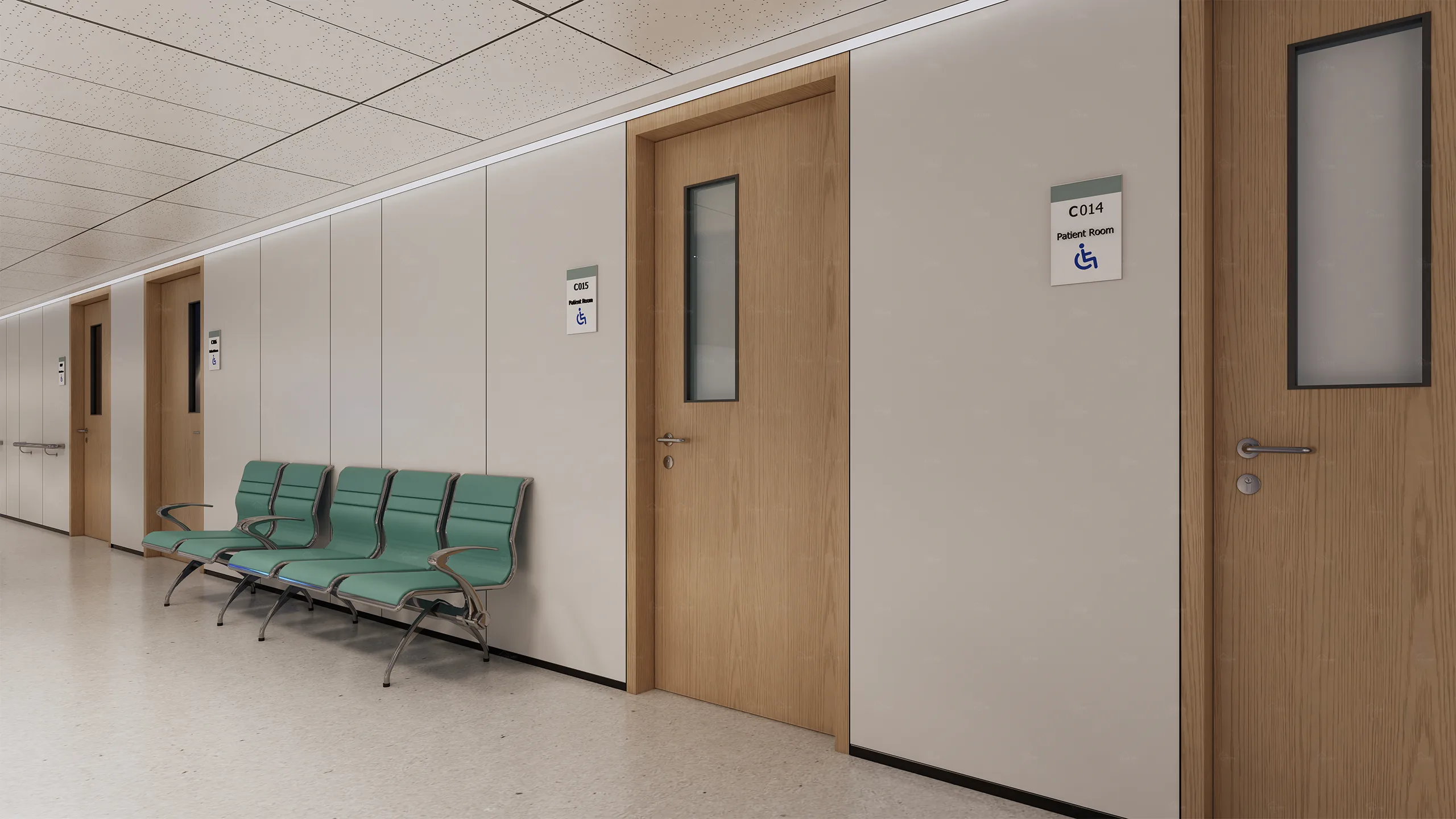
Key Fire Door Components That Make It Compliant
A Fire Rated Door is never just one part. It is a full system where every detail matters. From the door leaf to the hardware, each element of a fire-resistant door assembly must work together under heat and smoke conditions. In hotels and commercial buildings, compliance depends on how well these parts are designed and how well they match. If one piece fails, the whole fire protection door system loses performance.
Fire Resistant Door Leaf Materials
The door leaf is the core body of any Fire Rated Door system. It is the main surface that faces direct fire and heat. That is why fire-resistant door leaf materials must be strong, stable, and tested under extreme conditions. Most hotel doors are solid-core, designed for fire protection.
Inside a fire protection door leaf, you often find mineral core, gypsum-based boards, or engineered timber. These materials slow down heat transfer and help keep the door structure stable during fire exposure. The goal is simple: prevent fire from spreading too quickly.
A good Fire Rated Door leaf also resists warping and cracking. In real fire situations, weak materials bend quickly, creating gaps. Once gaps appear, smoke and flames can pass through, which reduces safety.
So, the door leaf is the main strength layer of the entire fire-resistant door system. The strength of the materials here determines how long the door can protect people in a hotel emergency.
Intumescent Seals
Intumescent seals are a hidden but very powerful part of a Fire Rated Door system. These seals are installed along the edges of the door leaf or frame. Under normal conditions, they stay flat and invisible. But when the heat rises, they expand quickly.
In a fire-resistant door setup, these seals swell and fill gaps between the door and frame. This stops smoke and flames from passing through small openings. Even tiny gaps can become dangerous during a fire, so this expansion effect is critical.
A Fire Rated Door with intumescent strips also improves smoke control. Smoke often spreads faster than fire in hotels, so sealing gaps helps protect corridors and stairwells. This keeps evacuation routes safer and clearer.
So, intumescent seals act like an automatic protection layer inside a fire protection door system. They activate only during fire, but they play a major role in real-life safety performance.
Fire Rated Frames
The frame is the structure that holds a Fire Rated Door in place. Without a strong frame, even the best door leaf cannot perform properly. That is why fire-rated door frames are a critical part of compliance.
Most fire-resistant door frames are made from steel or specially treated hardwood. These materials are chosen because they do not deform easily at high temperatures. A stable frame keeps the door aligned during fire exposure.
In a complete fire protection door system, the frame works together with seals and hardware. It must stay tight so that smoke and flames cannot pass around the edges. Even a small distortion in the frame can reduce safety performance.
So, the frame is not just a support. It is a key structural element of the entire Fire-Rated Door assembly, ensuring the door remains functional under fire conditions.
Self-Closing Devices
A Fire Rated Door must close automatically to work correctly. This is why self-closing devices are required in almost every hotel fire door installation. Without automatic closing, the door loses its main safety function.
In a fire-resistant door system, self-closing devices ensure the door returns to a closed position after every use. This prevents fire or smoke from spreading through open gaps in corridors or guest areas.
A Fire-Rated Door closer system is usually installed at the top of the door or within the hinge mechanism. It controls speed and force, so the door closes smoothly but securely every time.
So, self-closing devices are simple but essential. They keep the fire protection door system active at all times, especially during emergencies when manual closing cannot be relied on.
Fire Rated Hardware
Fire-rated hardware includes all metal components used on a Fire Rated Door system. This includes hinges, locks, handles, latches, and bolts. Each part must be tested to survive fire conditions without failing.
In a fire-resistant door setup, hardware must stay strong under extreme heat. If hinges melt or locks fail, the door cannot serve as a barrier to the escape route. That is why certified fire protection door hardware is always required in hotels.
A proper Fire Rated Door hardware set is usually made from stainless steel or other heat-resistant alloys. These materials retain their strength and function even when exposed to high temperatures during fire events.
So, hardware may look small, but it is a critical part of the system. It ensures the entire fire-rated door assembly works together and maintains safety performance when it matters most.
Common Mistakes Hotels Make With Fire Rated Doors
Hotels depend on every Fire Rated Door to control fire spread and protect guests, but small installation and maintenance errors often undermine the entire system. In many properties, doors are replaced, adjusted, or “improved” without understanding how a certified fire rated door set actually works.
Using Non-Certified Doors In Guest Rooms
Many hotels unknowingly install doors that appear to be Fire Rated Doors but are not truly certified. During renovations or budget upgrades, standard doors are sometimes used as replacements without proper testing or documentation. On the surface, they may look identical, but they do not meet the fire door certification standards required for hotel safety codes.
These non-certified doors often fail much faster under heat than a real fire-rated door for hotel rooms. That means smoke and flames can spread quickly through corridors or into adjacent rooms. In real fire situations, this difference becomes critical for evacuation safety.
Another issue is inspection and compliance. Authorities require proof of a tested fire rated door assembly, not just visual similarity. Without certification labels or test reports, hotels may fail audits or face insurance complications.
Removing Or Damaging Seals
A Fire Rated Door relies heavily on its seals, especially intumescent strips and smoke seals installed around the frame. These components expand under heat and block fire and smoke from passing through gaps. However, during repainting, cleaning, or repairs, hotel staff sometimes remove or damage them without realizing their importance.
Even minor damage to a seal can reduce the effectiveness of a fire-rated door system. Smoke may start leaking through the edges long before flames appear. This weakens the door’s ability to contain fire within a room or corridor.
In many cases, seals are painted over or cut during hardware changes. Once this happens, the original test performance of the fire rated door set is no longer valid. The door may still close properly, but it no longer meets certification standards.
For safety, seals must always remain intact and untouched. A properly maintained fire rated door assembly depends on these small but critical components working exactly as tested.
Wrong Gaps Around Door Edges
Correct spacing is essential for any Fire Rated Door to function properly. The gap between the door and frame must follow strict fire-rated tolerances. However, in many hotels, doors are installed with uneven or incorrect gaps due to rushed fitting or poor maintenance.
If the gap is too wide, smoke and hot gases can pass through quickly, reducing the fire-rated door’s effectiveness in hotel rooms. This creates a weak point even if the door itself is fully certified and tested.
On the other hand, if the gap is too tight, the door may scrape, stick, or fail to close fully. In a fire situation, thermal expansion can make the problem worse, preventing the fire rated door system from sealing properly.
Proper installation ensures consistent spacing around all edges. This is a key part of maintaining a reliable fire rated door assembly that performs as designed under heat and pressure.
Blocking Self-Closers
A Fire-Rated Door with a self-closer automatically shuts after each use. This ensures the door is always closed, ready to stop the spread of smoke and fire. However, in hotels, staff sometimes block doors open for convenience using wedges or magnets.
This is one of the most dangerous mistakes for any fire rated door system. When a door stays open, it completely loses its protective function. Smoke can travel freely through corridors, and fire containment is no longer effective.
Even short-term blocking creates risk. A fire can spread in minutes, and an open fire rated door for hotel safety cannot perform its role during that time. This puts both guests and staff in danger.
Self-closers must always remain active and unobstructed. A properly functioning fire rated door assembly depends on automatic closing to maintain safety at all times.
Mixing Hardware Not Tested Together
A Fire Rated Door is not just a single product—it is a tested system. That means the door, hinges, locks, closers, and handles must all be tested together as one unit. In many hotels, hardware is replaced individually during maintenance or upgrades, which creates a serious problem.
When untested parts are mixed, the fire rated door set loses its certified performance. Even if each component is fire-resistant on its own, the combination may not withstand real fire conditions. This can lead to early failure of the door system.
For example, using a non-certified lock or an incompatible hinge can change how the door behaves under heat. This affects the sealing pressure and the overall stability of the fire-rated door assembly, especially during expansion at high temperatures.

Maintenance And Inspection Rules
A Fire Rated Door needs regular checks, simple care, and clear routines. In hotels, this is even more important because doors are used all day, every day. A small issue can quickly turn into a safety risk. So good maintenance keeps every fire rated door system ready to perform when it matters most.
How Often Fire Doors Must Be Checked?
A Fire Rated Door should follow a clear inspection rhythm. In most hotels, basic visual checks are conducted weekly, while full inspections should occur at least every six months. This keeps the fire-rated door in good working order and helps catch small issues early.
Weekly checks are simple. Staff should quickly look at doors during daily cleaning rounds. They check whether the door closes fully, whether the seals look intact, and whether nothing blocks the path. This light routine helps maintain a reliable fire rated door for hotel safety without extra cost.
Every six months, a deeper inspection is needed. A trained person should test door closers, hinges, and gaps. They also confirm that the fire-rated door assembly still meets its original fire rating standard. This step is key to compliance and insurance.
What Inspectors Look For?
When inspectors review a Fire Rated Door, they focus on function, not just appearance. The first thing they check is the certification label. A real fire rated door for hotel rooms must show proof of testing and compliance. Without it, the door may fail inspection immediately.
Next, they test how the door behaves. It must close fully without help. Inspectors often open and close the door to check whether the self-closer works correctly. A weak or blocked fire rated door closer system is a common failure point.
They also check seals and gaps. Even small damage to intumescent strips can reduce performance. Inspectors carefully examine the edges of the fire-rated door assembly to ensure smoke protection remains intact.
Finally, hardware compatibility is reviewed. Locks, hinges, and handles must match the tested configuration. If parts are mixed, the fire-rated door system may lose its certification.
Simple Maintenance Checklist For Hotel Staff
Hotel staff play a big role in keeping every Fire Rated Door safe. A simple daily checklist is often enough to spot early problems. First, staff should check that the door closes fully on its own. If it stays open or sticks, the fire rated door system needs attention.
Next, they should look at seals and edges. No cracks, no missing strips, and no paint covering the seals. These small details are key to keeping a fire-rated door for hotel protection in place.
Then, staff should make sure nothing blocks the door. No wedges, no chairs, no magnets. A clear path ensures the fire-rated door closer can do its job every time, without delay.
Finally, they should report anything unusual. Loose hinges, strange gaps, or damaged handles should go straight to maintenance. Quick action keeps the fire-rated door assembly working safely and prevents bigger issues later.

Fire Safety Compliance For Hotel Owners
Hotel fire safety is not just about meeting rules. It is about protecting real people every day. A Fire Rated Door is one of the most important parts of that system because it slows the spread of fire, controls smoke, and protects escape routes. Hotel owners must treat every fire rated door system as a legal duty, not a design choice.
Duty Of Care In Hotels
Hotel owners carry a clear duty of care. Every guest who enters a room trusts that the building is safe. A working Fire Rated Door plays a direct role in that trust because it helps contain fire and smoke long enough for evacuation.
This responsibility starts with proper installation. Each fire-rated door in hotel rooms must be certified, tested, and correctly fitted. Owners cannot rely on looks alone. Real safety comes from a verified fire rated door system that meets fire standards.
Duty of care also includes daily control. Staff should never block or modify a fire rated door assembly. Even small actions, like wedging a door open, can break the full safety chain and increase risk for everyone inside the hotel.
Liability Risks If Doors Fail
When a Fire-Rated Door fails, the consequences can be serious. It is not just a technical issue. It can quickly become a legal and financial problem for hotel owners.
If fire spreads due to a damaged fire-rated door system, investigators will check the maintenance history. Missing checks or ignored damage can be seen as negligence. This increases the hotel owner’s liability.
Insurance companies also closely examine each fire-rated door for hotel compliance. If doors are not maintained or certified, claims may be reduced or fully denied after a fire.
Even small issues matter. A broken seal or a faulty hinge in a fire-rated door assembly can become a major liability if not repaired promptly.
Insurance Requirements
Hotel insurance policies often depend on fire safety standards. A working Fire Rated Door is usually a key condition for full coverage. Without it, financial protection can be reduced.
Insurers expect proof that every fire rated door system is inspected and maintained. This includes logs, reports, and certifications for each fire-rated door set inside the building.
If a fire happens and maintenance records are missing, insurers may argue that the hotel failed its safety duties. This can lead to reduced payouts or claim rejection.
Because of this, hotels must treat every fire-rated door assembly as part of their insurance protection strategy, not just as building hardware.
Fire Inspection Audits
Fire inspectors inspect hotels to ensure safety systems function as expected. A Fire Rated Door is always one of the first items they review during an audit.
They test each fire-rated door for hotel safety compliance by checking the closing speed, seals, and gaps. They also make sure nothing blocks the door from shutting properly in real conditions.
Inspectors also ask for documents. They want proof that every fire-rated door system is maintained according to a schedule. Without records, even a good-looking door can fail inspection.
A successful audit depends on consistency. When each fire-rated door assembly is properly maintained and documented, inspections become smoother and less stressful for hotel owners.
Relate FAQ
What fire rating is required for hotel room doors?
In most building codes, hotel room doors typically require a 20-60 minute fire rating (FD20–FD60) depending on the building height, occupancy type, and local regulations. High-rise hotels often require FD30 or higher fire-rated doors to ensure a safe evacuation time.
Are all hotel room doors required to be fire rated?
Not always. However, in most modern hotels, guest room doors, corridor doors, and escape route doors are required to be fire-rated to meet fire safety compliance and insurance standards.
What is the most common fire rated door used in hotels?
The most common specification is a 30-minute fire-rated door (FD30). It provides a balanced level of protection, cost efficiency, and compliance for standard hotel room applications.
Who decides the fire rating for hotel doors?
The required rating is determined by:
- Local building regulations.
- Fire safety codes (such as NFPA or BS standards in some regions).
- Fire risk assessment of the building.
- Hotel height, layout, and. occupancy level
Do hotel fire rated doors need smoke protection as well?
Yes. In most cases, hotel fire rated doors must also include smoke seals or intumescent seals to prevent smoke spread, which is often more dangerous than fire itself during evacuation.
Are hotel fire rated doors required to be self-closing?
Yes. In most fire safety codes, hotel room fire doors must be fitted with self-closing devices to ensure they remain closed during a fire event.