What is the difference between CE and UL fire doors?

Introduction to Fire Door
Fire doors are a fundamental aspect of building safety, often playing a crucial role in protecting lives and property during a fire. These doors are specifically designed to resist the spread of fire and smoke, giving people the time they need to evacuate safely and providing firefighters the opportunity to control the situation.
What Are Fire Doors?
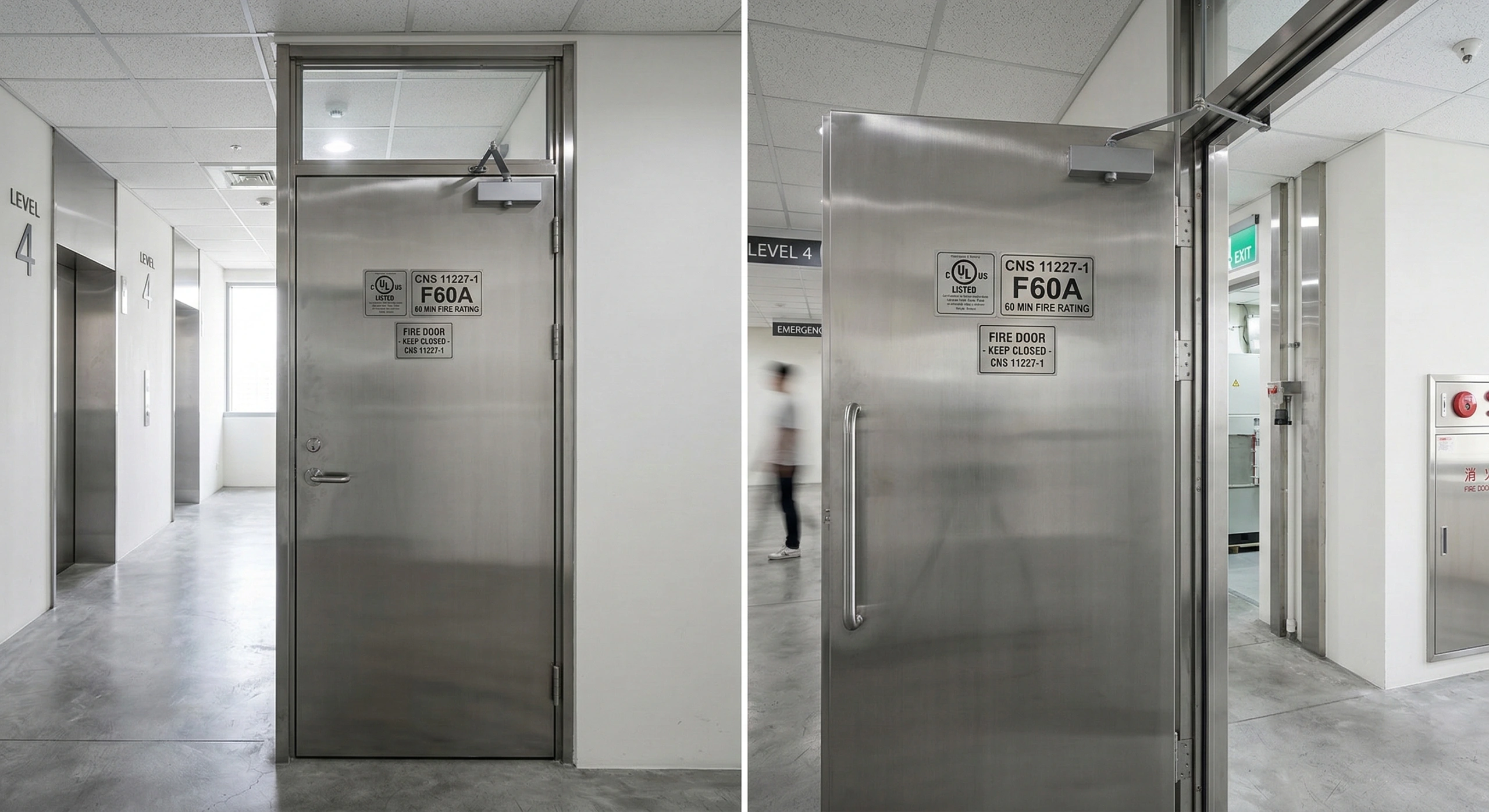
A fire door is a specially designed door that can withstand high temperatures and flames for a certain period. Unlike regular doors, fire doors are made from materials that help prevent the spread of fire and smoke between rooms. These doors are rated for fire resistance, indicating how long they can withstand fire. In most cases, fire doors come with additional features, such as fire-resistant seals, hinges, and frames, that work together to block the passage of heat and smoke.
Fire doors play a key role in building safety. Whether in homes, offices, schools, or hospitals, they act as barriers that help contain a fire in one area and limit its spread. This gives people inside the building more time to escape and helps firefighters tackle the fire more effectively.
Types of Fire Doors
There are different types of fire doors available, each serving a unique purpose. The most common types include:
- Timber Fire Doors: These are made of wood but are reinforced with fire-resistant materials. They are commonly used in residential and commercial buildings.
- Metal Fire Doors: Made from steel or other metal alloys, these doors offer greater fire resistance and are ideal for industrial settings or areas requiring high protection.
- Composite Fire Doors: These doors combine materials such as metal, timber, and fire-resistant glass to offer a blend of durability and fire resistance.
Importance Of Fire Doors In Building Safety
Fire doors are vital for preventing the spread of fire and smoke in a building. Without them, fire can spread quickly, making it much harder to control and evacuate safely. Here’s why fire doors are so important:
- Fire Containment: The primary purpose of a fire door is to contain fire within a specific area. By preventing flames from spreading, fire doors help minimize property damage and reduce the risk to occupants.
- Smoke Control: Smoke is one of the most dangerous aspects of a fire. It can cause respiratory problems, disorientation, and even death. Fire doors help to limit smoke movement, protecting people from inhaling harmful fumes.
- Time for Evacuation: Fire doors provide valuable time for people to evacuate the building before the fire spreads. With the protection these doors provide, occupants can exit safely, especially in large buildings where evacuations can take longer.
- Legal Requirement: In many countries, fire doors are required in certain types of buildings, such as hospitals, schools, and commercial buildings. Regulations ensure that fire safety measures are in place, and fire doors play a key role in meeting these standards.
- Protection for Firefighters: Firefighters rely on fire doors to help them control and suppress fires. These doors limit the fire’s spread, allowing firefighters to work more safely and efficiently.
Why Fire Doors Matter For Safety And Compliance?
Fire doors are vital to the safety of everyone in a building. These doors serve as barriers that limit the spread of fire, heat, and smoke, which can be deadly. The importance of fire doors goes beyond just protection from flames—they are often required by law to meet building safety standards.
Protecting Lives And Property
The primary role of fire doors is to protect lives. In the event of a fire, time is of the essence. Fire doors provide people with valuable time to evacuate safely. By containing the fire to one area, fire doors can slow its spread, preventing it from reaching other parts of the building quickly.
These doors also help limit property damage. For example, fire doors can prevent flames from spreading to other rooms, keeping expensive equipment, valuables, or sensitive areas protected for longer. Whether it’s a business, residential home, or a school, the protection offered by fire doors ensures that the building’s occupants have a fighting chance to escape before the fire becomes uncontrollable.
Moreover, fire doors are equipped with fire-resistant seals and high-quality materials that keep the heat from seeping through. This not only limits fire damage but also prevents smoke from traveling to other parts of the building. Smoke inhalation is often more dangerous than the fire itself. Fire doors help to protect people from these harmful fumes, offering a safer environment to wait until help arrives.
Fire Safety Regulations
In many countries, fire doors are required in certain types of buildings. Local building codes and fire safety regulations mandate the use of fire doors in commercial properties, hospitals, schools, and high-rise buildings. These regulations ensure that property owners take fire safety seriously and install fire doors where they are needed most.
Fire doors must meet specific standards set by these regulations. The fire rating of a door indicates how long it can withstand fire and heat. Typically, fire doors are rated for 30, 60, or 90 minutes, depending on the building’s requirements. This rating is crucial because it indicates how long the door can effectively contain a fire, giving people enough time to escape and helping firefighters control the blaze.
Compliance with fire safety regulations is not just about meeting legal requirements; it’s also about protecting people. Failing to install fire doors properly or ignoring fire safety codes can lead to serious consequences, including fines, building shutdowns, and, in the worst case, the loss of life. Therefore, ensuring that your fire doors meet these standards is not only a legal obligation but also an ethical one.
In some regions, fire safety regulations go even further, demanding that fire doors be regularly inspected and maintained. This ensures they will function as expected in an emergency. Regular checks of fire door seals, hinges, and frames are crucial to ensure they are in good working order.

Understanding Fire Door Certifications
Fire door certifications are vital for ensuring that fire doors meet specific safety standards. These certifications confirm that a fire door has been tested and is capable of performing as expected in a fire emergency. In the following sections, we’ll explore two of the most common certifications for fire doors: CE certification in Europe and UL certification in the United States.
What Is CE Certification For Fire Doors?
Overview Of CE Marking In The EU
The CE marking is a certification that indicates a product complies with the essential safety and environmental requirements set by the European Union (EU). For fire doors, the CE mark indicates that the door has been tested in accordance with EU standards for fire resistance and safety. These tests evaluate how long the fire door can withstand heat and smoke, how well it can contain a fire, and its ability to protect building occupants during a fire emergency.
When a fire door is CE certified, it means that the door has passed rigorous testing and is safe for use in European buildings. The CE marking ensures that the product meets all necessary legal and safety standards within the EU. Fire doors need to be CE marked in the European market, as this guarantees their performance in a fire and helps prevent injury and property damage.
Why CE Certification Is Important For Fire Doors?
CE certification for fire doors is important for several reasons:
1. Compliance with European Regulations:
CE marking confirms that the fire door meets the relevant European regulations, such as the Construction Products Regulation (CPR). This regulation, therefore, requires that construction products, including fire doors, meet specific safety standards. Additionally, having CE certification ensures that the fire door complies with EU regulations, thereby reducing the risk of legal issues. Moreover, CE certification provides confidence to builders, authorities, and end users regarding product safety.
2. Safety Assurance:
A CE-certified fire door has been tested to meet high standards for fire resistance and smoke control. Therefore, this provides building owners and occupants with peace of mind, knowing that the door will perform as expected in the event of a fire. Moreover, the certification confirms that the fire door can withstand the heat and smoke for the designated period, thereby helping to save lives and minimize property damage. Additionally, having CE certification demonstrates compliance with European safety regulations, which can also facilitate approvals from local authorities.
3. Quality Assurance:
CE certification indicates that the fire door has been manufactured to meet strict quality standards. Additionally, the process involves comprehensive testing and evaluation, including checks for fire resistance, durability, and overall performance. Therefore, a CE mark on a fire door ensures that the product is of high quality and has been rigorously tested to meet safety requirements. Moreover, this certification provides confidence to building owners, authorities, and end users because it verifies compliance with recognized European standards.
4. Market Access:
CE certification is required to place products on the European market. Without the CE mark, fire doors cannot be legally sold or used in EU buildings; therefore, manufacturers must ensure compliance before marketing their products. Additionally, this certification opens up market access, allowing them to compete in the European market while adhering to strict safety standards. Moreover, having CE certification also demonstrates commitment to quality and regulatory compliance.
Summary
In conclusion, CE certification for fire doors is a crucial step in ensuring fire safety in European buildings. It guarantees that the fire doors meet strict EU standards for fire resistance, quality, and safety. Whether you’re an architect, builder, or property owner, choosing a CE-certified fire door is essential for maintaining a safe building and complying with legal requirements.
What Is UL Certification For Fire Doors?
Overview Of UL (Underwriters Laboratories) In The USA
UL, or Underwriters Laboratories, is a global safety certification organization based in the United States. UL is recognized for testing and certifying a wide range of products, including fire doors. Their certification process ensures that products meet strict safety standards and are reliable for emergency use.
When it comes to fire doors, UL conducts extensive testing to evaluate their resistance to fire, smoke, and heat. UL certification for fire doors is a mark of quality, confirming that the door has passed rigorous fire safety tests and can perform as required in real-world fire scenarios.
UL certification is important not only for ensuring safety but also for providing legal assurance in the marketplace. It is widely accepted by building codes, insurance companies, and fire safety regulations in the U.S., making it a crucial factor in selecting fire doors for both residential and commercial buildings.
How UL Certification Impacts Fire Door Quality?
UL certification plays a significant role in ensuring the quality and performance of fire doors. Here’s how it impacts fire door quality:
1. Rigorous Testing for Fire Resistance:
UL-certified fire doors undergo comprehensive testing to verify their fire resistance. These tests simulate real-world fire conditions to determine how long the door can withstand flames and heat before breaking down. Only fire doors that meet UL’s high standards for fire resistance are awarded certification. This testing ensures that the fire door can provide the necessary protection during an emergency.
2. Quality Materials and Construction:
UL certification requires fire doors to be made from materials that can handle high temperatures and prevent the spread of smoke. The certification process ensures that the door is constructed with durable materials that will not degrade or fail under extreme heat. This guarantees that the fire door remains effective over time, maintaining its protective properties when needed most.
3. Compliance with U.S. Building Codes:
In the U.S., UL certification helps fire doors meet local building codes and fire safety regulations. Many local codes require fire doors to be UL-certified to ensure they provide the required level of protection. UL’s involvement in certifying fire doors ensures compliance with national and regional safety standards, making them a reliable choice for any building project.
4. Consistent Performance:
UL-certified fire doors are designed to provide consistent performance during a fire. The certification process not only ensures that the doors pass a one-time test but that they can maintain their integrity over time. This means that property owners can rely on their fire doors to function as intended whenever needed, providing ongoing safety.
5. Increased Trust and Credibility:
UL is one of the most trusted names in safety certification. A UL-certified fire door assures building owners, tenants, and fire safety officials that the door meets the highest standards for fire protection. It enhances the product’s reputation and gives everyone relying on its performance peace of mind.
Summary
In summary, UL certification for fire doors ensures that the door is thoroughly tested for fire resistance, made from high-quality materials, and compliant with U.S. building codes. It ensures the door performs as required in an emergency, providing reliable protection for people and property. For anyone involved in construction or building safety, UL certification is a crucial factor in selecting the right fire door.

Fire Door Ratings: Understanding Fire Resistance
Understanding the differences between CE-certified fire doors and UL-certified fire doors. Both certifications are widely recognized but are tailored to different regions and standards.
Scope And Geographic Differences
CE: European Regulations
The CE certification is a European standard that applies to fire doors sold and used within the European Union. When a fire door is CE marked, it indicates that the door complies with EU regulations, specifically the Construction Products Regulation (CPR). This regulation ensures that products, including fire doors, meet essential safety and performance requirements before being placed on the market.
CE marking is recognized across all EU member states and allows manufacturers to sell their fire doors freely within the European market without meeting additional country-specific requirements. The CE mark on a fire door guarantees that the product has undergone rigorous testing for fire resistance, durability, and smoke control, ensuring the door will perform effectively during a fire emergency.
Fire doors in Europe are generally tested for fire resistance according to standards such as EN 1634-1, which assesses how long the door can withstand heat and flames. This standard ensures the door meets specific fire-resistance ratings, such as 30, 60, or 120 minutes.
UL: U.S. Standards
In the United States, UL (Underwriters Laboratories) certification is the standard for fire doors. UL has a long history of testing products for safety and performance, and its certifications are recognized nationwide. A UL-certified fire door meets the safety requirements set by local and national fire codes, such as those of the National Fire Protection Association (NFPA) and local building codes.
Unlike CE certification, which is focused on the European market, UL certification is specific to the United States and its territories. UL-certified fire doors are tested to U.S. fire safety standards, including rigorous testing for heat, smoke, and fire resistance. In the U.S., UL certifications are often required by local building codes, insurance companies, and fire safety authorities to ensure compliance with safety regulations.
For fire doors in the U.S., UL certification ensures that the product meets the fire-resistance standards set by NFPA 80 (Standard for Fire Doors and Other Opening Protectives). UL tests fire doors to specific fire ratings (e.g., 20, 60, or 90 minutes) depending on the door’s intended use and location in the building.
Performance Testing Criteria
Fire Resistance Standards In CE Vs UL
Both CE and UL certifications require fire doors to undergo rigorous testing to ensure they can withstand high temperatures, smoke, and flames. However, the standards used for fire resistance testing differ slightly between Europe and the United States.
CE Certification:
In Europe, CE-certified fire doors must meet the EN 1634-1 standard for fire resistance. This standard tests how long a fire door can resist fire and smoke under controlled conditions. The door is exposed to intense heat, and its ability to contain the fire for a certain period (typically 30, 60, 90, or 120 minutes) is evaluated. The fire resistance rating depends on the door’s construction, materials, and other factors. CE certification also requires that fire doors be tested for smoke control, ensuring that they effectively prevent smoke from spreading to other parts of the building.
UL Certification:
In the U.S., UL-certified fire doors are tested according to UL 10C (Standard for Fire Tests of Door Assemblies) and NFPA 80 (Standard for Fire Doors and Other Opening Protectives). These standards also measure the door’s fire resistance, but they include different criteria, such as how the door reacts to heat and its ability to prevent the spread of flames and smoke. UL testing often exposes the door to a higher level of heat and longer durations, with fire resistance ratings typically ranging from 20 minutes to 3 hours, depending on the specific application. UL testing also assesses the door’s ability to maintain its structural integrity and functionality after exposure to fire conditions.
Materials Used In CE And UL Certified Fire Doors
The materials used in the construction of fire doors play a key role in their ability to withstand fire and heat. While both CE and UL certifications require fire doors to use fire-resistant materials, there are differences in the types of materials commonly used in Europe and the U.S.
CE-Certified Fire Doors:
In Europe, CE-certified fire doors are often made from a combination of timber, steel, glass, and fire-resistant materials like mineral core boards or intumescent seals. The materials must be tested to ensure they meet the required fire resistance levels. For instance, timber fire doors may have fire-resistant coatings or be constructed with a core made from a fire-resistant material. Metal fire doors, on the other hand, are often made of steel or a combination of metal alloys, offering enhanced durability and fire resistance.
UL-Certified Fire Doors:
In the U.S., UL-certified fire doors are typically constructed from steel, metal alloys, or wood and may include specially designed glass panels for fire resistance. UL-certified wood fire doors often use fire-resistant cores, such as mineral cores or composite materials, to meet the required fire-resistance standards. Steel fire doors are also common and preferred in commercial buildings for their durability and higher fire resistance ratings. In addition, UL-certified fire doors may include features such as heat-resistant glazing or fireproof seals to enhance their performance in preventing the spread of fire and smoke.
Installation And Compliance Requirements
Installation Guidelines For CE-Certified Doors
For CE-certified fire doors, installation is strictly regulated to ensure they perform as expected in a fire emergency. The CE mark indicates that the door complies with European safety standards, and its installation must follow specific guidelines to maintain its fire-resistance rating.
1. Proper Frame and Door Assembly:
When installing a CE-certified fire door, ensure the door and its frame are compatible and properly assembled. The door frame must be made from fire-resistant materials, and the door itself must be correctly fitted into the frame with no gaps around the edges. Gaps can allow heat and smoke to pass through, reducing the door’s effectiveness.
2. Seals and Hardware:
CE-certified fire doors are equipped with fire-resistant seals that expand when exposed to heat, creating a tighter seal to prevent smoke and flames from escaping. These seals must be installed around the edges of the door to ensure they function properly. Additionally, all hardware, including hinges, locks, and closers, must be fire-rated and installed according to the manufacturer’s instructions.
3. Wall Integrity:
For a fire door to work properly, the wall or partition where it is installed must also be fire-resistant. The wall should be constructed in a way that meets the required fire resistance rating, as the door relies on the wall’s ability to resist fire for complete protection. The installation should also ensure the door is aligned with the wall to prevent any gaps that might compromise fire resistance.
4. Compliance with Local Regulations:
Even though the fire door is CE-marked, its installation must comply with local building codes and fire safety regulations in the specific EU country where it’s being used. This ensures that the door not only meets European standards but also complies with any additional local requirements.
Installation Considerations For UL-Certified Doors
UL-certified fire doors must also be installed correctly to ensure they provide the required level of fire protection. UL, which certifies fire doors to U.S. safety standards, requires specific installation practices to ensure the door’s effectiveness during a fire.
1. Frame and Door Assembly:
Similar to CE-certified doors, UL-certified fire doors require a proper frame and door assembly. The frame must be made from materials that meet UL fire-resistance standards. The door must be correctly aligned and fit snugly within the frame. Any gaps between the door and the frame should be sealed with appropriate fire-rated materials to prevent the passage of smoke and heat.
2. Fire-Rated Hardware:
UL-certified fire doors require that all hardware, including hinges, latches, and closers, be fire-rated. These components must be tested to ensure they will function properly during a fire. For example, fire door closers are crucial in ensuring the door remains closed during a fire, preventing smoke and flames from spreading.
3. Fire Seals:
UL-certified fire doors are equipped with intumescent seals along the edges. These seals expand when heated, blocking any gaps that could allow smoke or fire to escape. The installation of these seals is critical to the door’s performance, and they must be installed in accordance with UL guidelines to ensure they function properly during a fire.
4. Compliance with U.S. Building Codes:
Installation of UL-certified fire doors must comply with local U.S. building codes and fire safety regulations, such as those set by the National Fire Protection Association (NFPA) and the International Building Code (IBC). These codes may include specific requirements for fire door placement, clearance, and accessibility to ensure safety in all situations.
5. Inspection and Maintenance:
After installation, UL-certified fire doors must undergo regular inspections to ensure continued functionality. Any damage to the door, seals, or hardware should be addressed immediately to maintain the door’s fire resistance rating. Regular maintenance checks should be part of a building’s fire safety plan.
How Fire Door Certifications Affect Building Projects?
Fire door certifications play a critical role in building projects. They influence not only safety but also design, construction planning, and legal compliance. Selecting the right fire door with the correct certification ensures the building meets safety standards while protecting occupants and property.
Choosing The Right Fire Door For Your Project
Selecting the right fire door is essential for both safety and compliance. Fire doors are not all the same, and picking a door without considering certification, fire rating, and materials can create problems later in the project.
1. Fire Resistance Rating:
The fire rating of a fire door tells you how long it can withstand fire and smoke. Common ratings are 30, 60, 90, or 120 minutes. Choose a fire door that meets the specific needs of your building, such as corridors, stairwells, or high-risk rooms.
2. Materials and Build:
Fire doors can be made of timber, steel, or composite materials. Timber fire doors are common in offices and residential buildings, while steel doors are ideal for industrial or high-traffic areas. Composite doors may combine materials to balance fire resistance and aesthetics.
3. Smoke Seals and Hardware:
A fire door isn’t just the panel. Fire-resistant seals, intumescent strips, hinges, and closers are critical. Properly fitted hardware ensures the fire door seals correctly in an emergency, preventing smoke and flames from spreading.
4. Size and Fit:
The fire door must fit its frame precisely. Gaps or misalignment can reduce its effectiveness. Check that the door meets the correct dimensions for the location and that the frame is fire-rated too.
5. Intended Use and Traffic:
Before finalizing the installation, ensure that the fire door and all components meet local building codes and fire safety regulations. Many areas require certified fire doors with specific fire resistance ratings for certain areas, such as hallways, stairwells, or storage rooms. Always check that the fire door has been properly tested and certified to meet the required standards.
How CE And UL Certifications Affect Your Choice?
The type of certification—CE or UL—can influence your fire door selection significantly:
CE Certification:
If your project is in the European Union, CE-certified fire doors are often required. CE certification guarantees that the door meets EU fire-resistance standards (EN 1634-1) and smoke-control requirements. CE-certified fire doors are recognized across all EU countries, so choosing a CE door ensures compliance with local building codes.
UL Certification:
In the United States, UL-certified fire doors are standard. UL doors meet rigorous U.S. fire safety standards, including UL 10C and NFPA 80. Choosing a UL-certified fire door ensures compliance with local fire codes and is often required by building inspectors and insurance providers.
Performance Differences:
Both certifications test fire doors for heat resistance, smoke control, and durability, but the testing methods and regional standards differ. CE certification focuses on EU safety standards, while UL certification aligns with U.S. fire safety codes. Understanding these differences helps you pick the right fire door that is recognized and legal in your project’s location.
Project Impact:
Selecting the correct certified fire door simplifies inspections, ensures safety compliance, and reduces liability. Using the wrong certification can lead to failed inspections, fines, and higher insurance premiums.
Summary
In short, fire door certifications guide your choice, ensuring the doors meet local regulations, provide proper fire resistance, and perform reliably. By considering fire rating, materials, hardware, and certification type, you can select the right fire door for your building project and ensure everyone’s safety.
Legal Implications And Liability
What Happens If The Wrong Certification Is Used?
Using a fire door with the wrong certification can create significant risks. For example, installing a UL-certified fire door in a European building that requires CE certification may violate local building codes. Similarly, using a CE-certified fire door in a U.S. project may not meet local fire safety standards.
1. Failed Inspections:
Building inspectors may reject the project if fire doors do not meet the correct certification standards. This can delay construction, increase costs, and create administrative challenges.
2. Legal Liability:
If a fire occurs and the fire doors fail to perform due to insufficient certification, building owners and contractors could face legal action. Injuries, fatalities, or property damage resulting from non-compliant fire doors could lead to lawsuits and penalties.
3. Insurance Issues:
Insurance claims may be denied if fire doors are not certified in accordance with local regulations. Insurers often require proof that fire doors are properly certified (CE in the EU, UL in the U.S.) to cover damage in the event of a fire.
4. Reduced Safety:
Beyond legal and financial consequences, using the wrong certification can compromise the safety of building occupants. Fire doors are designed to contain fire and smoke, and non-certified or incorrectly certified doors may not provide adequate protection.
The Importance Of Compliance For Building Safety
Compliance with fire door certifications is essential to protect people and property. Properly certified fire doors—whether CE in Europe or UL in the United States—meet rigorous fire-resistance and smoke-control standards.
1. Protecting Lives:
Fire doors that are correctly certified slow the spread of fire and smoke, giving occupants time to evacuate safely. Compliance directly contributes to saving lives during emergencies.
2. Building Code Adherence:
Fire door certification ensures the building complies with local codes and regulations. This not only keeps the project legal but also provides peace of mind for owners, tenants, and contractors.
3. Minimizing Liability:
Installing the right fire doors with proper certification reduces legal and financial risks. Compliance demonstrates that due diligence was taken to protect occupants and property.
4. Long-Term Safety:
Certified fire doors are regularly tested and maintained to uphold their fire-resistance rating. Compliance ensures the building remains safe over time, avoiding the risk of performance failure in future emergencies.
Summary
In summary, ignoring fire door certification can have severe legal, financial, and safety consequences. Ensuring compliance with CE or UL standards is not just a regulatory requirement—it’s a critical step to protect lives, meet legal obligations, and maintain the integrity of your building project. Properly certified fire doors are the foundation of fire safety and a key part of responsible construction practices.
Comparing Fire Door Standards Globally
Fire door standards vary worldwide, and understanding these differences is essential for architects, builders, and facility managers. Selecting a fire door certified to the appropriate standard ensures safety, legal compliance, and suitability for the region where the building is located.
CE Vs UL: Global Recognition And Market Reach
Which Certification Is Recognized In Your Region?
The recognition of fire door certifications depends largely on your geographic location:
CE Certification:
CE-certified fire doors are recognized throughout the European Union and many countries that follow EU safety regulations. Installing a CE fire door ensures that the product complies with European fire resistance standards (EN 1634-1) and smoke control requirements. For projects in Europe, a CE fire door is often mandatory to meet building codes and pass inspections.
UL Certification:
In the United States, UL-certified fire doors are the standard. A UL fire door has been tested under rigorous conditions defined by UL 10C and NFPA 80 standards. This certification ensures compliance with U.S. building codes and assures fire authorities and insurers that the door will perform effectively in an emergency.
Other Fire Door Certifications Around The World
International Fire Door Standards And Certifications
Many countries have developed fire door standards to ensure building safety. For example:
BS (British Standards):
In the UK, BS 476 is a common fire door standard. It tests fire resistance for doors, partitions, and panels. BS-certified fire doors are widely used in both commercial and residential projects across the UK.
EN Standards (European Norms):
EN standards cover a wide range of fire safety requirements in Europe. Fire doors tested under EN 1634-1 provide fire resistance and smoke control. EN-certified fire doors are recognized throughout the European Union.
AS (Australian Standards):
In Australia, AS 1905.1 sets the requirements for fire doors. This standard includes testing for fire resistance, smoke control, and door construction. AS-certified fire doors are mandatory in many Australian buildings to ensure safety.
Comparison With Other Certifications
While CE and UL certifications are widely known, BS, EN, and AS standards offer similar protections but differ in testing methods and fire rating classifications:
1. Testing Methods:
UL tests in the U.S. often focus on high heat and flame spread in specific U.S. building conditions. EN and BS tests focus on European building layouts and fire containment strategies AS standards in Australia adapt to local building designs and materials.
2. Fire Ratings:
Fire resistance ratings may vary slightly between certifications. For example, a CE- or EN-certified fire door may be rated for 60 minutes, while a UL-certified fire door may have a 90-minute rating, depending on the test procedure. BS and AS certifications also have their own rating scales.
3. Materials and Construction:
The type of materials allowed for fire doors can differ. Although timber, steel, and composite materials are common across all certifications, local standards may, however, require specific fire-resistant cores or intumescent seals. Therefore, selecting materials carefully is essential to meet both international and regional requirements. Additionally, understanding these variations helps manufacturers and builders ensure compliance.
4. Legal Requirements:
Building codes often dictate which certification is required. For example, a CE- or EN-certified fire door is essential in Europe, while UL certification is mandatory in the U.S.; similarly, BS certification is required in the UK, and AS certification applies in Australia. Therefore, choosing the correct certification ensures compliance and helps avoid legal issues. Additionally, proper certification supports safety and regulatory confidence across regions.
5. Global Projects:
For international building projects, understanding multiple fire door standards is key. Additionally, using fire doors that meet CE, UL, or both, as well as local certifications such as BS or AS, ensures the building remains safe and compliant across different regions. Moreover, this approach helps project teams address regional regulations because compliance requirements can vary significantly.
Summary
In conclusion, while CE and UL are globally recognized, fire door standards like BS, EN, and AS play a major role in regional compliance. Knowing these standards helps ensure fire doors provide optimal protection, meet local building codes, and are suitable for international projects.
Conclusion
CE Vs UL: What’s The Best Option For Your Needs?
The “best” certification for a fire door depends on where the building is located and how it will be used:
CE-Certified Fire Doors:
Ideal for projects in the European Union and countries that follow EU safety regulations. CE fire doors are tested under EN standards for fire resistance and smoke control. They are recognized across all EU member states, ensuring compliance with European building codes. If your project is in Europe, a CE-certified fire door is typically mandatory.
UL-Certified Fire Doors:
Perfect for projects in the United States or regions that adopt U.S. fire safety standards. Additionally, UL fire doors are tested according to UL 10C and NFPA 80, therefore ensuring high levels of fire resistance and durability. Moreover, U.S. building authorities, insurers, and fire safety professionals widely accept UL certification.
Importance Of Working With Certified Fire Door Experts
Working with certified fire door experts is just as important as choosing the right certification. Experienced fire door specialists can guide you through selecting the proper fire rating, material, and certification for your project. They can also ensure proper installation, which is critical to the door functioning effectively during a fire.
Certified fire door professionals understand local building codes, regional certification requirements, and industry best practices. They can help you avoid costly mistakes, such as installing the wrong fire door or using a non-compliant certification, which could lead to legal issues or reduced safety.
By collaborating with experts, you gain peace of mind knowing that your fire doors will perform as expected, protect lives and property, and keep your building fully compliant. Proper selection, certification, and installation of fire doors are key steps in creating a safe, secure, and code-compliant environment.
In short, the right fire door, combined with the correct certification and professional installation, provides maximum safety and legal protection. Whether CE, UL, or both, working with certified experts ensures that your fire doors will truly do their job when it matters most.

Relate FAQ
What does CE certification mean for fire doors?
CE (Conformité Européenne) indicates that a fire door meets European Union safety and performance standards. It ensures the door complies with EN 1634-1 fire-resistance testing and is approved for use on the EU market. CE marking focuses on performance characteristics and harmonized standards.
What does UL certification mean for fire doors?
UL (Underwriters Laboratories) certification is primarily used in North America. A UL fire door has been tested according to UL 10C standards for fire resistance, which evaluates its ability to contain fire and smoke for a specific duration. UL certification is widely recognized in the US and Canada.
Are CE fire doors acceptable in the US?
Not necessarily. CE-certified fire doors meet EU standards, which differ from UL standards in their testing methods and regulations. For US projects, UL-certified doors are typically required to comply with local building codes.
Can a fire door have both CE and UL certifications?
Yes, some manufacturers produce doors certified for both regions. These doors undergo dual testing to meet both European EN and North American UL standards, making them suitable for international projects.
Why is understanding the difference important for architects and builders?
Choosing the right certification ensures:
- Compliance with local building codes.
- Enhanced safety for occupants.
- Avoidance of legal or insurance issues.
Are CE and UL certifications a guarantee of quality?
Certification ensures the door meets tested fire-resistance standards, but installation quality and maintenance are equally critical for effective fire protection.