What components must be included in a CE fire door set?
Introduction to CE Fire Doors
What Are CE Fire Doors?
A CE fire door is a door that meets strict European Union fire-resistance standards. These doors are designed to prevent the spread of fire and smoke between building sections, ensuring people have enough time to escape safely. CE fire doors are marked with the CE logo, indicating compliance with essential health, safety, and environmental requirements set by the EU.
A CE fire door is typically made from materials that can withstand high temperatures for a specified period. This includes fire-rated timber, steel, or glass. The fire resistance of these doors is crucial for maintaining a building’s overall safety in the event of a fire, helping to protect lives and property.
Brief Explanation of CE Marking and Its Significance for Fire Safety
The CE marking on a fire door indicates that the door has passed tests to meet European standards. This marking indicates that the door complies with EU regulations, ensuring it is safe and effective in fire prevention. It is a vital part of the building’s fire safety system and plays a significant role in safeguarding both people and property.
The CE marking shows that a fire door has been rigorously tested to endure extreme conditions, such as heat and smoke, for a specific period (e.g., FD30 or FD60, meaning 30 or 60 minutes of fire resistance). The tests focus on how well the door withstands a fire, preventing the spread of flames and smoke.
In essence, the CE marking provides confidence to building owners, contractors, and fire safety professionals. It ensures the fire door performs as expected during an emergency, meets legal requirements, and protects building occupants. Without the CE mark, a fire door may not be legally recognized as compliant, and its fire-resistance may be questionable.
Why Are CE Fire Doors Important?
CE fire doors are essential components of building safety. They play a crucial role in protecting lives and property by limiting the spread of fire and smoke within a building. In the event of a fire, these doors act as barriers, allowing people to evacuate safely and giving firefighters more time to contain the situation.
Without fire doors, fires can spread rapidly, increasing the risk of injury or death. Therefore, CE fire doors are an integral part of a building’s fire safety system, helping to ensure both compliance with regulations and the safety of everyone inside.
Importance of Building Safety Regulations
CE fire doors are crucial for meeting building safety regulations, especially in commercial, residential, and public buildings. Building codes across the EU and other regions require installing fire-resistant doors in certain areas of a building, such as stairwells, corridors, and fire escape routes. These regulations are designed to protect both occupants and the structure in the event of a fire.
The CE marking indicates that the fire door meets the required fire-resistance requirements, a key factor in complying with building codes. For example, a CE fire door typically has a specific fire resistance rating (e.g., FD30, FD60, FD90), which indicates how long the door can withstand fire exposure. This helps to slow down the spread of fire, providing valuable time for evacuation.
By ensuring that fire doors meet legal standards, building owners and managers can avoid penalties for non-compliance and help protect the building and its occupants. In short, CE fire doors are not just a requirement—they are a lifesaving safety feature that ensures compliance with building safety regulations.
The Role of CE Marking in Ensuring Compliance and Safety
The CE marking on a fire door guarantees that it complies with the EU’s fire safety regulations. This marking serves as proof that the fire door has been tested according to stringent standards, ensuring that it will perform as expected in an emergency. The CE mark indicates that the door has passed fire-resistance tests and meets all required performance criteria.
For building owners, contractors, and architects, the CE mark offers peace of mind. It assures them that the fire door is legally compliant, safe, and effective in preventing the spread of fire. This is especially important in regulated industries where failure to meet safety standards can result in fines, legal actions, or even harm to individuals.
The CE mark is also crucial for manufacturers and suppliers. It helps them market their products within the EU, providing customers with confidence that the fire doors they purchase are safe and up to code. In essence, the CE marking acts as a symbol of quality and safety, ensuring that fire doors are both effective and compliant with building regulations.

Key Components of a CE Fire Door Set
Fire Door Leaf
The fire door leaf is the main, movable part of the fire door. It is designed to resist the spread of fire and smoke within a building. The leaf is the section of the door that swings open and closed, and it plays a critical role in ensuring that the door performs as expected during a fire emergency. The materials used to construct the fire door leaf, along with its fire resistance rating, determine how well it will withstand the extreme conditions of a fire.
Material Specifications
Fire door leaves are made from various materials, each chosen for its ability to withstand high temperatures and provide structural integrity during a fire. The most common materials used for fire door leaves include:
- Timber: Timber is a popular choice for fire door leaves due to its ability to provide good insulation and fire resistance. It is typically used for residential and low-traffic commercial buildings. However, not all timber doors are fire-rated, so it’s important to ensure that the door is specifically manufactured and tested to meet fire safety standards.
- Steel: Steel fire doors are commonly used in high-risk areas or commercial buildings, as they offer higher fire resistance and durability. Steel doors are more robust and better suited to withstand the intense heat and pressure during a fire. These doors often have a solid core or are filled with fire-resistant insulation materials to enhance their performance.
Fire Resistance Rating
The fire resistance rating is one of the most important aspects of a fire door leaf. This rating indicates how long the fire door will resist fire and prevent the spread of smoke and flames. Fire doors are classified by their fire resistance duration, commonly marked as FD30, FD60, and FD90, where the number represents the number of minutes the door can withstand fire exposure.
- FD30: This type of fire door provides 30 minutes of fire resistance. It is suitable for lower-risk areas, such as residential buildings or certain office environments. It is a common choice for internal doors in buildings with low fire hazards.
- FD60: Fire doors with an FD60 rating can withstand fire for up to 60 minutes. These doors are often used in buildings with higher fire risks, such as commercial buildings, hospitals, or schools. FD60 doors are typically used in areas like corridors, stairwells, and fire escape routes.
- FD90 and Higher: These doors offer 90 minutes or more of fire resistance and are used in areas that need the highest level of protection. They are common in large buildings, high-rise buildings, and industrial facilities where fire hazards are significant.
Fire Door Frame
The fire door frame is just as critical as the door leaf in ensuring that the door system functions properly during a fire. A fire door frame surrounds the fire door leaf and helps secure it within the building’s structure. It plays an essential role in maintaining the integrity of the fire door set, especially in resisting heat, smoke, and flames. The frame must be made from fire-resistant materials that are specifically tested to match the fire resistance rating of the door leaf.
Different Types of Frames
Fire door frames are available in various materials, each offering different benefits and suited to specific applications. The most common types of frames include:
- Metal Frames: Metal fire door frames, typically made from steel, are highly durable and provide excellent fire resistance. They are often used in commercial, industrial, and high-risk environments due to their strength and reliability. Steel frames help ensure the structural integrity of the fire door during a fire, as they are less likely to warp or bend under heat compared to timber frames. Additionally, metal frames are resistant to physical damage, making them ideal for high-traffic or heavy-use areas.
- Timber Frames: Timber frames are commonly used in residential buildings and offices. They offer good fire resistance, especially when combined with appropriate fire-resistant treatments. While timber frames may not be as fire-resistant as metal frames, they still provide sufficient protection for areas with lower fire risk. The choice of timber for the frame also contributes to aesthetics, as timber frames can blend well with interior designs and offer a more traditional look. However, they must be treated to meet the required fire-resistance standards.
The Role of Frames in Fire Resistance and Structural Integrity
The fire door frame is vital to the door’s overall fire safety performance. During a fire, the frame works alongside the door leaf to prevent the spread of fire and smoke. It supports the door leaf and keeps it properly sealed against the door opening. A well-installed fire door frame prevents gaps between the door and the frame, which could allow flames or smoke to escape.
The frame also plays a key role in maintaining the structural integrity of the fire door system. In the event of a fire, the frame helps the door remain in place and continues to act as a barrier, resisting the pressure and heat generated by the flames. Without a robust fire door frame, the door leaf could fail prematurely, allowing fire to spread more quickly.
Additionally, the frame must be securely anchored into the building’s structure, ensuring it can support the door leaf during a fire. If the frame is not properly installed or made from unsuitable materials, the entire fire door system could fail, endangering the safety of building occupants.

Intumescent Strips
Intumescent strips are an essential part of a CE fire door set. These strips are designed to expand when heated, creating a seal that blocks the passage of smoke and flames. They are typically installed around the edges of the fire door leaf, filling any gaps between the door and the frame. This helps to prevent fire and smoke from spreading to other parts of the building, offering crucial protection during a fire.
Function and Importance in Sealing Gaps to Prevent Smoke and Flames
The primary function of intumescent strips is to seal gaps around the fire door. In a fire emergency, even a small gap between the door and the frame can allow smoke and flames to pass through, making the situation more dangerous. Intumescent strips expand rapidly when exposed to heat, typically at around 200°C (392°F), forming a thick, insulating barrier that seals these gaps.
The material inside the strips is typically a combination of organic compounds that expand when heated. This expansion increases the strip’s thickness, effectively closing any gaps. Once the temperature drops, the strips return to their normal size, making them reusable after the fire has been extinguished.
In addition to blocking smoke and flames, intumescent strips also help to maintain the structural integrity of the fire door. By ensuring a tight seal, they prevent air from entering or escaping the compartment, which can help to slow the spread of fire and maintain a consistent temperature on both sides of the door. This is especially important in buildings where maintaining safe escape routes is a priority.
For fire doors to be effective in a fire, the entire door system—including the door leaf, frame, and seals—must be properly installed and maintained. Intumescent strips play a vital role in ensuring that the fire door system is airtight and can effectively contain fire and smoke. Without these strips, a fire door may not function as intended, and the risk of fire spreading could be significantly higher.
Fire Door Seals
Fire door seals are critical to ensuring that a fire door functions effectively during an emergency. These seals are designed to prevent smoke, heat, and flames from passing through the gaps between the fire door leaf and the door frame.
By sealing these gaps, fire door seals enhance the door’s ability to contain fire, protect escape routes, and safeguard the building’s occupants. Without proper seals, even the most fire-resistant door could fail to perform as expected, compromising the building’s fire safety.
Types of Seals
There are different types of fire door seals, each serving a specific purpose in enhancing the fire door’s performance. The most common types of seals include:
Smoke Seals:
Smoke seals are designed to block the passage of smoke, which can be just as dangerous as fire itself. In the event of a fire, smoke can spread quickly throughout a building, making it difficult to see and breathe. Smoke seals are typically made from flexible, fire-resistant materials that create a tight seal around the edges of the fire door. They are crucial for maintaining a smoke-free environment in escape routes, helping people evacuate safely, and allowing fire services to work without obstruction. Smoke seals expand when heated, further improving their ability to block smoke and gases.
Heat Seals:
Designed to withstand high temperatures. Unlike smoke seals, which focus on blocking smoke, heat seals are made to resist direct flames and high heat. These seals help to prevent the spread of fire by maintaining a tight seal around the door, especially when exposed to intense heat. Heat seals are typically made from materials that can expand when heated, ensuring that any gaps are sealed even more effectively during a fire. These seals are essential for fire doors with higher fire-resistance ratings, such as FD60 or FD90.
Combination Seals:
Many modern fire doors feature combination seals that combine both smoke and heat sealing properties. These seals offer comprehensive protection by preventing both smoke and flames from passing through gaps. Combination seals are often made from intumescent materials that expand when exposed to heat, forming a more robust barrier to both smoke and fire. These seals are commonly used in commercial and industrial buildings where both fire and smoke resistance are a priority.
Installation and Maintenance of Seals
Proper installation and maintenance of fire door seals are essential for ensuring their effectiveness. Even the best-quality seals can fail if they are not installed correctly or maintained over time.
Installation:
Fire door seals must be installed according to the manufacturer’s guidelines to ensure they perform as intended. Seals are typically placed along the edges of the fire door leaf and within the frame, where gaps are most likely to form. The seals must fit tightly and be aligned correctly to prevent any gaps from forming. The installation should be done by professionals trained in fire door assembly, as improper installation can compromise the door’s fire resistance rating. The seal material should also be checked to ensure it is compatible with the door and frame material, as this can affect performance during a fire.
Maintenance:
Regular maintenance is key to ensuring that fire door seals continue to perform over time. Seals should be inspected periodically for wear and tear, damage, or any other signs of deterioration. Over time, seals may lose their flexibility or become damaged, reducing their ability to block smoke or flames effectively. Any worn or damaged seals should be replaced promptly to maintain the door’s fire safety. Cleaning the seals is also important to prevent debris, dirt, or dust from accumulating, which could affect their performance. It’s a good practice to check the seals during routine fire door inspections and replace them if necessary.
Summary
In conclusion, fire door seals are vital components that prevent smoke and flames from escaping through gaps. Whether using smoke seals, heat seals, or combination seals, they ensure that the fire door functions properly in an emergency. Correct installation and regular maintenance are crucial to the longevity and effectiveness of these seals, helping keep your building safe in the event of a fire.
Essential Accessories for CE Fire Doors
Fire Door Closers
Fire door closers are essential accessories that play a key role in the performance of CE fire doors. These devices ensure that the fire door automatically closes after being opened. This function is vital for the door’s effectiveness in containing fire, smoke, and heat. Without a proper door closer, the fire door may not close securely, leaving gaps that could allow fire or smoke to spread, compromising the building’s safety.
The Role in Ensuring the Door Closes Properly After Use
The primary function of a fire door closer is to ensure the fire door closes fully after opening, creating a tight seal between the door and the frame. This is especially important in an emergency when people are evacuating, as the door must be securely closed to prevent the fire from spreading to other parts of the building.
When the door is opened, whether by hand or automatically, the fire door closer gradually closes the door back into its frame. This action is smooth and controlled, ensuring the door doesn’t slam shut but instead closes slowly to prevent any damage to the door or frame. In a fire, the closer ensures the door shuts promptly and stays in place, providing a barrier against flames and smoke.
A well-functioning fire door closer prevents the door from being left open or ajar by wind, human error, or other forces. This is crucial because, during a fire, even a small gap could allow smoke and flames to pass through, jeopardizing the safety of the building’s occupants. Therefore, fire door closers are a vital component for maintaining the integrity of the fire door system.
Compliance with Fire Safety Standards
Fire door closers are not only essential for door functionality but are also required to comply with fire safety standards and regulations. CE fire doors, including their accessories such as door closers, must meet specific criteria to ensure the safety of buildings in the event of a fire.
In the EU, fire door closers must comply with EN 1154 and EN 1155. These standards specify the technical requirements for the design and performance of door closers, ensuring they deliver the appropriate closing force and timing. This is particularly important because fire door closers must work effectively under extreme conditions, such as high heat, to ensure the fire door closes securely.
Compliance with fire safety standards means that the fire door closer will perform reliably in the event of a fire, allowing the door to function as part of the overall fire containment strategy. Building owners and managers must ensure that all components, including fire door closers, comply with these regulations to ensure the building’s safety and meet legal requirements. Non-compliance with these standards could result in penalties or, more importantly, the failure of the fire door to provide adequate protection.
Fire Door Hinges
Fire door hinges are a critical component of any fire door system. These heavy-duty hinges ensure the fire door opens and closes smoothly and securely, maintaining its fire-resistant integrity. The performance of fire door hinges is particularly important for ensuring the door remains in place and functions as part of the overall fire safety strategy.
Importance of Heavy-Duty, Fire-Rated Hinges
The importance of using heavy-duty, fire-rated hinges for fire doors cannot be overstated. Regular door hinges are not suitable for fire doors because they may not withstand the extreme conditions of a fire. Fire-rated hinges are specifically designed to withstand high temperatures and support the door’s weight without failing, even in the intense heat of a fire.
A fire-rated hinge is usually made from steel or other heat-resistant metals and is tested to ensure it can operate reliably during a fire. These hinges are also designed to provide a strong, secure connection between the door leaf and the frame, preventing the door from becoming detached during a fire. This is essential for maintaining the door’s ability to act as a barrier against smoke and flames, ensuring it stays in place and functions correctly throughout the emergency.
Moreover, fire-rated hinges are essential for meeting fire safety standards. For a fire door to be fully compliant, all components—including the hinges—must be fire-resistant. The use of heavy-duty, fire-rated hinges ensures that the door operates as part of a cohesive system that effectively protects the building and its occupants during a fire. A wrong or improperly installed hinge can compromise the door’s performance, potentially leading to the failure of the entire fire door system.
In addition to their fire-resistance properties, these heavy-duty hinges also provide strength and durability over time. They can withstand the wear and tear of everyday use without losing their ability to function properly, which is especially important in high-traffic areas.
Glazing for Fire Doors
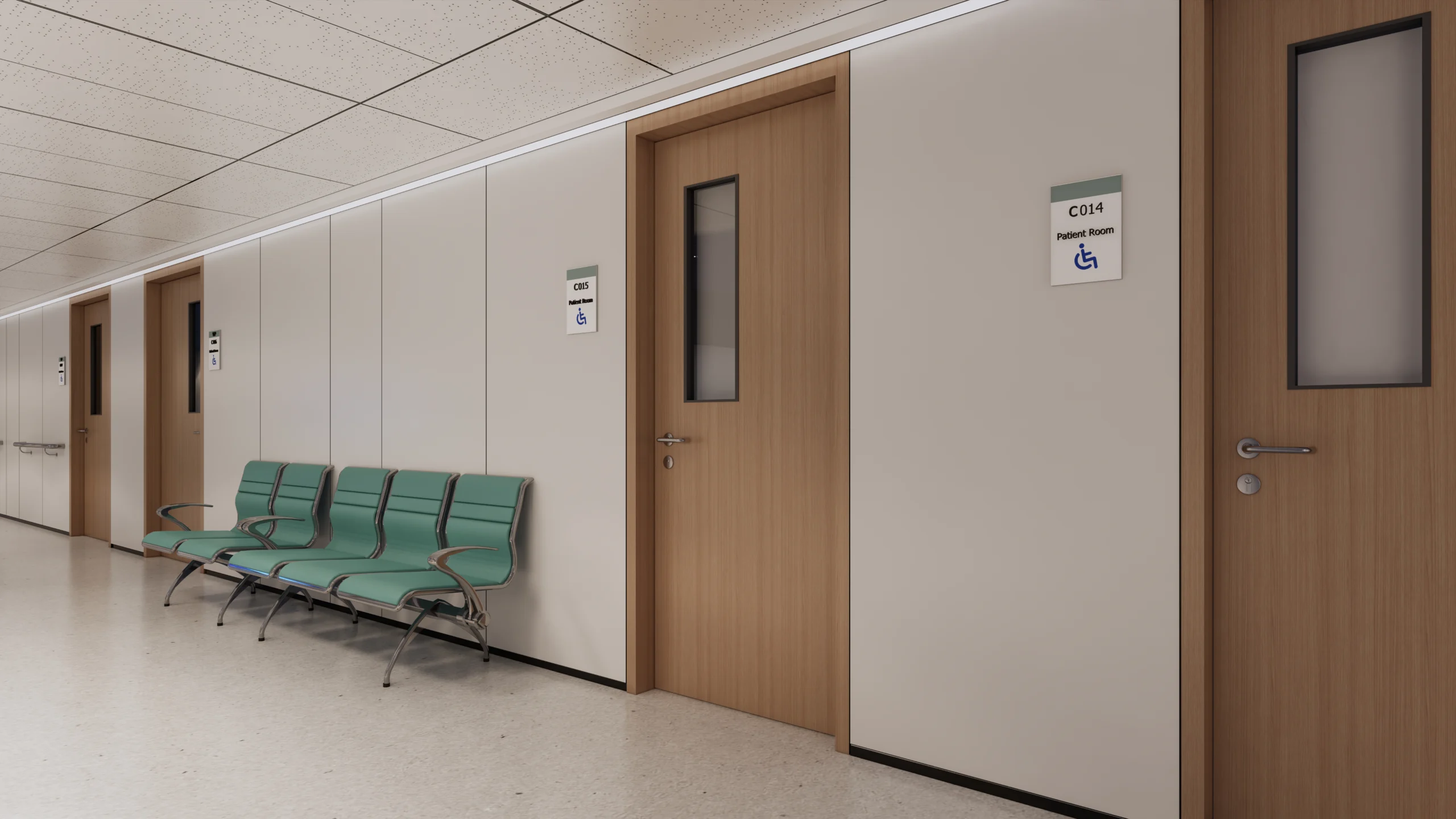
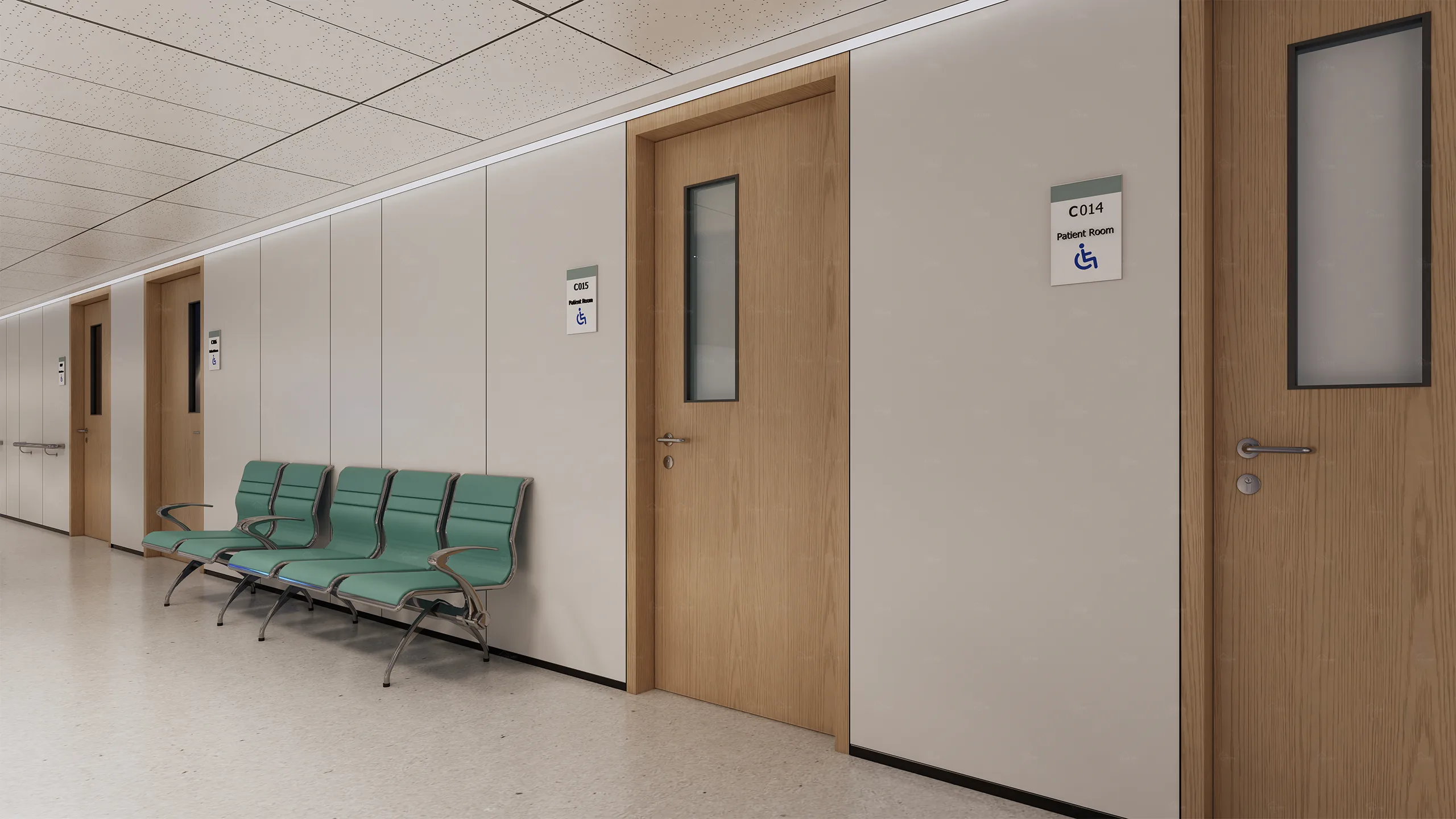
Glazing in fire doors is used when visibility is required, but fire safety cannot be compromised. Fire-resistant glass is incorporated into fire doors to allow light into rooms, provide visibility in hallways, and improve the aesthetics of the building while maintaining the door’s fire protection capabilities. However, not all glass is suitable for fire doors, so it’s important to choose the right type of fire-rated glazing to ensure safety and compliance with fire safety standards.
Use of Fire-Resistant Glass
Fire-resistant glass is specially designed to withstand high temperatures without breaking, cracking, or allowing flames to pass through. It is an essential component of fire doors in areas where visibility is needed. Still, fire protection remains a top priority, such as corridors, stairwells, and doors leading to exit routes.
The key feature of fire-resistant glass is its ability to withstand heat and smoke for a specified period, typically 30-60 minutes or more, depending on the door’s fire rating. During a fire, the glass may become cloudy or opaque as it reacts to heat, but it will remain intact, preventing fire and smoke from passing through. This ensures that the fire door continues to perform as a barrier, protecting the escape routes and allowing people to evacuate safely.
It is important to note that only certified, fire-rated glass should be used in fire doors. This glass is tested to meet specific fire resistance standards, ensuring it can perform as part of the overall fire safety system. Without fire-resistant glass, the fire door would fail to provide the required level of protection, compromising both the safety of the building’s occupants and the fire door’s structural integrity.
The Different Types of Fire-Rated Glazing Options
There are several types of fire-rated glazing options, each offering different levels of fire resistance and functionality. The most common types include:
Wired Glass:
Wired glass has a wire mesh embedded within it, helping prevent it from shattering in the event of a fire. It is typically used for lower fire resistance ratings (up to 30 minutes). While wired glass is cost-effective, it may not offer the same clarity and appearance as other options, and its fire resistance can be limited.
Clear Fire-Resistant Glass:
This type of glass is specifically designed to maintain clarity while offering fire resistance. Clear, fire-resistant glass is ideal for areas where visibility is important, such as corridors and meeting rooms. It provides the same fire protection as wired glass, with improved aesthetics that allow light to pass through while maintaining the look of a traditional window.
Laminated Glass:
Laminated fire-resistant glass is made by sandwiching a fire-resistant interlayer between two panes of glass. This type of glazing is more durable and offers higher fire resistance, typically up to 60 minutes. Laminated glass is often used in applications where both fire resistance and security are needed, as it is also impact- and break-resistant.
Intumescent Glass:
Intumescent glass is coated with a special material that expands when heated, forming a thick, protective layer that blocks smoke and flames. This type of glazing can provide high levels of fire resistance, often exceeding 60 minutes. It is commonly used in more demanding applications, such as fire-rated partitions or doors in commercial buildings.
Pyrolytic Glass:
Pyrolytic glass is treated with a coating that forms a barrier against heat when exposed to fire. This type of glass is often used for fire doors that require a high level of fire resistance and is particularly effective in areas where protection from both heat and smoke is essential.
Testing and Certification for CE Fire Doors
How Fire Doors Are Tested for CE Certification?
To ensure fire doors meet safety standards, they must undergo rigorous testing before they can be CE certified. This testing process evaluates how well the fire door withstands high temperatures, prevents the spread of smoke and flames, and maintains structural integrity during a fire. Only fire doors that pass these tests are eligible for CE certification, which guarantees compliance with European safety standards.
The fire door testing process involves subjecting the door to controlled fire conditions in a specially designed test environment. These tests simulate a real-life fire scenario, ensuring the door performs as expected under extreme heat and smoke. Fire doors are tested to determine how long they can withstand fire exposure and whether they can prevent the passage of smoke and flames, providing enough time for people to evacuate the building.
Overview of Fire Testing Methods
The BS EN 1634-1 standard is one of the most widely recognized fire testing methods for fire doors in Europe. This standard sets out the specific requirements for testing fire doors’ resistance to fire and smoke. The BS EN 1634-1 test involves exposing the door to high heat while monitoring its ability to resist fire and prevent the passage of smoke.
During the test, the fire door is placed in a furnace where temperatures can rise to 1,000°C (1,832°F). The test simulates the heat and conditions a fire door would encounter in a real fire. The door is subjected to this extreme heat for a specified period, often 30, 60, 90, or even 120 minutes, depending on the fire resistance rating required.
The test assesses the following key areas:
- Fire Resistance: How long the door can withstand fire exposure without failing. The door must not let flames pass through or allow fire to spread to the other side.
- Smoke Resistance: Whether the door can prevent smoke from passing through gaps, which is equally important as fire resistance in keeping escape routes clear and safe.
- Structural Integrity: Whether the door maintains its shape and functionality under extreme heat. It should not warp, break, or become dislodged.
Role of Independent Testing Bodies
Independent testing bodies play a crucial role in the fire door certification process. These third-party organizations are responsible for conducting unbiased fire tests and ensuring that the fire doors meet the required safety standards. Independent testing bodies are essential for maintaining the integrity and credibility of the certification process.
These organizations are accredited by national and international standards bodies to conduct fire testing in accordance with established protocols. They are impartial, meaning that they have no vested interest in the product being tested. Their role is to ensure that fire doors are tested under controlled, rigorous conditions and that the results are accurate and reliable.
The involvement of independent testing bodies provides confidence to manufacturers, suppliers, and customers that the fire doors meet the necessary fire safety standards. It also helps to prevent any conflicts of interest that could arise if the manufacturer were responsible for testing its own products.
Once the fire door passes the tests, the testing body issues a certificate that confirms the door’s fire resistance and compliance with safety standards. This certification is essential for the door to receive the CE mark, which allows it to be sold and used legally across the EU.
What Documentation Is Required for CE Fire Door Certification?
For a fire door to be legally sold and used in the European Union, it must meet specific safety standards. CE certification is required to demonstrate that the fire door meets all applicable regulations and involves providing certain documentation. This documentation ensures that the fire door has been thoroughly tested and complies with both fire safety and building regulations. Two essential documents in this process are the Declaration of Performance (DoP) and CE Marking Documentation.
Declaration of Performance
The Declaration of Performance (DoP) is a key document in the CE certification process for fire doors. This document provides detailed information about the fire door’s performance characteristics, based on the results of its fire resistance tests and other essential safety assessments. The DoP outlines key data, including the fire door’s fire resistance rating (e.g., FD30, FD60), the materials used, and the test methods the door underwent.
The DoP also confirms that the fire door complies with relevant European standards, including BS EN 1634-1 for fire testing. It should include specific details about how the door was tested, including its duration of fire resistance and its ability to prevent the spread of smoke and flames. This document serves as proof that the fire door meets the required fire safety regulations and is suitable for use in buildings that require fire-rated doors.
Additionally, the DoP includes information on the manufacturer’s responsibilities, including installation, maintenance, and any necessary servicing to ensure the fire door remains compliant over time. It helps building owners, contractors, and regulatory authorities verify that the door has passed all necessary tests and complies with legal requirements.
CE Marking Documentation
CE Marking Documentation is the formal proof that a fire door meets all requirements and can be legally sold and installed within the European Union. The CE mark indicates that the product complies with EU regulations on health, safety, and environmental protection.
For fire doors, CE Marking Documentation provides a full description of the product, including the fire door’s classification, the materials used, and its tested performance against fire hazards. It also specifies the exact standards the fire door meets, including those related to fire resistance, smoke control, and structural integrity. This documentation is crucial for building owners and construction professionals to confirm that the fire door meets all fire safety standards.
CE Marking Documentation also ensures that the manufacturer has followed the correct procedures for CE certification. This includes ensuring the fire door has been tested by an independent, accredited testing body and that the manufacturing process complies with quality control standards. CE Marking Documentation confirms that the fire door is safe, reliable, and compliant with EU regulations.
For both the DoP and CE Marking Documentation, these documents must be updated and accurate. Fire doors must be regularly retested, and any changes in design or materials must be reflected in the documentation to ensure they continue to meet safety standards.
Maintenance and Inspection of CE Fire Doors
Importance of Regular Inspections
Regular inspections of CE fire doors are crucial for ensuring their effectiveness and compliance with safety regulations. A fire door is a vital part of a building’s fire protection system, and its role is to stop the spread of fire and smoke in an emergency. However, for a fire door to perform properly, it must be maintained and inspected regularly. Over time, parts of the fire door, such as seals, hinges, and the door closer, can wear out or become damaged, reducing the door’s performance in a fire.
Why Regular Checks Are Crucial for Safety?
Regular checks are crucial because they ensure that all components of the fire door are in good working condition. A fire door that is not properly maintained could fail to close fully, allow smoke to escape, or even fail to resist fire for the required duration. These issues could compromise the safety of building occupants during a fire, leading to potentially dangerous consequences.
For example, if the seals around the fire door become damaged or worn, smoke and flames can pass through gaps, increasing the risk of fire spreading to other parts of the building. Similarly, if the door closer isn’t functioning correctly, the fire door may not close fully after being opened, leaving a gap that could allow fire to spread.
Regular inspections help identify problems early, so repairs or replacements can be made before a fire occurs. This is particularly important in buildings with higher fire risk or in high-traffic areas, where fire doors are subject to greater wear and tear.
Moreover, fire doors must be inspected to ensure that they still comply with fire safety regulations. Building codes and fire safety standards may evolve, and a once compliant fire door might no longer meet current regulations. Regular inspections help ensure that the fire door remains up to date with any new requirements, keeping the building legally compliant and safe.
How to Maintain Your Fire Door Set?
Proper maintenance of your fire door set is essential to ensure it remains effective in an emergency. Fire doors play a critical role in building safety, and regular care helps ensure that all components function as intended. From keeping the door leaf in good condition to maintaining seals and other hardware, every aspect of the fire door set requires attention. Here are some straightforward steps to maintain your fire door set and ensure its longevity.
Cleaning and Upkeep Tips for Long-Term Fire Resistance
Maintaining the cleanliness and condition of a fire door is key to ensuring its fire resistance remains intact. While the fire door is designed to withstand high heat and fire, regular cleaning and upkeep can prevent damage and extend its lifespan.
1. Regular Cleaning:
Door Leaf: Regularly wipe down the door leaf to remove dirt, dust, and debris. This helps maintain the door’s appearance and prevents dirt from accumulating in the seals or hinges. Use a soft cloth and mild detergent to clean the door. Avoid using abrasive cleaners or chemicals, as they can damage the door’s surface or protective coatings.
Frames: Clean the door frame regularly to prevent dirt or debris from building up along the edges. A clean frame ensures that the fire door closes properly and forms an effective seal.

2. Check and Clean Fire Door Seals:
Fire door seals (such as smoke seals or heat seals) play an important role in keeping smoke and fire from escaping through gaps. Over time, dust and debris can accumulate on the seals, preventing them from expanding correctly during a fire. Use a soft brush or a cloth to clean the seals gently. Never use harsh chemicals or solvents that could degrade the seal material.
3. Inspect the Hinges and Closers:
Hinges and door closers should be regularly checked to ensure they are in good working order. Clean the hinges to remove any dust or buildup that could prevent smooth operation. Lubricate the hinges with a light oil or lubricant if necessary to prevent rust or wear.
Similarly, check the fire door closer to ensure it’s functioning properly. The closer should automatically pull the door shut after it’s opened. If it seems weak or doesn’t fully close the door, it might need adjustment or replacement.
4. Inspect the Glazing:
If your fire door has glazing (glass), ensure the glass is intact and free of cracks. Fire-rated glass should always remain clear and unbroken to maintain its fire-resistant properties. Clean the glass with a non-abrasive cleaner to keep it looking good and ensure maximum visibility.
5. Avoid Obstructions:
Ensure no obstructions prevent the fire door from moving or closing properly. Keep the area around the fire door clear and free of any items that could interfere with its function.
6. Test the Door's Functionality:
Regularly test the fire door to ensure it functions properly. Open and close the door to check the mechanism. Ensure that it closes fully and securely and that the door closer works as it should. If there are any issues, such as difficulty closing or unusual noises, address them immediately to avoid any potential failure during an emergency.
7. Professional Inspections:
In addition to regular cleaning and simple upkeep, have your fire door professionally inspected at least once a year. A certified fire door inspector will check for any issues that may not be immediately obvious, such as frame, hinge, seal, or glazing issues. They will ensure the door complies with the latest fire safety regulations and functions correctly.
Summary
In conclusion, proper cleaning and regular upkeep are vital to maintaining the fire resistance of your fire door set. By keeping the door clean, checking its components for functionality, and addressing any issues early, you can ensure the door performs effectively when needed most. Fire doors are crucial for safety, and consistent maintenance will help keep them in top condition for the long term.
Conclusion
Summary of Key Points
In this guide, we have explored the essential components and considerations involved in selecting, installing, and maintaining CE fire doors. Fire doors are crucial for protecting both people and property in the event of a fire. Key elements such as the fire door leaf, frame, seals, and accessories like fire door closers, hinges, and glazing all contribute to a fire door’s overall performance. Each of these components works together to ensure the door withstands heat, prevents the spread of smoke and flames, and provides a safe exit route for building occupants.
We also highlighted the importance of testing and certification, with fire doors required to pass rigorous tests, such as those outlined in BS EN 1634-1, to ensure they meet the required fire resistance levels. Proper documentation, such as the Declaration of Performance (DoP) and CE Marking Documentation, provides transparency and verifies the fire door’s compliance with safety standards.
Additionally, regular maintenance and inspections are essential to ensure that the fire door continues to function as intended. Routine checks for wear and tear, along with cleaning and maintenance, help maintain the fire door’s integrity and reliability over time.
Why You Should Choose Certified CE Fire Doors?
Choosing certified CE fire doors is essential for ensuring the safety of your building and its occupants. CE certification guarantees that the fire door has been rigorously tested to meet the highest European fire safety standards. This certification assures that the fire door will perform effectively in a fire emergency, slowing or stopping the spread of smoke and flames, and providing safe evacuation routes.
Certified CE fire doors also help you comply with local building regulations, ensuring that your property meets the necessary legal requirements. Non-compliant fire doors can lead to penalties, insurance issues, and, more importantly, serious safety risks in the event of a fire. By selecting CE-certified fire doors, you are prioritizing the safety and well-being of everyone in the building, from tenants to visitors.
In addition to safety, certified CE fire doors are a long-term investment. They are built to last, require minimal maintenance when properly cared for, and provide peace of mind. With their proven fire resistance and regulatory compliance, you can rest assured that your fire doors are doing their job when it matters most.

Conclusion
The Peace of Mind Fire Doors Bring to Home and Business Owners
For both homeowners and business owners, fire doors offer invaluable peace of mind. The presence of a fire door provides a sense of security, knowing that you have an important line of defense against the spread of fire and smoke. When properly installed and maintained, fire doors ensure that fire won’t quickly spread from room to room or floor to floor, giving everyone more time to evacuate safely.
1. Protection for Occupants:
When a fire door is in place, it effectively compartmentalizes the building, preventing fire from spreading across different areas. This buys valuable time for people to evacuate safely or for first responders to reach those in need. Whether you’re in a home, office building, hospital, or apartment complex, knowing that fire doors are in place helps protect everyone inside.
2. Safeguarding Property:
Aside from saving lives, fire doors are crucial for minimizing property damage. They help protect valuable assets, equipment, and irreplaceable items from being destroyed in a fire. For example, in commercial spaces or data centers, fire doors can prevent costly damage to stock, machinery, or sensitive information.
3. Reduced Risk of Liability:
For business owners, having properly installed and maintained fire doors reduces the risk of liability in case of an emergency. If a fire were to spread due to faulty or non-compliant doors, the consequences could be devastating. By investing in fire doors, you not only protect lives and property but also ensure that your business complies with fire safety regulations, thus avoiding potential fines or legal issues.
The Peace of Mind Fire Doors Bring to Home and Business Owners
It’s not enough to install fire doors; they must also comply with safety standards and local regulations to be effective. Failure to meet these requirements can undermine their ability to protect the building and its occupants in case of a fire.
1. Understanding Local Regulations:
Different regions have varying fire door regulations. In the US, the NFPA 80 standard outlines the installation and maintenance of fire doors. In the UK, the Regulatory Reform (Fire Safety) Order 2005 requires that fire doors meet specific fire resistance ratings. The European Union has its own set of standards under EN 1634-1. As a building owner, it’s your responsibility to stay informed about the fire safety codes in your area and ensure your fire doors comply with these requirements.
2. Regular Inspections and Maintenance:
Fire doors must be regularly inspected and maintained to ensure they meet these safety standards. The doors should be tested at least once a year by a professional, but regular monthly checks can help catch minor issues early. This includes checking that the door closes properly, the seals are intact, and the hardware functions correctly. If any part of the fire door is damaged, it should be repaired or replaced immediately to keep it compliant with fire safety regulations.
3. Certification and Testing:
Make sure that all fire doors are properly certified. Certification from organizations like UL (Underwriters Laboratories) or BSI (British Standards Institute) guarantees that the doors have been tested under controlled conditions and meet the necessary fire resistance ratings. Always check the fire door’s labeling to ensure that it has passed the required tests and is compliant with local building codes.
4. Professional Installation:
The installation of fire doors must also adhere to specific guidelines. Improper installation can cause the doors to fail during a fire emergency. Therefore, hire a qualified professional to install fire doors, ensuring they are placed in the correct locations and fitted properly. If a fire door has been installed incorrectly, it won’t be able to prevent the spread of fire, making it essentially useless in an emergency.
Relate FAQ
What is a CE fire door set?
A CE fire door set is a fire-resistant door system that has been tested and certified according to European standards (CE marking). It is designed to prevent the spread of fire and smoke in buildings, ensuring safety during emergencies. The CE mark indicates that the product meets essential EU safety, health, and environmental requirements.
What are the main components of a CE fire door set?
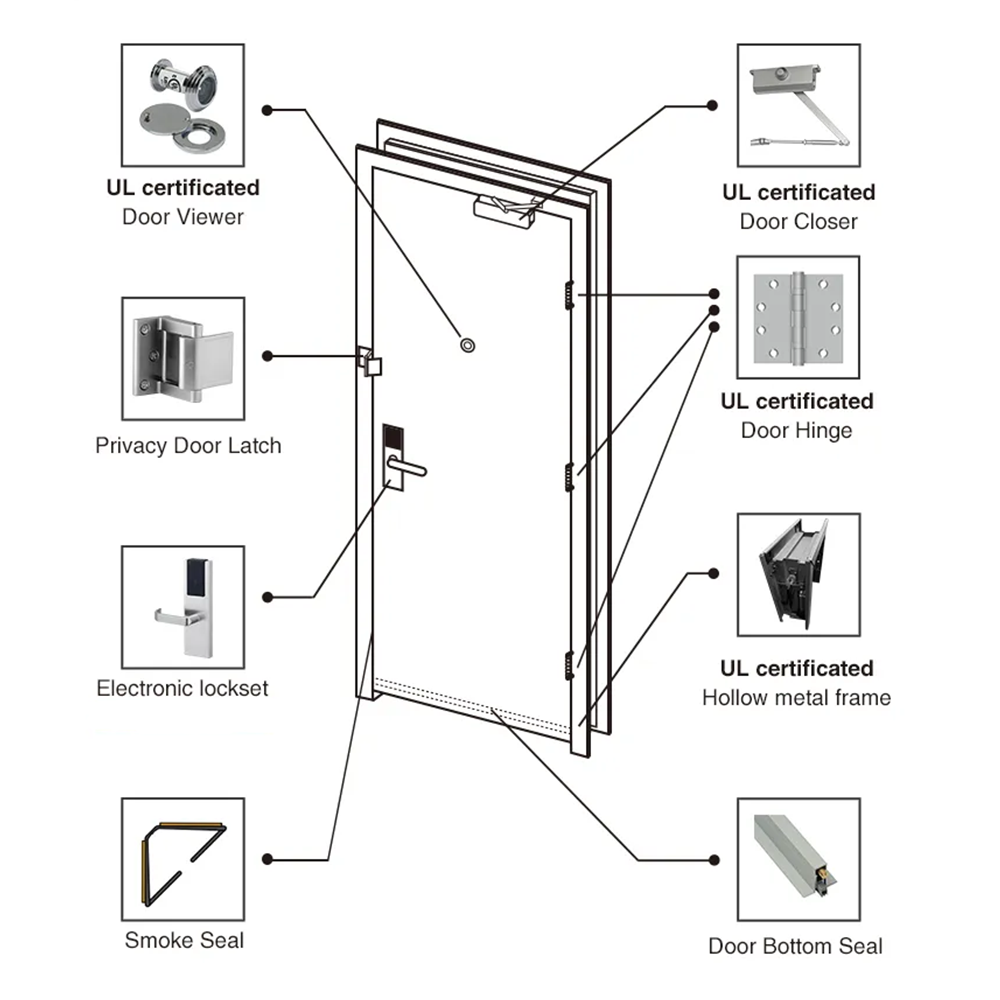
A CE fire door set typically includes the following essential components:
- Fire Door: The main door panel, which is the core element of the fire door set. It must be constructed from fire-resistant materials such as timber or steel.
- Fire Door Frame: The frame that supports the fire door and ensures its proper installation. It must also be fire-resistant to maintain the door's integrity during a fire.
- Intumescent Seals: Seals that expand when exposed to heat, helping to close any gaps between the door and frame to prevent the spread of fire and smoke.
- Fire-Rated Hinges: Hinges that are specifically designed to withstand heat for a specified duration, ensuring the door can remain functional during a fire.
- Fire Door Hardware: This includes components such as locks, closers, panic bars, and handles. These parts must be certified to meet fire-resistance standards.
- Glazing: If the fire door includes windows, these must be made from fire-resistant glass or other approved materials.
What fire rating should a CE fire door have?
The fire rating of a CE fire door can range from 30 minutes (FD30) to 90 minutes (FD90). The rating depends on the type of door and the materials used in its construction. The rating indicates how long the door can withstand exposure to fire before it fails.
Do all components of a CE fire door set need to be fire-resistant?
Yes, every component of a CE fire door set must meet the fire resistance standards. This includes not only the door panel and frame but also the hardware, seals, and any glazing used. These components must be specifically designed and certified for use in fire door systems to ensure the door performs as intended during a fire.
Can the components of a CE fire door be replaced?
Yes, the components of a CE fire door, such as the door itself, hardware, and seals, can be replaced, but replacements must maintain the CE certification. Always use parts that are specifically designed and approved for fire door systems to ensure the door set retains its fire performance characteristics.
What is the role of intumescent seals in a CE fire door set?
Intumescent seals are critical in enhancing the fire resistance of a door set. When exposed to heat, these seals expand, filling any gaps between the door and frame to prevent smoke and fire from passing through. This helps contain the fire and smoke, protecting other areas of the building.
What regulations govern CE fire door sets?
CE fire door sets are governed by the European Union's Construction Products Regulation (CPR) and must comply with the EN 16034 standard for fire resistance. They must also undergo rigorous testing in accredited laboratories to ensure they meet the required fire performance standards before being CE marked.