What hardware is required for hotel fire rated doors?
Understanding Fire Rated Doors In Hotels
Hotels are high-traffic spaces with constant movement of guests and staff. Because of this, fire safety design is critical throughout the building. A Fire Rated Door plays a key role in controlling fire spread and protecting escape routes. In hotels, it helps create safe zones and buys time during emergencies.
What A Fire Rated Door Actually Is?
A Fire Rated Door is a certified door system designed to resist fire for a specific time period. It is tested as a complete unit, not just a single door leaf. This includes the frame, seals, hinges, and locking hardware working together.
In simple terms, it is built to slow down fire and smoke. It does not stop fire forever, but it controls how fast it spreads. This delay is critical in hotels where evacuation takes time.
You may also hear terms such as fire-resistant door, fire door assembly, or rated fire safety door system. All of these refer to doors that have passed strict fire testing standards.
The goal is simple. Give people inside the building more time to escape safely while protecting key escape routes, such as corridors and stairwells.
Why Hotels Must Use Fire Rated Doors?
Hotels are complex buildings with many rooms, long corridors, and guests who may not know the layout. In an emergency, confusion can slow down evacuation. That is why a Fire-Rated Door system is essential to hotel safety planning.
Fire and smoke can spread quickly through hallways and open spaces. Without proper fire doors, escape routes can become blocked within minutes. This poses a serious risk to guests and staff.
Building codes in most countries require hotels to install fire-rated doors. This includes guest room doors, stairwells, service rooms, and exit routes. Compliance is not optional—it is mandatory for approval and insurance.
Beyond regulations, hotels also have a duty of care. A properly installed fire door system helps protect lives, reduce damage, and ensure safer evacuation under pressure.
How Fire Rated Doors Protect Guests And Escape Routes?
A Fire Rated Door works by slowing the spread of fire between spaces. When heat rises, the door structure and seals activate to block flames and reduce smoke leakage. This helps contain fire in one area for a longer time.
One of the most important features is the intumescent seal. When heated, it expands and fills gaps around the door frame. This prevents smoke from spreading into corridors where guests may be escaping.
At the same time, door closers ensure the door shuts automatically. This is important because an open door allows fire and smoke to move freely through a building. Self-closing action keeps escape routes protected.
Together, these systems help maintain usable evacuation paths, such as staircases and corridors. In a hotel emergency, this extra protection time can be the difference between safe escape and danger.
Common Fire Door Ratings
Fire-rated doors are tested on how long they can withstand fire exposure. This is called the fire resistance rating. It is always measured in minutes and depends on the full door assembly performance.
A 30-minute Fire Rated Door is often used in lower-risk internal areas. It provides basic protection and is sometimes used for certain guest room entrances in smaller hotels. It is known as FD30 in many standards.
A 60-minute Fire Rated Door is more common in hotels. It is widely used in corridors and escape routes. This rating offers stronger protection and is suitable for mid-rise hotel buildings.
Higher ratings, such as 90 and 120 minutes, are used for high-risk or high-rise hotel structures. These doors are typically installed in stairwells, fire exits, and critical safety zones where maximum protection is required.

What Hardware Is Required For Hotel Fire Rated Doors?
In hotels, a Fire Rated Door system depends fully on its hardware to perform in real fire situations. It is not only about the door leaf. Every part, from hinges to locks, must work together under heat and smoke pressure. That is why hardware selection is critical for safety and compliance.
Core Hardware Components Overview
A Fire-Rated Door in a hotel uses a complete set of tested hardware components. Each part has a direct role in fire safety. And each one must work together as a complete system, not separately.
First, you have fire-rated hinges. These are designed to hold the door under heavy heat. They keep the door aligned and stable even when temperatures rise quickly.
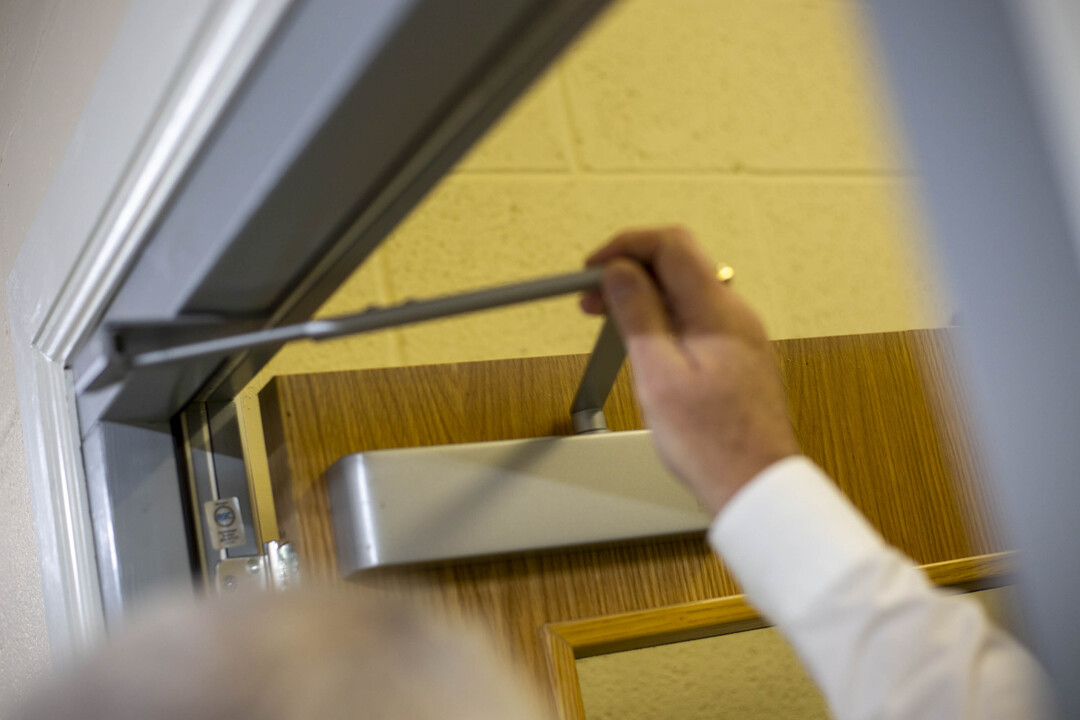
Next is the door closer. This is one of the most important parts of a Fire Rated Door system. It ensures the door closes automatically after use, helping prevent smoke from spreading in hotel corridors.
Then comes the locking system. Hotels often use fire-rated mortise locks or panic exit devices. These provide secure locking during normal use while still enabling a fast escape during emergencies.
Finally, you have seals like intumescent strips and smoke seals. These expand when exposed to heat. They fill gaps around the frame and block smoke from moving through the door edges.
Why Hardware Must Be Fire Tested And Certified?
Fire Rated Door hardware must always be tested as part of a full system. It is not enough for a hinge or lock to look strong. It must prove performance under real fire conditions. That is why certification matters so much.
During fire testing, each hardware part is exposed to high heat and pressure. The goal is simple. The door system must stay functional long enough to protect escape routes. If one part fails, the whole system fails.
Certified Fire Rated Door hardware ensures all components work together. This includes hinges, closers, locks, and seals. They are tested as one unit, not random parts mixed.
In hotels, this reduces risk. Non-certified hardware may fail early in a fire. That can lead to smoke spreading in corridors and blocking evacuation paths. Certified systems deliver reliable, predictable safety performance.
Building Code Requirements For Hotel Fire Door Hardware
Hotels must comply with strict building codes when installing Fire-Rated Door hardware. Safety authorities set these rules and vary slightly by region. But the goal is always the same: protect life and escape routes.
One key requirement is self-closing and self-latching hardware. Every Fire Rated Door must close automatically and stay locked in place during fire conditions. This prevents smoke from moving freely through hotel corridors.
Another rule is safe emergency exit design. Doors on escape routes must allow quick, single-action opening. That is why panic bars or push bar systems are commonly required in hotel Fire Rated Door setups.
Finally, all hardware must match the door’s fire rating. A 60-minute Fire-Rated Door must use hardware certified to the same rating. Regular inspection is also required to ensure ongoing compliance and safety performance.
Fire Rated Door Locks And Latching Systems
In a Fire Rated Door system, locks and latches are not just for security. They are part of life safety. In hotels, they must balance two things: strong fire containment and fast emergency escape. That is why the hardware choice here is very important. A minor failure in the locking system can affect the fire door’s overall performance.
Fire-Rated Mortise Locks Vs Cylindrical Locks
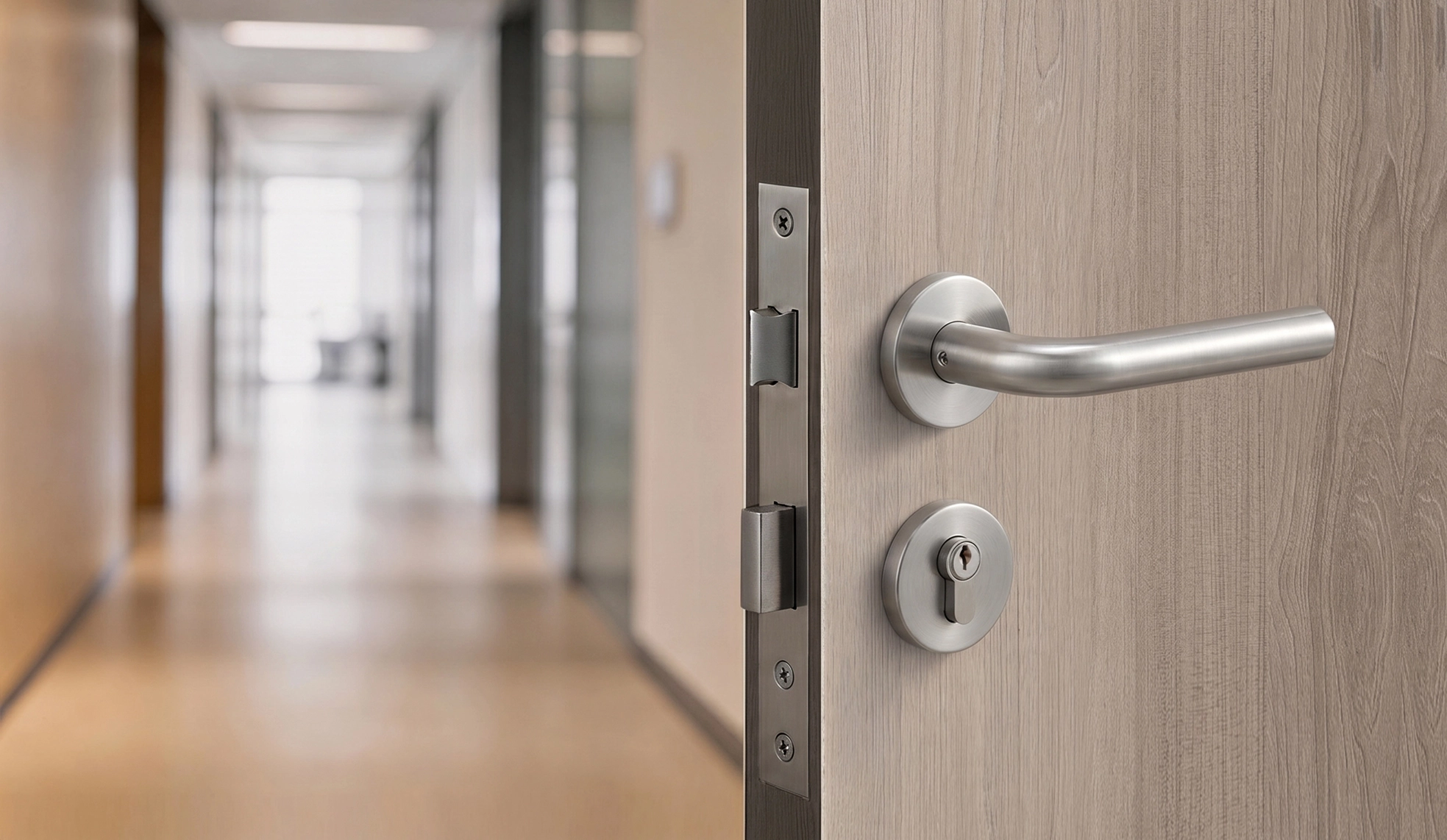
Fire-rated mortise locks are one of the most common choices for a Fire Rated Door system in hotels. They are installed inside the door body, providing strong structural support. This design helps them stay stable under heat and pressure during a fire.
Mortise locks also offer better alignment and stronger latching force. In hotel environments, doors are used many times a day. So durability matters. A Fire-Rated Door with a mortise lock can withstand heavy traffic while maintaining fire-resistance performance.
Cylindrical locks are simpler in design and easier to install. They are often used in lighter-use areas. However, in many hotel Fire Rated Door applications, they are less preferred because they sit more on the surface of the door.
This surface-mounted structure makes cylindrical locks slightly weaker under extreme fire conditions. So while they can still be fire-rated, hotels usually choose mortise systems for guest rooms, corridors, and high-risk escape routes where stronger performance is needed.
Self-Latching Mechanisms Explained
Self-latching is a key safety feature in any Fire Rated Door system. It ensures that once the door closes, it automatically locks into place without human action. This is important in hotels where doors are constantly opening and closing.
The mechanism works through a spring-loaded latch. When the door shuts, the latch moves into the strike plate on the frame. This creates a secure seal. In a fire situation, this seal helps stop smoke and fire from passing through gaps.
In hotel Fire Rated Door systems, self-latching also helps reduce human error. Guests may forget to lock a door fully. But with self-latching hardware, the door always secures itself after use. This improves safety without relying on user behavior.
Over time, self-latching systems also help maintain building compliance. Fire inspectors often check if doors fully latch on their own. If a Fire Rated Door does not latch correctly, it may fail inspection and require immediate repair.

Why Positive Latching Is Mandatory In Hotels?
Positive latching means the Fire Rated Door is fully locked into the frame when closed. It is not loose or partially engaged. Instead, it is tightly secured to resist pressure from fire and smoke.
In hotels, this is mandatory because escape routes must stay protected. If a Fire Rated Door does not latch properly, smoke can move into corridors very quickly. This can block evacuation routes and increase the danger to guests.
Positive latching also helps during changes in fire pressure. When a fire grows, the air pressure inside rooms and corridors changes fast. A weak latch can allow the door to swing open. But a positive latch holds the door firmly in place.
Building codes in most regions require positive latching on hotel Fire Rated Door systems. This ensures that every door acts as a real barrier during emergencies, not just a normal swinging panel.
Panic Exit Devices For Emergency Evacuation Routes
Panic exit devices, also known as push bars, are essential in hotel Fire Rated Door systems. They allow people to open the door quickly with one simple push. No keys, no codes, no delay. This is very important in emergencies.
In a hotel fire, visibility can drop fast due to smoke. People may panic or become confused. A Fire-Rated Door with a panic bar simplifies things. One push is enough to open the door and escape safely.
These devices are also designed to stay fire-rated. That means they still support fire containment while allowing fast exit from the inside. The outside remains secure, but the inside is always easy to open under pressure.
Because of this balance, panic exit devices are required on many hotel Fire Rated Door locations. These include stairwells, corridor exits, and emergency routes. They ensure that evacuation is fast, simple, and reliable when every second matters.
Door Closers For Fire Safety Compliance
In a hotel, a Fire Rated Door system relies heavily on the door closer to perform correctly during both daily use and emergencies. This component ensures the door always returns to a closed position after opening, which is critical for controlling smoke and fire spread. Without a proper closer, even a certified fire door can fail its safety purpose.
What A Fire-Rated Door Closer Does?
A Fire Rated Door closer ensures that a hotel Fire Rated Door always returns to a closed position after being opened. This simple movement is the foundation of fire compartment control. Without it, doors would stay open too often in busy hotel environments.
In daily hotel operations, guests and staff constantly pass through doors. A closer prevents human error. Even if someone forgets to shut the door, the mechanism takes care of it automatically. This helps maintain safety at all times.
The closer also controls the door’s motion. Instead of slamming shut, it guides the door with a smooth, controlled movement. This protects the Fire Rated Door frame, hinges, and locking system from long-term wear.
During a fire situation, the closer becomes even more important. It keeps the door sealed against smoke pressure and heat flow. This helps maintain safe escape routes, such as corridors and stairwells, for longer.
Adjustable Closing Speed And Latch Control
A Fire Rated Door closer is designed with adjustable settings so it can fit different hotel environments. One of the most important settings is closing speed. This controls how quickly the Fire Rated Door moves from open to closed position.
In hotel corridors, traffic is constant. So the speed must be balanced. If it is too fast, it can create noise and damage hardware. If it is too slow, the door may not close in time to maintain fire safety protection.
Latch control is another key function. This final stage ensures the Fire Rated Door fully engages with the frame. Without proper latch action, small gaps can remain open, allowing smoke to pass through during a fire event.
Technicians usually fine-tune both settings during installation. They test how the door behaves under normal use and emergency conditions. This ensures the Fire Rated Door system works reliably in real hotel operations.
Overhead Vs Concealed Door Closers
Overhead door closers are the most widely used option in hotel Fire Rated Door systems. They are installed on the door’s top surface and are easy to inspect and maintain. This makes them very practical for large hotel buildings.
These closers provide a strong and consistent closing force. They are often used in corridors, stairwells, and public areas where durability is more important than design concealment. Their visibility also makes maintenance checks faster during fire inspections.
Concealed door closers, on the other hand, are hidden inside the door or frame. They are mainly used in guest rooms or premium hotel areas where design aesthetics matter. This helps maintain a clean and minimal interior look.
However, concealed systems require more precise installation. If alignment is not perfect, the Fire Rated Door may not close properly or may lose sealing efficiency. That is why skilled installation is critical for these systems in hotel environments.
Common Hotel Installation Mistakes To Avoid
One of the most common mistakes is using non-certified closers on a Fire Rated Door system. Even if the hardware looks strong, untested components may fail under real fire conditions. This creates serious safety risks in hotels.
Another frequent issue is incorrect adjustment of closing speed. If the door closes too weakly, it may stay slightly open. In a fire situation, even a small gap can allow smoke to spread quickly through corridors and escape routes.
Poor alignment is also a major problem. If the closer arm is installed at the wrong angle, the Fire Rated Door may not fully latch. This reduces the sealing performance and weakens the fire resistance of the entire system.
Some hotels also make the mistake of disabling or removing door closers for convenience. This is a serious violation. A Fire Rated Door must always close automatically to remain compliant with fire safety codes and protect guests effectively.
Hinges And Load-Bearing Hardware
In a Fire Rated Door system, hinges and load-bearing hardware are small parts, yet they bear the full responsibility for door stability. In hotels, doors are used all day, every day. So these components must withstand constant movement, heavy weight, and fire pressure simultaneously. If hinges fail, the entire fire door system becomes unsafe.
Fire-Rated Ball Bearing Hinges
Fire-rated ball-bearing hinges are among the most common hinge types used in a Fire Rated Door system. They are designed to reduce friction and support heavy door weight in hotel environments. This makes them ideal for high-traffic areas like corridors and guest rooms.
Inside these hinges, ball bearings help the door move smoothly. This reduces wear over time and keeps the Fire Rated Door aligned. In hotels, doors open and close many times per day, so smooth operation is very important.
These hinges are also tested under high heat conditions. In a fire situation, they must stay in place and not deform. If hinges fail, the door may drop or misalign, breaking the fire seal and reducing protection.
Because of this, fire-rated ball bearing hinges are often required by code for hotel Fire Rated Door installations. They provide a balance of durability, smooth motion, and fire resistance.
How Many Hinges Are Required Per Door Height?
The number of hinges on a Fire Rated Door depends on door height, weight, and fire rating. In hotels, standard practice usually starts with at least three hinges per door. This ensures basic structural support and stability.
For taller or heavier Fire Rated Doors, more hinges may be required. Some hotel doors use four or even five hinges. This helps distribute weight evenly and reduces stress on each hinge point during daily use.
Spacing is also important. Hinges must be placed at the correct top, middle, and bottom positions. This keeps the Fire Rated Door aligned and prevents sagging over time, which could affect sealing performance.
Building codes often define minimum hinge requirements for fire-rated doors. In hotel installations, a correct hinge count is mandatory. It is part of compliance and safety certification.
Continuous Hinges For Heavy-Duty Hotel Doors
Continuous hinges, also known as piano hinges, are used in some heavy-duty Fire Rated Door systems. Instead of using multiple separate hinges, they run the full height of the door. This creates even weight distribution.
In hotels, continuous hinges are often used for high-traffic or heavy Fire Rated Doors. These include service doors, back-of-house areas, and large corridor doors. They reduce stress points and improve long-term durability.
Another advantage is alignment control. Because the hinge runs the full length, it keeps the Fire Rated Door stable even after years of use. This helps maintain proper sealing and reduces maintenance issues.
However, installation must be precise. If not fitted correctly, the door may bind or fail to close properly. That is why continuous hinges must always be installed as part of a certified fire door system.
Heat Resistance And Material Standards
Material quality is critical in any Fire Rated Door system. Hinges and load-bearing hardware must survive high temperatures without losing strength or shape. That is why fire-rated materials are strictly regulated.
Most fire-rated hinges are made from stainless steel or hardened steel. These materials resist heat and corrosion. In hotel environments, they also handle constant use without losing performance.
During a fire, temperatures rise quickly. So, hardware must stay stable and not deform. If hinges or supports bend, the Fire Rated Door can misalign and fail to seal properly, allowing smoke to pass through.
Because of this, building standards require tested and certified materials for all load-bearing parts. In hotel Fire Rated Door systems, material quality is not just about durability—it is about life safety performance.
Intumescent Seals And Smoke Seals
In a Fire-Rated Door system, seals are among the most important safety components. Intumescent seals and smoke seals work together as one system. They activate when the heat rises or when the smoke starts to spread. This makes them a core part of every hotel Fire Rated Door installation.
What Intumescent Strips Do In A Fire Situation?
Intumescent strips are a core safety element in any Fire Rated Door system. At normal temperatures, they stay flat and inactive along the edges or frame of the door. But when the fire heats up, they react immediately.
As the temperature increases, the strip expands many times its original size. This expansion fills the gaps between the door leaf and the frame. It creates a solid barrier that blocks flames and hot gases from passing through.
In hotel Fire Rated Door applications, this function is critical. Doors always have small natural gaps for movement. Without intumescent strips, those gaps become direct paths for fire spread.
This expansion process helps maintain fire compartment control. It slows the movement of fire between rooms and corridors. That extra time allows guests and staff to evacuate safely through protected escape routes.
Smoke Control Seals For Hotel Corridors
Smoke seals are designed to control smoke leakage in a Fire Rated Door system. In real fire events, smoke spreads faster than flames. So controlling smoke is one of the most important safety functions in hotels.
These seals are usually made from flexible materials, such as rubber or brush-style strips. When the Fire Rated Door closes, it presses against the frame, creating a tight seal. This reduces the flow of smoke into corridors.
In hotel environments, this is very important. Corridors are the main evacuation paths. If smoke enters these areas, visibility drops quickly, making escape difficult. Smoke seals help keep these routes usable for longer.
They also improve air quality during evacuation. While they do not completely stop fire, they reduce the movement of toxic smoke. This gives guests more time and better conditions to exit the building safely.
Frame Vs Door Leaf Seal Placement
Seal placement is a key part of a Fire Rated Door system design. There are two main installation areas: the door leaf and the frame. Both must work together to create a full protective barrier.
On the door leaf, seals are installed along the edges. When the Fire Rated Door closes, these seals press tightly against the frame. This helps block direct air and smoke passage.
On the frame side, intumescent and smoke seals are fixed inside grooves or channels. When the door closes, the leaf compresses against these seals. This creates a double sealing effect for better protection.
In hotel fire door installations, correct placement is very important. If seals are misaligned or installed incorrectly, gaps will remain. This can reduce fire resistance and cause the Fire Rated Door system to fail inspection.
Replacement Cycles And Maintenance Checks
Seals in a Fire Rated Door system do not last forever. Over time, daily use, cleaning chemicals, and door movement can wear them down. That is why regular inspection is required in hotels.
Hotel maintenance teams usually conduct visual checks monthly. They look for cracks, hardening, or missing sections in intumescent and smoke seals. Any damage can reduce fire performance.
A full inspection is often done once or twice a year. During this process, the Fire Rated Door is tested to ensure it still closes properly and seals activate as expected. This is important for compliance and safety audits.
If seals are damaged, they must be replaced immediately. Worn seals reduce the effectiveness of the entire fire door system. In a real fire situation, even a small seal failure can allow smoke to spread and reduce evacuation safety.
Panic Bars And Emergency Exit Hardware
In a Fire-Rated Door system, panic bars and emergency exit hardware are critical for rapid evacuation. Hotels are high-occupancy buildings, so guests must be able to exit quickly without confusion or delay. This hardware is designed to make escape simple, even in smoke-filled or low-visibility conditions.
Push Bar Systems In Hotels
Push bar systems are one of the most common solutions in a Fire Rated Door setup. They are installed horizontally across the door and allow users to open the door with a simple push. No key or handle is needed.
In hotels, this design is very important. During a fire, guests may panic or lose visibility due to smoke. A Fire Rated Door with a push bar removes complexity. One push is enough to unlock and open the door instantly.
These systems are built for durability. They must handle constant use in busy hotel environments while still working perfectly in emergencies. That is why fire-rated push bars are tested as part of the full door assembly.
Push bar systems are usually installed on exit routes and on Fire Rated Doors in corridors. They help maintain smooth evacuation flow and reduce crowd pressure near escape points.
Single-Action Escape Requirements
Single-action escape is a core rule in any Fire Rated Door system used in hotels. It means the door must open with one simple movement. No keys, no codes, no extra steps, and no delay during evacuation.
In real hotel fire scenarios, people may be stressed or confused. So the Fire Rated Door must respond instantly. A simple push on a panic bar or exit device must be enough to open the door.
Building codes in most regions require single-action escape on all emergency routes. This includes stairwell exits, corridor doors, and fire escape paths inside hotels. The goal is to remove any barrier that slows down evacuation.
So in practice, panic bars and push pads become mandatory hardware. They ensure that even large crowds can exit quickly and safely without bottlenecks or technical obstacles.
Accessibility Compliance
Accessibility is a key part of modern Fire Rated Door design in hotels. Panic exit hardware must support all users, including elderly guests, children, and people with mobility limitations. Safety must work for everyone, not just able-bodied users.
A compliant Fire Rated Door must require very low force to operate. This ensures that even in panic or smoke conditions, guests can still open the door easily. Smooth and simple operation is a core requirement in accessibility standards.
Regulations like the ADA in the US and the EN standards in Europe define strict rules. These include handle height, push force limits, and positioning of exit hardware. Hotels must follow these rules to remain legally compliant.
So accessibility is not just a design choice. It is a legal and safety requirement. A Fire Rated Door must combine fire protection with universal usability in real-world conditions.
Integration With Access Control Systems
Modern hotels often combine electronic security systems with a Fire Rated Door setup. This includes card readers, keyless entry systems, and electric locks. The challenge is to maintain security without blocking emergency escape.
Inside the room or corridor, panic hardware always has priority. Even if an electronic lock is active, a Fire Rated Door must open instantly when the panic bar is pushed. This ensures safe evacuation at all times.
To achieve this, hotels use fire-rated electric hardware. Magnetic locks and electric strikes must release automatically when alarms trigger. This allows the Fire Rated Door to switch from secured mode to emergency mode instantly.
In real hotel systems, this balance is critical. Security protects daily operations, but life safety always comes first. So, access control integration must never reduce the emergency function of a Fire Rated Door system.
Hotel Fire Door Compliance Standards And Codes
In a hotel, a Fire-Rated Door system must comply with strict safety rules and building regulations. These standards ensure every door works properly in a fire situation. They also ensure consistency across different countries and building types. Without compliance, even a well-built fire door system can fail inspection or put guests at risk.
International Fire Door Standards
International standards define how a Fire Rated Door system must perform under fire conditions. These rules ensure products are tested consistently across markets. Hotels often follow one or more of these standards depending on location and project type.
UL standards are commonly used in North America. They test how long a Fire-Rated Door can withstand fire exposure. They also check hardware performance, sealing, and structural stability under heat.
EN standards are widely used in Europe. They focus on full system testing, including door leaf, frame, and hardware. A Fire Rated Door must pass strict fire and smoke control tests to get certification.
BS and AS standards are used in the UK and Australia. They define fire resistance levels, installation rules, and maintenance requirements. In hotel projects, these standards ensure safe evacuation routes and long-term reliability of fire door systems.
Hotel-Specific Fire Safety Regulations
Hotels have stricter rules compared to many other buildings. A Fire Rated Door system in a hotel must protect guests who are often unfamiliar with the building layout. So regulations focus heavily on escape routes and compartment safety.
Most hotel codes require fire-rated doors at guest room entrances, corridors, stairwells, and service areas. These doors must stay closed during a fire to prevent smoke from spreading between zones.
Another key rule is automatic closing systems. Every hotel Fire Rated Door must self-close after use. This ensures doors are never accidentally left open in busy environments.
Hotels must also maintain clear evacuation paths. Fire doors must not be blocked or modified. Even small changes can break compliance and reduce safety performance.
Inspection And Certification Requirements
Inspection is a core part of maintaining a Fire Rated Door system in hotels. It ensures that all components still work correctly after installation and daily use. Regular checks help prevent hidden failures.
Most regulations require monthly visual inspections and yearly full safety audits. Inspectors check hinges, seals, locks, closers, and door alignment. They also test if the Fire Rated Door closes and latches properly.
Certification must be kept up to date. A fire door without a valid certification may fail compliance even if it looks fine. All components must match the original tested system specification.
Hotels also keep maintenance records. These logs prove that the Fire Rated Door system has been checked and maintained over time. This is important for fire authority audits and insurance requirements.
Common Compliance Mistakes In Hotels
One common mistake is using non-certified replacement parts on a Fire Rated Door system. Even one wrong hinge or lock can break the full fire rating. This often leads to inspection failure.
Another issue is poor maintenance. Many hotels forget to regularly check seals, closers, or latching systems. Over time, this reduces the performance of the Fire Rated Door and creates hidden safety risks.
Some hotels also block or modify fire doors for convenience. For example, keeping doors open or disabling closers. This is a serious violation and can cause major compliance problems.
Incorrect installation is also a frequent problem. If a Fire Rated Door is not installed in accordance with the standards, it may not perform correctly in a fire. Even small gaps or misalignments can dramatically reduce safety.

Maintenance And Inspection Of Fire Door Hardware
Over time, heavy use can cause fire doors to create wear, loosen parts, or reduce sealing efficiency. That is why regular checks are part of fire safety rules in most countries. Hotels must follow structured inspection routines and keep clear records. This ensures the Fire Rated Door system always meets safety standards and works during emergencies.
Monthly And Annual Inspection
Monthly inspection is the first layer of control in a Fire Rated Door system. Hotel staff usually perform quick visual checks. They inspect hinges, seals, locks, and door closers to ensure everything is in place and working smoothly.
During these checks, the Fire Rated Door must close fully without obstruction. Staff also test if the latch engages properly. Even small issues like slow closing or minor gaps can signal a bigger problem.
Annual inspections are more detailed and technical. A certified inspector reviews the full Fire Rated Door assembly. This includes frame alignment, hardware condition, and compliance with fire rating requirements.
These yearly checks ensure the system continues to meet building code standards. If any part fails, repairs or replacements must be made immediately to keep the hotel compliant and safe.
Signs Of Hardware Failure Or Wear
One common sign of failure in a Fire Rated Door system is misalignment. If the door does not sit properly in the frame, it may not seal correctly. This reduces fire and smoke resistance.
Another warning sign is door closer issues. If the Fire Rated Door slams, closes too slowly, or stays open, the closer may be worn out. This can seriously affect fire safety performance in hotel corridors.
Damaged seals are also a major problem. Cracked or missing intumescent strips mean the Fire Rated Door cannot properly block smoke and heat. This is often found during routine inspections.
Loose hinges or latch problems are also common. If hardware moves or feels unstable, it indicates the Fire Rated Door is losing structural integrity and requires immediate attention.
How Hotels Manage Fire Door Maintenance Logs?
Hotels use maintenance logs to track every Fire Rated Door system across the building. These logs record inspections, repairs, and replacements. They help ensure nothing is missed over time.
Each Fire-Rated Door is usually assigned an ID number. Staff records the condition of hardware components such as hinges, locks, seals, and closers. This makes it easy to track each door’s performance history.
Digital systems are now common in larger hotels. Maintenance teams update Fire Rated Door data in real time. This improves accuracy and helps with compliance audits.
These logs are also important for legal and insurance purposes. If a fire incident happens, records prove that the Fire Rated Door system was properly maintained and inspected.
Replacement Guidelines For Safety Components
In a Fire Rated Door system, not all parts can be repaired. Some components must be replaced once they show wear. This ensures the door continues to meet fire safety standards.
Seals are usually the first components to be replaced. If intumescent or smoke seals are damaged, they cannot perform correctly. Replacing them immediately restores Fire Rated Door protection.
Door closers and locks also have replacement cycles. If they lose tension or fail to latch properly, they can reduce safety performance. In hotels, these parts are often replaced before full failure happens.
Hinges and structural hardware are replaced less often, but still checked carefully. If there is bending, rust, or looseness, the Fire Rated Door may lose stability. In that case, full replacement is required to maintain compliance.
Common Mistakes Hotels Make With Fire Door Hardware
Hotels rely heavily on Fire-Rated Door systems to protect guests and staff during emergencies. But in real life, many issues come from small mistakes in hardware use and maintenance. These mistakes may look minor at first, but they can seriously reduce the performance of a fire door and fire-resistant door assembly when it matters most.
Using Non-Certified Replacement Parts
Hotels often replace damaged parts on a Fire Rated Door without checking certification. A broken hinge, latch, or closer gets swapped with a cheaper or easier-to-find part. At first, everything still looks normal, and the door may even close properly. But inside, the fire-rated system is no longer fully compliant.
Fire doors are tested as a complete assembly. That means the frame, leaf, hinges, locks, and seals all work together. When a non-certified fire door hardware part is added, the system loses its tested integrity. Even a small change can reduce fire resistance performance.
In real hotel environments, this mistake usually happens during urgent maintenance. Teams want a quick fix, so they choose standard hardware rather than certified fire door replacement parts. This saves time, but it increases long-term risk.
The result is simple but dangerous. The Fire Rated Door assembly may fail earlier during heat or smoke exposure. For hotels, this can also lead to compliance issues during fire inspections or audits.
Removing Or Disabling Door Closers
Door closers on a Fire Rated Door system are often removed because guests complain about noise or fast closing speed. Hotel staff sometimes try to “solve” the issue by loosening, removing, or blocking the closer. At first, this makes daily use more comfortable for guests.
But the real function of a fire door closer is safety, not convenience. It ensures the fire door automatically closes whenever it is opened. Without it, the door may stay open or only partially closed. That creates a direct path for smoke and fire.
In many hotels, this issue goes unnoticed because the door still looks fine. However, in a real fire situation, an open fire-rated door in a corridor can allow smoke to spread very quickly. This affects evacuation routes and increases danger for guests.
The correct approach is always adjustment, not removal. Hotels should fine-tune the closer speed or replace it with certified fire door hardware. A working Fire Rated Door closer system is a key part of passive fire protection and should never be disabled.
Incorrect Latch Alignment Issues
Latch alignment problems are common in older hotel buildings where doors are used heavily every day. Over time, hinges loosen, frames shift slightly, or the door slab sags. This small movement can cause the latch on a Fire Rated Door to stop aligning properly with the strike plate.
When this happens, the door may still appear closed, but the latch does not fully engage. That means the fire door is not securely locked into position. In fire conditions, vibration or air pressure can push the door open slightly, creating dangerous gaps.
Hotel staff often ignore this issue because it does not affect daily access. Guests can still open and close the door normally. But in terms of fire-rated performance, even a small misalignment reduces the effectiveness of the fire door assembly.
Fixing this issue usually requires simple adjustments. Re-centering the strike plate, tightening hinges, or replacing worn latch hardware can restore full performance. Regular inspection of every Fire Rated Door system helps prevent this silent but serious problem.

Blocking Fire Doors In Corridors
One of the most dangerous mistakes in hotels is blocking fire doors in corridors. A Fire Rated Door is designed to stay closed and protect escape routes, but in daily operations, staff often prop them open for convenience. Cleaning carts, door wedges, or furniture are commonly used without considering the risks.
At first, this seems harmless. It helps housekeeping move faster or improves airflow in hallways. But when a fire happens, these blocked doors cannot close automatically. That allows smoke and fire to spread quickly through evacuation paths.
In real emergencies, blocked fire doors can turn safe corridors into unsafe zones within minutes. Guests may lose clear escape routes, and visibility can drop as smoke moves. This is one of the most critical failures in fire safety management.
Hotels should enforce strict rules: fire doors must always remain clear and fully operational. Regular staff training and corridor checks are essential. A properly maintained Fire Rated Door system only works when nothing is blocking its closing path.
Relate FAQ
What hardware is required for hotel fire rated doors?
Hotel fire rated doors typically require certified fire-rated hardware assemblies, including fire-rated hinges, self-closing devices, fire-rated locks or latches, intumescent seals, door closers, and smoke seals. All components must be tested as a complete door set to maintain the door’s fire resistance rating (e.g., 30, 60, 90 minutes).
What type of lock is used on fire rated hotel doors?
Hotels commonly use fire-rated mortise locks or UL- or EN-certified cylindrical locks. These locks must withstand high temperatures without failure and ensure the door remains securely closed during a fire event.
Do hotel fire doors require door closers?
Yes, self-closing devices are mandatory for hotel fire rated doors. These can be hydraulic door closers or concealed overhead closers designed to automatically return the door to a fully closed position after each use, ensuring compartmentalization of fire and smoke.
Are intumescent seals necessary for hotel fire doors?
Yes, intumescent strips and smoke seals are essential. When exposed to heat, intumescent materials expand to seal gaps around the door, preventing fire, smoke, and toxic gases from spreading between hotel rooms and corridors.
What hinges are used for fire rated hotel doors?
Hotel fire doors must use fire-rated ball-bearing or stainless steel hinges, typically tested to withstand high temperatures. The number of hinges depends on the door size and weight, but at least three heavy-duty fire-rated hinges are usually required.
Can hotel fire rated doors include electronic access control?
Yes, but only if the components are fire-rated and fail-safe compliant. This includes fire-rated electric strikes, maglocks (where permitted by code), and integrated access control systems that automatically release upon fire alarm activation.
Are door seals required for smoke control in hotels?
Yes, smoke seals are often required in addition to fire seals, especially in corridors and guest room doors. These seals help prevent smoke migration, a leading cause of fire-related fatalities in hotels.
Who certifies hotel fire rated door hardware?
Fire rated door hardware must be certified by recognized authorities such as UL (Underwriters Laboratories), CE marking (Europe), or local civil defense/fire authority approvals, depending on the country of installation.