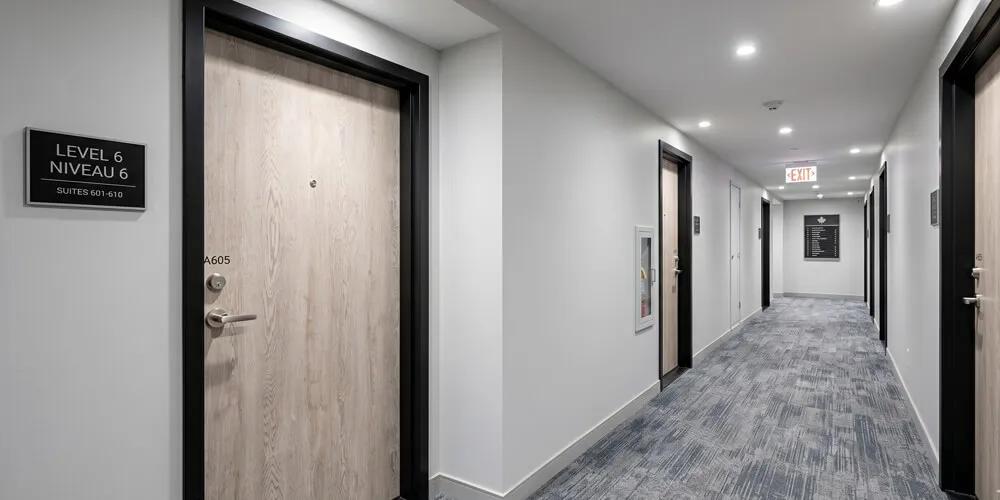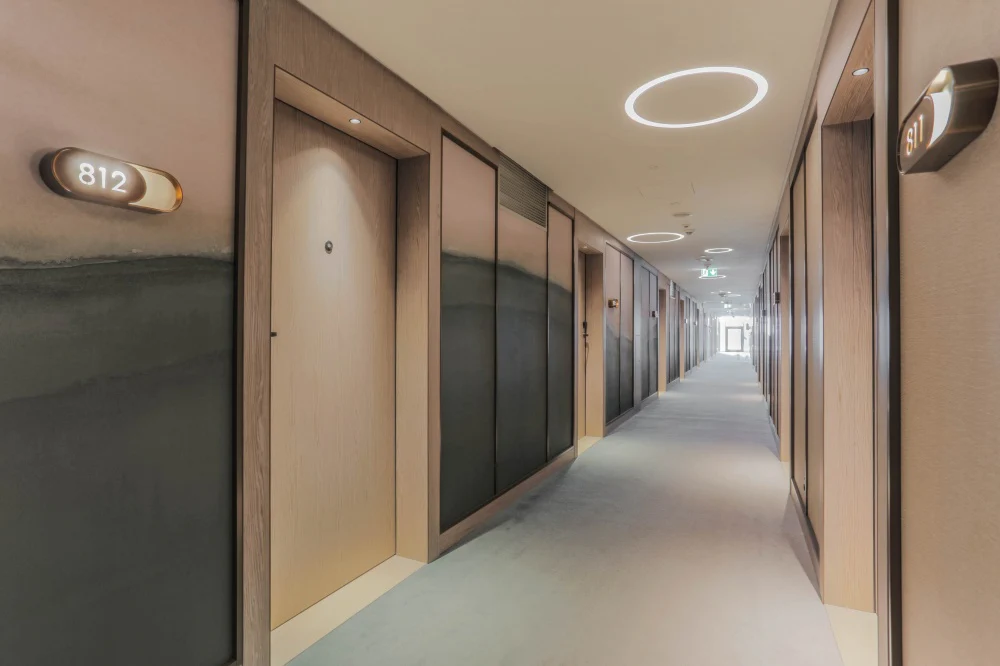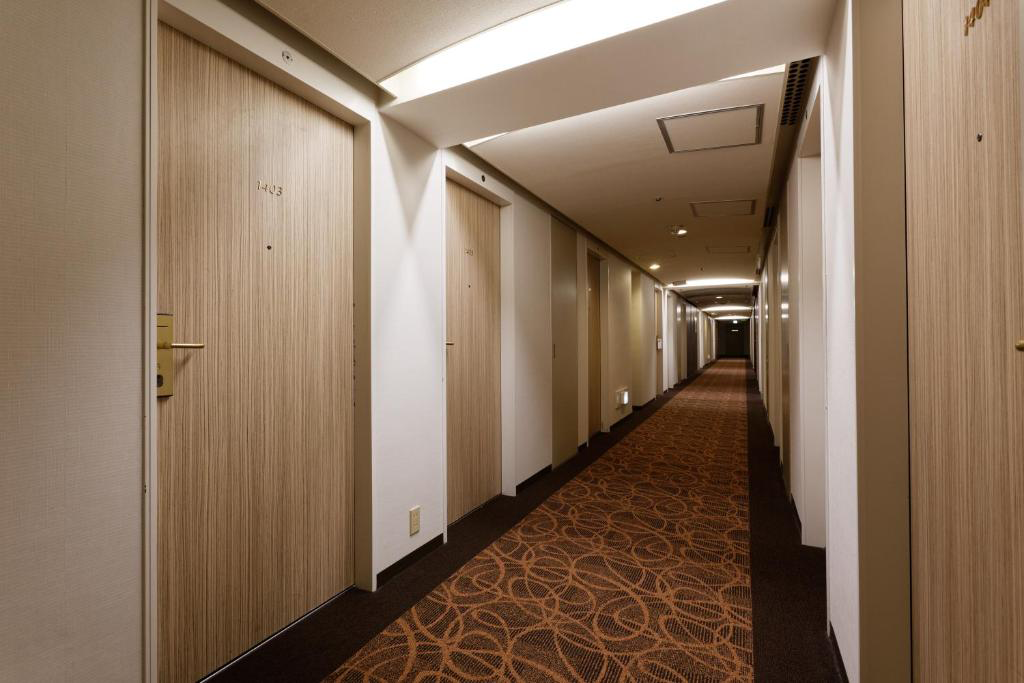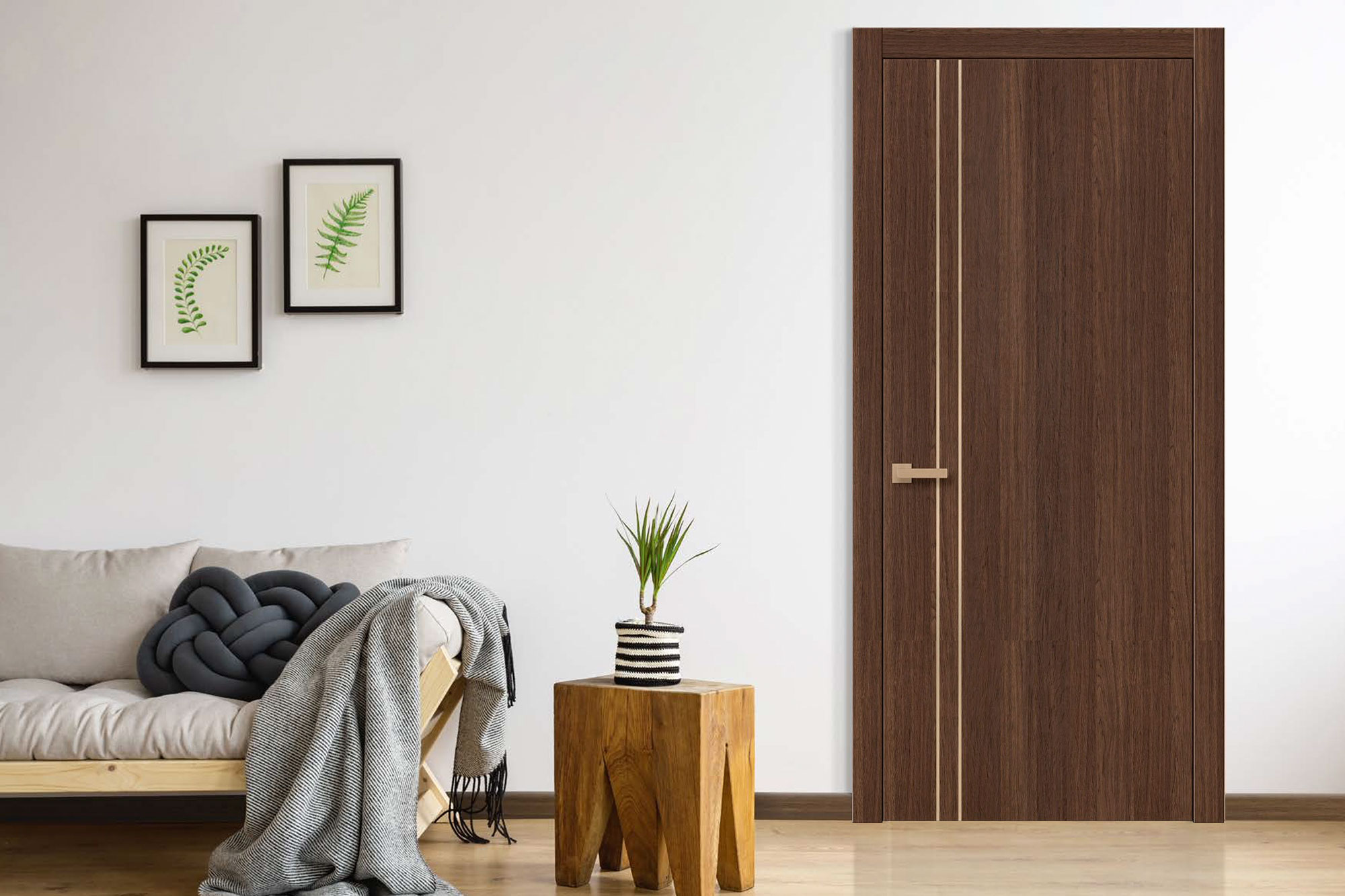
What qualifies as a fire-rated door?

Introduction to Fire-Rated Doors
What is a Fire-Rated Door?
A fire-rated door is a specially designed door that helps to prevent the spread of fire and smoke between different areas of a building. It’s an essential part of any building’s fire protection system, playing a crucial role in keeping people safe by slowing down or stopping the fire’s spread. These doors are built to withstand high temperatures for a specific period, typically 30 minutes to 2 hours, depending on their fire rating. This allows people time to evacuate safely and for fire services to respond.
Fire-rated doors are typically made from stronger materials, such as steel or specially treated wood, which can withstand extreme heat. They also come with fire-resistant hardware and seals, which help prevent smoke from escaping. Unlike regular doors, fire-rated doors undergo rigorous testing to ensure compliance with safety standards, including local building codes and fire safety regulations.
So, what sets a fire-rated door apart from a regular door? The main difference lies in its construction. While a standard door is designed for everyday use and doesn’t have any special fire resistance, a fire-rated door is designed to resist fire for a specific period. Standard doors don’t offer any protection against heat or smoke and will quickly allow fire to spread, while fire-rated doors help to compartmentalize fire, protecting other areas of the building.
Why are Fire-Rated Doors Important?
Fire-rated doors play a critical role in any building’s fire protection system. They are designed to contain fires, keeping them from spreading quickly and giving occupants more time to evacuate. In an emergency, time is everything, and a fire-rated door can literally save lives by slowing the spread of smoke and fire to other parts of the building.
When a fire breaks out, it’s essential to have a barrier that can withstand the heat and smoke for a set period. Fire-rated doors act as these barriers, preventing fire from spreading through hallways, rooms, and even entire floors. This gives building occupants the time they need to safely exit or move to a safer area, especially in larger buildings where escape routes might be far away. Without fire-rated doors, fire can spread rapidly, causing significant damage, injury, or even worse.
In many areas, installing fire doors is required by law. Depending on the building type and its intended use, you may need to meet fire safety regulations that mandate the use of fire doors. For example, if you are running a business or managing an apartment complex, you must ensure that your building complies with local fire safety regulations. Fire doors can help you meet these legal requirements and avoid potential fines or legal issues.
Moreover, fire-rated doors enhance a building’s overall safety by helping maintain its structural integrity during a fire. They are part of a comprehensive fire protection strategy that includes sprinklers, alarms, and smoke detectors. In addition to preventing fire spread, these doors also help contain smoke, which is often the leading cause of death in fires. By limiting smoke travel, fire-rated doors ensure that evacuation routes remain passable, reducing the risk of injury.

Key Features of a Fire-Rated Door
Materials Used in Fire-Rated Doors
Steel, Wood, and Other Common Materials
When it comes to fire-rated doors, the materials used in their construction are critical to their effectiveness. The most common materials for fire-rated doors include steel, wood, and sometimes glass or composite materials. Each of these materials has different properties that make it suitable for various fire protection needs.
Steel
Steel is one of the most popular materials for fire-rated doors. It is durable, non-combustible, and can withstand high temperatures for extended periods. Steel doors are often used in commercial buildings and industrial settings where a high level of fire resistance is required. These doors are usually paired with fire-resistant glass and seals to create a complete fire barrier.
Wood
Wood, on the other hand, is commonly used for residential fire-rated doors. While wood is naturally combustible, fire-rated wood doors are treated with fire-resistant materials that help them resist fire for a specified period. These doors are an excellent choice for environments where aesthetics are important, but fire safety can’t be compromised. Wood doors are often used in places like homes, hotels, and low-rise buildings.
Composite Materials
Composite materials are also gaining popularity for fire-rated doors. These materials can be engineered to combine the best properties of both steel and wood, offering strength, fire resistance, and a more appealing appearance. They are often used in situations where both fire safety and design are priorities.
How Materials Affect Fire Performance?
The material of a fire-rated door directly impacts its fire resistance and overall performance during a fire. Steel doors, for example, offer the highest level of fire resistance because they are non-combustible and can withstand extreme heat. The thicker the steel, the better the door will resist the spread of fire. Steel doors can typically handle high temperatures for 1 to 2 hours, depending on the fire rating.
Wood doors, while effective, typically offer less fire resistance than steel doors. However, fire-rated wooden doors are treated with fire-resistant chemicals that help slow the spread of fire. The fire rating for wood doors generally ranges from 30 to 90 minutes, depending on thickness and treatment type. The key to their effectiveness lies in the quality of the fire-resistant treatment and the door’s construction.
Composite doors offer a good balance between strength, appearance, and fire performance. The materials used in composites, like fire-resistant cores and layers, provide a high level of resistance while maintaining aesthetic appeal. These doors are becoming a popular choice for both residential and commercial applications because they combine fire safety with a more refined look.
Summary
In conclusion, the material of a fire-rated door is crucial to its ability to protect against fire. Whether steel, wood, or composite, each material brings unique advantages. When selecting a fire-rated door, it’s essential to consider the bot.
Fire Ratings and How They're Measured
Fire Rating Classifications
Fire-rated doors are classified based on how long they can resist fire and heat. These ratings are measured in terms of time, such as 30, 60, 90, or 120 minutes. The higher the fire rating, the longer the door can withstand the heat and prevent fire from spreading.
- 30-Minute Fire Rating: These doors are typically used in residential buildings or areas with lower fire risk. They provide a basic level of protection and can withstand fire for about 30 minutes, allowing occupants time to evacuate.
- 60-Minute Fire Rating: This rating is commonly used in office buildings or light commercial areas. It offers more protection than a 30-minute rating and is suitable for environments with moderate fire risk. These doors can withstand a fire for about 60 minutes.
- 90-Minute Fire Rating: Often found in larger commercial or industrial spaces, these doors provide a higher level of protection and can withstand fire for up to 90 minutes. They are designed for buildings with higher fire risks, such as warehouses or factories.
- 120-Minute Fire Rating: These doors are typically used in high-risk areas, such as industrial facilities or multi-story buildings. They offer the most protection, holding up against fire for 120 minutes or more, giving ample time for evacuation and firefighting efforts.
How Fire Protection Performance Is Tested?
The performance of fire-rated doors is tested using standardised methods to ensure compliance with safety requirements. During testing, the door is exposed to high heat and flames to determine how long it can withstand a fire. The test is done in controlled environments, often in fire-testing laboratories. The key elements that are evaluated during testing include:
- Heat Resistance: The door must withstand the intense heat from the fire. During testing, the door is exposed to temperatures exceeding 1,000°F (537°C), and it must prevent the fire from passing through for the required time.
- Structural Integrity: The door must maintain its shape and integrity during the test. It should not warp, crack, or break apart. This ensures the door continues to act as a barrier to smoke and fire.
- Smoke Seal Integrity: Smoke can spread quickly, so fire-rated doors are also tested for their ability to contain smoke. Special seals around the edges of the door prevent smoke from leaking into other areas, which is crucial for safe evacuation.
Summary
In conclusion, understanding fire ratings and how they are measured is key when selecting a fire-rated door. Whether it’s for residential, commercial, or industrial use, the right fire rating can provide critical protection during a fire. By understanding the classification and how doors are tested, you can make an informed decision that ensures everyone’s safety in the building.

Understanding Fire-Rated Door Standards and Codes
Building Codes for Fire-Rated Doors
National and Local Building Code Requirements
When it comes to fire-rated doors, compliance with building codes is crucial for ensuring safety and meeting legal requirements. These codes provide guidelines for the design, installation, and maintenance of fire-rated doors. They vary by location, but national and local building codes, such as the National Fire Protection Association (NFPA) and the International Building Code (IBC), are commonly referenced.
NFPA Codes:
The NFPA is one of the most recognized organizations for fire safety standards. NFPA 80, for example, provides the standard for the installation and maintenance of fire doors and other opening protectives. This code outlines specific requirements for fire-rated doors, including testing, maintenance, and performance during a fire. Fire-rated doors must meet these requirements to ensure they provide adequate protection in case of an emergency.
IBC (International Building Code):
The IBC sets out comprehensive guidelines for building construction, including the use of fire-rated doors. It specifies which areas of a building must have fire-rated doors and the minimum ratings for each application. For example, in certain commercial buildings, fire-rated doors may be required in hallways, stairwells, and fire exits to prevent fire from spreading to other parts of the building. The IBC also outlines acceptable installation methods and the maximum time a door must withstand fire.
Summary
These national and local building codes ensure that fire-rated doors meet minimum performance standards to protect lives and property. Compliance with these codes is mandatory, and any building that fails to meet them may be considered unsafe and could face penalties or even legal action in the event of a fire.
Certification Labels for Fire-Rated Doors
Common Certification Labels
Certification labels are a crucial part of the fire-rated door industry. These labels assure building owners, contractors, and inspectors that a fire-rated door has passed rigorous testing and meets the necessary safety standards. Different countries and regions have their own certification bodies and standards, but several labels are recognized worldwide.
UL (Underwriters Laboratories):
UL is one of the most respected certification bodies in the United States. The UL label on a fire-rated door means the door has undergone thorough testing for fire resistance and durability. UL-certified doors can withstand the specified fire conditions for the required period, which might range from 30 minutes to 2 hours. UL is a key certification to look for in North America when ensuring a door’s reliability and safety.
AS (Australian Standards):
In Australia, fire-rated doors must meet AS 1905.1, which sets the requirements for fire doors. These doors are tested to ensure they provide the appropriate fire resistance for the designated time. AS certification is essential in Australia, ensuring that doors meet local safety expectations.
BS (British Standards):
In the UK, BS 476 governs fire-resistance tests for doors. Fire-rated doors with the BS label are tested for heat and smoke resistance, ensuring they prevent the spread of fire and smoke for a specified time. BS-certified fire doors are essential in residential, commercial, and industrial buildings across the UK.
EN (European Norms):
EN certification applies to fire-rated doors sold in Europe. The EN 1634-1 standard is the key guideline for fire-resistance testing in Europe. These tests ensure that the doors provide the required level of protection, depending on the building’s needs. EN labels are recognised across the European Union and serve as a guarantee of the door’s fire resistance and quality.
Summary
Each of these labels helps ensure that fire-rated doors meet or exceed the safety standards in their respective regions. It’s important to choose fire-rated doors that carry the appropriate certifications for the intended use. This ensures that the door performs as required and complies with local building codes and regulations.
The Importance of the Certification Process
The certification process is essential for guaranteeing the safety and performance of fire-rated doors. Without certification, it’s impossible to know if a door can truly withstand a fire for the specified time or meet the required standards. Here’s why the certification process is so important:
Safety Assurance:
Certification ensures that a fire-rated door has been tested under controlled conditions to withstand heat, flames, and smoke for a specific period. This testing is done by experts in fire safety who simulate real-world fire scenarios. A certified door is proven to perform its job—stopping fire from spreading and protecting lives and property.
Compliance with Codes and Regulations:
Many local and national building codes require fire-rated doors to meet specific standards. The certification process confirms that the door complies with these codes. Without a certified door, a building may fail safety inspections or even be held liable in the event of a fire.
Quality Control:
The certification process is not just about testing a door’s fire resistance; it also ensures the door’s overall quality and durability. Certified doors have been thoroughly inspected for strength, durability, and functionality. This means they’re less likely to fail under stress, even in high-traffic areas.
Insurance and Liability:
Many insurance companies require that fire-rated doors in commercial and industrial buildings be certified. If a building owner installs uncertified doors, they may face difficulties with insurance claims in the event of a fire. Certification provides peace of mind to both building owners and insurers.
Summary
In conclusion, certification labels are not just a formality; they are a vital part of fire-rated door safety. They confirm that the doors have passed rigorous tests, meet safety standards, and are suitable for use in protecting lives and property. Whether it’s UL, AS, BS, or EN, each label carries its own set of guarantees, helping to ensure the door performs as expected during an emergency. Always check for proper certification when selecting a fire-rated door to ensure safety and compliance.
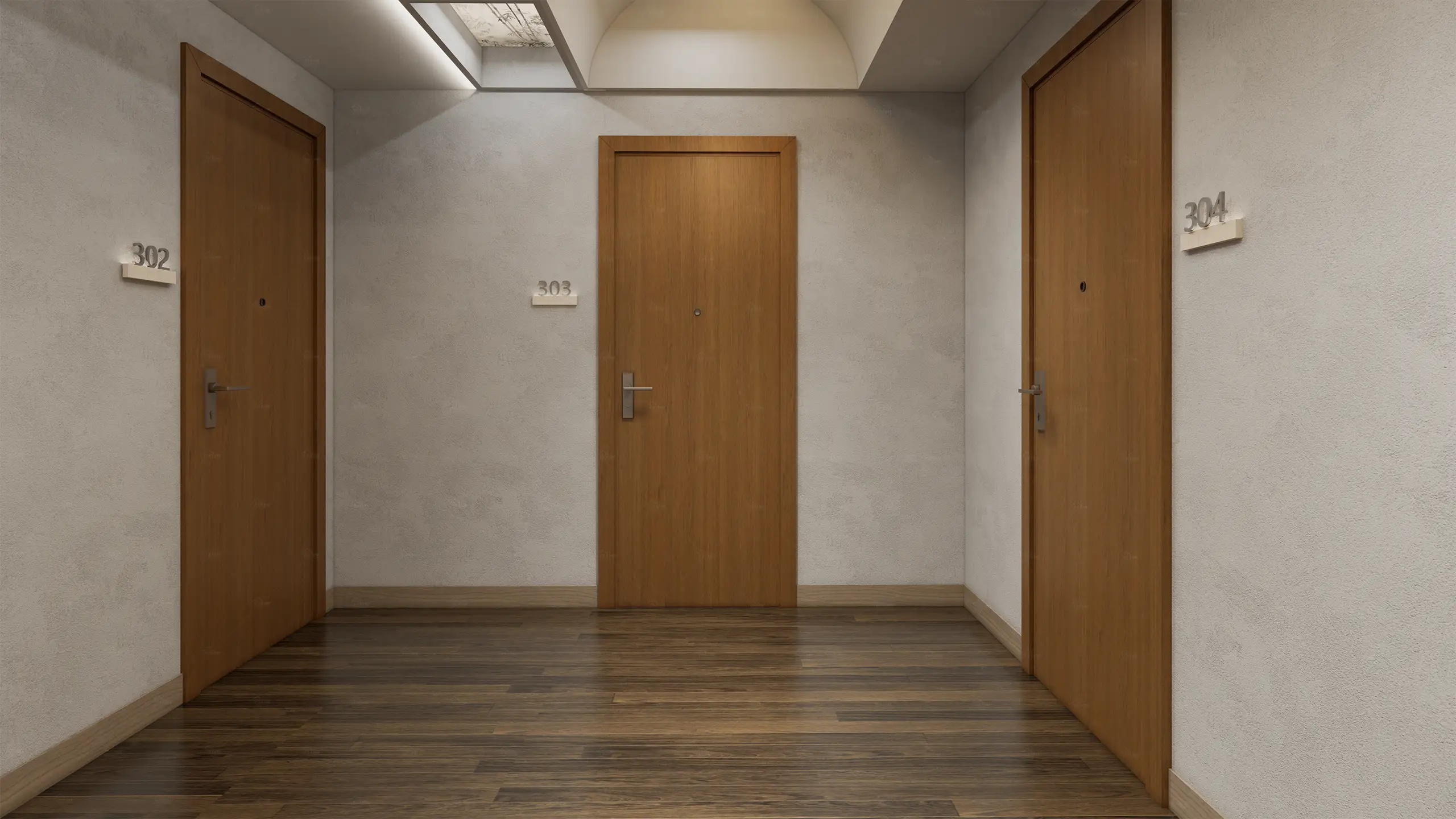
How to Choose the Right Fire-Rated Door?
Identifying the Right Fire Rating for Your Building
Choosing the right fire rating for your fire-rated door is crucial to ensuring your building’s safety. Fire ratings are determined by how long a door can withstand heat and flames before failing. The required fire rating depends on the building’s purpose, size, and the level of fire risk in different areas.
For Low-Risk Areas:
In residential buildings or areas with minimal fire risk, a 30-minute fire-rated door is often sufficient. These doors are commonly used in places like bedrooms or hallways where the fire risk is lower, and the goal is to provide enough time for evacuation.
For Moderate-Risk Areas:
If you are choosing a fire-rated door for an office, a smaller commercial space, or a stairwell, a 60-minute fire rating might be more appropriate. These areas are more likely to encounter fire hazards, so a door with a 60-minute rating provides greater protection.
For High-Risk Areas:
In industrial buildings, warehouses, or places with significant fire hazards, such as kitchens or server rooms, a 90-minute or 120-minute fire-rated door is essential. These doors offer the highest level of fire resistance and are designed to contain fire for extended periods, which is critical in areas with a higher risk of fire outbreaks.
Summary
It’s important to note that different areas of the same building may require doors with varying fire ratings. For instance, fire-rated doors on the exterior of a building may require a higher rating than those on the interior. Always consult local building codes to determine the exact fire rating needed for each area.
Fire-Rated Doors for Residential vs. Commercial Use
When selecting fire-rated doors, it’s essential to consider the differences between residential and commercial use. While both require fire-rated doors to ensure safety, the requirements and regulations vary significantly.
Residential Use:
In residential buildings, fire-rated doors are typically installed in areas that connect to the exterior or between the house and garage. For homes, a 30-minute to 60-minute fire-rated door is generally sufficient for protecting people and preventing fire from spreading. In some regions, fire-rated doors are required for garage-to-living-area doors or for doors leading to utility rooms. These doors are often made from wood or a combination of materials, offering both fire protection and aesthetic appeal.
Commercial Use:
In commercial settings, fire-rated doors are subject to stricter regulations due to the higher foot traffic, valuable assets, and, often, greater fire risks. For example, offices, hotels, and hospitals will require 60-minute or 90-minute fire-rated doors, especially in corridors, stairwells, and between fire zones. In commercial kitchens or data centers, where fire hazards are more likely, you may need 120-minute fire-rated doors. The materials used for commercial fire-rated doors tend to be more robust, often steel or composite, to meet higher safety standards.
One major difference in commercial spaces is that fire-rated doors are often part of a larger fire prevention strategy that includes sprinklers, alarms, and smoke detectors. Therefore, these doors need to be durable and regularly maintained to ensure they function effectively in the event of a fire.
Summary
The choice of a fire-rated door for residential or commercial use depends on the level of fire risk, the local building codes, and the specific needs of the building. Whether you’re protecting your home or a commercial property, it’s essential to choose the right fire rating to ensure that your fire-rated doors provide the proper protection when it matters most.
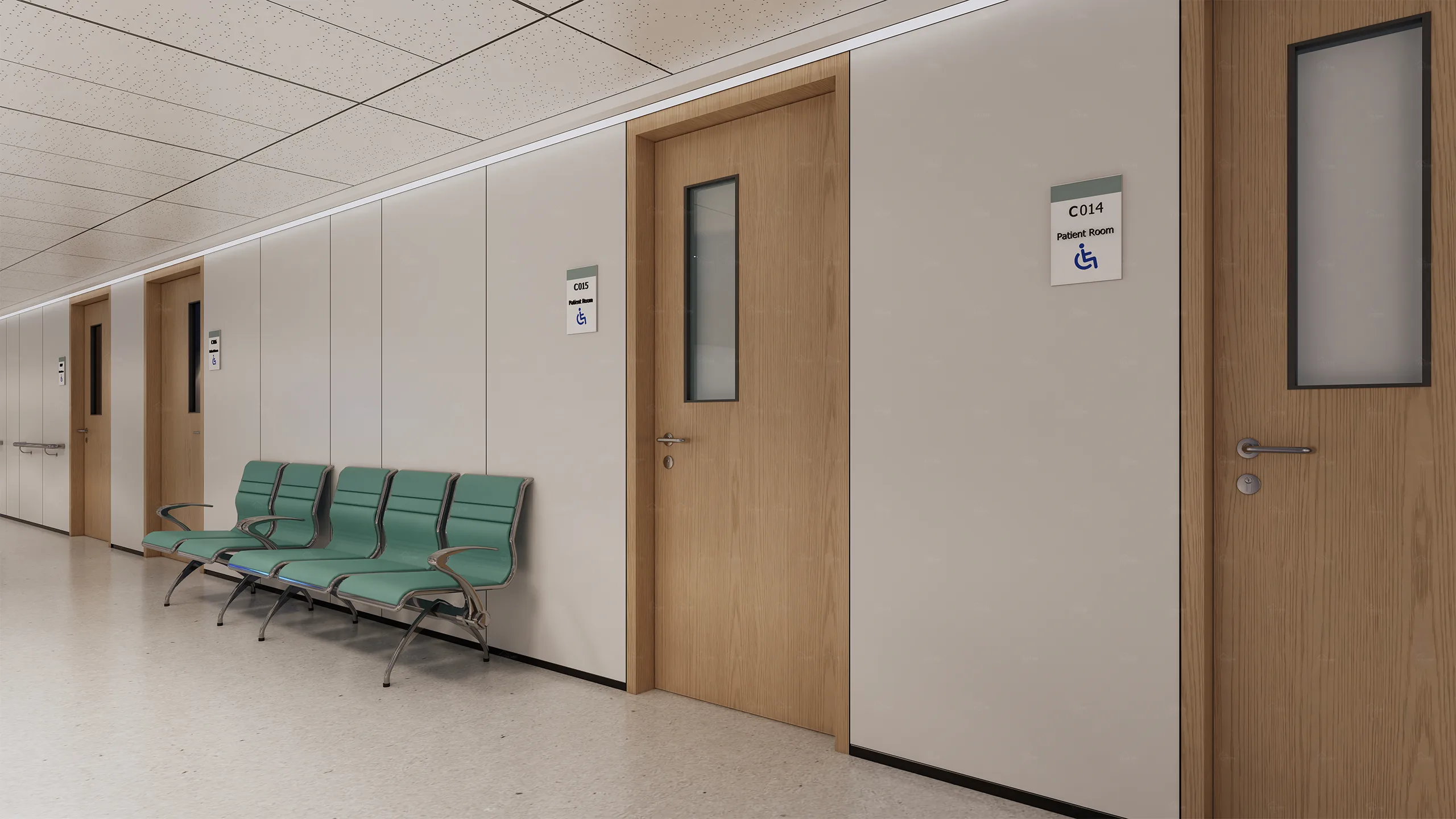
Fire-Rated Door Installation and Maintenance
Professional Installation of Fire-Rated Doors
Key Points to Consider During Installation
When installing a fire-rated door, it’s essential to follow specific guidelines to ensure that it functions correctly during a fire. Professional installation is key to ensuring the door performs as expected. Here are some key points to consider during installation:
Correct Door Frame:
The fire-rated door must be installed within a fire-rated frame. If the frame isn’t fire-rated, the door may not provide the intended protection. Be sure to choose frame materials compatible with the door’s fire rating.
Proper Seals and Gaskets:
Fire-rated doors rely on seals and gaskets to prevent smoke and heat from passing through the edges. These seals should be installed correctly and made of materials that expand when heated, forming a tight seal. This is crucial for keeping the fire from spreading to other areas.
Door Hardware:
The hardware used on fire-rated doors, such as hinges, locks, and handles, must also be fire-resistant and compatible with the door’s fire rating. Using non-rated hardware can compromise the door’s performance and the building’s overall fire protection.
Swing Direction:
Fire-rated doors should be installed to swing in the direction of escape. This is important for ensuring that people can safely exit the building during an emergency. Installing the door the wrong way can make it harder to escape quickly, which can be dangerous.
Clearance and Alignment:
The gap between the door and the frame must be minimal to prevent fire from seeping through. Ensure the door is aligned correctly and check the clearance around the edges. The door should close completely when shut and not leave any gaps that would allow smoke or fire to pass.
How Installation Affects Fire Performance?
The way a fire-rated door is installed significantly impacts its performance during a fire. Even the best fire-rated door will fail to protect if it’s not installed correctly. Here’s how installation can affect the door’s fire resistance:
Fire Resistance:
If the door is not installed correctly, gaps around the edges can allow fire and smoke to pass through. Proper installation ensures the door fits tightly in the frame, providing an airtight seal that helps prevent the spread of fire. A small gap might not seem like much, but during a fire, it can make the difference between containing the fire and letting it spread quickly.
Structural Integrity:
The installation process also affects the door’s structural integrity. A door that isn’t correctly aligned or secured is more easily damaged by heat and flames. Ensuring the door is firmly installed and properly secured to the frame helps maintain its strength and fire resistance.
Maintenance and Durability:
The way a door is installed can also affect its durability. If it’s installed in a way that puts undue stress on the door or frame, it could wear out faster, compromising its fire resistance. Proper installation ensures the door stays in good working condition for longer, which is essential for both safety and cost-effectiveness in the long run.
Summary
In summary, professional installation is crucial to maintaining the door’s fire performance. By following proper guidelines, ensuring the correct materials are used, and addressing all installation factors, you can maximize the safety benefits of your fire-rated door.
Maintenance and Inspection of Fire-Rated Doors
Regular Inspections and Maintenance Are Essential
Proper maintenance and regular inspections are crucial for ensuring that fire-rated doors remain effective throughout their lifespan. Over time, wear and tear can impact their ability to withstand fire, making inspections an essential part of fire safety. Here’s why regular checks and maintenance are needed:
Ensuring Fire Resistance:
Fire-rated doors are designed to withstand intense heat for a specific period. However, if components such as seals, gaskets, or the door itself are damaged, the door may not perform as expected during a fire. Regular inspections ensure that all parts are intact and functioning correctly, maintaining the door’s fire-resistance capabilities.
Identifying Damage Early:
During everyday use, fire-rated doors can experience minor damage that may go unnoticed. For example, hinges may become loose, seals can wear out, or the door may develop cracks. These issues can reduce the door’s effectiveness during a fire. Regular inspections help catch these problems early before they compromise the door’s performance.
Compliance with Safety Regulations:
Many building codes and fire safety regulations require regular inspections of fire-rated doors. Keeping up with these inspections ensures compliance with local fire codes and can help avoid legal issues or penalties. It also ensures your building is up to code, protecting occupants and reducing liability in the event of a fire.
How to Ensure Consistent Fire Protection Performance?
To keep fire-rated doors performing at their best, it’s essential to take a proactive approach to maintenance. Here’s how to ensure their fire protection capabilities remain consistent:
Check the Door’s Condition:
Regularly inspect the door’s surface for any signs of damage, including cracks, dents, or holes. Any physical damage to the door could compromise its fire resistance. The door should be structurally sound and free from damage that might weaken its resistance to heat.
Examine the Seals and Gaskets:
The seals around the edges of the door are vital for preventing smoke and heat from passing through. Check these seals to make sure they are intact and in good condition. If the seals are worn, replace them immediately. Some seals expand when exposed to heat, which is crucial for keeping the fire from spreading. Ensure the door closes tightly, with no gaps, as even small openings can compromise safety.
Test the Hardware:
The hardware on a fire-rated door, including hinges, locks, and handles, must be fire-resistant and functional. Regularly test the door to make sure it opens and closes smoothly. If the door doesn’t close fully or the hardware malfunctions, it may not seal properly during a fire, which reduces its effectiveness.
Check the Frame and Alignment:
Ensure that the door is correctly aligned with its frame and that there are no gaps. Over time, structural shifts in the building can misalign the door, affecting its performance. Any misalignment can allow smoke and fire to pass through, leading to significant damage or loss. The door should be firmly in place and close securely.
Clean and Maintain the Door:
While fire-rated doors are built to last, they still need basic cleaning and care. Regularly clean the door to prevent dirt, grease, or other debris from interfering with its function. Be sure to clean the hardware, seals, and the door surface to maintain its integrity.
Summary
In conclusion, regular maintenance and inspections are key to ensuring that fire-rated doors remain effective in protecting against fire. By checking the door’s condition, seals, hardware, alignment, and cleaning it regularly, you help ensure that the door will perform as expected in an emergency. This proactive approach not only enhances safety but also extends the life of the fire-rated door, keeping your building and its occupants protected for years to come.
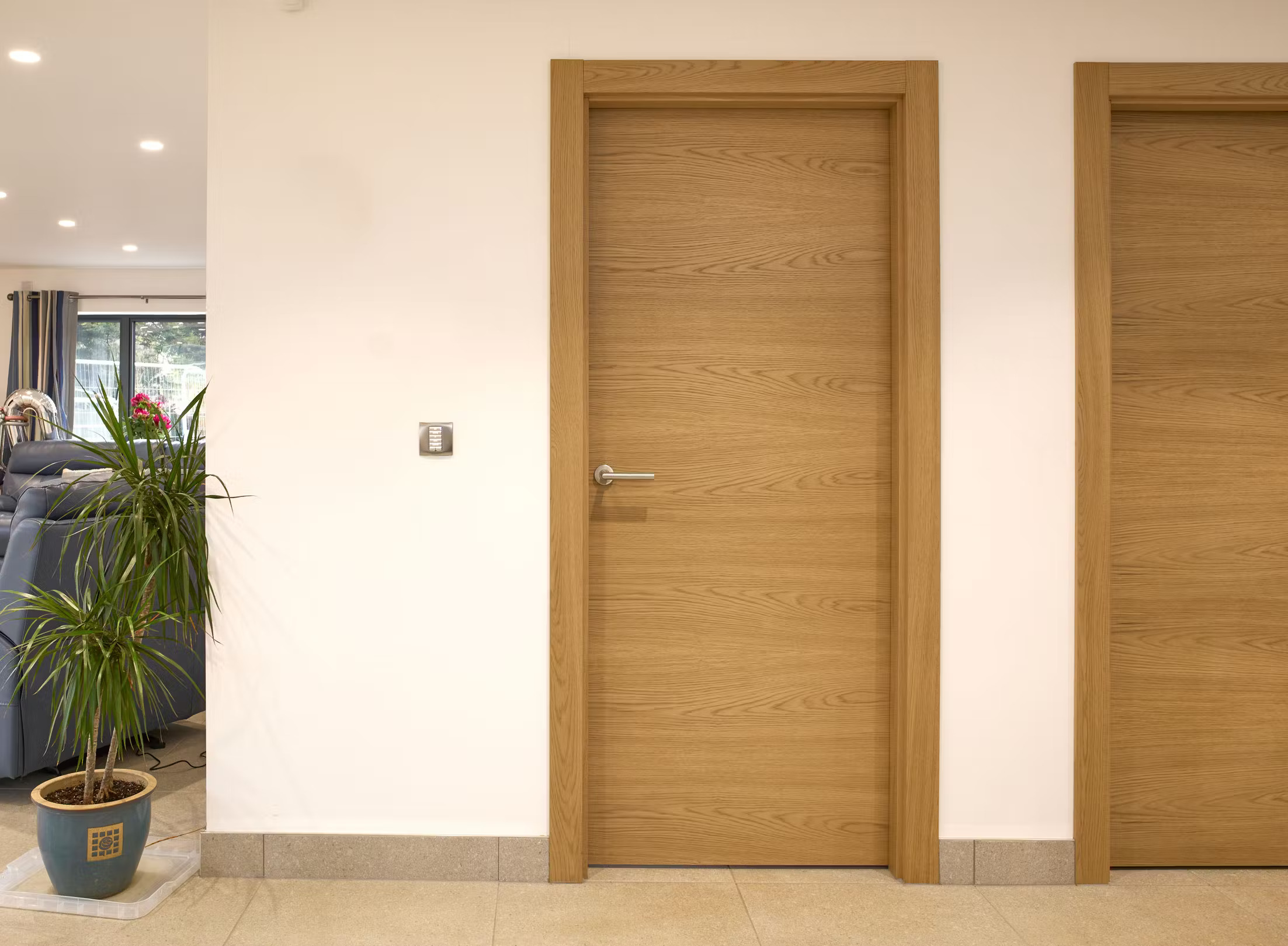
Conclusion
Gaps and Misalignment: Why It’s Crucial to Fix These Issues
Fire-rated doors are more than just another part of a building—they are a critical component of fire safety. In both residential and commercial buildings, these doors provide an invaluable barrier that helps prevent the spread of fire and smoke, giving people more time to evacuate safely and reducing property damage.
When installed and maintained correctly, fire-rated doors can make a significant difference in the event of a fire. Their ability to withstand intense heat for extended periods—whether 30, 60, or 120 minutes—helps prevent fire from spreading unchecked, potentially saving lives and limiting the destruction that could otherwise occur.
In addition to their life-saving qualities, fire-rated doors also enhance the building’s overall safety and security. They are carefully designed to meet specific standards and regulations, helping ensure your building complies with local fire codes. This is not only important for safety but also for legal and insurance purposes.
Fire-rated doors are an essential part of any fire safety strategy. Whether it’s in homes, office buildings, hospitals, or factories, fire-rated doors provide peace of mind. They help contain fires, protect escape routes, and keep people safe. Regular maintenance and professional installation are key to ensuring these doors continue to function correctly, maintain their fire-resistant properties, and keep your building up to code.
In short, fire-rated doors are not just a necessary feature—they are life-saving tools that contribute to overall fire safety. By choosing the right fire-rated door for your building, following installation guidelines, and committing to regular maintenance, you ensure that your building remains safe for years to come.
Relate FAQ
What qualifies as a fire-rated door?
A fire-rated door has been tested and certified to resist the spread of fire and smoke for a specified period. Typically, fire-rated doors are made from materials such as steel or composite and feature a fire-resistant core. The rating, measured in hours (e.g., 30, 60, 90, or 120 minutes), indicates the amount of time the door can withstand fire exposure while still protecting the area behind it.
How long does a fire-rated door last in a fire?
The duration a fire-rated door can withstand a fire depends on its rating. Most fire-rated doors come with ratings such as 30, 60, 90, or 120 minutes, indicating they can protect against fire for those durations. The specific rating of the door depends on factors such as the materials used and the testing standards it was subjected to.
Does law require fire-rated doors?
Yes, fire-rated doors are typically required by local building codes and fire safety regulations in some regions of a building, such as stairwells, corridors, and fire exits. They are critical in buildings with high occupancy, industrial facilities, and any place that requires a fire escape plan.
What are the components of a fire-rated door?
A fire-rated door consists of several components that contribute to its fire resistance, including:
- Core material: Often made from fire-resistant composites, mineral cores, or steel.
- Frame: Usually made of metal to prevent fire from bypassing the door through gaps.
- Seals: Intumescent seals expand during a fire to avoid smoke and heat from escaping through the door’s edges.
- Hardware: Door handles, hinges, and locks are all specially designed to withstand heat for extended periods.
Can fire-rated doors be used for external openings?
Yes, fire-rated doors can be used for external openings, but it’s essential to ensure that the door and its frame are designed to withstand not only fire but also environmental factors such as weather. Specially designed fire-rated doors for external use often feature additional features such as weatherproof seals and corrosion-resistant materials.
How do you maintain a fire-rated door?
To ensure your fire-rated door performs well during a fire, it is essential to:
- Regularly inspect it for damage or wear, especially the seals and hinges.
- Ensure the door closes properly and that there are no gaps.
- Keep the door free of obstructions and ensure it is not painted or altered in any way that could compromise its fire resistance.
- Replace any damaged components with compliant fire safety components.
What is the difference between a fire door and a fire-rated door?
While the terms are sometimes used interchangeably, a "fire-rated door" is a door that has been specifically tested and rated for its ability to resist fire for a specified period, typically in accordance with standards such as ASTM E119. A "fire door" is a general term for any door designed to resist the spread of fire, but it may not always be formally rated or tested.
Can fire-rated doors be customized to fit different designs?
Yes, fire-rated doors can be customized to fit specific design and aesthetic requirements. Customisation options include finishes, colours, and styles to ensure the door matches the building's interior design while maintaining its fire protection capabilities. However, any modifications must comply with fire safety regulations and standards.