What are the common sound insulation ratings for fire doors in North America?
Understanding Sound Insulation Ratings For Fire Doors
A Fire Door is designed to slow the spread of fire, smoke, and heat, but many modern fire-rated door systems also provide sound-control benefits. Understanding sound insulation ratings for fire doors helps building owners, architects, and contractors choose the right door solution for safety, privacy, and comfort.
What Is A Sound Insulation Rating For A Fire Door?
A sound insulation rating for a Fire Door indicates how effectively the door assembly reduces sound transmission between two spaces. Unlike a basic interior door, a fire-rated door with acoustic performance is tested to control both safety risks and unwanted noise.
The most common sound rating used for commercial Fire Doors in North America is the STC rating. A higher STC number means the Fire Door can block more sound, making it suitable for areas where privacy and noise control are important.
For example, a standard Fire Door may provide basic sound reduction. At the same time, an acoustic Fire Door with a higher STC rating can help reduce voices, office noise, machinery sounds, and other common disturbances.
It is important to understand that not every fire-rated door is automatically soundproof. Fire protection and sound insulation are two different performance features. A Fire Door needs the correct materials, core construction, seals, and testing certification to achieve both fire resistance and acoustic control.
Why Sound Insulation Matters In Fire-Rated Door Systems?
Sound insulation is becoming an important feature in modern Fire Door systems, especially in commercial buildings, healthcare facilities, schools, hotels, and multi-family properties. A well-designed acoustic fire door improves comfort while maintaining required fire protection standards.
In busy buildings, noise can affect concentration, privacy, and the overall user experience. For example, hospitals need quiet patient rooms, hotels need better guest comfort, and offices need private meeting spaces. A sound-rated Fire Door helps create a more controlled indoor environment.
Another reason sound insulation matters is that many areas already require both fire protection and noise control. A corridor door, stairwell door, or mechanical room door may need to prevent the spread of fire while also reducing unwanted sound transfer.
By selecting the right Fire Door with an STC rating, building professionals can achieve a better balance between safety, performance, and occupant comfort. This makes acoustic Fire Doors a practical choice for modern construction projects across North America.
How Fire Door Ratings And Sound Ratings Are Measured?
Fire Door ratings and sound ratings are measured through different testing methods because they evaluate different performance factors. A Fire Door rating focuses on how long the door can resist fire exposure, while a sound rating focuses on how much noise the door can block.
In North America, fire performance is commonly tested according to standards such as NFPA 80, while acoustic performance is often measured using the STC (Sound Transmission Class) test method. These tests evaluate the complete door assembly, including the door slab, frame, seals, and hardware.
The STC rating of a fire-rated door assembly depends on many factors, including door thickness, core material, frame design, gasketing, and installation quality. Even a high-performance Fire Door may lose acoustic value if gaps exist around the frame or if the wrong hardware is installed.
Because of this, choosing a certified acoustic Fire Door system is important. Manufacturers test complete assemblies to ensure the Fire Door meets both fire safety requirements and sound reduction expectations for real-world applications.

What Is The STC Rating For Fire Doors?
The STC rating for Fire Doors is one of the most common measures of sound control performance in North America. It shows how well a fire-rated door assembly can reduce airborne noise between rooms or spaces. A higher STC number means better sound insulation, making the Fire Door more suitable for areas that need privacy, comfort, and noise control.
What Does STC Mean In Door Sound Ratings?
STC stands for Sound Transmission Class, a standard rating that measures how well a door, wall, window, or building material blocks sound. For a Fire Door, the STC rating shows how much everyday noise, such as voices, conversations, and equipment sounds, the door can reduce.
In North America, many commercial Fire Doors use STC ratings to describe their acoustic performance. The rating helps architects, contractors, and building owners compare different acoustic Fire Door solutions before selecting the right product for their projects.
A higher STC rating means the fire-rated acoustic door provides stronger sound protection. For example, a Fire Door with an STC rating of 50 can block much more noise than a basic Fire Door with an STC rating of 25.
However, STC is not the same as a fire resistance rating. A Fire Door may have a 60-minute or 90-minute fire rating, but its sound performance depends on the door core, frame, seals, and overall assembly design.
How STC Ratings Measure Sound Reduction Performance?
The STC rating of a Fire Door assembly is determined by laboratory sound tests that measure how much airborne noise passes through the door. During testing, sound is generated on one side of the door, and specialized equipment measures how much reaches the other side.
The test checks various sound frequencies, including the common human speech range. The results are combined into a single STC number that represents the overall sound-blocking ability of the fire-rated door system.
Several parts affect the STC performance of a Fire Door. These include door thickness, core material, steel or wood construction, frame design, fire door seals, and installation quality.
For this reason, the STC rating belongs to the complete Fire Door assembly, not only the door slab itself. A high-quality acoustic Fire Door with poor installation may not achieve the expected noise-reduction performance.
Common STC Rating Levels For Commercial Fire Doors
Commercial buildings across North America use different STC-rated Fire Doors depending on their location and noise control needs. The right STC level depends on the type of building, the purpose of the room, and the required level of sound reduction.
STC 20–30: Basic Sound Control Doors
STC 20–30 Fire Doors provide basic sound reduction and are commonly used in areas where moderate noise control is enough. These doors can help reduce normal conversations, hallway noise, and general background sounds.
Many standard commercial Fire Doors fall into this range because their main purpose is fire protection rather than advanced acoustic performance. They are often found in offices, storage rooms, utility areas, and low-noise environments.
Many standard commercial Fire Doors fall into this range because their main purpose is fire protection rather than advanced acoustic performance. They are often found in offices, storage rooms, utility areas, and low-noise environments.
For projects that only need basic privacy and fire protection, a standard fire-rated door with sound insulation features may provide a practical and cost-effective solution.
STC 35–45: Standard Acoustic Fire Doors
STC 35–45 Fire Doors are a popular choice for commercial buildings that need better noise control. These acoustic Fire Doors provide improved sound reduction and are commonly used in offices, schools, hotels, and healthcare facilities.
A Fire Door in this STC range can reduce normal speech, meeting room conversations, and common workplace noise. It creates a quieter environment while still meeting fire safety requirements.
Many manufacturers design STC-rated fire doors in this range with special cores, improved seals, and stronger frames. These features help prevent sound leakage around the door edges.
For most commercial applications, an STC 35–45 fire-rated acoustic door offers a good balance between price, performance, and installation requirements.
STC 50+: High-Performance Soundproof Fire Doors
STC 50+ Fire Doors provide advanced sound insulation for spaces that require high privacy and strong noise control. These high-performance soundproof Fire Doors are often used in hospitals, recording areas, conference rooms, laboratories, and specialized facilities.
A Fire Door with an STC rating above 50 can significantly reduce speech and many environmental noises. It helps create quiet spaces where confidentiality and comfort are critical.
These premium acoustic-rated Fire Doors usually include heavy-duty cores, specialized seals, reinforced frames, and tested hardware systems. Every part of the assembly works together to achieve better sound reduction.
For projects that require both fire protection and superior acoustic performance, an STC 50+ commercial Fire Door system provides one of the highest levels of sound control available in North America.

Common Sound Insulation Ratings For Fire Doors In North America
The sound insulation ratings for Fire Doors in North America vary by door material, core construction, and application. While most fire-rated doors use the STC (Sound Transmission Class) system to measure acoustic performance, the actual rating depends on the complete door assembly. Understanding the typical STC range for different types of Fire Doors makes it easier to choose the right solution for both fire safety and noise control.
Typical STC Ratings For Wood Fire-Rated Doors
Wood Fire-Rated Doors are a popular choice for offices, schools, hotels, apartments, and healthcare buildings. In addition to providing fire protection, many modern wood Fire Doors also offer solid acoustic performance, making them suitable for spaces where comfort and privacy matter.
A standard wood Fire Door usually delivers an STC rating between 30 and 40. When manufacturers use a solid mineral core, particleboard core, or acoustic core, the rating can increase to STC 45 or higher. This level helps reduce conversations, office noise, and hallway sounds.
The overall sound performance depends on more than the door leaf. Proper frames, smoke seals, acoustic gasketing, and automatic door bottoms all help improve the STC rating of a wood fire-rated door assembly.
For most commercial projects, wood acoustic Fire Doors provide a good balance between appearance, fire resistance, and sound insulation. They are often selected for projects that require both attractive finishes and reliable acoustic performance.
Typical STC Ratings For Steel Fire Doors
Steel Fire Doors are widely used in commercial, industrial, healthcare, and institutional buildings because they offer excellent durability and fire protection. Many building owners also choose steel Fire Doors for their dependable sound insulation performance.
A standard steel Fire Door generally achieves an STC rating between 30 and 40. With insulated cores, reinforced construction, and acoustic seals, premium steel fire-rated doors can achieve STC ratings of 45 to 50 or higher, depending on the tested door assembly.
The door core plays an important role in sound control. Honeycomb cores provide basic performance, while mineral cores or composite acoustic cores offer much better sound reduction. Quality installation also helps prevent sound leakage around the frame.
Because of their strength and long service life, steel acoustic Fire Doors are commonly installed in hospitals, mechanical rooms, office buildings, schools, and public facilities where both safety and noise control are essential.
Typical STC Ratings For Commercial Fire Doors
Commercial Fire Doors come in many designs, including wood, steel, glass, and composite door systems. Their STC ratings usually range from 25 to 50+, depending on the building requirements and the level of acoustic protection needed.
Many office buildings use Fire Doors with STC ratings between 35 and 45 because they provide effective sound control for conference rooms, private offices, classrooms, and hotel corridors. These ratings offer a comfortable balance between cost and performance.
For hospitals, laboratories, legal offices, and executive meeting rooms, designers often specify high-STC commercial Fire Doors rated at 50 or above. These doors help protect confidential conversations while maintaining certified fire resistance.
When selecting a commercial fire-rated door, it is important to review the tested STC rating for the complete assembly. The frame, glazing, seals, and hardware all influence the final acoustic performance, not just the door panel itself.
Typical STC Ratings For Other Fire Doors
In addition to wood and steel models, North America offers several other types of Fire Doors designed for specialized applications. These include glass Fire Doors, double Fire Doors, aluminum Fire Doors, and acoustic Fire Door systems with advanced sound insulation features.
Fire-rated glass doors generally provide STC ratings between 30 and 40, depending on the glazing system and frame design. They are often used in offices, schools, and commercial entrances where visibility and fire protection are equally important.
Double Fire Doors and custom acoustic Fire Doors can achieve STC ratings of 45 to 55+ when equipped with high-density cores, perimeter seals, and automatic door bottoms. These systems are commonly installed in theaters, healthcare facilities, recording spaces, and other noise-sensitive environments.
No matter which type of Fire Door you choose, the best acoustic performance comes from a fully tested and certified door assembly. Selecting the right combination of door material, frame, seals, glazing, and hardware ensures reliable fire protection and effective sound insulation.
Sound Insulation Ratings For Different Fire Resistance Ratings
The fire resistance rating of a Fire Door tells you how long the door can resist fire, while the STC rating measures how well it blocks sound. Although these two ratings serve different purposes, many modern fire-rated door assemblies are designed to deliver both fire protection and acoustic performance.
20-Minute Fire Door Sound Ratings
A 20-minute Fire Door is commonly used in residential buildings, office suites, hotel rooms, and corridors where a shorter fire resistance period meets building code requirements. These fire-rated doors also provide basic to moderate sound control when paired with the right door core and sealing system.
Most 20-minute Fire Doors achieve an STC rating between 25 and 35. This level helps reduce everyday sounds such as conversations, footsteps, and hallway activity. While these doors are not fully soundproof, they improve privacy compared with standard interior doors.
The actual STC rating depends on the complete Fire Door assembly. A solid-core wood Fire Door or insulated steel Fire Door, combined with acoustic gasketing and automatic door bottoms, can deliver better sound insulation than a basic hollow-core design.
For offices, apartments, hotels, and residential buildings, a 20-minute fire-rated acoustic door often provides a practical combination of code compliance, cost efficiency, and everyday noise reduction.
45-Minute Fire Door Sound Ratings
A 45-minute Fire Door offers stronger fire protection and is widely installed in schools, hospitals, stairwells, commercial corridors, and mixed-use buildings. Many building owners also choose this type of Fire Door for its improved acoustic performance.
Most 45-minute Fire Doors typically achieve STC ratings from 30 to 40. Premium models with mineral cores, composite cores, and advanced acoustic seals can achieve an STC rating of 45 or higher, depending on the assembly being tested.
Because these Fire Doors often separate busy public spaces from quieter rooms, sound control becomes an important part of the overall design. A higher STC rating helps reduce speech, office activity, and corridor noise without affecting fire safety.
For many commercial projects, a 45-minute acoustic Fire Door offers an excellent balance between fire resistance, sound insulation, durability, and long-term building performance.
60-Minute Fire Door Sound Ratings
A 60-minute Fire Door is commonly specified for healthcare facilities, educational buildings, industrial sites, and large commercial developments. These fire-rated door systems provide extended fire protection while also supporting stronger acoustic control.
Most 60-minute Fire Doors provide STC ratings between 35 and 45. High-performance models with specialized acoustic cores, perimeter seals, and insulated frames can achieve an STC rating of 50, making them suitable for spaces that require greater privacy.
The sound performance of a 60-minute Fire Door depends on the entire tested assembly. Even small gaps around the frame can reduce the acoustic rating, so correct installation is just as important as selecting the right door.
Many architects choose 60-minute Fire Doors for meeting rooms, patient rooms, laboratories, and administrative offices because they combine dependable fire resistance with effective sound insulation.
90-Minute Fire Door Sound Ratings
A 90-minute Fire Door is designed for areas that require a high level of fire protection, including stair enclosures, mechanical rooms, electrical rooms, and fire barriers. These commercial Fire Doors are also available with excellent acoustic performance for projects where noise control is essential.
Typical 90-minute Fire Doors achieve STC ratings between 35 and 45, while premium acoustic Fire Door systems can reach STC 50-55+. These higher ratings significantly reduce speech, equipment noise, and other airborne sounds.
Manufacturers achieve this performance by combining dense door cores, reinforced steel or wood construction, acoustic glazing when required, smoke seals, and automatic door bottoms. Every component contributes to the overall Fire Door STC rating.
For hospitals, government buildings, data centers, laboratories, and other high-performance facilities, a 90-minute fire-rated acoustic door provides reliable fire protection together with outstanding sound insulation, making it one of the most versatile Fire Door solutions available in North America.
Fire Door Sound Ratings Required By North American Building Codes
North American building codes prioritize life safety, but many projects also require effective noise control. While Fire Door regulations primarily address fire resistance, smoke protection, and proper installation, architects often pair these requirements with STC-rated Fire Doors to meet acoustic goals.
Fire Door Requirements Under NFPA 80 Standards
NFPA 80 is one of the most important standards for Fire Door assemblies in North America. It covers the installation, inspection, testing, maintenance, and repair of fire-rated doors to ensure they perform properly during a fire emergency.
Although NFPA 80 does not specify minimum STC ratings for Fire Doors, it requires that every Fire Door assembly match its certified design. The door, frame, glazing, hinges, hardware, and seals must work together as one tested system.
Changing parts of a Fire Door without approval can affect both fire resistance and acoustic performance. For example, replacing certified seals or modifying the door core may reduce the door’s ability to block smoke, fire, and sound.
When selecting an acoustic Fire Door, always choose a product that has both fire certification and sound performance testing. This approach helps ensure compliance with building codes while delivering reliable noise control.
Sound Control Requirements Under Building Codes
Unlike fire ratings, sound insulation requirements usually come from building codes, local regulations, or project specifications rather than from Fire Door standards themselves. Many commercial and residential projects include minimum acoustic performance requirements to improve comfort and privacy.
For example, apartments, hotels, classrooms, and healthcare facilities often require doors with specific STC ratings to reduce sound transmission between occupied spaces. In these cases, an STC-rated Fire Door becomes an ideal solution because it combines fire protection with acoustic performance.
Architects and building consultants often specify acoustic Fire Doors when noise control is a design objective. They evaluate the complete fire-rated door assembly, including the frame, seals, glazing, and hardware, rather than the door panel alone.
Meeting both fire safety and sound control requirements helps improve occupant comfort while keeping the building compliant with local regulations. It also adds long-term value by creating quieter and more functional spaces.
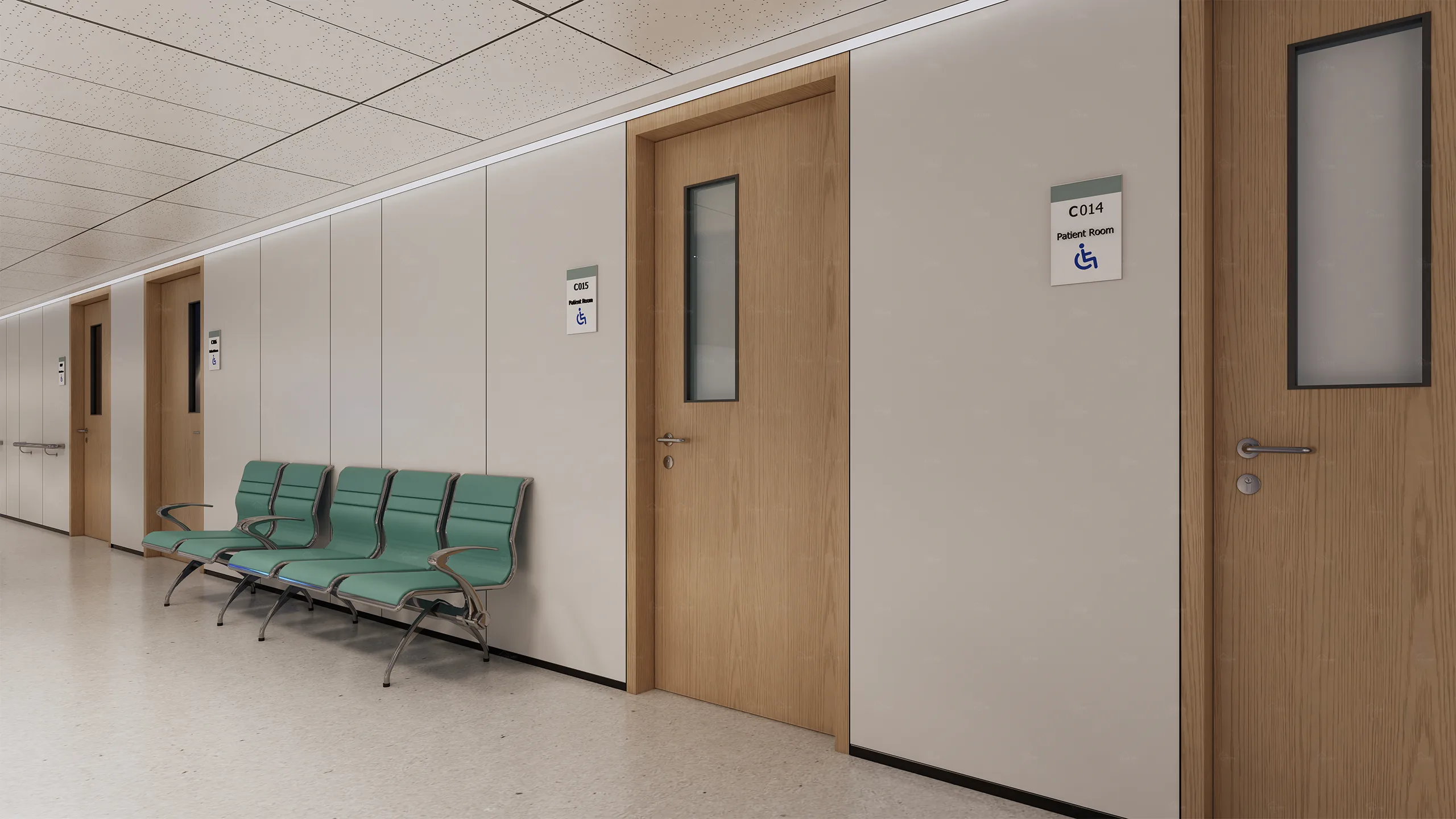
How IBC Codes Address Fire And Acoustic Door Performance?
The International Building Code (IBC) establishes many of the fire protection requirements used throughout North America. It specifies where Fire Doors are required, the appropriate fire resistance rating, and the type of door assembly needed for different building applications.
Fire Door Ratings For Commercial Buildings
Commercial buildings rely on Fire Doors to protect exit routes, stairwells, corridors, electrical rooms, and mechanical spaces. Depending on the location, these doors commonly carry 20-minute, 45-minute, 60-minute, or 90-minute fire ratings.
Many offices, hotels, conference centers, and educational facilities also require strong acoustic performance. As a result, commercial Fire Doors with STC ratings between 35 and 45 are widely used to improve speech privacy and reduce workplace noise.
Building owners often choose steel Fire Doors or wood fire-rated doors with acoustic cores and smoke seals. These products provide dependable fire protection while supporting a quieter indoor environment.
Selecting a certified commercial Fire Door assembly ensures that the door meets fire code requirements and delivers tested sound insulation for long-term performance.
Fire Door Ratings For Residential Buildings
Residential buildings such as apartments, condominiums, and townhouses also require Fire Doors in specific locations. Common applications include unit entrance doors, garage entry doors, shared corridors, and stair enclosures.
Most residential fire-rated doors use 20-minute or 45-minute fire ratings, depending on local building codes. Many of these doors also provide STC ratings of 30-40, helping reduce noise between neighboring units.
Improved sound insulation creates a more comfortable living environment by reducing noise from conversations, television, and hallway activity. This is especially valuable in multi-family housing where privacy is important.
A residential Fire Door with certified fire resistance and tested acoustic performance offers homeowners both safety and everyday comfort without altering the building’s overall appearance.
Fire Door Ratings For Healthcare Facilities
Healthcare facilities place some of the highest demands on Fire Door systems. Hospitals, medical centers, and long-term care facilities require reliable fire protection while maintaining a calm and quiet environment for patients and staff.
Many healthcare projects specify 45-minute, 60-minute, or 90-minute Fire Doors with STC ratings of 40 to 50 or higher. These doors help reduce noise from corridors, medical equipment, and nearby treatment areas.
In addition to strong door cores, healthcare acoustic Fire Doors often include smoke seals, automatic door bottoms, and specialized hardware. These features improve both life safety and acoustic performance without affecting daily operation.
By combining certified fire resistance with high sound insulation, Fire Doors for healthcare facilities help create safer buildings and more comfortable spaces for patient recovery, staff communication, and confidential medical care.
Factors That Affect Fire Door Sound Insulation Performance
The STC rating of a Fire Door depends on much more than the door itself. Every part of the fire-rated door assembly, including the core, thickness, frame, seals, and hardware, works together to reduce sound transmission. Even a high-quality acoustic Fire Door may lose performance if one component is poorly designed or installed incorrectly.
Door Core Materials And Their Impact On Sound Reduction
The door core is one of the biggest factors that affect the sound insulation of a Fire Door. Different core materials absorb and block sound in different ways, so choosing the right core is just as important as selecting the correct fire rating.
Basic Fire Doors often use honeycomb cores because they are lightweight and cost-effective. While these doors meet many fire safety requirements, they usually provide lower STC ratings than doors with solid or acoustic cores.
For better sound control, manufacturers often use mineral cores, solid particleboard cores, or composite acoustic cores. These materials increase the density of the fire-rated door, helping reduce airborne noise while maintaining certified fire resistance.
If your project needs both life safety and privacy, choosing a Fire Door with an acoustic core is usually the best option. A well-designed core can improve sound insulation without changing the door’s appearance.
Door Thickness And Acoustic Performance
The thickness of a Fire Door also plays an important role in acoustic performance. In general, a thicker door contains more material, which helps reduce sound transmission between rooms.
Most commercial fire-rated doors are available in standard thicknesses, but higher-performance acoustic Fire Doors often use thicker door constructions combined with heavier core materials. This combination helps achieve higher STC ratings.
However, thickness alone does not guarantee better sound insulation. A thick Fire Door with poor seals or an unsuitable core may perform worse than a thinner door with a complete acoustic design.
The best approach is to choose a tested Fire Door assembly in which the door thickness, core material, frame, and hardware are designed to work together for both fire protection and sound control.
Frame Design And Sound Leakage Control
A high-quality Fire Door frame is just as important as the door leaf itself. Even if the door has an excellent STC rating, sound can still pass through small gaps around the frame if it is not properly designed or installed.
Modern fire-rated door frames are engineered to create a tight fit between the door and the frame. This reduces air gaps that allow sound to escape and helps improve the overall acoustic performance of the Fire Door assembly.
The frame material also affects sound insulation. Steel frames, wood frames, and specially designed acoustic frames each provide different levels of sound control depending on the building application.
Professional installation is equally important. A certified Fire Door system with an incorrectly aligned frame may lose both fire resistance and sound insulation, reducing the effectiveness of the entire assembly.
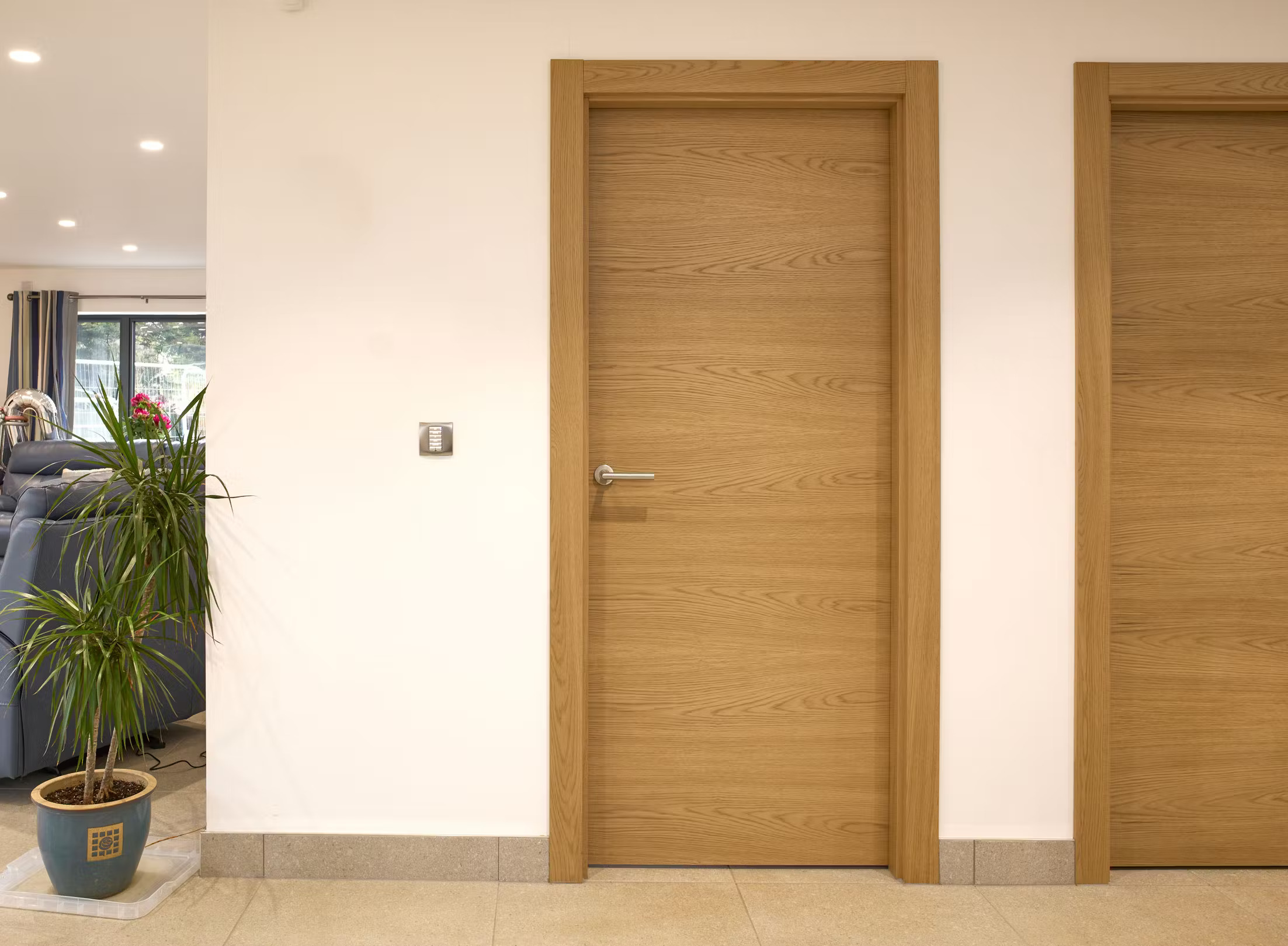
Door Seals And Weatherstripping For Noise Control
Door seals are among the simplest yet most effective ways to improve the acoustic performance of a Fire Door. Small openings around the edges of the door allow sound to travel easily, even when the door itself has a high STC rating.
Many acoustic Fire Doors use perimeter seals, smoke seals, and automatic door bottoms to close these gaps. Together, these components help block both airborne sound and smoke while maintaining fire safety compliance.
High-quality weatherstripping also improves everyday comfort by reducing drafts, dust, and unwanted noise. This makes fire-rated acoustic doors a practical choice for offices, hotels, hospitals, and educational buildings.
When replacing seals on a Fire Door, always use certified products recommended by the manufacturer. Approved seals help maintain both the fire certification and the tested acoustic performance of the complete door assembly.
Hardware Selection And Its Effect On STC Ratings
The hardware installed on a Fire Door can have a noticeable impact on its sound insulation performance. Hinges, locks, closers, vision panels, and threshold systems all influence how tightly the door closes and seals against the frame.
A properly adjusted door closer helps the Fire Door shut completely every time. Consistent closing pressure allows the seals to make full contact, reducing sound leakage while supporting smoke and fire protection.
Hardware must also be compatible with the certified fire-rated door assembly. Using unapproved locks, hinges, or accessories may affect both the fire rating and the STC rating of the completed system.
For the best results, choose Fire Door hardware that has been tested as part of the complete door assembly. When quality hardware works together with the right core, frame, and seals, the acoustic Fire Door delivers reliable fire protection and effective sound insulation for years to come.
Where Are High Sound-Rated Fire Doors Commonly Used?
High sound-rated Fire Doors are widely used in buildings where both fire protection and noise control are important. These acoustic Fire Doors help reduce sound transmission while maintaining the required fire resistance rating. From hospitals and schools to offices and industrial facilities, high-STC fire-rated door systems create safer, quieter, and more comfortable spaces.
Hospitals And Healthcare Buildings
Hospitals and healthcare buildings are among the most common places that use high-sound-rated Fire Doors. These facilities need strong fire protection, but they also require quiet environments to support patient recovery, privacy, and effective communication.
Many healthcare projects use acoustic Fire Doors with STC ratings ranging from 40 to 50+ for patient rooms, operating areas, consultation rooms, and medical offices. These doors help reduce noise from hallways, medical equipment, and daily hospital activities.
A fire-rated acoustic door also helps protect private conversations between doctors, patients, and families. Better sound insulation creates a more comfortable experience while supporting important confidentiality needs.
Because hospitals operate 24 hours a day, they need durable commercial Fire Doors that can handle frequent use. A properly installed high-STC Fire Door provides long-term performance in both safety and sound control.
Schools And Universities
Schools and universities often install sound-rated Fire Doors to create better learning environments. Classrooms, lecture halls, laboratories, and administrative areas all benefit from reduced background noise and improved speech privacy.
A high-performance Fire Door with acoustic insulation can help block hallway sounds, student conversations, and activity from nearby rooms. This allows teachers and students to focus better during lessons and presentations.
Many educational buildings use fire-rated doors with STC ratings from 35 to 45. These doors provide a good balance between noise reduction, durability, and compliance with fire safety requirements.
In addition to classrooms, acoustic Fire Doors are commonly used in music rooms, libraries, testing areas, and meeting spaces where controlling sound transmission is especially important.
Hotels And Apartment Buildings
Hotels and apartment buildings rely heavily on acoustic Fire Doors because guest comfort and privacy are major priorities. Noise from hallways, neighboring rooms, and shared spaces can affect the overall living experience.
Many hotels use fire-rated guest room doors with improved STC ratings to reduce conversations, television sounds, and corridor noise. These doors help create a quieter environment for guests while meeting fire safety codes.
In apartment buildings, high sound-rated Fire Doors are often installed between units, corridors, stairwells, and service areas. They help reduce sound transfer between living spaces and improve resident satisfaction.
A well-designed commercial Fire Door system with proper seals, frames, and hardware provides both fire protection and acoustic comfort, making it a valuable feature for modern residential projects.

Office Buildings And Conference Rooms
Modern office buildings increasingly use sound insulation Fire Doors to support privacy and productivity. Open workspaces, meeting rooms, and executive offices often require better control of conversations and workplace noise.
High-STC Fire Doors are commonly installed in conference rooms, private offices, server rooms, and executive areas. These doors help prevent confidential discussions from being heard outside the room.
For office projects, fire-rated acoustic doors with STC ratings between 35 and 50 are often selected. They provide a practical solution for reducing noise while maintaining the required fire rating.
A quality office Fire Door assembly combines strong materials, proper seals, and reliable hardware. This creates a safer workplace with improved comfort and better sound privacy.
Industrial And Manufacturing Facilities
Industrial and manufacturing facilities often face high noise levels from machines, production lines, and equipment. In these environments, high sound-rated Fire Doors help control noise while providing essential fire protection.
Many industrial buildings use steel Fire Doors with acoustic cores because they offer excellent durability and sound reduction. These doors are commonly installed in mechanical rooms, control rooms, warehouses, and production areas.
An acoustic fire-rated door can help separate noisy work zones from quieter areas such as offices, laboratories, and control stations. This improves workplace comfort and supports better communication.
For demanding industrial applications, a properly tested commercial Fire Door system ensures reliable performance against both fire hazards and excessive noise. The right combination of STC rating, materials, and installation quality creates a safer and more efficient facility.
How To Choose The Right Sound Rated Fire Door?
Choosing the right sound-rated Fire Door requires more than looking at the fire rating or STC number alone. A good fire-rated acoustic door should match your building type, safety requirements, noise conditions, and daily usage. By checking the fire rating, STC performance, installation location, and certification, you can select a Fire Door system that provides reliable protection and better sound control.
Identify Your Required Fire Rating First
The first step when choosing a sound-rated Fire Door is to determine the required fire resistance rating. The fire rating shows how long the fire-rated door assembly can protect against fire, heat, and smoke during an emergency.
Common Fire Door ratings in North America include 20-minute, 45-minute, 60-minute, and 90-minute options. The correct rating depends on the door location, building type, and local building code requirements.
For example, a corridor door in an office building may need a different Fire Door rating than a stairwell door or a mechanical room door. Choosing the wrong fire rating can affect both safety and code compliance.
After confirming the required fire protection level, you can select an acoustic Fire Door that also provides the right STC rating for your sound control needs.
Choose The Right STC Rating For Your Space
Once the fire rating is clear, the next step is choosing the correct STC rating for your Fire Door. STC, or Sound Transmission Class, measures how well a door reduces airborne noise such as voices, conversations, and equipment sounds.
For basic noise control, a Fire Door with STC 25–35 may be suitable for offices, storage areas, or low-noise spaces. For better privacy, many commercial projects choose STC 35–45 acoustic Fire Doors.
Areas such as hospitals, conference rooms, recording spaces, and private offices often require high-STC Fire Doors with ratings of 45 or above. These doors provide stronger sound reduction and help protect confidential conversations.
It is important to remember that the STC rating applies to the complete Fire Door assembly, including the frame, seals, and hardware. A high-quality door alone cannot deliver maximum sound performance without proper installation.
Consider Door Location And Noise Sources
The location of a Fire Door plays a major role in selecting the right sound insulation level. Different areas experience different noise levels, so that each space may require a different type of fire-rated acoustic door.
For example, doors near elevators, in busy hallways, in mechanical rooms, or in production areas usually need better sound control. In these locations, a higher STC-rated Fire Door can reduce unwanted noise and improve indoor comfort.
Quiet areas such as patient rooms, hotel rooms, meeting rooms, and classrooms also benefit from sound-rated Fire Doors. These doors help maintain privacy and create a more comfortable environment for users.
Before choosing a commercial Fire Door, evaluate where the door will be installed, what type of noise exists nearby, and how much sound reduction the space actually needs.
Check Fire Door Certification And Testing Labels
Certification is an important part of selecting a reliable Fire Door system. A certified fire-rated door assembly has been tested to confirm compliance with required safety and performance standards.
In North America, many Fire Doors are tested and labeled by recognized organizations such as UL (Underwriters Laboratories) or other approved testing agencies. These labels provide important information about the fire rating, construction details, and approved components.
For an acoustic Fire Door, check whether the STC rating comes from a complete tested assembly. The label or product documentation should clearly show the door type, fire rating, and sound performance information.
Always choose a certified Fire Door manufacturer that provides proper testing records and installation guidance. This helps ensure the door performs correctly for fire protection, noise reduction, and long-term building safety.

Relate FAQ
What is the most common sound insulation rating for a fire door?
In North America, the most common sound insulation rating for a Fire Door is the STC (Sound Transmission Class) rating. Most sound-rated fire doors range from STC 30 to STC 55, depending on the building type and noise control requirements. Higher STC ratings provide better sound reduction while maintaining the required fire resistance.
What does an STC rating mean on a fire door?
An STC rating measures how well a Fire Door blocks airborne sound, such as voices, music, and office noise. The higher the STC value, the better the door performs at reducing sound transmission. For example:
- STC 30–35: Reduces normal speech.
- STC 40–45: Suitable for offices and meeting rooms.
- STC 50–55: Ideal for hospitals, hotels, studios, and other quiet spaces.
What STC rating is recommended for commercial fire doors?
Most commercial buildings use Fire Doors with an STC rating between 35 and 45. Offices, schools, healthcare facilities, and hotels often require higher sound insulation to improve privacy and reduce distractions. The right rating depends on the building's acoustic and fire safety requirements.
Can a fire door have both a fire rating and a sound rating?
Yes. Many modern Fire Doors are tested and certified for both fire resistance and acoustic performance. A door can have a 20-, 45-, 60-, 90-, or 180-minute fire rating while also achieving an STC rating. Choosing a dual-certified door helps meet both safety codes and noise control needs.
Does a higher STC rating always mean better performance?
Generally, yes, but the entire door assembly matters. A high-STC Fire Door will not perform as expected if the frame, seals, thresholds, glazing, or installation are not designed for sound control. Proper installation is just as important as the door's tested rating.
How can I improve the sound insulation performance of a fire door?
You can improve the acoustic performance of a Fire Door by using:
- Acoustic perimeter seals
- Automatic door bottoms
- Properly sealed fire-rated frames
- Fire-rated acoustic glazing (if vision panels are required)
- Professional installation to eliminate air gaps
Are STC-rated fire doors required by building codes in North America?
Building codes in North America usually require fire ratings, while STC ratings are specified based on the building's acoustic design, occupancy type, or project specifications. Hospitals, hotels, schools, offices, and multifamily residential buildings commonly include sound-rated Fire Doors to meet privacy and comfort requirements.
How do I choose the right sound-rated fire door?
Start by identifying your required fire rating, then select an STC rating that matches your environment. Consider the room's noise level, privacy requirements, and local building codes. Finally, verify that the complete Fire Door assembly has been tested and certified for both fire resistance and acoustic performance to ensure reliable, code-compliant results.