What does CE certification for fire doors cover?

What Is CE Certification For Fire Doors?
CE certification for Fire Doors shows that a Fire Door meets the safety and performance rules required in the European market. It proves that the Fire Door has passed specific tests for fire resistance, quality, and reliability.
For manufacturers, CE marking is an important step to sell Fire Doors across Europe. For builders, architects, and property owners, it helps them choose a compliant Fire Door that can provide better protection during a fire emergency.
Understanding The Meaning Of CE Marking For Fire Doors
CE marking on a Fire Door means that the product follows the essential requirements of European safety standards. It shows that the Fire Door manufacturer has checked the product and confirmed that it meets the required regulations before placing it on the market.
A CE marked Fire Door is usually tested based on important factors such as fire resistance, smoke control, durability, and overall performance. These tests help ensure that the Fire Door can slow down the spread of fire and protect people inside a building.
The CE marking is not just a simple quality label. It is a legal sign that the Fire Door has passed the correct assessment process. It gives customers more confidence when choosing a certified fire rated door for homes, offices, hospitals, and commercial buildings.
However, CE marking does not mean that every Fire Door has the same level of protection. Different Fire Doors can have different ratings, such as FD30 or FD60, depending on how long they can resist fire. Buyers should always check the technical details before installation.
Why CE Certification Matters For Fire Door Compliance?
CE certification plays an important role in Fire Door compliance because it helps ensure that fire safety products meet European requirements. A compliant Fire Door can support building safety by helping prevent fire and smoke from moving between different areas.
For construction companies and building owners, using CE marked Fire Doors can reduce risks during inspections and approval processes. It also helps make sure that the installed Fire Door matches the required fire safety regulations for the project.
Another reason CE certification matters is product reliability. A tested Fire Door is more likely to perform as expected during a fire. Without proper certification, there is no clear proof that the Fire Door can provide the level of protection it claims.
In addition, CE certified Fire Doors help create trust between manufacturers, suppliers, and customers. When people buy a certified fire resistant door, they know that the product has gone through a recognized evaluation process.
The Difference Between CE Marked And Non CE Marked Fire Doors
The main difference between CE marked and non CE marked Fire Doors is the level of verified compliance. A CE marked Fire Door has completed the required assessment process and meets specific European safety standards, while a non CE marked Fire Door may not have official proof of performance.
A CE certified Fire Door usually comes with clear information about its fire rating, testing results, and product performance. This makes it easier for architects and installers to select the right fire safety door for different building needs.
On the other hand, a non CE marked Fire Door may have limited documentation or unclear testing information. Even if the door looks strong and well-made, there is no guarantee that it can provide the expected fire protection.
Choosing a CE marked Fire Door can also help avoid future problems with building regulations and safety checks. For many European projects, using certified fire doors is a key part of creating a safe and compliant building.
Is CE Certification Required For All Fire Doors In Europe?
Whether CE certification is required for all Fire Doors in Europe depends on the specific product type, application, and local building regulations. Many Fire Doors used in construction projects must meet European standards and carry CE marking to be legally placed on the market.
For example, external fire doors and certain construction-related Fire Doors may require CE marking under European product regulations. These rules help ensure that fire safety products provide consistent performance across different European countries.
However, not every door with fire protection features will automatically need CE certification. Some special-purpose doors or products may follow different national requirements depending on their use and location.
Because fire safety rules can vary across Europe, manufacturers and buyers should always check the latest regulations for their target market. Working with a certified Fire Door supplier can help ensure the product meets the correct compliance requirements.

What Does CE Certification Cover For Fire Doors?
CE certification for Fire Doors covers several important safety areas that show how a Fire Door performs during a fire. It mainly checks fire resistance, heat control, and the door’s ability to protect people and property.
Through strict testing, a certified Fire Door can prove its ability to resist flames, reduce heat transfer, and limit fire spread. These performance factors help ensure the Fire Door meets European fire safety standards.
Fire Resistance Performance And Fire Rating
Fire resistance performance is one of the most important parts of Fire Door testing. It shows how long a Fire Door can continue to protect a building when exposed to fire. The fire rating usually indicates the time period that the door can resist fire, such as 30, 60, or 90 minutes.
A fire-rated fire door is tested under controlled fire conditions to check its overall strength and protective ability. The test measures whether the door can maintain its structure and prevent fire from spreading to another area.
The fire rating of a Fire Door helps architects and builders choose the right door for different buildings. For example, a residential building may require a different fire resistant door compared with a hospital, office, or industrial facility.
When buying a CE marked Fire Door, customers should always check the fire rating and test documents. A higher rating does not always mean a better choice, but it must match the specific safety requirements of the building.
Integrity (E) Performance During Fire Exposure
Integrity, often shown as the “E” rating in Fire Door testing, measures how well a Fire Door can stop flames and hot gases from passing through. It focuses on the door’s ability to remain a strong barrier during a fire.
During the test, the Fire Door is exposed to high temperatures while inspectors check for cracks, openings, or failures. If flames or smoke pass through the door too early, the Fire Door will not meet the required integrity standard.
A Fire Door with good integrity performance helps create safe escape routes inside a building. It allows people more time to leave and gives firefighters better conditions to control the fire.
For CE certification, the integrity rating is a key part of proving that a fire resistant door can perform correctly during a real fire. It shows that the door system, including the frame and hardware, works together as a complete safety solution.
Insulation (I) Performance Against Heat Transfer
Insulation performance, known as the “I” rating, measures how well a Fire Door can reduce heat transfer from one side of the door to the other. This helps protect people and objects located near the non-fire side of the door.
During Fire Door testing, the surface temperature on the safe side of the door is carefully measured. A high insulation rating means the door can keep the temperature lower for a longer time during fire exposure.
A Fire Door with strong insulation performance is especially important in places such as hospitals, schools, offices, and apartment buildings. These areas often need extra protection to keep evacuation paths safer.
CE certified Fire Doors must meet specific insulation requirements when this performance is part of the product standard. It helps ensure that the door provides not only fire separation but also better protection against dangerous heat.
Radiation (W) Control In Fire Door Testing
Radiation control, shown as the “W” rating, measures how much heat radiation passes through a Fire Door during a fire. This performance helps reduce the risk of heat damage to nearby materials and people.
During Fire Door testing, specialists measure the level of heat radiation from the non-fire side of the door. A Fire Door with good radiation control can limit the amount of heat energy transferred through the door surface.
This feature is important for buildings where rooms are close together or where sensitive equipment needs extra protection. A radiation-resistant Fire Door can help reduce the chance of fire spreading through heat exposure.
Although not every Fire Door requires a W rating, it can provide additional safety in specific applications. When selecting a CE certified Fire Door, understanding E, I, and W performance ratings helps buyers choose the right level of protection.
Fire Door Material And Construction Requirements
The materials and construction of a Fire Door directly affect its ability to resist fire, heat, and smoke. A high-quality Fire Door uses specially designed components that work together to provide reliable protection during a fire.
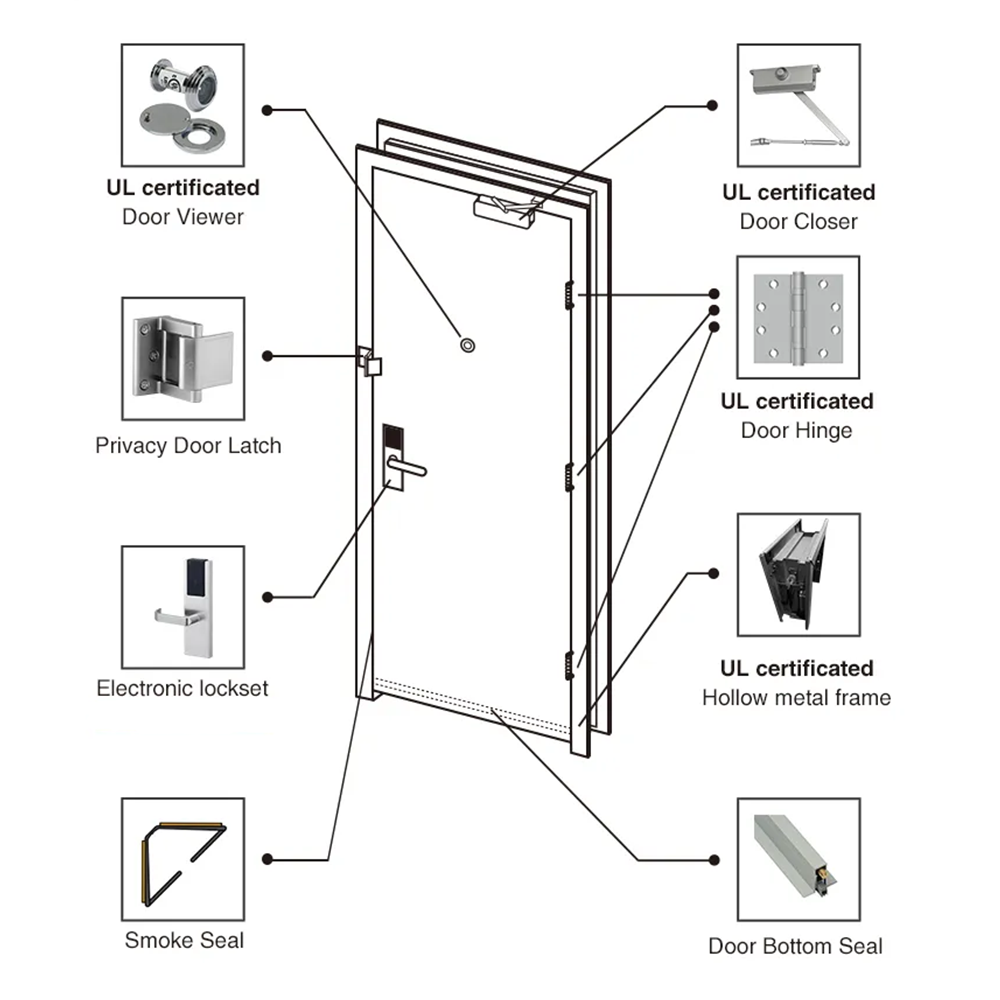
From the door leaf and core materials to the frame, hardware, and seals, every part of a fire resistant door must meet strict safety requirements. Proper construction helps the Fire Door maintain its performance when exposed to extreme heat.
Door Leaf Construction And Core Materials
The door leaf is the main part of a Fire Door and plays a key role in fire protection. It usually contains a fire resistant core made from materials such as mineral wool, gypsum, vermiculite, or other fire rated materials that can slow down heat and flame spread.
A well-designed Fire Door uses multiple layers to improve strength and stability. These layers help the door maintain its shape during a fire and prevent early failure caused by high temperatures.
The core material inside a Fire Door is important because it controls how quickly heat moves through the door. A quality fire rated door with the right core can provide better protection for longer periods, depending on its fire rating.
Manufacturers must carefully select and test each material used in the Fire Door construction. The combination of the door leaf, core, and outer surface must work together to meet required fire safety standards.
Fire Resistant Frame And Hardware Components
The frame is an important part of the Fire Door system because it supports the door leaf and helps maintain the fire barrier. A fire resistant frame must be strong enough to hold the door in place during high temperatures.
Common Fire Door frames are made from materials such as steel, timber with fire protection treatment, or other tested fire resistant materials. The frame design must match the door leaf to ensure the whole system works correctly.
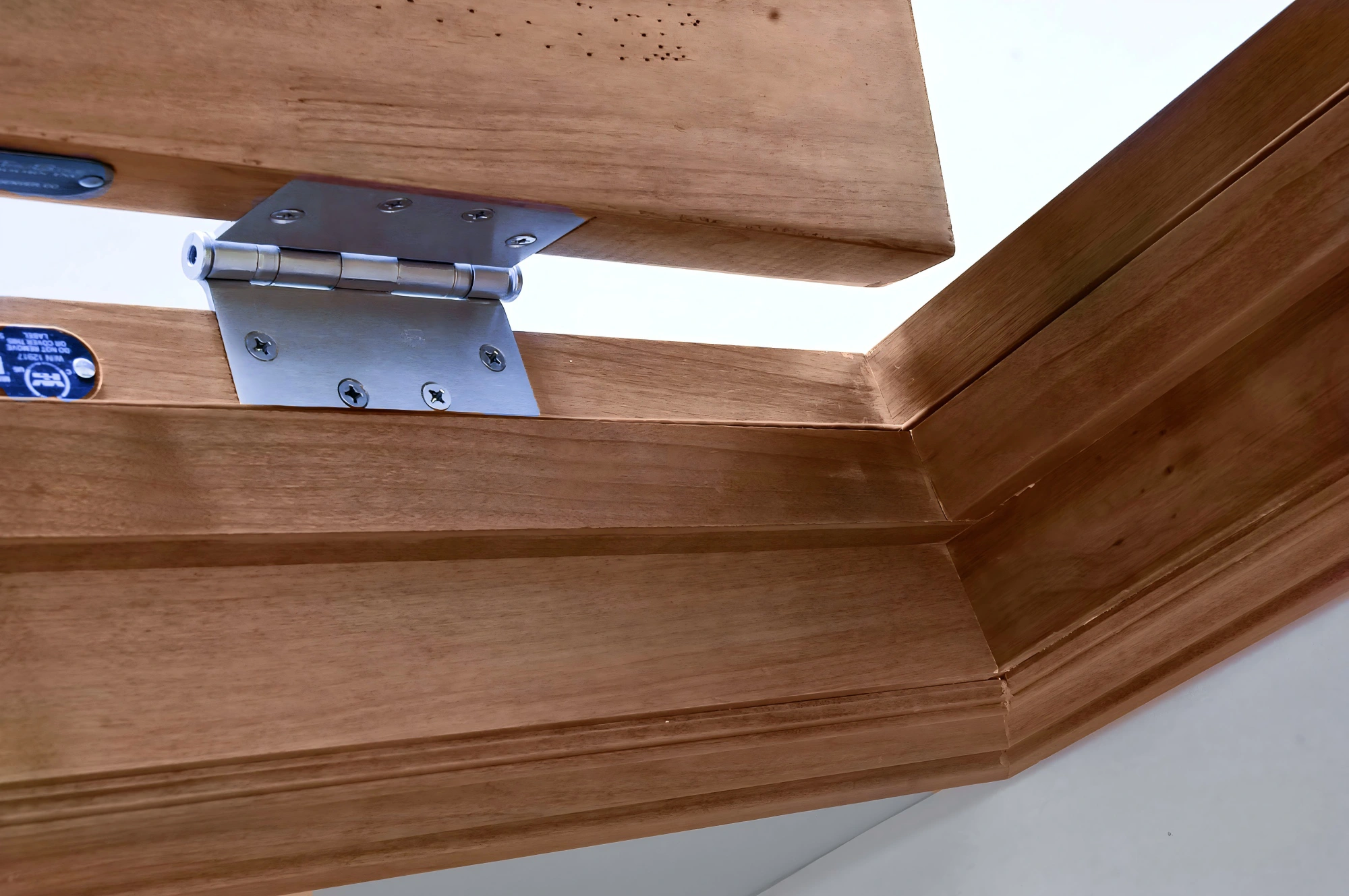
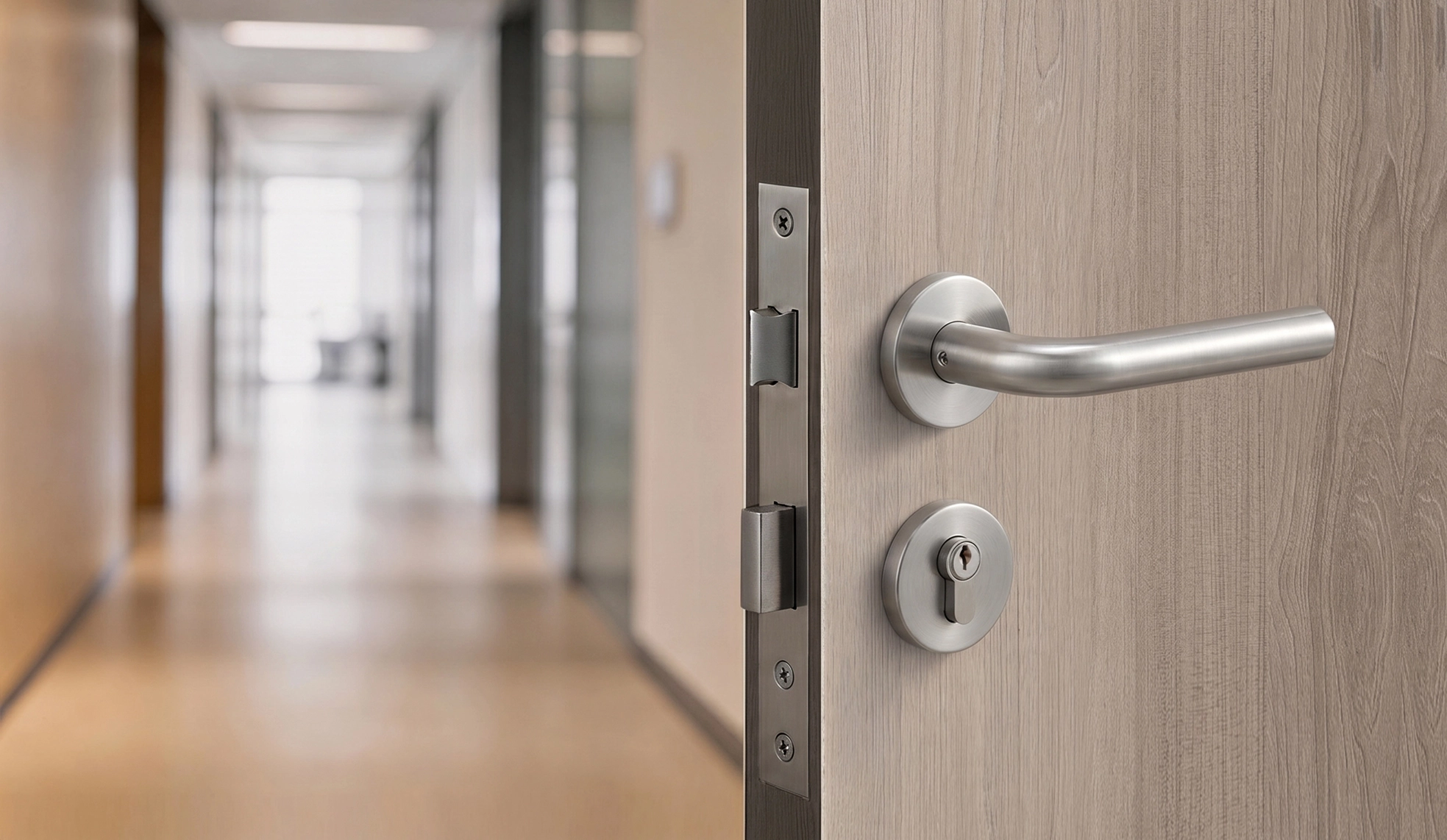
Hardware components also affect Fire Door performance. Hinges, locks, handles, closers, and other accessories must be suitable for fire rated doors and tested together with the door system.
Using the wrong hardware can reduce the safety performance of a Fire Door. For this reason, builders should always choose certified fire door hardware that meets the same fire protection requirements as the door itself.

Glass Panels And Vision Panels In Fire Doors
Some Fire Doors include glass panels or vision panels to improve visibility and allow people to see through the door. However, normal glass cannot provide enough protection during a fire, so special fire resistant glass must be used.
Fire rated glass in a Fire Door is designed to resist heat, flames, and smoke for a specific period. It allows natural light and visibility while still helping the door maintain its fire safety function.
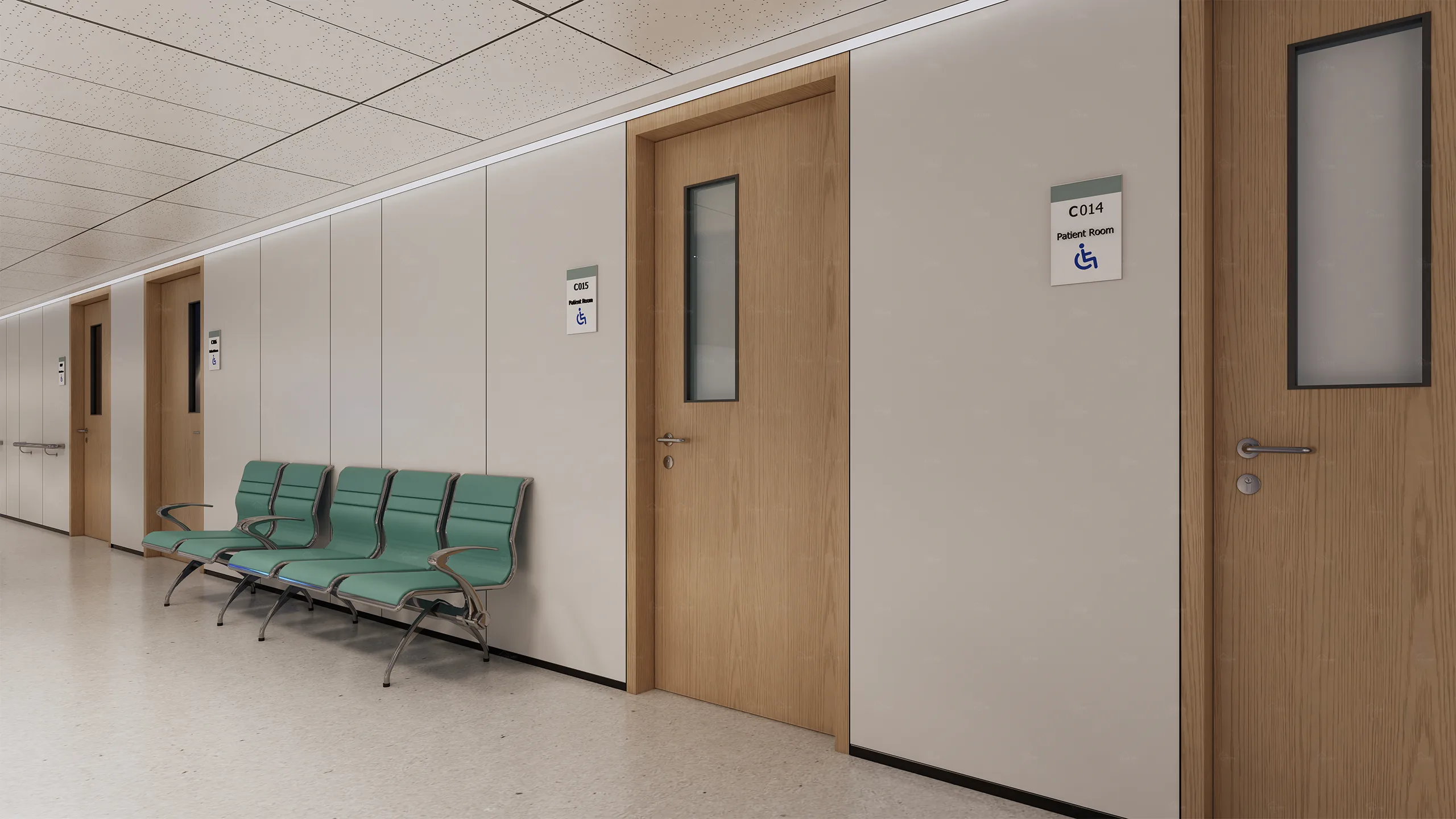
The size and position of vision panels are also important. A properly tested Fire Door with a glass panel can provide both safety and practical benefits in places like schools, hospitals, offices, and public buildings.
When selecting a Fire Door with glass, buyers should check the glass fire rating and certification details. The glass, frame, and sealing system must all work together to maintain the overall fire protection performance.
Fire Door Seals And Smoke Control Features
Fire Door seals are small but essential components that help prevent fire and smoke from passing through gaps around the door. These seals expand when exposed to heat and help close spaces between the door leaf and frame.
A smoke control Fire Door uses special seals to limit the movement of cold smoke before a fire becomes fully developed. This feature is important because smoke can spread quickly and create serious risks during an emergency.
High-quality Fire Door seals must remain effective over time and work correctly with the door closing system. Damaged or missing seals can reduce the protection level of an otherwise certified fire rated door.
Regular inspection and maintenance of Fire Door seals are necessary to keep the door working properly. Checking seals, hinges, and closing mechanisms helps ensure the Fire Door continues to provide reliable fire and smoke protection.
Fire Door Testing And Performance Assessment
Fire Door testing is a key step to confirm whether a fire resistant door can provide reliable protection during a real fire. Through different performance assessments, manufacturers can prove that their Fire Door meets safety standards for fire resistance, smoke control, and daily use.
These tests check not only the door material but also the complete Fire Door system, including the frame, hardware, seals, and closing mechanism. A tested Fire Door gives building owners more confidence in long-term fire safety.
Fire Resistance Tests Under EN 1634-1 Standard
The EN 1634-1 standard is one of the main fire resistance tests used for Fire Doors in Europe. It checks how well a Fire Door can resist fire exposure and maintain its protective function under controlled fire conditions.
During the test, the Fire Door is installed in a test wall and exposed to high temperatures that represent a real fire situation. Experts then check if the door can maintain its integrity and insulation performance for the required time.
The EN 1634-1 test measures important factors such as flame spread, heat transfer, and structural stability. A Fire Door that passes this test can receive a specific fire rating, such as FD30, FD60, or higher.
For manufacturers, passing the EN 1634-1 fire resistance test is an important step toward CE certification. It proves that the fire rated door can perform safely and consistently when exposed to extreme heat.
Smoke Leakage Tests Under EN 1634-3 Standard
Smoke control is another important part of Fire Door performance. The EN 1634-3 standard focuses on testing how well a Fire Door can prevent smoke from moving through gaps around the door.
During the smoke leakage test, the Fire Door is checked under different pressure and temperature conditions. The test measures how much smoke can pass through the door edges, seals, and other connection points.
A smoke resistant Fire Door helps protect escape routes by reducing the spread of dangerous smoke inside a building. This is especially important in places such as hospitals, schools, offices, and high-rise buildings.
A Fire Door that meets EN 1634-3 requirements provides extra protection during the early stages of a fire. Good smoke control performance gives people more time to evacuate safely.
Mechanical Strength And Durability Tests
A Fire Door must not only resist fire but also work properly during everyday use. Mechanical strength and durability tests check whether a Fire Door can handle repeated opening, closing, and regular operation over time.
During these tests, the Fire Door is opened and closed many times to simulate daily use. Inspectors check the door leaf, hinges, frame, locks, and other hardware to make sure they remain strong and reliable.
A durable Fire Door should keep its correct shape and function after long-term use. This is important because a damaged or poorly maintained fire door may not provide the expected protection during an emergency.
These durability tests help ensure that a certified Fire Door is not only safe during fire conditions but also practical for daily building operations.
Closing Force and Self-Closing Performance Tests
The self-closing function is an important feature of many Fire Doors because the door must close automatically to maintain fire separation. Closing force tests check whether the Fire Door can close correctly without creating problems for users.
During testing, experts measure the force needed to open and close the Fire Door. The door must balance safety and convenience, allowing people to use it easily while still ensuring reliable closing performance.
A self closing Fire Door usually works with a door closer that controls movement and keeps the door shut when not in use. If the closer fails, the Fire Door may remain open and lose its ability to stop fire and smoke.
Regular checks of the closing mechanism, hinges, and door alignment help maintain Fire Door performance. A properly working self closing fire rated door provides continuous protection throughout the building.

Which Standards Apply To CE Certified Fire Doors?
CE-certified fire doors must meet strict European standards to demonstrate their safety, performance, and reliability. These standards help ensure that a fire door can resist fire, control smoke, and protect people and property during an emergency. Different fire door types follow different testing rules depending on where and how they are used.
EN 16034: The Main Standard For Fire Door CE Marking
EN 16034 is the key standard for Fire Door CE Marking in Europe. It defines the requirements for fire-resisting and smoke-control door sets, including how a fire door should perform when exposed to fire. A CE certified fire door must pass these tests before it can carry the CE mark.
This Fire Door standard focuses on important safety features such as fire resistance, smoke leakage control, and automatic closing systems. For example, a fire door with self-closing devices must work correctly during a fire to stop flames and smoke from spreading between areas.
When manufacturers produce a CE marked fire door, they need to provide test reports and performance documents based on EN 16034. This gives building owners, architects, and contractors confidence that the fire door meets European fire safety requirements.
For anyone buying a Fire Door in Europe, checking EN 16034 compliance is an important step. It helps confirm that the door has been tested properly and can provide the expected level of fire protection in real building conditions.
EN 14351-1: External Door Performance Requirements
EN 14351-1 covers performance requirements for external doors, including certain types of fire doors used on the outside of buildings. This standard focuses on general door performance, such as air tightness, water resistance, wind resistance, and thermal insulation.
For an external fire door, meeting EN 14351-1 means the door must provide both fire safety and daily protection against weather conditions. A high quality external Fire Door should not only resist fire but also maintain good energy performance and durability.
Manufacturers of external Fire Door systems often use EN 14351-1 together with EN 16034. This combination helps create a complete CE certified door solution that meets both fire protection and building performance needs.
When selecting an external Fire Door, it is important to check that the product meets the correct standards for the project location. A properly certified fire door can improve building safety while also supporting long-term performance.
EN 1634: Fire Resistance And Smoke Control Testing
EN 1634 is the main testing standard used to measure Fire Door resistance against fire and smoke. It explains how fire door assemblies should be tested in controlled conditions to check their ability to stop fire spread.
During EN 1634 testing, a Fire Door is exposed to high temperatures that simulate a real fire situation. Test results show how long the fire door can maintain its integrity, insulation, and smoke control performance.
This standard covers different fire door components, including the door leaf, frame, hinges, locks, and sealing materials. Every part of the fire door system must work together to achieve reliable fire protection.
For commercial buildings, apartments, and public facilities, choosing an EN 1634-tested fire door provides extra confidence. It ensures the door has been evaluated under strict conditions and can perform when fire safety matters most.
EN 13501-2: Fire Classification For Building Products
EN 13501-2 defines the fire classification system for building products, including Fire Door assemblies. It uses test results from standards like EN 1634 to classify how well a fire door performs during a fire.
Under this classification system, Fire Door products receive ratings such as E, EI, or EW, followed by a time period like 30, 60, or 90 minutes. These ratings show how long the fire door can resist flames, heat transfer, or radiation.
For example, an EI60 Fire Door means the door can maintain both integrity and insulation for 60 minutes during fire exposure. This information helps architects and safety professionals choose the right fire door for different building requirements.
Understanding EN 13501-2 ratings makes it easier to compare Fire Door options. A correctly classified CE certified fire door can support safer building design and help meet European fire protection regulations.
What Documents Are Needed For CE Certification Of Fire Doors?
To get CE certification for a Fire Door, manufacturers need to prepare a complete set of technical documents that prove the door meets European safety requirements. These documents show the Fire Door design, production control, test results, and performance level. Proper documentation also helps customers and inspectors confirm that the fire door is safe and reliable for building use.
Declaration Of Performance (DoP) For Fire Doors
The Declaration of Performance (DoP) is one of the most important documents required for CE certification of a Fire Door. It clearly explains the declared performance of the fire door, including fire resistance level, smoke control performance, product identification, and the standards followed during assessment.
A Fire Door DoP provides essential information about the manufacturer, product model, intended use, and technical characteristics. It allows customers and building authorities to understand what level of protection the fire door can provide in real fire conditions.
For CE marked Fire Doors, the manufacturer must create the DoP according to the requirements of the Construction Products Regulation (CPR). This document confirms that the fire door has completed the required assessment process and meets the relevant European standards.
The DoP is also useful throughout the life cycle of a Fire Door. During installation, inspection, or maintenance, building managers can use this document to check whether the installed fire door matches the original certified product.
Factory Production Control (FPC) System
The Factory Production Control (FPC) system is a key part of CE certification for Fire Doors because it ensures consistent quality during manufacturing. A fire door must maintain the same performance as the tested sample, even when hundreds or thousands of units are produced.
The FPC system controls every important stage of Fire Door production, including material selection, manufacturing methods, assembly processes, and final product checks. Manufacturers usually monitor components such as door cores, frames, hinges, locks, glass panels, and fire seals.
A reliable FPC system helps prevent differences between tested fire doors and factory-produced fire doors. Even a small change in materials or construction methods can affect fire resistance, smoke control, and overall safety performance.
During the certification process, manufacturers need to keep detailed FPC records. These records may include inspection reports, quality checks, production data, and corrective actions when problems are found.
Certificate Of Constancy Of Performance (CoCP)
The Certificate Of Constancy Of Performance (CoCP) is an official certification document that confirms a Fire Door manufacturer can maintain consistent product performance. A notified certification body normally issues it after reviewing the factory and production control system.
For CE certified Fire Doors, the CoCP shows that the manufacturer has passed the required assessment procedures. It confirms that the production process, quality management, and fire door performance remain under continuous control.
Before issuing a CoCP, the notified body may inspect the factory, review the Factory Production Control system, and check whether the manufacturer follows the approved production procedures. This process helps ensure that every fire door meets the same safety requirements.
The Certificate of Constancy of Performance is especially important for large construction projects. Architects, contractors, and fire safety professionals often require this document before approving a Fire Door supplier.
Fire Test Reports And Classification Reports
Fire Test Reports are essential documents that prove the fire performance of a Fire Door. These reports show how the door performs when exposed to high temperatures and fire conditions during laboratory testing.
A Fire Door test report usually includes detailed information about the tested product, such as door construction, materials, frame design, glazing options, hardware, and sealing systems. It explains how long the fire door can resist fire and control smoke.
The results from fire testing are then used to create Classification Reports. These reports define the official fire performance rating of the door, such as E30, EI60, or EI90, depending on the level of protection achieved.
For example, an EI60 Fire Door means the door can maintain both integrity and insulation performance for 60 minutes during a fire test. This classification helps professionals select the correct fire door based on building regulations and safety needs.
Fire Test Reports and Classification Reports are important references for architects, engineers, and building inspectors. They provide reliable evidence that a CE marked Fire Door has been tested according to recognised European fire safety standards.
Technical Product Documentation
Technical Product Documentation provides detailed information about the design, construction, and performance of a CE certified Fire Door. It explains how the product is made and includes the technical details needed to support the certification process.
This documentation usually contains product drawings, material specifications, manufacturing details, installation instructions, and information about fire door components. It may also describe the use of hinges, locks, handles, seals, and other accessories that affect fire performance.
A Fire Door is a complete system where every component works together. Therefore, technical documents must clearly explain the relationship between different parts of the door assembly and ensure that the installed product matches the tested design.
Accurate technical documentation also helps during installation and maintenance. Contractors can follow the correct installation method, while building owners can keep records for future inspections and fire safety checks.

What Information Must Appear On A CE Marked Fire Door?
A CE-marked fire door must include clear information showing its compliance, safety level, and manufacturer details. The CE marking helps buyers, inspectors, and building professionals identify whether the fire door meets European requirements. Proper labeling also makes it easier to check the product’s origin, performance rating, and certification information.
Gaps and Misalignment: Why It’s Crucial to Fix These Issues
The CE label is an important part of every CE certified Fire Door because it provides basic information about the product’s compliance. A fire rated door with a CE mark shows that the manufacturer has followed the required European assessment process and declared the correct performance level.
The CE marking on a Fire Door usually includes key details such as the CE symbol, manufacturer information, product identification number, and reference to the relevant European standard. These details allow inspectors and customers to verify the product status quickly.
For fire rated doors, the CE label must be placed in a visible and durable location. It should remain readable throughout the service life of the Fire Door, even after regular use and maintenance.
A correct CE label also helps prevent confusion between certified fire doors and standard doors. When checking a Fire Door installation, building professionals can use the label to confirm that the door matches the approved product specification.
Product Identification And Manufacturer Details
Product identification details help users understand exactly which Fire Door product they are buying and installing. A CE marked Fire Door must include information that connects the physical door with its technical documents and certification records.
The label normally includes the manufacturer’s name, registered address, and product reference number. These details allow customers and authorities to identify the company responsible for producing the fire door system.
A unique product identification code is also important because Fire Door models can have different designs, materials, and performance levels. This code helps match the installed door with the correct test reports, Declaration of Performance (DoP), and technical documents.
For large construction projects, accurate manufacturer details make future inspections easier. Building owners can contact the supplier, confirm product information, and obtain maintenance guidance when needed.
Fire Rating And Performance Classification
The fire rating and performance classification are some of the most important details shown on a CE marked Fire Door. These ratings explain how well the door can resist fire, control smoke, and protect people during an emergency.
A Fire Door label usually includes classification information such as E, EI, or EW ratings with a time period. For example, an EI60 Fire Door means the door can provide integrity and insulation protection for 60 minutes during fire exposure.
The performance classification helps architects, contractors, and safety professionals choose the correct fire rated door for different building areas. A hospital, office building, apartment, or industrial facility may require different Fire Door protection levels.
In addition to fire resistance ratings, some Fire Doors may include smoke control information. Smoke leakage protection is important because smoke can spread quickly and create serious risks during a building fire.
Year Of Certification And Certification Body Information
The year of certification and certification body information provide additional details about the approval history of a CE marked Fire Door. These details help users understand when the product certification was completed and which organisation performed the assessment.
A CE certified Fire Door may include the year when the CE marking was first applied. This information helps track the product’s certification timeline and supports document management during building inspections.
The certification body information is also important because certain Fire Door products require assessment by a recognised notified body. The identification number of this organisation may appear on the CE label or related certification documents.
For building owners and contractors, checking certification body details provides extra confidence in the Fire Door product. It shows that the door has been reviewed according to the correct European certification procedures.

Why Should You Choose CE Certified Fire Doors?
Choosing a CE certified Fire Door means choosing a product that has been tested, assessed, and documented according to European safety requirements. These fire rated doors provide reliable protection during emergencies while also helping buildings meet legal and construction standards. For architects, contractors, and property owners, a certified Fire Door offers better safety, quality, and long-term confidence.
Better Fire Safety Performance
The main reason to choose a CE certified Fire Door is improved fire safety performance. A tested fire door is designed to resist fire, limit smoke movement, and slow down the spread of flames between different areas of a building.
Unlike standard doors, a certified Fire Door has passed strict fire resistance tests under controlled conditions. These tests check important parts of the door system, including the door leaf, frame, hinges, locks, and fire seals.
A high quality Fire Door can provide valuable extra time during a fire emergency. This allows occupants to leave safely and gives firefighters more time to control the situation.
CE certified fire doors are available with different protection levels, such as EI30, EI60, and EI90 ratings. This allows building professionals to select the right fire rated door based on the specific safety needs of each area.
Compliance With European Building Regulations
A CE certified Fire Door helps buildings meet European construction and fire safety regulations. The CE marking shows that the product follows the required standards and has completed the necessary assessment process.
For many construction projects, using approved fire rated doors is not just a quality choice but also a legal requirement. A non-certified Fire Door may create problems during inspections or approval procedures.
CE certification provides clear proof that the Fire Door meets recognised European performance requirements. It gives building authorities and safety inspectors confidence that the product is suitable for professional use.
Different countries may have their own building rules, but CE marked fire doors provide a common reference across the European market. This makes it easier for suppliers and contractors to select compliant products.
Easier Approval For Construction Projects
Using CE certified Fire Doors can make the approval process for construction projects much smoother. Since these doors come with official documents, test reports, and performance information, they are easier for inspectors to review.
During a building project, architects and contractors often need to provide evidence that installed products meet safety requirements. A CE marked Fire Door already has the necessary certification records to support this process.
Documents such as the Declaration of Performance (DoP), fire test reports, and classification reports help confirm the quality and safety level of the fire door. This reduces delays caused by missing or unclear product information.
For large commercial projects, hospitals, schools, and residential buildings, using certified fire doors can save time during approval stages. It helps project teams work more efficiently with authorities and building inspectors.
Improved Product Quality And Reliability
CE certification helps ensure that a Fire Door is produced under controlled quality conditions. Manufacturers must follow strict production procedures to maintain consistent performance between tested products and finished doors.
The Factory Production Control (FPC) system plays an important role in maintaining Fire Door quality. It checks materials, manufacturing steps, and final inspections to reduce production problems.
A reliable Fire Door is not only about fire resistance but also about long-term performance. Quality materials, accurate manufacturing, and proper testing help the door continue working correctly after years of use.
CE certified fire rated doors are also supported by technical documents and maintenance information. This helps installers and building owners use the product correctly throughout its service life.
Greater Confidence For Architects And Contractors
For architects and contractors, selecting the right Fire Door is an important responsibility. CE certification provides confidence that the chosen product has been tested and meets recognised European safety requirements.
A CE marked Fire Door gives professionals clear information about fire rating, performance classification, installation requirements, and product limitations. This makes the design and construction process more reliable.
When working on complex projects, architects and contractors need products they can trust. A certified fire door reduces uncertainty because its performance has already been verified through official testing procedures.
Using high quality Fire Doors also helps professionals protect their reputation. Reliable products reduce the risk of installation problems, inspection failures, and future safety concerns.

How To Check If A Fire Door Has Valid CE Certification?
Checking the CE certification of a Fire Door is an important step before installation or purchase. A valid CE marked fire door should have clear labeling, supporting documents, and reliable testing evidence. By checking these details carefully, buyers and contractors can avoid uncertified products and choose a Fire Door that meets European safety requirements.
Check The CE Label On The Door
The first step to verify a CE certified Fire Door is to check the CE label placed on the door itself. This label provides basic product information and confirms that the manufacturer has completed the required certification process.
A valid Fire Door CE label should include important details such as the CE marking symbol, manufacturer information, product identification number, and reference standards. These details should match the documents provided by the supplier.
The label should also be clear, permanent, and easy to read. A Fire Door is used for long-term safety protection, so the CE marking must remain visible throughout the product’s service life.
When checking a fire rated door, avoid products with missing labels, unclear markings, or information that does not match the manufacturer’s records. These signs may indicate that the Fire Door does not have valid certification.
Verify The Declaration Of Performance Document
The Declaration of Performance (DoP) is one of the most important documents used to confirm a Fire Door’s CE certification. It explains the product’s declared performance and shows whether the door meets the required European standards.
When reviewing the DoP, check that the information matches the installed Fire Door. The product name, model number, manufacturer details, and fire performance classification should match the information shown on the door label.
The DoP should include details about the Fire Door’s fire resistance level, smoke control performance, and the standards used for testing. For example, it may refer to EN 16034 and other relevant European requirements.
A reliable Fire Door supplier should provide the Declaration of Performance without hesitation. If a manufacturer cannot provide this document, it may be a warning sign that the product has not completed proper certification.
Confirm The Certification Body Information
Another important step is checking the certification body information connected with the Fire Door certification. Certain CE certified fire doors require assessment and verification from a recognised notified body.
The certification body reviews important parts of the Fire Door approval process, including factory production control, testing records, and product performance. Their identification details may appear on certification documents or related product information.
When checking a Fire Door, make sure the certification body information is valid and matches the official certification records. Incorrect names, missing details, or unclear certification references may indicate unreliable documentation.
For construction projects, this verification step provides extra confidence. Architects, contractors, and inspectors can confirm that the fire rated door has been assessed by an approved organisation.
Ask The Manufacturer For Test Evidence
Requesting test evidence is another practical way to check whether a Fire Door has valid CE certification. A professional manufacturer should be able to provide supporting documents that prove the product’s fire performance.
Fire test reports show how the Fire Door performed under controlled fire conditions. These reports usually include details about the door design, materials, testing method, and achieved fire resistance rating.
A reliable supplier should also provide classification reports and technical documents that support the Fire Door’s performance claims. These records help confirm whether the tested product matches the door supplied to the project.
When reviewing test evidence, pay attention to important details such as the tested door model, frame type, hardware, glazing system, and fire rating. Even small differences can affect the final performance of a fire rated door.
Relate FAQ
What does CE certification for fire doors cover?
CE certification for fire doors demonstrates that the product complies with the European Construction Products Regulation (CPR) and has been tested and assessed according to harmonized European standards. It typically covers fire resistance performance, smoke control (where applicable), durability, mechanical performance, factory production control (FPC), and the Declaration of Performance (DoP).
Does CE certification guarantee a fire door is fire-rated?
Yes, but only when the fire door has been successfully tested and classified according to the relevant European standards. The CE mark confirms that the declared fire resistance performance has been independently assessed and documented.
Does CE certification include smoke control performance?
Yes, if the manufacturer declares smoke control characteristics. Smoke leakage performance is typically tested according to EN 1634-3 and classified under EN 13501-2.
Are fire door hardware components included in CE certification?
Yes. A fire door should be tested as a complete doorset, including the door leaf, frame, hinges, locks, closers, glazing, seals, and other essential hardware. Changing certified components without proper assessment may invalidate the fire rating.
How is a CE-certified fire door tested?
The door assembly is exposed to controlled fire conditions in a certified laboratory following EN 1634-1. During testing, experts evaluate integrity (E), insulation (I), and, where required, radiation performance over a specified period such as 30, 60, 90, or 120 minutes.
Does CE certification apply to both internal and external fire doors?
Yes. CE certification can apply to both internal and external pedestrian fire doors, provided they meet the applicable harmonized standards and intended use requirements.
Is factory production control required for CE certification?
Yes. Manufacturers must operate a Factory Production Control (FPC) system to ensure every produced fire door consistently meets the declared performance. A notified body regularly audits the FPC.